
Afghans, Fearing More Violence, Feel Abandoned by Struggling Government

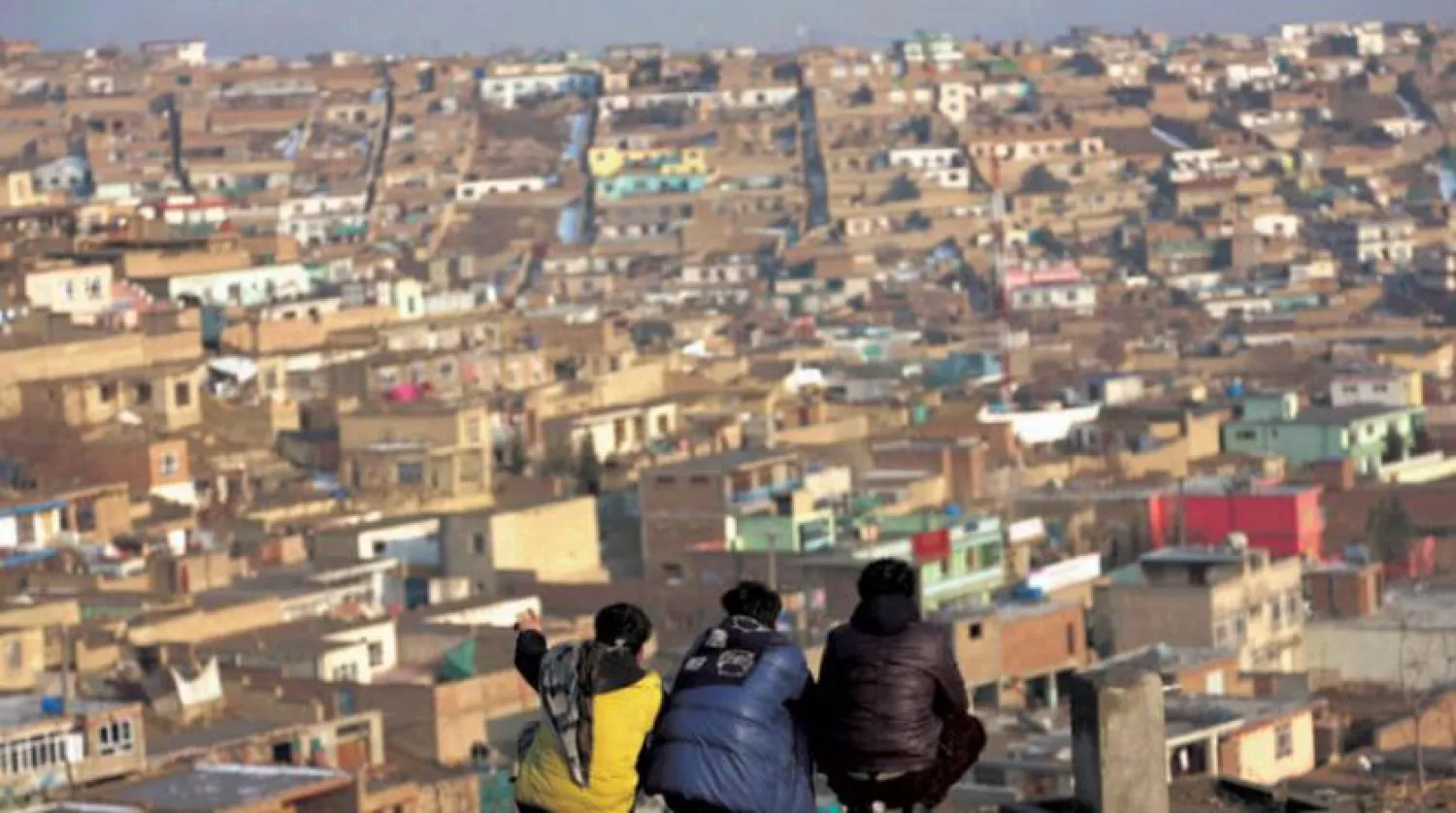
Afghans look over Kabul in January. (Rahmat Gul/AP)
TT

Afghans, Fearing More Violence, Feel Abandoned by Struggling Government

Afghans look over Kabul in January. (Rahmat Gul/AP)

The streets are clogged with yellow taxis again. Peddlers are back pushing carts of shampoo and socks, sidewalk juice sellers are crushing pomegranates, and pigeons are pecking at corn outside a riverside shrine. The evidence of the Afghan capital’s bloodiest week in eight months has been scrubbed away.

But the city still has not fully recovered.

It is not only the shock of triple terrorist attacks that took 150 lives within 10 days last month — an ambulance-borne suicide bomb, a hilltop raid on a luxury hotel and a commando attack on a military academy. It is not only the visible heightening of security that followed — armed men on corners, roads blocked for official convoys and turreted military vehicles parked outside foreign and government compounds.

It is something else in the frigid winter air — a deeper sense of anxiety that things are out of control, that the government is failing to serve the public and consumed by political power struggles. People fear the destructive menace of the Taliban and ISIS, but their anger is directed at their own leaders, especially President Ashraf Ghani, who many feel have abandoned them.

“People did not suddenly become afraid, but this time the violence has added to their frustrations with the government. It showed a total failure of institutions and leadership,” said Haroun Mir, an independent analyst and former government security adviser.

Like several observers, Mir said Afghans feel increasingly frustrated with the National Unity Government, which they see as preoccupied with combating domestic political opponents and courting international favor, while many ordinary citizens can’t find jobs or feel safe walking the streets.

“Security has become the privilege of the elite,” he said. “The rest of us are in the hands of God.”

The insurgents have continued to gain far-flung territory and launch devastating urban attacks, even as the US government embarks on a new initiative to strengthen and expand the Afghan defense forces, bringing in thousands of new US military trainers in close cooperation with Ghani and his security advisers.

In west Kabul, where so many mosques have been attacked in the past year that some are now guarded by local militiamen and others have closed, people are especially nervous and disillusioned.

“This government is destroying itself and the country,” said Khudadad Allahyar, 65, a resident of Dasht-e-Barchi, a district of west Kabul dominated by Shiite ethnic Hazaras. “When we leave home to go and pray, we are not sure we will come back safely.”

Ghani has responded swiftly to the recent spate of terrorist attacks, although with mixed results. He visited survivors in hospital wards and announced the removal of numerous police and military officials. But he also offered contradictory remarks — first giving an emotional speech at a mosque about “avenging” the violence, then a televised lecture about the urgency of seeking reconciliation with the Taliban.

Several of Ghani’s aides said he remains focused on his other top priorities as well as the insurgent threat. One priority is reforming a public sector known for bloat and corruption; another is preparing for local, parliamentary and then presidential elections in the coming months. But that process has been marred by technical and political problems, and last week officials announced that the first polls slated for July probably will be delayed until October.

“The brutality and lives lost in the Kabul attacks created a psychosis of fear, and people are full of anxiety, but this has not distracted the president and his team from the broader agenda,” said a senior aide to Ghani, speaking on the condition of anonymity.

“If we can pass through this crisis, the government will be back on track, and the electoral season will be healthier.”

The Washington Post


Top Trump Iran Negotiator Says Visits US Aircraft Carrier in Middle East

US Special Envoy Steve Witkoff delivers a press conference upon the signing of the declaration on deploying post-ceasefire force in Ukraine, during the so-called "Coalition of the Willing" summit, at the Elysee Palace in Paris, France, January 6, 2026. (Reuters)
TT

Top Trump Iran Negotiator Says Visits US Aircraft Carrier in Middle East

US Special Envoy Steve Witkoff delivers a press conference upon the signing of the declaration on deploying post-ceasefire force in Ukraine, during the so-called "Coalition of the Willing" summit, at the Elysee Palace in Paris, France, January 6, 2026. (Reuters)

US President Donald Trump's lead Iran negotiator Steve Witkoff on Saturday said he visited the USS Abraham Lincoln aircraft carrier currently in the Arabian Sea, with Washington and Tehran due to hold further talks soon.

"Today, Adm. Brad Cooper, Commander of US Naval Forces Central Command, Jared Kushner, and I met with the brave sailors and Marines aboard the USS Abraham Lincoln, her strike group, and Carrier Air Wing 9 who are keeping us safe and upholding President Trump's message of peace through strength," said Witkoff in a social media post.

Iranian Foreign Minister Abbas Araghchi said on Saturday he hoped talks with the United States would resume soon, while reiterating Tehran's red lines and warning against any American attack.


Israel’s Netanyahu Expected to Meet Trump in US on Wednesday and Discuss Iran

Israeli Prime Minister Benjamin Netanyahu delivers a speech during a special session to mark the 77th anniversary of the Knesset's establishment and the 60th anniversary of the dedication of the current building at the Knesset, the Israeli parliament, in Jerusalem, 02 February 2026. (EPA)
TT

Israel’s Netanyahu Expected to Meet Trump in US on Wednesday and Discuss Iran

Israeli Prime Minister Benjamin Netanyahu delivers a speech during a special session to mark the 77th anniversary of the Knesset's establishment and the 60th anniversary of the dedication of the current building at the Knesset, the Israeli parliament, in Jerusalem, 02 February 2026. (EPA)

Israeli Prime Minister Benjamin Netanyahu is expected to meet US President Donald Trump on Wednesday in Washington, where they will discuss negotiations with Iran, Netanyahu's office said on Saturday.

Iranian and US officials held indirect nuclear ‌talks in the ‌Omani capital ‌Muscat ⁠on Friday. ‌Both sides said more talks were expected to be held again soon.

A regional diplomat briefed by Tehran on the talks told Reuters Iran insisted ⁠on its "right to enrich uranium" ‌during the negotiations with ‍the US, ‍and that Tehran's missile capabilities ‍were not raised in the discussions.

Iranian officials have ruled out putting Iran's missiles - one of the largest such arsenals in the region - up ⁠for discussion, and have said Tehran wants recognition of its right to enrich uranium.

"The Prime Minister believes that any negotiations must include limiting ballistic missiles and halting support for the Iranian axis," Netanyahu's office said in a ‌statement.


Italy FM Rules Out Joining Trump’s ‘Board of Peace’

Italy's Minister for Foreign Affairs Antonio Tajani speaks to the press during the EPP Leaders’ meeting, in Zagreb, Croatia, 30 January 2026. (EPA)
TT

Italy FM Rules Out Joining Trump’s ‘Board of Peace’

Italy's Minister for Foreign Affairs Antonio Tajani speaks to the press during the EPP Leaders’ meeting, in Zagreb, Croatia, 30 January 2026. (EPA)

Italy will not take part in US President Donald Trump's "Board of Peace", Italian Foreign Minister Antonio Tajani said Saturday, citing "insurmountable" constitutional issues.

Trump launched his "Board of Peace" at the World Economic Forum in Davos in January and some 19 countries have signed its founding charter.

But Italy's constitution bars the country from joining an organization led by a single foreign leader.

Prime Minister Giorgia Meloni, a Trump ally, last month noted "constitutional problems" with joining, but suggested Trump could perhaps reopen the framework "to meet the needs not only of Italy, but also of other European countries".

Tajani appeared Saturday to rule that out.

"We cannot participate in the Board of Peace because there is a constitutional limit," he told the ANSA news agency.

"This is insurmountable from a legal standpoint," he said, the day after meeting US Secretary of State Marco Rubio and US Vice President JD Vance at the Olympics in Milan.

Although originally meant to oversee Gaza's rebuilding, the board's charter does not limit its role to the Palestinian territory and appears to want to rival the United Nations.