


Libya: Sarraj Sacks Interior Minister in Cabinet Reshuffle

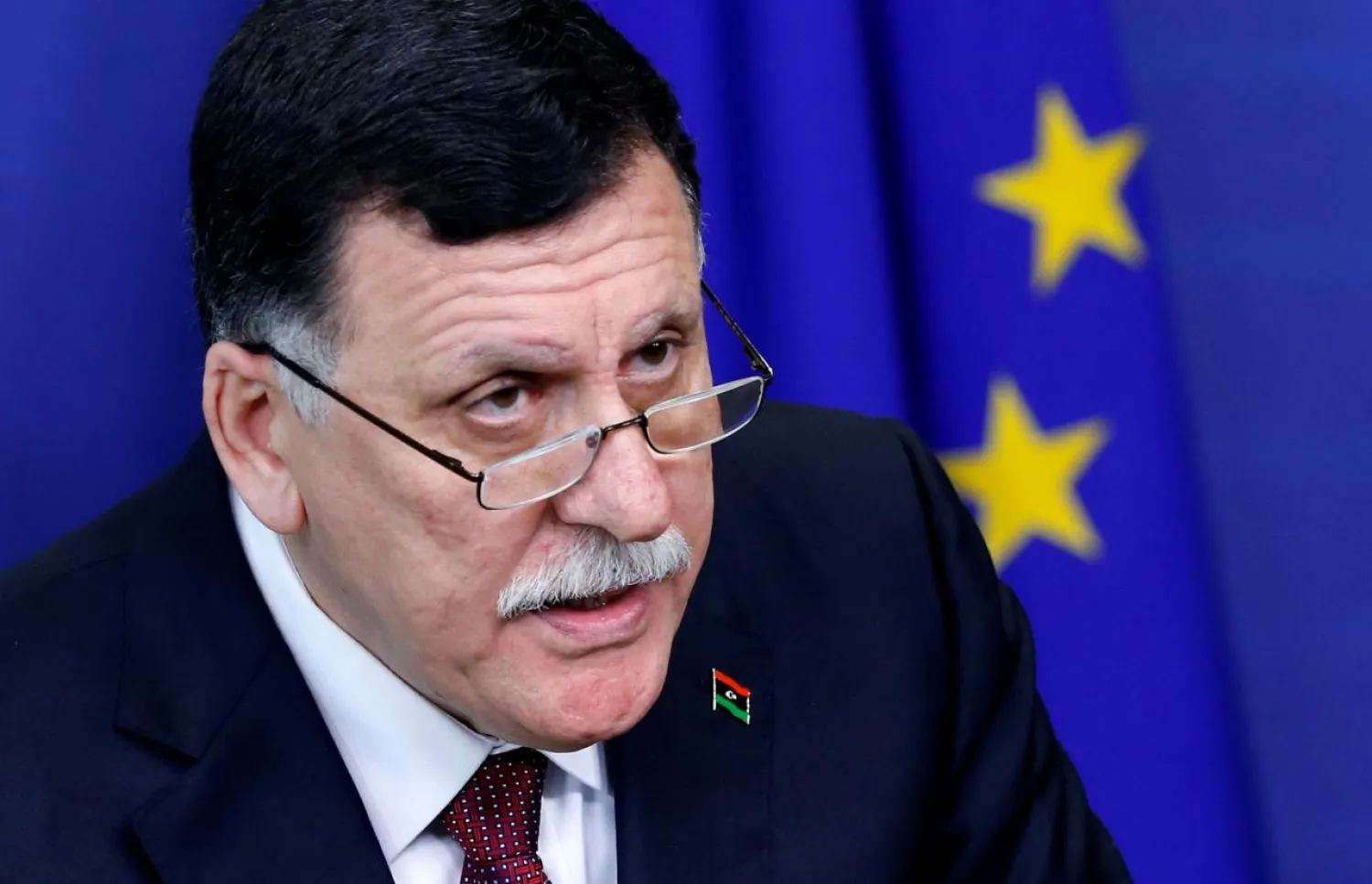
Libya's UN-backed Prime Minister Fayez Al-Sarraj. Reuters
TT

Libya: Sarraj Sacks Interior Minister in Cabinet Reshuffle

Libya's UN-backed Prime Minister Fayez Al-Sarraj. Reuters

Libya's UN-backed Prime Minister Fayez Al-Sarraj on Thursday carried out a ministerial reshuffle as he relieved Interior Minister Al-Aref al-Khoja from his duties and replaced him with Abdussalam Ashour.

Meanwhile, a senior Libyan lawmaker said the UN mission's plan to hold elections in Libya before the end of the year was at risk.

In this context, President of the Tobruk-based House of Representatives’ National Defense and Security Committee Talal Abdullah al-Mayhoub told Asharq Al-Awsat that the parliamentary and presidential elections planned by the UN mission "may not take place this year."

He considered the ruling of the Supreme Constitutional Court in the capital Tripoli, which blocked legal challenges from lower courts to a draft constitution on Wednesday, paving the way for a possible referendum on the document and a move toward elections, as “politicized, defective, and totally unconstitutional.”

Members of a Constitutional Drafting Assembly (CDA) had voted last summer in favor of a draft constitution, but an administrative court in the eastern city of Bayda had ruled that the vote was invalid.

The supreme court effectively quashed the Bayda decision by declaring that administrative courts do not have the jurisdiction to rule on matters relating to the CDA.

The draft constitution could still face hurdles, including challenges in the supreme court, turnout or approval requirements set by the eastern parliament or House of Representatives (HOR) for a constitutional referendum, and the difficulty of holding a nationwide poll in a country where there are no national security forces.

For his part, UN Envoy Ghassan Salame considers establishing a constitutional framework a key step in efforts to stabilize Libya after years of anarchy following a 2011 uprising.

The United Nations and its envoy insist on holding the elections with the explicit support of the UN Security Council by the end of September this year.

Several Western countries have also expressed an urgent need to carry out elections in the country and provided financial support for the upcoming electoral process; however, without a clear map.

Regarding the obstacles facing the success of the elections, Federica Saini Fasanotti of the Washington-based Brookings Institute think-tank told AFP, “when there are 20 million weapons in the hands of six million Libyans, how can the election be successful?"

"Elections are the peak of democracy and not the beginning," she said


Israeli Military Issues Evacuation Warning to Residents of Lebanon’s Tyre

 Smoke rises from an Israeli airstrike that hit Qlaileh village, as it seen from the southern port city of Tyre, Lebanon, Tuesday, June 2, 2026. (AP)
Smoke rises from an Israeli airstrike that hit Qlaileh village, as it seen from the southern port city of Tyre, Lebanon, Tuesday, June 2, 2026. (AP)
TT

Israeli Military Issues Evacuation Warning to Residents of Lebanon’s Tyre

 Smoke rises from an Israeli airstrike that hit Qlaileh village, as it seen from the southern port city of Tyre, Lebanon, Tuesday, June 2, 2026. (AP)
Smoke rises from an Israeli airstrike that hit Qlaileh village, as it seen from the southern port city of Tyre, Lebanon, Tuesday, June 2, 2026. (AP)

The Israeli military issued an evacuation warning to the residents of the southern Lebanese city of Tyre and its surrounding areas on Sunday ahead of possible strikes as clashes between Israel and Hezbollah continue.

The military said earlier it had ‌intercepted two ‌projectiles that crossed into Israeli ‌territory ⁠from Lebanon, after ⁠sirens sounded in the areas of Yiftah and Ramot Naftali.

Lebanese group Hezbollah has not claimed responsibility for the launches.

The Iran-backed group rejected proposals linking a ceasefire to its disarmament, ⁠saying Israel must first halt ‌its attacks ‌and withdraw its forces from southern Lebanon.

Iran ‌has made a ceasefire in Lebanon ‌between its close ally and Israel a condition for any peace deal with the United States.

Hezbollah entered the war ‌on March 2, saying it was retaliating for the killing ⁠of ⁠Iran's Supreme Leader at the start of a conflict that has since killed thousands in Lebanon and displaced more than a million people.

Israel continued to carry out strikes in Lebanon even before March 2, despite a US-brokered ceasefire that took effect in November 2024. It said its attacks are aimed at Hezbollah members and infrastructure.


Israel Army Says Intercepted Two Projectiles Fired from Lebanon

Smoke billows from southern Lebanon following an Israeli strike, as seen from Marjaoun, Lebanon, June 6, 2026. REUTERS/Stringer
TT

Israel Army Says Intercepted Two Projectiles Fired from Lebanon

Smoke billows from southern Lebanon following an Israeli strike, as seen from Marjaoun, Lebanon, June 6, 2026. REUTERS/Stringer

Israel's military said Sunday that it had intercepted two projectiles launched from Lebanon into Israeli territory, despite a new ceasefire agreement announced this week aimed at ending hostilities between Israel and Hezbollah.

"Following the sirens that sounded a short while ago in the areas of Yiftah and Ramot Naftali, two projectiles that crossed from Lebanon into Israeli territory were intercepted," the military reported.

Israel and Lebanon agreed to a new US-brokered ceasefire on Wednesday. However, Hezbollah has rejected the agreement.


Palestinians Suffer from Lack of Proper Toilets Across Gaza’s Vast Tent Cities

Palestinians walk along the street on a hot day at the Nuseirat refugee camp in the central Gaza Strip on June 5, 2026. (AFP)
TT

Palestinians Suffer from Lack of Proper Toilets Across Gaza’s Vast Tent Cities

Palestinians walk along the street on a hot day at the Nuseirat refugee camp in the central Gaza Strip on June 5, 2026. (AFP)

In their bare-bones tent in southern Gaza, Mostafa Shaaban built his family’s makeshift toilet behind a curtain in a corner. He dug a shallow pit in the sandy soil, poured a concrete slab around it, fixed a bottomless bucket over the hole, then topped it off with a battered, plastic toilet seat.

It reeks with a foul odor and buzzes with flies and mosquitoes only a few feet from where they sleep and prepare meals. Every week, Shaaban has to dig the sewage sludge out of the pit. But at least it’s more private than the fetid communal latrines used by hundreds of other people in their sprawling tent camp.

“I did not want the kids and my wife to use any public toilet. It is humiliating,” said the 38-year-old Shaaban, who was driven from his home city of Rafah by Israeli forces two years ago and eventually settled in a tent camp in Khan Younis.

“The situation is revolting,” he said of having the toilet inside the tent, “but at least it has more dignity.”

There is not a single proper toilet across the vast tent cities housing most of Gaza’s 1.7 million Palestinians left homeless by the war. Displaced families have largely been left on their own to dig their own latrines, some shared by extended families.

At communal camp toilets, men, women and children wait in long lines then do their business behind a thin cloth or sheet of metal separating them from the crowd of strangers outside. Women fear walking to the communal toilets at night.

The result is a hygienic nightmare as horrible smells drift among the tightly packed tents and pools of sewage collect from leaking cesspits or from people dumping the contents of their latrines. More than 80% of the sewage pumping stations in Gaza have collapsed under Israel’s bombardment and offensives over the past 2 ½ years, rights groups say.

Some aid groups have carried out projects to improve family toilets, but they have been small scale and supplies are limited. It remains far from certain when reconstruction of Gaza will begin.

The US-backed official overseeing the ceasefire in place since October has blamed Hamas for holding up the process by failing to reach an agreement on disarmament. The ceasefire deal calls for the entry of major construction and repair equipment into Gaza even before disarmament, and so far little has entered.

“It’s the most basic right. Making a toilet is more important than food and water, because you see the insects everywhere, the smell covers everyone,” said Shaaban’s wife, Iman Mansour, who is pregnant with their third child. “We want something clean.”

Building a latrine is not cheap. Shaaban said it took him a long time to set up his toilet because he had to buy the pipe for the latrine hole and the concrete to seal around it. The concrete often crumbles, so he has to buy more when he can afford it.

A porcelain toilet seat runs from 1,700 to 2,000 shekels ($500 to $680), out of reach for most families. In any case, a seat in a tent latrine would simply be set over the hole to provide a more comfortable seat, unable to flush. So people improvise, using chairs or buckets with the bottom knocked out. Or they just squat over the hole.

One vendor working out of a tent in Khan Younis makes metal sheets to fit around a latrine hole that at least are easier to clean, selling them for 100 shekels ($34).

In one of the camps around Khan Younis, Khaled Kollab laboriously cleared the sewage drain and pools of untreated wastewater next to his tent. His tent latrine is a simple squat toilet with no seat, which he said was made of ramshackle supplies because he couldn’t afford anything better. His 3-year-old daughter, Sila, stood nearby, her body covered in lesions.

“You go into this toilet and feel humiliation and shame,” Kollab said.
