


Libya: Chairman of High Council Survives Assassination Attempt

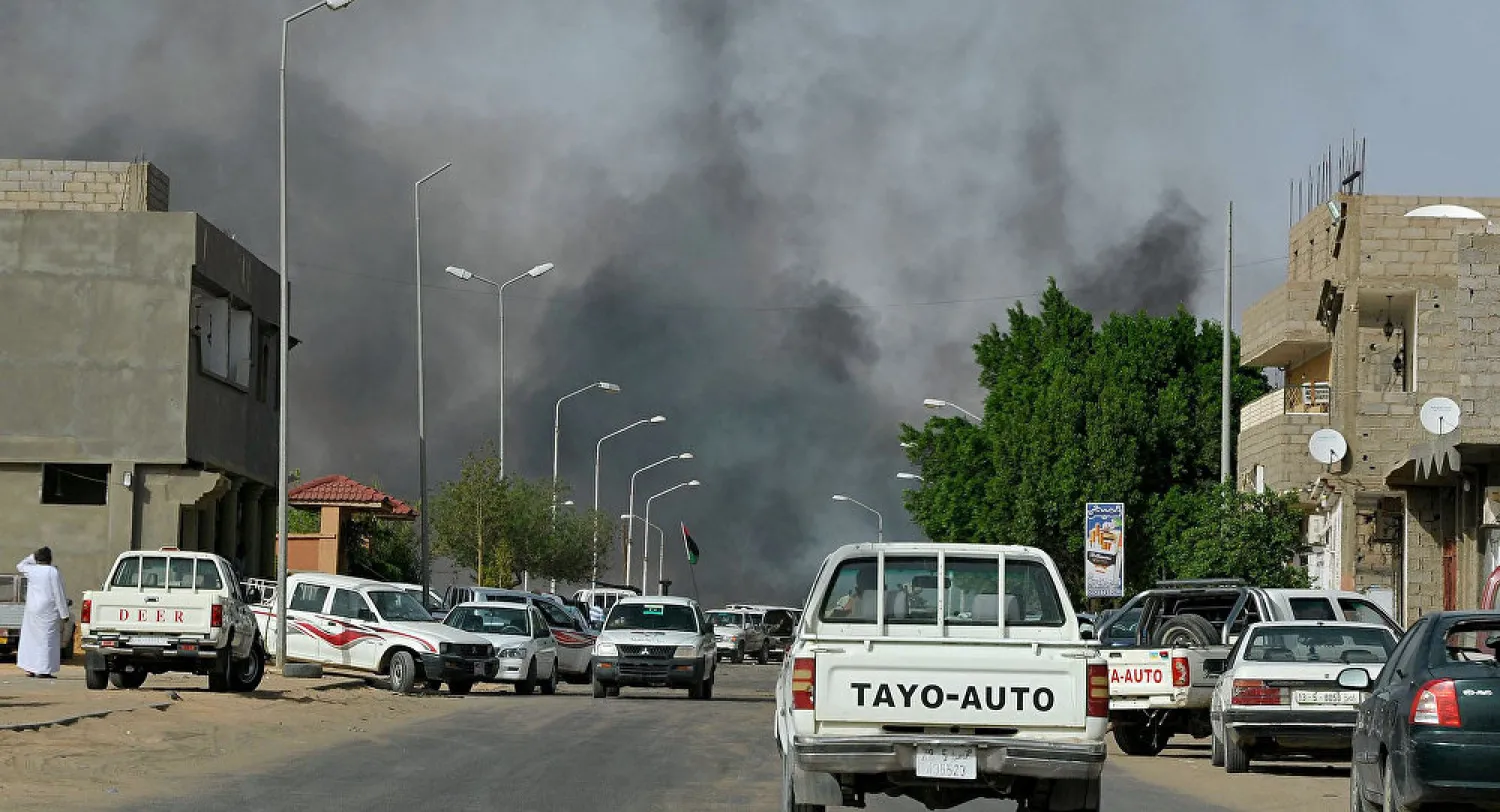
Smoke rising in Sabha, South Libya (AFP 2018/ STR)
TT

Libya: Chairman of High Council Survives Assassination Attempt

Smoke rising in Sabha, South Libya (AFP 2018/ STR)

High Council of State (HCS) announced on Wednesday its chairman Abdulrahman al-Sweihli survived an assassination attempt.

The media office of the Council reported that Sweihli and members of his accompanying delegation were ambushed during his visit to the cities of Gharyan and Yefran by an armed group of "al-Karama" in the area of Thaher al-Jabal.

Meanwhile, Asharq Al-Awsat learned that the sixth negotiation meeting aimed at unifying the Libyan military will be held in Cairo, Egypt, under the auspices of the Egyptian authorities next week.

The convoy of Sweihli was ambushed and came under fire in Guwalish district while en route to visit Yefren town after visiting the city of Gharyan on Wednesday.

"Our security personnel in cooperation with the Gharyan security department as well as those of the western military zone helped thwart the attack. The attackers ran away, while two of our security personnel were injured and four Gharyan policemen were kidnapped," HCS media office said in a statement.

HCS Head and delegation went on with their visit destination despite the ambush and thanked the Gharyan, Yefren and western mountain areas' dignitaries councils for their reception.

No one claimed responsibility for the latest assassinate attempt, knowing that over the past two years several senior officials were subject to similar assassination attempts.

On Wednesday, Sweihli met with a delegation of commanders and officers of "al-Bunyan al-Marsous" operation, against terrorist organizations in the coastal city of Sirte.

Meanwhile, a Libyan military official told Asharq Al-Awsat that officers from different military areas will return to Cairo next week to complete discussions on the definition of the high commander of the Libyan armed forces, noting that there is an agreement that Marshal Khalifa Hafter remains the commander-in-chief of the national army.

During Cairo negotiations, the National Army's delegation wants the army's supreme commander to be the commander-in-chief, while the group of officers negotiating on behalf of Fayez Serraj's government wants the next political authority to be in charge, according to the official who spoke on condition of anonymity.

Prime Minister of Government of National Accord (GNA) Serraj, preceded Cairo meetings with a new resolution appointing Abdul Basset Marwan commander of Tripoli's military district, after he was promoted from Brigadier General to General.

On the other hand, Serraj said that the Electoral Commission continues to prepare for the presidential and parliamentary elections, which the UN mission plans to hold by September.

The Prime Minister's remarks came during a meeting in Tripoli with Italy's ambassador to Libya, Giuseppe Perrone, who renewed his country's support for what he called "Serraj's compromise approach" and his efforts to achieve security and stability in Libya.

A statement issued by Serraj's office reported the Italian ambassador's support of the efforts of UN envoy Ghassan Salama, hoping that they will lead to the elections this year.

Meanwhile, British Ambassador to Libya Frank Becker, who also met Serraj in Tripoli, renewed his country's commitment to supporting the efforts of Serraj to achieve stability in Libya.

A statement issued by the United Nations Support Mission in Libya (UNSMIL), expressing its concern about the deteriorating security situation in southern Libya, drew wide criticism.

UNSMIL said it is concerned by the ongoing violence in Sabha and calls on all parties to refrain from acts that endanger civilian lives and contribute further to the destruction of Libya’s infrastructure.

"Buildup of armed forces in the South risks further escalation and calls on all parties to work towards a ceasefire agreement, advance dialogue and reconciliation efforts, and refrain from rhetoric that may inflame the situation," the Mission warned.

In an unrelated matter, Libya's top prosecutor al-Sadiq al-Sour announced efforts to deliver the remains of Egyptian Christians who were killed in Sirte in February 2015 by ISIS militants. He also discussed Libyan fuel smuggling to Europe, and involvement of Libyan security elements in the killing of 600 illegal immigrants.

Sour pointed out that the Libyan authorities received a request from Egypt's Attorney General through Libya's Foreign Ministry for judicial assistance, in analyzing the remain.

Libya's top prosecutor says criminal groups are smuggling Libyan fuel on board fishing vessels to Europe. He told reporters on Wednesday their investigations revealed that smugglers use sea routes to move subsidized fuel from the western coastal cities of Zuwara and Zawiya to Malta, Italy, Turkey, Spain and Greece.

Sour indicated that hundreds of fuel stations are involved in the smuggling of their portions of subsidized diesel and that smugglers have made at least $100 million in the past three years.

Sour also discussed the case of Osama al-Jidran, brother of the former oil-field commander of the central region Ibrahim al-Jadran, indicating Osama is wanted for cases related to terrorism..

The top prosecutor concluded that Saif al-Islam Gaddafi's case is being discussed in the Court of Appeal, without going into further details.


Israel Army Says Struck Hezbollah Members in Southern Lebanon

Smoke rises above Lebanon, following an Israeli strike, amid ongoing cross-border hostilities between Hezbollah and Israeli forces, as seen from Israel's border with Lebanon in northern Israel, May 5, 2024. REUTERS/Ayal Margolin /File Photo
TT

Israel Army Says Struck Hezbollah Members in Southern Lebanon

Smoke rises above Lebanon, following an Israeli strike, amid ongoing cross-border hostilities between Hezbollah and Israeli forces, as seen from Israel's border with Lebanon in northern Israel, May 5, 2024. REUTERS/Ayal Margolin /File Photo

The Israeli military said it targeted three members of the Iran-backed Hezbollah group in strikes on southern Lebanon on Sunday.

The Lebanese health ministry said on Sunday that two people had been killed in separate Israeli strikes in the south of the country, which came despite a ceasefire between Israel and Hezbollah.

"Since this morning (Sunday), the (military) has struck three Hezbollah terrorists in several areas in southern Lebanon," the Israeli military said in a statement, AFP reported.

"The terrorists took part in attempts to reestablish Hezbollah's terror infrastructure, and their activities constituted a violation of the understandings between Israel and Lebanon," it added, referring to the November 2024 ceasefire.

The agreement sought to end over a year of fighting between Israel and Hezbollah, which broke out at the start of the Gaza war in October 2023.

Israel has repeatedly bombed Lebanon despite the truce, usually saying it is targeting Hezbollah members and infrastructure to stop the group from rearming.

The Lebanese health ministry said earlier on Sunday that an "Israeli enemy strike" on a motorcycle in Yater, south Lebanon, killed one individual and wounded another.

It added later in another statement that a second person was killed in a separate strike on southern Lebanon targeting a car in Safad Al-Battikh.

On Saturday, the Israeli army said it had "temporarily" suspended a planned strike on a building in Yanuh, which it described as Hezbollah infrastructure.

The decision came after the Lebanese army "requested access again to the specified site... and to address the breach of the agreement", the Israeli military's Arabic-language spokesman Avichay Adraee said.

According to the ceasefire, Hezbollah was required to pull its forces north of the Litani River, some 30 kilometres from the border with Israel, and have its military infrastructure in the vacated area dismantled.

Under a government-approved plan, Lebanon's army is to conduct the dismantling south of the Litani by the end of the year, before tackling Hezbollah's weapons in the rest of the country.

In a televised speech on Saturday, Hezbollah chief Naim Qassem, who has repeatedly rejected attempts to disarm the group, said "disarmament will not achieve Israel's goal" of ending resistance, "even if the whole world unites against Lebanon".


Syrian Who Killed Americans was Part of Security Forces

Members of the Syrian security forces secure an area -REUTERS/Karam al-Masri
TT

Syrian Who Killed Americans was Part of Security Forces

Members of the Syrian security forces secure an area -REUTERS/Karam al-Masri

Syria's interior ministry said Sunday the gunman who killed three Americans in the central Palmyra region the previous day was a member of the security forces who was to have been fired for extremism.

Two US troops and a civilian interpreter died in what the Syrian government described as a "terrorist attack" on Saturday, while Washington said it had been carried out by an ISIS militant who was then killed.

The Syrian authorities "had decided to fire him" from the security forces before the attack for holding "extremist ideas" and had planned to do so on Sunday, interior ministry spokesman Noureddine al-Baba told state television.

A Syrian security official told AFP on Sunday that "11 members of the general security forces were arrested and brought in for questioning after the attack".

The official who spoke on condition of anonymity said the gunman had belonged to the security forces "for more than 10 months and was posted to several cities before being transferred to Palmyra".

Palmyra, home to UNESCO-listed ancient ruins, was controlled by ISIS at the height of its territorial expansion in Syria.

The incident is the first of its kind reported since the overthrow of longtime Syrian ruler Bashar al-Assad in December last year, and rekindled the country's ties with the United States.

US President Donald Trump vowed "very serious retaliation" following Saturday's attack.

A Syrian defense ministry official told AFP on condition of anonymity that prior to the attack, US forces had "arrived by land from the direction of the Al-Tanf military base" in southeastern Syria, near the border with Jordan.

"The joint Syrian-American delegation first toured the city of Palmyra, then proceeded to the T-4 airbase before returning to a base in Palmyra", the source added.

A Syrian military official who requested anonymity said on Saturday that the shots were fired "during a meeting between Syrian and American officers" at a Syrian base in Palmyra.

However, a Pentagon official speaking on condition of anonymity told AFP that the attack "took place in an area where the Syrian president does not have control."

- Warnings -

Pentagon spokesman Sean Parnell said the soldiers "were conducting a key leader engagement" in support of counter-terrorism operations when the attack occurred, while US envoy to Syria Tom Barrack said the ambush targeted "a joint US-Syrian government patrol".

Trump called the incident "an ISIS attack against the US, and Syria, in a very dangerous part of Syria, that is not fully controlled by them", using another term for the group.

He said the three other US troops injured in the incident were "doing well".

The official SANA news agency said the attack also wounded two members of the Syrian security forces.

Syrian Foreign Minister Asaad al-Shaibani said Damascus "strongly condemns the terrorist attack".

In an interview on state television on Saturday, Syrian Interior Ministry spokesman Anwar al-Baba said there had been "prior warnings from the internal security command to allied forces in the desert region".

"The international coalition forces did not take the Syrian warnings of a possible ISIS infiltration into consideration," he said.

ISIS seized swathes of Syrian and Iraqi territory in 2014 during Syria's civil war, before being territorially defeated in the country five years later.

Its fighters still maintain a presence, however, particularly in Syria's vast desert.

Last month, during Syrian President Ahmed al-Sharaa's historic visit to Washington, Damascus formally joined the US-led global coalition against ISIS.

US forces are deployed in Syria's Kurdish-controlled northeast as well as at Al-Tanf near the border with Jordan.


Hamas Says Weapons Are 'Legitimate Right'

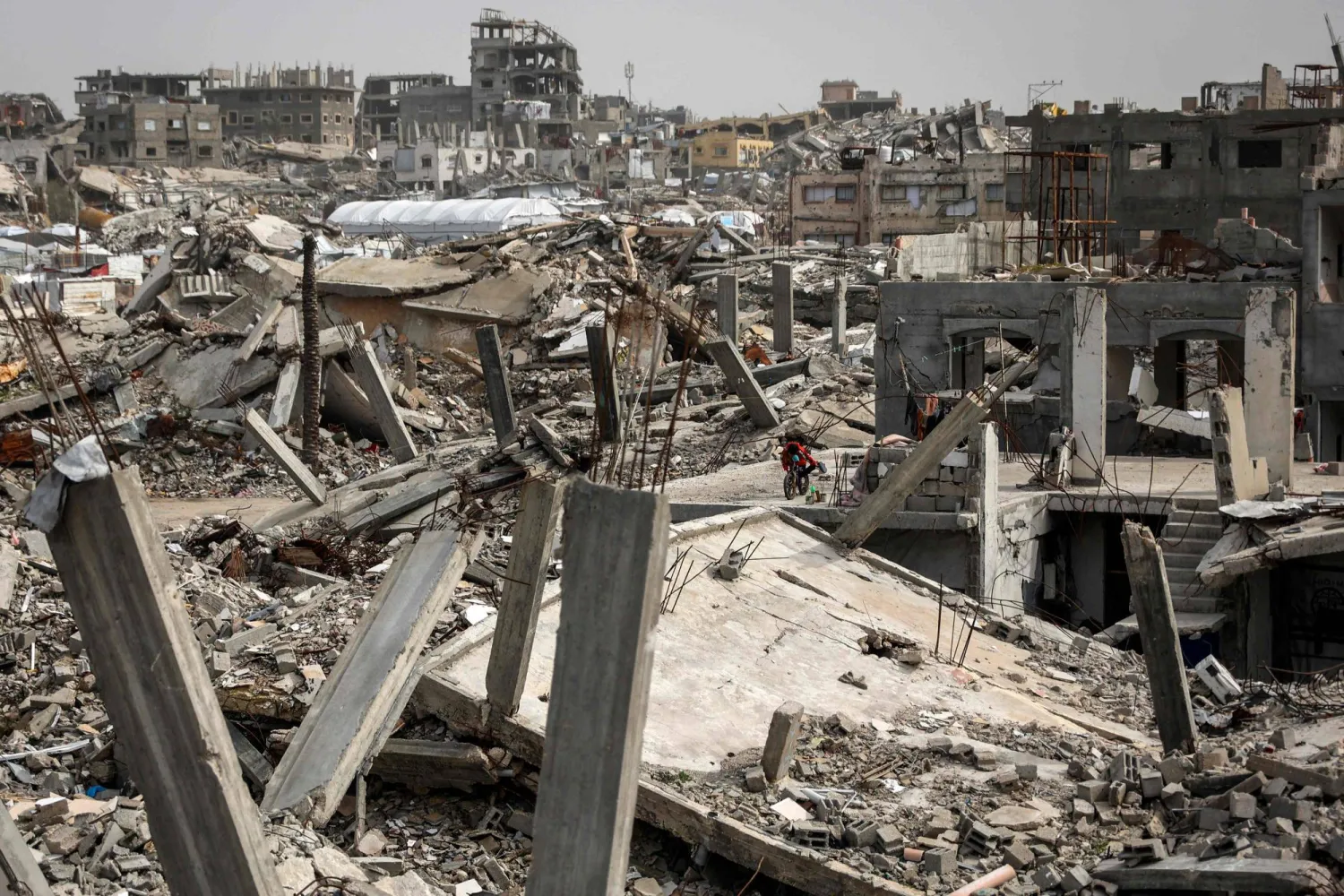
A Palestinian amputee walks in Yafa street among the destroyed Al Mahata mosque and destroyed buildings, in Al Tuffah neighborhood, east of Gaza City, 13 December 2025, near the yellow line amid a ceasefire between Israel and Hamas. EPA/MOHAMMED SABER
TT

Hamas Says Weapons Are 'Legitimate Right'

A Palestinian amputee walks in Yafa street among the destroyed Al Mahata mosque and destroyed buildings, in Al Tuffah neighborhood, east of Gaza City, 13 December 2025, near the yellow line amid a ceasefire between Israel and Hamas. EPA/MOHAMMED SABER

Hamas' Gaza chief Khalil al-Hayya said on Sunday that the group had a "legitimate right" to hold weapons and that any proposal for the next phases of the Gaza ceasefire must uphold that right.

"Resistance and its weapons are a legitimate right guaranteed by international law and are linked to the establishment of a Palestinian state," said al-Hayya in a televised address on the militant group's Al-Aqsa TV.

"We are open to studying any proposals that preserve this right while guaranteeing the establishment of a Palestinian state."

Al-Hayya also confirmed that the head of the group's weapons production was killed in an Israeli strike in the Gaza Strip the day before.

"The Palestinian people are currently going through difficult times and suffering greatly... with the martyrdom of more than 70,000 people, the latest of whom was the mujahid commander Raed Saad and his companions."

Israel announced on Saturday that it had killed Saad, describing him as "one of the architects" of the October 7, 2023 attack on Israel that sparked the war in Gaza.

It was the highest-profile assassination of a senior Hamas figure since the Gaza ceasefire deal came into effect in October this year.

The US-sponsored ceasefire remains fragile as Israel and Hamas accuse each other almost daily of violations.

The agreement is composed of three phases. In the first phase of the deal, Palestinian militants committed to releasing the remaining 48 living and dead captives held in the territory.

So far they have released all of the hostages except for one body.

Under the second phase Israeli troops would further withdraw from their positions in Gaza and be replaced by an international stabilization force, while Hamas would lay down its weapons.

Israel has repeatedly insisted Hamas "will be disarmed.”

The third phase includes the reconstruction of the vast areas of Gaza levelled by Israel's retaliatory military campaign.