Why I was Wrong over Mohamed Salah, Liverpool's Egyptian King

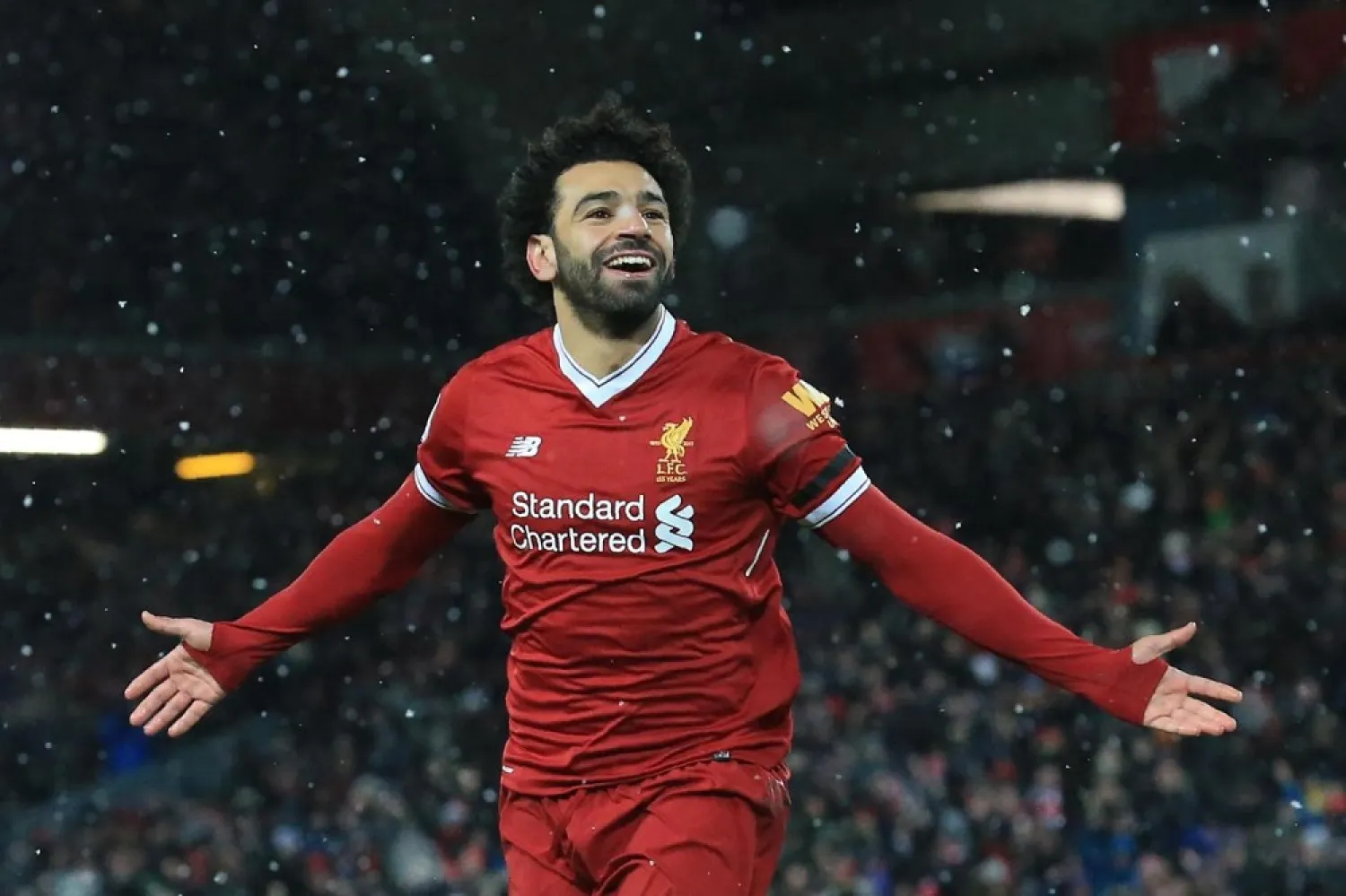
Liverpool's Mohamed Salah celebrates after scoring against Watford. (AFP)
TT

Why I was Wrong over Mohamed Salah, Liverpool's Egyptian King

Liverpool's Mohamed Salah celebrates after scoring against Watford. (AFP)

To err is human, to forgive divine. As a coda to this: to err massively and hilariously is also human, as anyone who writes about sport can confirm. It is a common experience to find yourself wincing a little at the way things turn out in the real world, even when the way things turn out is also a source of pure sporting pleasure.

All of which is a prelude to a mea culpa. Yes: I was a Salah doubter. Or at least a nonplussed observer. My Guardian pre-season Premier League preview from last August contained the following dismissive summary of Jürgen Klopp’s transfer business: “Liverpool have bought a good left-back and spent an awful lot of money on Mohamed Salah.” Let’s just read that back. An awful. Lot of. Money. Mo Salah for £35m. Lol. Laughing weeping face emoji. Do I get paid for this stuff?

But then this is the joy and, indeed, the whole point of watching and playing sport. Whatever you say about it, that’s what it’s not. It thumbs its nose, rips up your preconceptions.

In mitigation those tossed-off thoughts were written just before the four biggest transfers of all time took place, kicked off by the financial inanity of Neymar’s move to Paris Saint-Germain. Shortly afterwards Barcelona paid three times Salah’s fee for Ousmane Dembélé. By the end of the summer £35m was looking, if not small potatoes, then smaller potatoes. Right now it looks like one of the outstanding bargains of the last 10 years.

But then, even those who knew Salah’s game in intimate detail, who spoke excitedly of his deeds in Serie A, will surely be a bit surprised at the sheer extent of his instant, exhilarating success under Klopp, a thing to be studied and marveled at on its own terms.

With seven games to go Salah is the player of the season. He has 28 league goals, four more than Harry Kane and seven more than Sergio Agüero, capped by those four against Watford at the weekend. He also has nine assists, surpassed only by Leroy Sané and David Silva. Only Eden Hazard, Wilfried Zaha and Andros Townsend have made more successful dribbles. Only Kane has had more shots.

A nice touch too: despite playing in a bruising, full-throttle team Salah has yet to be shown any kind of card this season. There is a truism that good footballers need to have something nasty about them. Salah is merciless in many ways. But he kills you with a smile.

The numbers are, of course, just a part of it. It was not a goal or a man-of-the-match performance that revealed the full dawning Salah-ness of Salah to this observer. It was instead the 0-0 draw with Manchester United at Anfield in October, a game dominated by José Mourinho’s defensive organization.

Even here Salah just stood out, the only player on the pitch able to turn and surge away through the defensive lines. He made eight dribbles in 73 minutes, more than United’s entire midfield and attack put together. More than this, he seemed a relentlessly optimistic player, football as reinterpreted by a gerbil superhero. Legs whirring, head up, chest out.

Fast forward to Watford at the weekend and Salah has begun to make parts of the game look like a mismatch, the way only the very best can. The hat-trick goal at Anfield will remain one of the images of the season, those three Watford defenders squished together in front of Salah, tottering on their heels as this miracle of balance and speed springs to his left then springs back, leaving the yellow shirts collapsing helplessly like a row of derelict tenement houses. Even the finish is a lovely detail, the ball swished past Orestis Karnezis with an impudent playground shuffle.

At which point two questions occur. How has this happened? And how long can it go on?

The first of these is a legitimate question. In just seven months Salah has scored 36 goals for Liverpool, more than for any other club he has ever played for. It is the nature of it too, those moments of out-there physical creativity, the basic joy in his football that bears passing comparison, even after a single season, to the conjoined Henry-Ronaldo-Suárez-Bergkamp-Agüero attacking godhead of the Premier League years.

With this in mind it has been easy to look at Salah’s time under Mourinho at Chelsea and see a genuine howler, a huge beaming, bouncy Egyptian stick with which to beat the master of toxic defense.

In Mourinho’s defense he did at least see enough to sign Salah in the first place. He was 21. Eden Hazard, Willian and Oscar were ahead of him. He never got a proper run, playing 19 games, starting 10 of them. For those who saw Salah in the flesh at Stamford Bridge the memory lingers of trapped energy, of an eager figure haring off down the right wing while his manager lurked and barked and burped on the touchline, never quite at ease with this scuttling force of attacking will.

It seems what Salah needed was to be driven on, to be given the stage. At Roma Luciano Spalletti famously held up Salah’s contribution in one game as an example of perfect team play. Salah has said Spalletti would often sit with him after training teaching him how to defend, discussing the moral responsibilities of running and working for the team.

If Salah needed the paternal arm from Spalletti, he has clearly found another perfect fit in the speed-metal football of Klopp’s exhilarating front three. It will be fascinating from here to see how he goes about sustaining that pitch of performance.

And this is the next challenge, as even the better teams begin to make detailed plans for a player who must now demand this level of attention. Can Salah continue to produce his extraordinary, uplifting fantasy football? Only a fool – as they have in the past – would bet against him.

The Guardian Sport


Irish Boxer Lee Reeves Dies at Age 31, Three Months after Dublin Title Fight Injury

Irish boxer Lee Reeves. Reuters
TT

Irish Boxer Lee Reeves Dies at Age 31, Three Months after Dublin Title Fight Injury

Irish boxer Lee Reeves. Reuters

Irish boxer Lee Reeves has died more than three months after being injured during a fight in Dublin, promoter Queensberry said Tuesday. He was 31.

"Everyone at Queensberry is devastated to learn of the passing of Lee Reeves," Queensberry Promotions said in a statement.

Reeves was hospitalized after being knocked out by compatriot Gary Cully in the 10th and final round of their Boxing Union of Ireland Celtic super-lightweight title fight on Aug. 1.

Reeves was carried from the ring on a stretcher after receiving initial treatment.

Queensberry had said after the fight that his condition was critical but stable.

“Lee was an immensely talented boxer, as well as a true role model and inspiration to his community,” the statement added Tuesday, according to The Associated Press. “Our deepest condolences go to Lee’s family, friends and all those who loved him. We ask that their privacy be respected at this incredibly difficult time. Rest in peace, Lee.”


Alonso to Enter Dakar Rally with Loeb and Aston Martin Team

November 5, 2026 Aston Martin's Fernando Alonso during a press conference ahead of the F1 Sao Paulo Grand Prix. (Reuters)
TT

Alonso to Enter Dakar Rally with Loeb and Aston Martin Team

November 5, 2026 Aston Martin's Fernando Alonso during a press conference ahead of the F1 Sao Paulo Grand Prix. (Reuters)

Double Formula One champion Fernando Alonso will compete in next January's Dakar Rally in an Aston Martin Dreadnought entry run by engineering partner Prodrive.

The 45-year-old Spaniard, a 32-time Grand Prix winner and two-time Le Mans 24 Hours winner, will be racing in the annual event for the second time after competing with Toyota in 2020, finishing 13th.

France's nine-time world rally champion Sebastien Loeb and Brazil's reigning world rally-raid champion Lucas Moraes will be his teammates in a three-car entry.

The 49th edition of the Dakar Rally will ‌be held in ‌Morocco from January 9 to 23, with a prologue and first ‌stage ⁠in Portugal, after ⁠being moved from Saudi Arabia due to security concerns.

The 24-round Formula One season is due to start in Bahrain in March after testing in late February.

Alonso, who will again have compatriot and five-time motorcycle Dakar winner Marc Coma as co-driver, is racing in the Las Vegas Grand Prix this weekend. He said he had turned his thoughts to Dakar after deciding to continue in Formula One with Aston Martin.

“In the end, the decision became simple. I wanted to embrace ⁠the challenge completely and take on both Formula One and the ‌Dakar Rally in the same year," he explained in ‌a statement.

"In 2020, Dakar was one of the most challenging and enjoyable experiences of my career. ‌I have enormous respect for this race and the specialists who have mastered it.

"Formula One ‌remains my priority. But I am a racing driver, and challenges like this are why I love competing. I’m looking forward to seeing what we can achieve."

LOEB CHASES FIRST DAKAR WIN

In October, Alonso told reporters at the Singapore Grand Prix that he felt the desert endurance race would be physically ‌incompatible with his Formula One commitments.

Loeb, 52, will also be chasing a first Dakar win after 10 previous attempts that have brought ⁠him 28 stage ⁠wins to date.

“Winning the Dakar is very important to me,” said the Frenchman, who will be partnered by Belgian Fabian Lurquin. “We have come close several times, and the motivation is there to keep working until we achieve it."

The Dreadnought is a digital-only tactical SUV created exclusively for gamers playing "Call of Duty: Modern Warfare 4" that will now be brought into the real world by Prodrive, Aston Martin's partners in endurance GT racing.

The Dakar will be Aston Martin Racing’s debut in the world rally-raid championship.

"Aston Martin's ambition for this program has been clear from the outset: to create a car capable of competing at the front of the world's toughest motorsport event," said Prodrive Chairman David Richards.

"By combining Aston Martin's vision with Prodrive's experience in rallying, endurance racing and Dakar competition, we have built a strong foundation. With an exceptional driver line-up and a highly capable engineering team, we look forward to seeing Dreadnought take on this remarkable challenge."


Owono Does Not Deserve 12-Match Ban Over De Miguel Death, Says Andorra Owner Pique

Equatorial Guinea's goalkeeper #01 Jesus Owono leaves the pitch at half time during the Africa Cup of Nations (CAN) Group E football match between Equatorial Guinea and Algeria at Moulay Hassan Stadium in Rabat on December 31, 2025. (AFP)
TT

Owono Does Not Deserve 12-Match Ban Over De Miguel Death, Says Andorra Owner Pique

Equatorial Guinea's goalkeeper #01 Jesus Owono leaves the pitch at half time during the Africa Cup of Nations (CAN) Group E football match between Equatorial Guinea and Algeria at Moulay Hassan Stadium in Rabat on December 31, 2025. (AFP)

FC Andorra owner Gerard ‌Pique said goalkeeper Jesus Owono did not deserve the 12-match suspension he received following the challenge that led to the death of Tenerife forward Jesus de Miguel.

Owono and De Miguel collided during a Spanish second-tier match on November 2. De Miguel was taken to intensive care and died the following day.

The disciplinary committee of the Spanish football federation (RFEF) banned Owono for violent conduct which resulted in serious ‌injury last week.

"Players, ‌former players, coaches, goalkeepers, everyone has ‌called ⁠it an accident," ⁠Pique said in a video posted on social media late on Monday.

"I truly believe that imposing the maximum sanction on Jesus for this action puts him in a situation he does not deserve, because he is not to blame for all of ⁠this having happened."

Former Barcelona player Pique ‌pointed to the three-match ‌ban handed to Albacete's Jose Corpas for accidentally kicking Sabadell ‌player Quadri Liameed in the head during a ‌recent match in Spain.

"Fortunately Quadri is fine, the consequences in this case were not fatal, and the committee decided to sanction Corpas with three matches," Pique added.

"With ‌all this, my reflection is: what is being sanctioned, the action or the ⁠consequences?"

The RFEF ⁠did not immediately respond to a request for comment outside regular business hours in Spain.

Owono, 25, has withdrawn from Equatorial Guinea's squad for Africa Cup of Nations qualifiers against Zimbabwe this month and Pique said it was unlikely the goalkeeper would return to action as soon as his suspension is up.

"Jesus is going to need far more than 12 matches before he is available and able to compete," he added. "No sanction is going to bring Demi (De Miguel) back to us."