



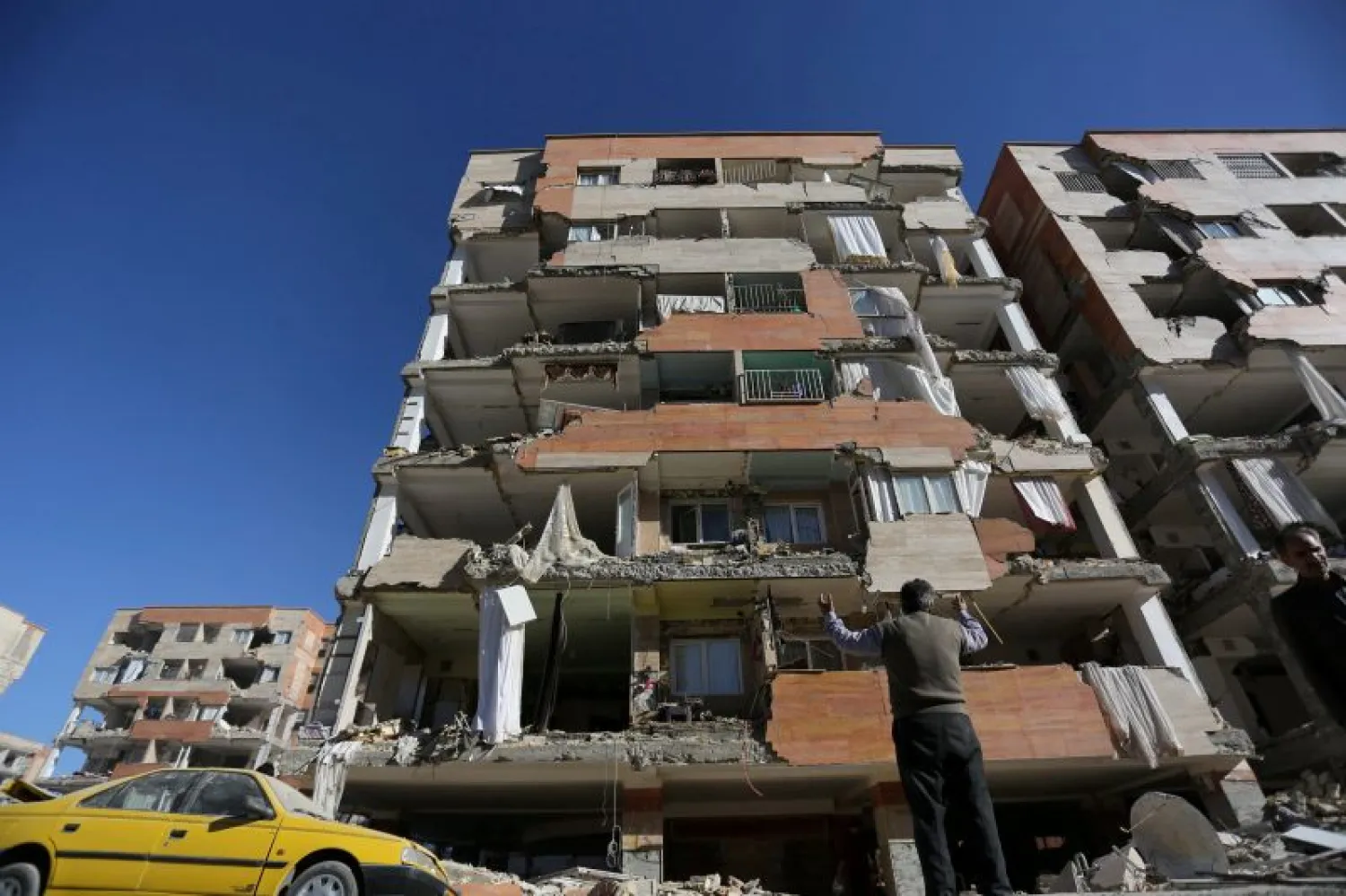

An earthquake that struck a “nuclear” province west of Iran on Thursday has renewed concerns in the Gulf region, which is at a geographic proximity to the Bushehr nuclear reactor more than some Iranian cities.
Residents in the Gulf, including those in some areas in Kuwait and the Eastern Province of Saudi Arabia as well as Bahrain, felt the 5.9 magnitude quake that hit the region of Bushehr.
The earthquake occurred at 11:04 am at a depth of 18 kilometers and three kilometers away from Kaki. Iranian agencies published photos showing landslides in the mountainside and a dust wave in the quake’s aftermath.
"The earthquake had no effect on the activity of the plant," Mahmoud Jafari, project manager at the Bushehr nuclear plant, said.
The epicenter of the earthquake was around 95 kilometers from the Bushehr plant, which has a 1,000 megawatt reactor built by Russia that became operational in 2011 and reached full capacity the following year.
The former head of the Saudi Geological Survey, Zohair Nawab, told Asharq Al-Awsat newspaper that Iranian authorities should take all necessary measures to prevent any leak from the nuclear plant to avoid harm to their citizens and neighboring countries.
Iran sits atop several fault lines and has been hit by a series of earthquakes since November 2017, when a 7.3-magnitude tremor killed 620 people in the western province of Kermanshah and eight in Iraq.
Geology expert at King Saud University Dr. Abdullah Al-Omari downplayed concerns over a nuclear leak, saying only major earthquakes can cause damage and result in radiation.


