
How New Pay Gap Disclosures in Britain Could Push Companies to Promote Women

(Richard Drew/AP file)
TT

How New Pay Gap Disclosures in Britain Could Push Companies to Promote Women

(Richard Drew/AP file)

A new reporting rule in the United Kingdom requires companies that have more than 250 UK workers to disclose data on any gender wage gap by Wednesday — and so far the numbers reported by companies from a range of industries have hardly been flattering.

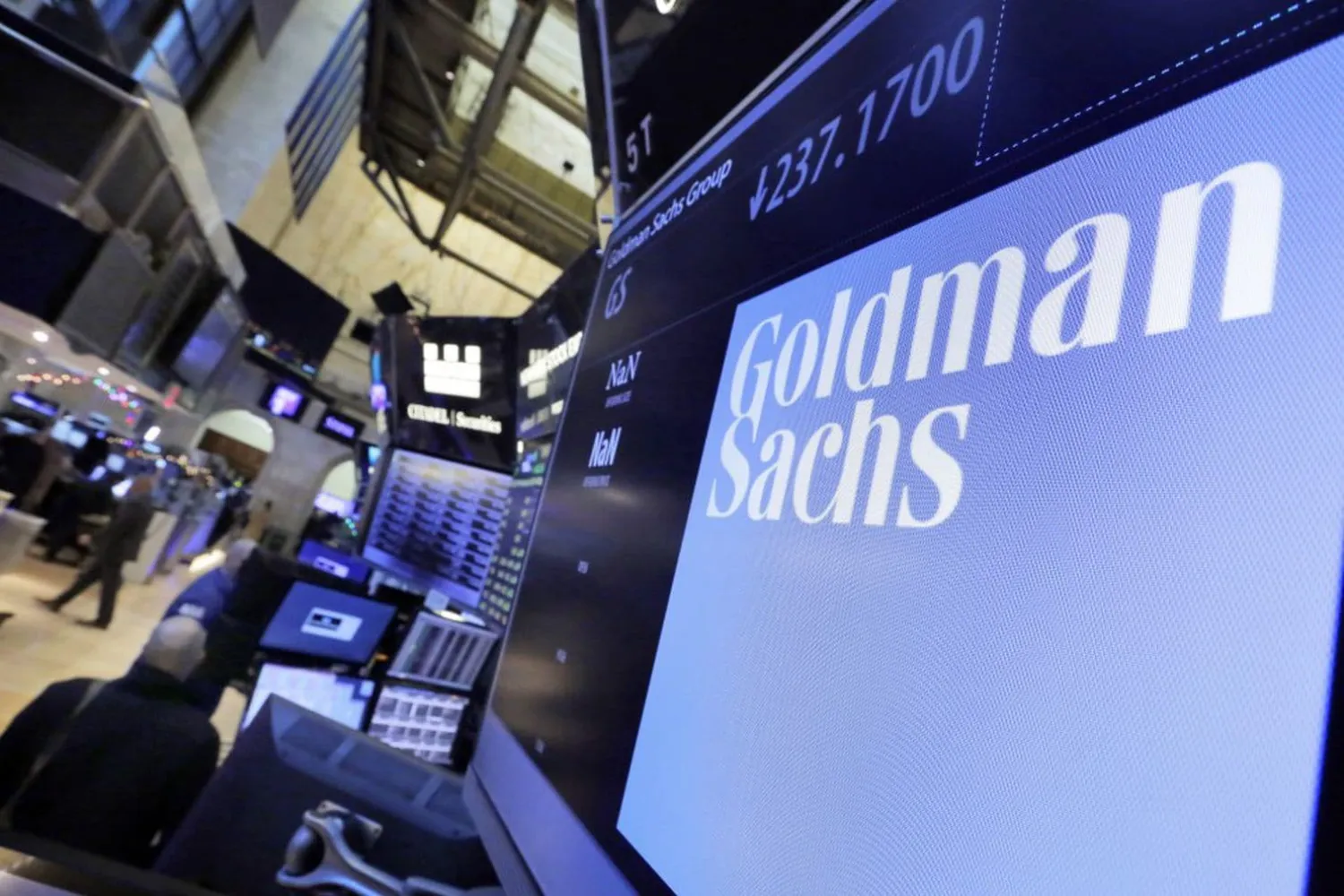
The average hourly pay rate for women at Deloitte in Britain was 18 percent less than for men (and up to 43 percent less than for men, depending on whether one includes partners). At Intel's UK operations, women make 33 percent less than men on average, the chipmaker reported. And at Goldman Sachs' UK arm, the gap is nearly 56 percent.

But while much of the focus has been on the double-digit pay gaps — prompting a #PayMeToo online campaign in the UK as hundreds of companies rush to meet the April 4 deadline — perhaps more telling is another set of figures that each company must also report.

In addition to calculating differences in bonus pay and the overall average and median gap in hourly wages — which does not take into account job descriptions, education levels or years of experience — companies are also expected to show the gender breakdown of workers they employ across four pay bands in the country, from highest to lowest.

The numbers won't surprise anyone who has studied the issue, as it's well known that companies tend to have fewer women in their leadership ranks — and therefore in their highest-paying jobs, causing a disproportionate effect on the overall numbers.

“It takes you back to the age-old question, which is: Why are we seeing more women in the lower quartile and not in the higher quartile?” said Cheryl Pinarchick, who co-chairs the pay equity practice at the US-based employment law firm Fisher Phillips. “The data in the UK is reinforcing that fact.”

Yet by shining a glaring spotlight on what has been called the “position gap” — or how many fewer women are on the higher rungs of the corporate ladder — the UK data also reveals a rare company-by-company look that could have a real impact, some experts say. Companies' inability to hide potentially embarrassing figures could prompt more pressure to show they're boosting the number of women in the higher ranks.

“We’re going to be able to track this over time,” said Gail Greenfield, a principal at the New York-based human resources consulting firm Mercer. “The first year, maybe they get a pass and are able to say, 'We didn’t quite understand our situation.' Next year, when they report again, they can’t say that.”

Some companies have been releasing the data with explanations about the efforts they're making to get more women into higher-paying roles and to shift their gender balance, Greenfield said. “So they're going to be under pressure to show some improvement in the number of women in the higher quartiles.”

For many companies in the UK database — which includes more than 9,000 employers — the bar graphs showing the ratio of women to men in the four pay quartiles looks literally like a set of stairs — an unsettling, realistic illustration of the long-used corporate ladder analogy.

At Goldman Sachs' UK arm, for instance, 17 percent of those in the highest-paid quartile are women, and it steps down from there, with 31 percent in the second, 58 percent in the third and 62 percent in the lowest-paid quartile.

In a memo sent to employees, Goldman chief executive Lloyd Blankfein and President David Solomon said they want to have 50 percent of the firm's incoming analyst class be women by 2021. “At Goldman Sachs we pay women and men in similar roles with similar performance equally,” the two wrote in March. “However, the real issue for our firm and many corporations is the underrepresentation of women and diverse professionals both in magnitude and levels of seniority.”

At Intel, meanwhile, women made up 13 percent of its highest-paid workers, 20 percent of the next quartile, and 33 percent and 47 percent of the last two, respectively. In its explanatory report, the chipmaker suggested a similar culprit. Intel said its recent analysis “confirms that there is zero statistically significant pay difference by gender. The UK gender pay data we’re publishing today reflects a lower representation of women in senior roles.” In a recent report, the company also said it was ahead of its overall workforce diversity goals in the United States.

Some law firms and professional services firms excluded their partners from their calculations at first, because they are considered equity owners but then bowed to public pressure and recalculated their numbers to include them.

Deloitte, for instance, initially published an average gender pay gap of 18 percent, which excluded partners. The company updated that number in March, saying the gender earnings gap (salary and bonus of employees and total earnings of equity partners) was 43 percent.

“These calculations again serve as a stark reminder that we don’t have enough women in senior roles — this is not about unequal pay, but the shape of our firm,” Emma Codd, managing partner for talent at Deloitte UK, said in a statement.

Some have criticized the United Kingdom's focus on the numbers as a blunt instrument that doesn't look closely enough at pay equity (whether companies are offering equal pay for equal work), potentially obscuring what is already a hotly debated issue.

Others have questioned how much the data really reveals. Claudia Goldin, a Harvard University economist who has studied the gender pay gap, said the data appears to be missing a key element — the absolute average or median wage that companies pay their workers. “Having the quartiles is good, but one needs to know what the actual earnings are,” she said, pointing to the food service sector as an example, where there tends to be a lower wage gap but also low wages overall.

Still, Natasha Lamb, who works for an activist US shareholder that has successfully pressured tech firms and American banks to reveal whether men and women who work in the same jobs are paid equally, thinks the broader UK rule is an important one. She says she has begun urging companies to release a global median pay gap, rather than just comparing those with the same job titles.

Looking only at equal pay for equal work, she said, “doesn’t tell the whole story, which is this structural deficit which is across our society. We think a real authentic representation would show both.”

The Washington Post


Saudi Inflation Slows to Nine-Month Low in November

 People enjoy sitting outdoors as the summer heat eases in Riyadh (AFP). 
 People enjoy sitting outdoors as the summer heat eases in Riyadh (AFP). 
TT

Saudi Inflation Slows to Nine-Month Low in November

 People enjoy sitting outdoors as the summer heat eases in Riyadh (AFP). 
 People enjoy sitting outdoors as the summer heat eases in Riyadh (AFP). 

Saudi Arabia’s annual inflation rate slowed to 1.9 percent in November 2025, its lowest level in nine months, down from 2.2 percent in October, driven by easing housing costs and lower prices for food and beverages.

On a monthly basis, inflation remained broadly stable, edging up 0.1 percent compared with October.

According to data released on Monday by the Saudi General Authority for Statistics (GASTAT), the housing, water, electricity, gas and other fuels category rose 4.3 percent year on year in November, down from 4.5 percent in October. Within that category, actual housing rents increased 5.4 percent, slowing from 5.7 percent a month earlier.

Prices in the food and beverages category rose 1.3 percent, reflecting a 1.6 percent increase in the prices of fresh, chilled and frozen meat. The transport category climbed 1.5 percent, driven by a 6.4 percent rise in passenger transport services.

The personal care, social protection and miscellaneous goods and services category recorded the largest annual increase, up 6.6 percent, supported by a 19.9 percent surge in prices of other personal products, influenced by a 21.6 percent rise in jewelry and watch prices.

Prices for insurance and financial services increased 5.1 percent, led by an 8.4 percent rise in insurance costs. The recreation, sports and culture category rose 1.3 percent, reflecting a 2.1 percent increase in holiday package prices.

In contrast, prices for furniture, household equipment and routine household maintenance declined 0.3 percent. The restaurants and accommodation services category also fell 0.5 percent, as accommodation service prices decreased 2.3 percent.

GASTAT noted that the Consumer Price Index (CPI) measures changes in prices paid by consumers for a fixed basket of 582 items, while the Wholesale Price Index (WPI) tracks price movements of goods at the pre-retail stage for a fixed basket of 343 items.


Northern Saudi Arabia Offers 240 Investment Opportunities Worth $10.6 Billion

Prince Faisal bin Khalid bin Sultan bin Abdulaziz during the inauguration of the Northern Borders Investment Forum, alongside the Minister of Investment (Asharq Al-Awsat). 
TT

Northern Saudi Arabia Offers 240 Investment Opportunities Worth $10.6 Billion

Prince Faisal bin Khalid bin Sultan bin Abdulaziz during the inauguration of the Northern Borders Investment Forum, alongside the Minister of Investment (Asharq Al-Awsat). 

The Northern Borders Investment Forum 2025 has unveiled more than 240 investment opportunities in northern Saudi Arabia, with a total value estimated at SAR 40 billion ($10.6 billion), spanning key sectors including livestock and food production, mining and energy, tourism and environment, and logistics.

Prince Faisal bin Khalid bin Sultan bin Abdulaziz, Governor of the Northern Borders Region, inaugurated the forum on Monday, at the Ministry of Interior Employees Club in the city of Arar. The event was attended by ministers, senior officials, experts and advisers, as well as company chairmen, chief executives and business leaders.

Prince Faisal said the forum reflects the government’s commitment to development and investment promotion, noting that the region possesses strong fundamentals, including natural resources, a strategic logistics location and advanced infrastructure. These advantages, he noted, position the Northern Borders as an attractive destination for high-quality investments aligned with Vision 2030.

He added that the forum provides an institutional platform to discuss sector-specific opportunities, showcase investment enablers, including incentives, financing and regulatory frameworks, and translate outcomes into practical programs and executive initiatives in coordination with national ministries and agencies.

For his part, Saudi Minister of Investment Khalid Al-Falih said the forum serves as a strategic platform to strengthen investment in the Northern Borders Region, support business growth and advance sustainable development goals under Vision 2030.

Also speaking at the event, Qutaiba Badawi, head of Syria’s General Authority for Border Crossings and Customs, highlighted the forum’s role in fostering professional dialogue and development cooperation, noting Saudi Arabia’s continued progress in improving its business environment and investment competitiveness.

The forum’s main panel discussion, titled “Northern Borders: A Global Investment Destination — Energy as a Driver of Growth and Sustainable Development,” brought together senior officials from the environment, energy, commerce, education and investment sectors, who underscored the region’s promising economic potential and partnership opportunities.


Saudi Logistics and Supply Chain Investments Reach $74.6 Billion  

Saudi Minister of Transport and Logistics Services Saleh Al-Jasser speaks at Monday's conference. (Asharq Al-Awsat)
TT

Saudi Logistics and Supply Chain Investments Reach $74.6 Billion  

Saudi Minister of Transport and Logistics Services Saleh Al-Jasser speaks at Monday's conference. (Asharq Al-Awsat)

Investments in Saudi Arabia’s supply chain and logistics sector have reached approximately SAR 280 billion ($74.6 billion) since the launch of the National Transport and Logistics Strategy, Saudi Minister of Transport and Logistics Services Saleh Al-Jasser said on Monday.

Speaking at the opening of the seventh Supply Chain and Logistics Conference in Riyadh, Al-Jasser said the strategy, launched by Prince Mohammed bin Salman, Crown Prince and Prime Minister, has raised the contribution of transport and storage activities to 6.2 percent of gross domestic product. He added that air cargo volumes rose 34 percent year on year to 1.2 million tons.

The conference attracted strong participation from policymakers, sector leaders and international stakeholders.

Al-Jasser said Saudi Arabia has entered a new phase in its ambition to rank among the world’s top 10 countries on the World Bank’s Logistics Performance Index, after jumping 17 places to 38th out of 160 countries.

The minister noted that the number of logistics hubs across the Kingdom has increased by about 30 centers, supporting economic diversification and strengthening Saudi Arabia’s role in global supply chains. He attributed the sector’s progress to leadership support and the goals of Vision 2030.

Saudi Arabia also ranked among the top four emerging markets out of 50 countries in the Agility Logistics Index 2025. Employment in the logistics ecosystem has grown to 651,000 workers, he underlined.

Al-Jasser described the Kingdom as a key pillar in safeguarding global supply chains and a central hub for Arab logistics integration amid ongoing global challenges.

The conference brings together 150 exhibitors and 14,000 participants, highlighting the sector’s importance to trade, tourism, industry and quality of life.

Al-Jasser revealed that Saudi Arabia’s aviation sector is undergoing unprecedented expansion, including airport development, fleet growth and supply chain integration, positioning the Kingdom as a reliable global logistics partner.

The Kingdom has also become a host for major international logistics events. Last year, it staged the inaugural Global Logistics Forum, and next year it will host the second UNCTAD Global Supply Chain Forum, in cooperation with the United Nations and the Saudi Ports Authority.

At the conference, Sulaiman bin Mohammed Al Rubaian, senior vice president of Aramco Procurement and Supply Chain Management at Saudi Aramco, said the company’s Iktva (In-Kingdom Total Value Add) program has contributed about SAR 900 billion ($240 billion) to Saudi GDP over the past decade.

He said the program created more than 200,000 direct and indirect jobs, established 350 local manufacturing facilities, and enabled the local production of 47 products manufactured in the Kingdom for the first time.

Al-Jasser also inaugurated the exhibition accompanying the conference, where leading local and international companies showcased logistics technologies and services.

Over two days, the event will witness the signing of 93 agreements and memoranda of understanding worth SAR 19.05 billion ($5.2 billion), supporting the development of new logistics projects across the Kingdom.