Sultan bin Salman Says Investors Drawn to Saudi Tourism Sector After Developmenthttps://english.aawsat.com/home/article/1245656/sultan-bin-salman-says-investors-drawn-saudi-tourism-sector-after-development
Sultan bin Salman Says Investors Drawn to Saudi Tourism Sector After Development
Prince Sultan bin Salman during his speech at the annual conference of the World Travel and Tourism Council (SPA)
Chairman of the National Commission for Tourism and National Heritage Saudi Prince Sultan bin Salman bin Abdulaziz stressed that the attention of tourism investors worldwide is currently directed towards the Kingdom.
Saudi Arabia, since the launch of the Kingdom Vision 2030, has opened wide doors providing a stimulating investment environment and displaying a strong state commitment to invest in tourism and travel sector.
Attending the World Travel & Tourism Council (WTTC) annual conference in the Argentine, Buenos Aires, Prince Sultan said that modern-day Saudi Arabia is the buildup of successive stages of construction, solidarity of citizens and their cohesion with their state, and a long-term view to develop new economic sectors.
He added that tourism has become among the lead economic sectors in job creation.
Prince Sultan pointed out that the annual WTTC conference is expected to be held in 2020 in the Kingdom.
The Kingdom is now a destination for large exhibitions and conferences, he added. This is one of the most important international conferences. It is attended by all major hotels, airlines and investors.
The Prince also said that his country is in a prime league of hosts for industry, exhibitions and conferences in the region.
He also noted that tourism and heritage sectors in the Kingdom have undergone extensive development over the past few years, pointing out that the contribution of tourism to the national GDP amount to 3.6 percent, up to 4.9 percent of the non-oil national income.
Revenues of tourist activity amounted to SAR97.5 billion, and has directly created over 994,000 jobs, with 28 percent of the employees benefiting being Saudis.
AI Is Reshaping Saudi Arabia's Venture Capital Landscapehttps://english.aawsat.com/business/5292798-ai-reshaping-saudi-arabias-venture-capital-landscape
AI Is Reshaping Saudi Arabia's Venture Capital Landscape
The words "Artificial Intelligence" are seen alongside a keyboard and robotic hands in this illustration. (Reuters)
Saudi Arabia is moving rapidly to cement its position as the region's leading hub for venture capital. That ambition was reflected in a record 38 percent increase in the number of investors backing Saudi startups, bringing the total to 194, driven by a 65 percent rise in international investor participation.
Reflecting this momentum, Amal Dokhan, Managing Partner at global investment firm 500 Global, which manages $2.3 billion in assets, outlined the contours of the Kingdom's evolving investment landscape in an exclusive interview with Asharq Al-Awsat. She said artificial intelligence is no longer simply an added feature but has become the primary tool for reshaping business models and building sustainable competitive advantages that will pave the way for the region's next generation of billion-dollar companies.
Speaking on the sidelines of the Global AI Show, held in Riyadh on June 29 and 30, Dokhan said Saudi Arabia offers a rare combination of qualities that investors seek. These include strong government support for innovation, a digitally savvy population, abundant capital, and ambitious goals to diversify the economy.
She added that what makes the Saudi market particularly attractive is that it is not only witnessing broader adoption of emerging technologies but also a simultaneous transformation of business models across multiple sectors. This creates opportunities for founders to build companies capable of redefining their markets rather than merely offering incremental improvements.
Betting on Artificial Intelligence
Dokhan expects the region's next wave of billion-dollar technology companies to emerge in sectors that align with Saudi Arabia's strategic priorities. These include AI-powered enterprise software, fintech infrastructure, health technology, logistics and supply chain technologies, climate and energy technologies, industrial technologies, and platforms that support the digital transformation of government entities and large enterprises.
She noted that 500 Global is placing increasing emphasis on startups developing the infrastructure needed to enable AI adoption, rather than companies that simply add AI as another feature within existing products. She added that the most valuable companies will be those with proprietary data, control over core business workflows, or distribution channels whose value increases as AI adoption expands.
Building a Sustainable Competitive Advantage
On improving startup economics, Dokhan explained that lowering customer acquisition costs is not simply a matter of reducing marketing spending. Instead, it requires building systems that make customer acquisition more efficient as a company grows.
She said AI and automation help improve customer targeting and qualification, streamline onboarding, and strengthen customer retention, increasing conversion rates instead of relying on higher marketing expenditures.
Dokhan stressed that technology alone no longer provides a sustainable competitive advantage as AI tools become more widely available. Instead, differentiation increasingly depends on proprietary customer data and insights, strong brand trust, and robust distribution channels.
She added that the strongest companies are not those focused solely on reducing customer acquisition costs, but those that successfully balance customer lifetime value against acquisition costs. Every customer interaction should generate data that helps improve products, enhance the user experience, and reduce future acquisition costs, creating a competitive advantage that is difficult for rivals to replicate.
Scaling Efficiently
On scalability, Dokhan said venture capital investors are looking for companies that can expand their customer base and enter new markets while growing revenue faster than operating expenses. In other words, business expansion should not be matched by a proportional increase in costs.
She added that investors seek founders who build scalable operating systems rather than businesses whose growth depends primarily on hiring more employees. She also stressed the importance of reviewing repetitive functions in customer service, compliance, and reporting with the goal of automating them from the earliest stages.
Achieving this, she said, requires early investment in scalable technology infrastructure, including robust data architecture, API-driven design, and modern cloud-based systems. This enables companies to serve thousands of additional customers without a corresponding increase in staffing or operational infrastructure, ultimately improving profit margins as the business grows.
Operational Resilience and Risk Management
On cybersecurity, Dokhan said cyber risks are no longer merely an issue for IT departments but have become a key factor in company valuations and their ability to attract investment. A security breach or prolonged system outage can affect revenue, customer confidence, regulatory compliance, and access to future funding.
She added that growing reliance on data and artificial intelligence is also increasing the economic cost of security vulnerabilities, making cybersecurity an integral part of business strategy rather than simply a technical requirement.
Dokhan said investors expect founders to approach cybersecurity with the same discipline they apply to financial controls. This includes establishing clear governance frameworks, conducting regular security reviews, developing disaster recovery plans, implementing access controls and data protection measures, providing ongoing employee training, and continuously monitoring systems.
She concluded that operational resilience has become a competitive advantage in its own right. Customers, large enterprises, and investors are placing greater importance on a company's ability to detect, contain, and recover quickly from security incidents, strengthening trust and reinforcing long-term enterprise value.
Saudi Real Estate Market Continues to Rebalance, Selective Recovery Expected in 2nd Halfhttps://english.aawsat.com/business/5292674-saudi-real-estate-market-continues-rebalance-selective-recovery-expected-2nd-half
Saudi Real Estate Market Continues to Rebalance, Selective Recovery Expected in 2nd Half
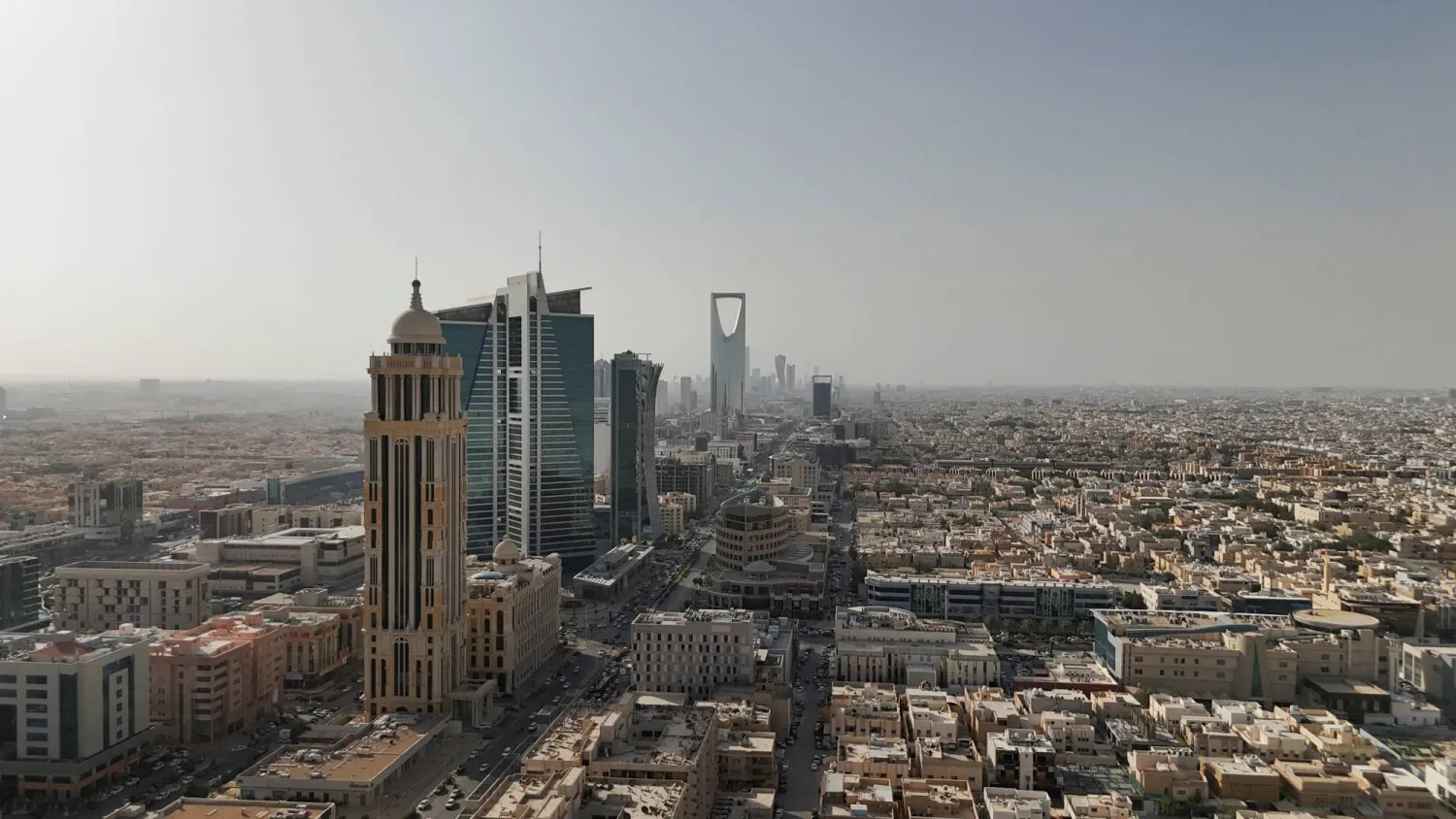
A view of the Saudi capital, Riyadh. (Reuters)
The slowdown recorded by official indicators in Saudi Arabia’s real estate market during the first half of this year did not surprise observers. Rather, it reflected the practical unfolding of a “rebalancing” phase whose signs began to emerge in 2025.
With major regulatory changes, such as parcel-based real estate registration coming into effect, investors and developers are now recalculating and watching the market carefully, ahead of a second half that experts expect to be led by real demand in residential projects and integrated logistics sectors.
Data from the Saudi Ministry of Justice’s Real Estate Market, covering property transfers, showed that the total value of real estate transactions fell in the first half of 2026 to $21.9 billion, or 82.2 billion riyals, compared with $45.1 billion, or 169.4 billion riyals, in the same period of 2025 — a 51.5 percent decline, the steepest among the indicators.
Transaction activity also slowed, with the number of deals falling to 161,900 from 220,000 a year earlier, a decline of 26.4 percent. The drop extended to the number of traded properties, which fell from 204,900 to 138,600, down 32.4 percent.
The total traded area also declined to 1.625 billion square meters from 2.088 billion square meters in the first half of 2025, a fall of 22.2 percent.
Prices, however, showed relative resilience compared with transaction volumes. Official data showed the average price per square meter fell to 1,965 riyals from 2,217 riyals a year earlier, down 11.4 percent. The highest recorded price per square meter also dropped to 330,578 riyals from 453,124 riyals, a decline of about 27 percent.
Reassessment phase
Real estate expert and appraiser Ahmad Al-Faqih told Asharq Al-Awsat that the decline in transaction value and volume was “very logical” given two decisive developments in recent months: regional geopolitical events represented by the US-Iran war, and the actual impact of government decisions aimed at rebalancing the market.
Both were reflected quantitatively and qualitatively in trading activity, he said.
Al-Faqih added that it was important to distinguish between traded and non-traded assets, noting that the exchange’s indicators show many investors have moved their assets into the “non-traded” category as they choose to wait and reposition themselves in light of market developments.
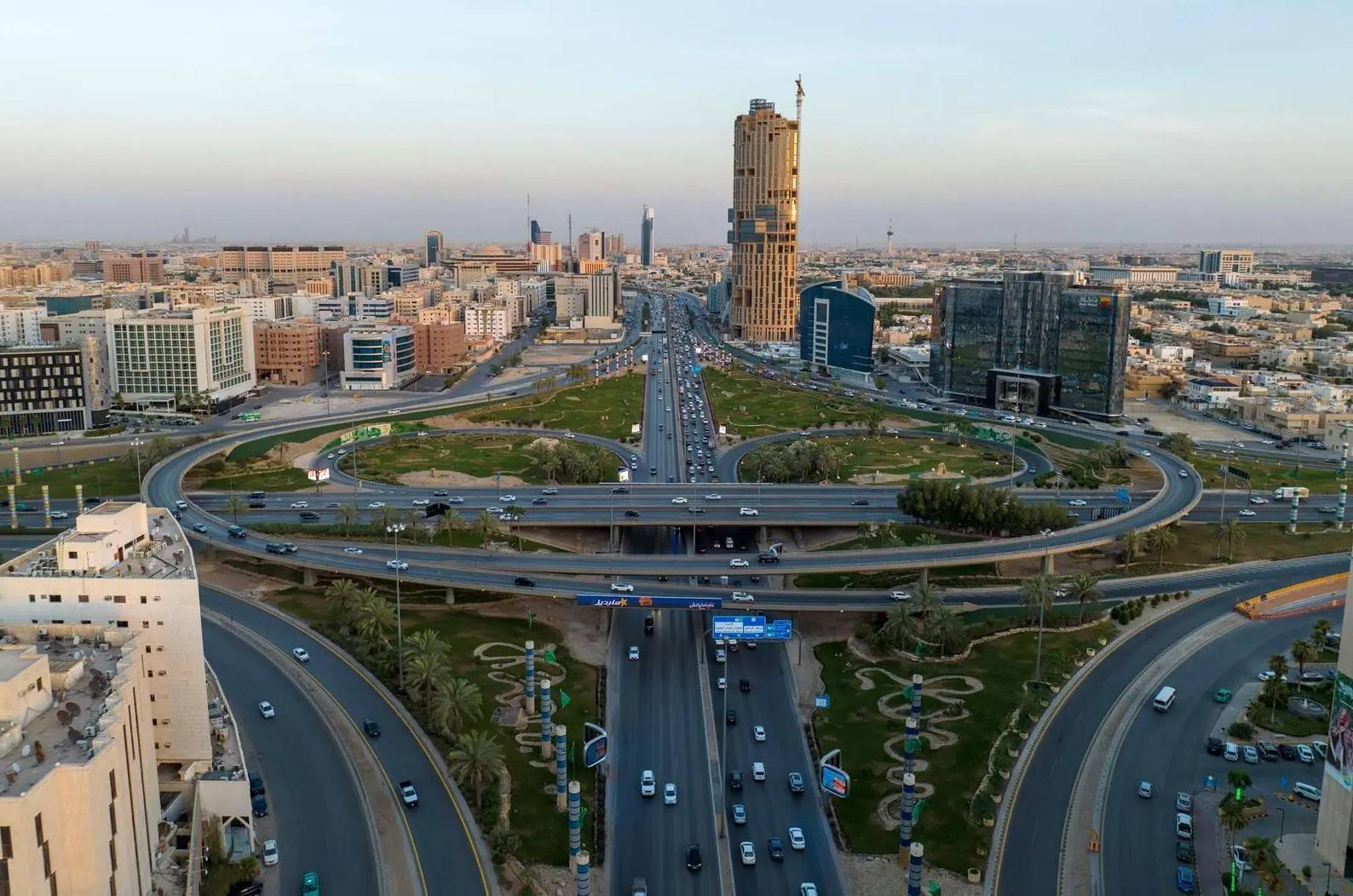
A general view of Riyadh, Saudi Arabia. (SPA)
He described other economic variables, such as interest rates and financing costs, as “secondary factors” compared with the geopolitical and regulatory files.
“The real estate investor, especially the speculator, is now going through a serious reassessment phase, particularly with the government’s clear direction toward developing the sector and correcting its practices,” he explained. “This approach will help redirect large liquidity flows into genuine development projects and increase housing supply.”
Market resilience
Real estate expert Abdullah Al-Mousa agreed that the more than 51 percent fall in transaction values cannot be read as “a direct reflection of an equivalent decline in prices.” A deeper reading of the indicators is needed, he told Asharq Al-Awsat.
Al-Mousa said the market underwent a pivotal institutional shift in the first half of 2026, with the expanded application of parcel-based registration and the transfer of real estate transactions in key areas — foremost among them Riyadh — to the Real Estate Registry system.
This is a major variable that must be considered in annual comparisons, he said.
He pointed to the market’s underlying resilience, saying the 11 percent decline in the average price per square meter, compared with a drop of more than half in transaction values, confirms that the sector has not seen a sharp price correction
Instead, the composition of deals has changed, with fewer billion-riyal transactions and high-value assets, while prices in locations with real demand have remained relatively stable, he remarked.
Al-Mousa said the market is undergoing a phase of “re-sorting,” rather than a broad price correction. Liquidity has become more selective, and investors are increasingly turning toward high-quality assets with stronger investment feasibility.
Looking ahead, he expects the second half of 2026 to bring gradual, qualitative improvement in real estate activity, while ruling out a quick return to the record transaction levels of previous years.
The sector is in a transitional phase driven by regulatory reforms, greater transparency and a more advanced legislative framework — factors that strengthen investor confidence over the medium term, even if their full impact takes time to appear, he went on to say.
Al-Mousa said integrated residential projects that meet actual demand, along with the logistics and industrial sectors supported by economic growth and major projects, are likely to lead growth in the coming period.
The market’s success in the next phase, “will not be measured only by transaction volume and quantity, but by its ability to attract quality investment, raise asset-use efficiency and achieve a sustainable balance between supply and demand,” he added.
South Korea’s SK Hynix Launching $28 Billion US Listing to Ride Global AI Wavehttps://english.aawsat.com/business/5292653-south-korea%E2%80%99s-sk-hynix-launching-28-billion-us-listing-ride-global-ai-wave
The logo of SK Hynix at a SK Hynix booth before a public briefing on the development vision for advanced industry in South Korea's southwestern region, in Gwangju, South Korea, June 30, 2026. (Reuters)
TT
TT
South Korea’s SK Hynix Launching $28 Billion US Listing to Ride Global AI Wave
The logo of SK Hynix at a SK Hynix booth before a public briefing on the development vision for advanced industry in South Korea's southwestern region, in Gwangju, South Korea, June 30, 2026. (Reuters)
South Korean chipmaker SK Hynix will launch a US listing on Monday to raise about $28 billion, according to regulatory filings, as it capitalizes on the global artificial intelligence boom with one of the world's largest new share sales.
The company will sell 17.79 million new shares in the depository receipt listing on the Nasdaq. Ten ADRs will represent one common share and the stock will be sold in a price range that is due to be revealed on Monday, based on SK Hynix's Seoul trading price.
SK Hynix's share price was down 4% at 2,327,000 won each on Monday, but the stock is up about 273% this year, as it rides surging global investor demand for AI stocks. Korea's KOSPI was down 2.2% on Monday.
Memory chip stocks were volatile in recent sessions due in part to renewed investor concerns about how long the boom would last.
"While market volatility has been quite high recently, I would expect demand for SK Hynix shares to remain relatively robust," said Albert Yong, a managing partner at Petra Capital Management.
South Korea last week unveiled a sweeping industrial strategy centered on semiconductors and AI, including a $576 billion chip investment program in the country's southwest to help spread returns from the boom.
SK Hynix and Samsung Electronics will anchor the investment program, the government said.
South Korean President Lee Jae Myung on Monday ordered officials to move quickly to get to work on major chip and AI projects announced last week.
He warned that delays in permits, land acquisition, and securing power and water supply could undermine the country's bid to dominate advanced industries.
MEMORY INFLATION
SK Hynix has been among the world's largest beneficiaries of the AI boom as it outperformed its major rivals Samsung and Micron.
"This is more than a liquidity event," said Dave Mazza, the chief executive officer of Roundhill Investments in New York, which manages an exchange-traded fund tracking DRAM manufacturers, which is one of the most popular ways for US investors to trade SK Hynix's stock. "SK Hynix has been one of the most important companies in the world that most US institutions could not easily own."
"The listing removes an accessibility discount, not a quality discount."
Steve Sosnick, chief strategist at Connecticut-based Interactive Brokers, said individuals and smaller institutions would benefit from the US listing, rather than large investors.
"The new listing will make it easier for capital-hungry Hynix to directly access a new group of momentum-hungry investors," Sosnick said.
SK Hynix said the proceeds from the listing of the American Depositary Receipts will be used to build chip factories in South Korea and buy chipmaking equipment including an extreme ultraviolet scanner made by Dutch equipment maker ASML.
The final price of the New York listing is due to be set on Thursday, ahead of the stock starting trade on Friday, regulatory filings showed. The company's management will meet global investors on a roadshow this week.
The deal is expected to be the second-biggest share sale after a record $85.7 billion initial public offering by SpaceX last month.
Some investors were cautious that memory "inflation" would dent spending on AI infrastructure, mobile phones and PCs.
"We expect better access, but timing of the memory cycle is equally important," said Sundeep Gantori, Standard Chartered's chief investment officer of equities. "We believe memory cycle is beyond the early phase and now in the mid-cycle stage."
SK Hynix is a key supplier of high-bandwidth memory chips used in AI systems by customers such as Nvidia and Google.
SK Hynix is expected to join the chip-heavy Philadelphia SE Semiconductor index, analysts said, helping pave the way for a surge in passive investments. A Nasdaq listing should help reduce the valuation gap with smaller US rival Micron, they said.
Last month, HSBC said it would raise its valuation of SK Hynix by applying a 20% premium to its previous price-to-book multiple of 2.8 times, implying a multiple of 3.4 times, "reflecting more proactive shareholder-friendly initiatives and improved accessibility to global investors."
لم تشترك بعد
انشئ حساباً خاصاً بك لتحصل على أخبار مخصصة لك ولتتمتع بخاصية حفظ المقالات وتتلقى نشراتنا البريدية المتنوعة