



Bahrain: New Evidence in Qatar Spy Case, Verdict Expected in June

A night view of Bahrain's capital, Manama. (AFP)
TT

Bahrain: New Evidence in Qatar Spy Case, Verdict Expected in June

A night view of Bahrain's capital, Manama. (AFP)

The Public Prosecution in Bahrain presented on Tuesday new damning evidence against Bahraini suspects held for their involvement in the Qatar spy case.

A hearing at the High Criminal Court meanwhile said that it will announce a verdict in the case on June 21.

The prosecution accuses each of Ali Salman, Hassan Ali Jomaa Sultan and Ali Mahdi al-Aswad with spying for Doha.

The High Criminal Court had continued its proceedings on Tuesday, looking into charges that the defendants had “collaborated with a foreign country to commit hostile acts against Bahrain.” They sought to “undermine its political and economic status and its national interests for the purpose of toppling the ruling regime.”

The charges also include “passing defense secrets to and accepting money from a foreign country in exchange for providing it with military secrets and information about the internal situation in Bahrain and spreading rumors abroad to weaken the financial confidence in the Kingdom and undermine its standing,” reported the Bahrain news agency (BNA).

The general prosecutor said that the court held an open session on Tuesday according to the law. The first defendant and his lawyer were present, while the second and third suspects were absent.

The trial proceedings kicked off in November after official authorities in Bahrain announced on August 16 that former Qatari Prime Minister Sheikh Hamad bin Jassem bin Jabr Al Thani had contacted one of the suspects, Ali Salman, in wake of the developments witnessed in Bahrain between February 14 and March 16, 2011.

Bahraini security agencies revealed “Qatar’s schemes to fund terrorist acts” in the Kingdom through wiring funds from a Qatari figure to a member of the al-Wefaq party, which was headed by Salman. The party was later dissolved.

The security forces charged that the funds were aimed at financing the terrorist bombing in the Sitra region in July 2015 that left two security personnel dead and wounded eight others.

Salman is currently serving a prison sentence in another case.

He was accused of promoting a political regime change through threats, the use of force and illegal means. He was also convicted of sectarian incitement in order to destabilize civil peace.

He was sentenced to four years in prison.

The other defendant, Hassan Jomaa Sultan, is a hardline cleric, who earned his religious education in Iran. He is one of the leading figures of the Islamic Dawa and the dissolved Wefaq party.

The third defendant, Sultan, has close ties with Qatari sponsors of terrorism and Lebanon’s “Hezbollah” party. A voice recording between him and former aide to the emir of Qatar, Hamad bin Khalifa al-Atieh, had previously surfaced in which they are heard to be planning to stoke chaos in Bahrain.



Saudi Defense Ministry Denies Reports of Attack on Prince Sultan Air Base in Al-Kharj

Saudi Defense Ministry Denies Reports of Attack on Prince Sultan Air Base in Al-Kharj
TT

Saudi Defense Ministry Denies Reports of Attack on Prince Sultan Air Base in Al-Kharj

Saudi Defense Ministry Denies Reports of Attack on Prince Sultan Air Base in Al-Kharj

Saudi official Spokesperson of the Ministry of Defense Major General Turki Al-Malki stated that reports circulating about Prince Sultan Air Base in Al-Kharj Governorate having been targeted are inaccurate, SPA reported.

Major General Al-Malki said: “The activation of warning sirens in Al-Kharj Governorate early this morning was a precautionary measure following the launch of a ballistic missile from Yemen, which disappeared near the border. Investigations are still underway to determine the details and circumstances of this launch.”


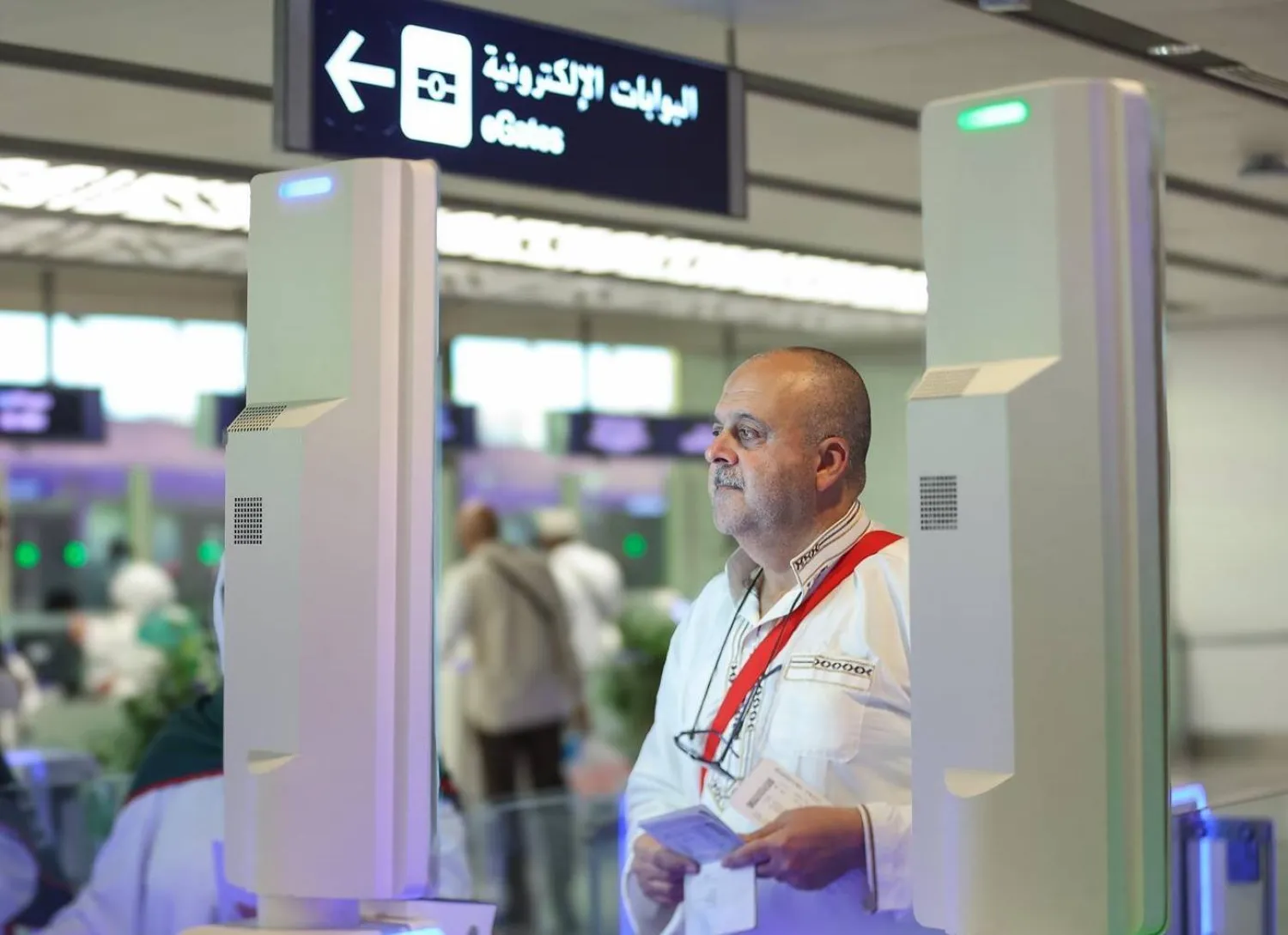
Saudi Passports Directorate Utilizes Airport E-Gates to Speed Up Hajj Pilgrim Departures

Automated E-gates allow departing pilgrims to complete passport control steps independently in a matter of seconds. (SPA)
TT

Saudi Passports Directorate Utilizes Airport E-Gates to Speed Up Hajj Pilgrim Departures

Automated E-gates allow departing pilgrims to complete passport control steps independently in a matter of seconds. (SPA)

Saudi Arabia’s General Directorate of Passports is utilizing modern technologies, including self-service E-gates at international airports, to streamline departure procedures for post-Hajj pilgrims across all border ports.

By instantly matching biometric data, these automated E-gates allow departing pilgrims to complete passport control steps independently in a matter of seconds.

The initiative, by the Ministry of Interior, significantly enhances passenger flow, reduces waiting times, and ensures a smoother, more efficient exit journey for travelers.

Saudi Arabia had announced the exceptional success of this year’s Hajj season that was backed by an integrated system of security, organization, and services, allowing pilgrims to perform their rituals with ease and tranquility.

The 2026 Hajj saw 1,707,301 pilgrims perform the rituals, with 1,485,729 pilgrims arriving via air ports, 54,429 by land, and 6,497 by sea.

Spokesperson of the General Directorate of Passports Major Nasser Al-Otaibi stressed on Sunday that the directorate continues to implement its operational plan for the departure of pilgrims through all international air, land, and sea ports.


Saudi Arabia to Host 39th Arab Inter-Parliamentary Union Conference this Week

The Speaker of the Saudi Shura Council said Joint Arab action represents a fundamental pillar for addressing current challenges (Arab Parliament)
TT

Saudi Arabia to Host 39th Arab Inter-Parliamentary Union Conference this Week

The Speaker of the Saudi Shura Council said Joint Arab action represents a fundamental pillar for addressing current challenges (Arab Parliament)

Saudi Arabia will host the 39th Conference of the Arab Inter-Parliamentary Union (AIPU) on Thursday via videoconference under the patronage of Custodian of the Two Holy Mosques King Salman bin Abdulaziz Al Saud.

The conference, organized by the Shura Council and AIPU, will bring together speakers of Arab parliaments and legislative councils, as well as delegates from several organizations.

Speaker of the Shura Council Sheikh Dr. Abdullah bin Mohammed Al Al-Sheikh expressed his appreciation for the Custodian of the Two Holy Mosques' patronage of the conference. He said the support reflects the commitment of the Custodian of the Two Holy Mosques and Prince Mohammed bin Salman bin Abdulaziz Al Saud, Saudi Crown Prince and Prime Minister, to strengthening joint Arab cooperation and highlighting the role of Arab solidarity in supporting regional security and stability.

He also underscored the Kingdom's commitment to advancing development and prosperity across the Arab world.

"Joint Arab action represents a fundamental pillar for addressing current challenges and an important basis for unifying positions and coordinating parliamentary efforts," Al Al-Sheikh said.

He added that such efforts contribute to enhancing stability, protecting shared Arab interests, promoting the role of parliaments in supporting development efforts, and consolidating the values of dialogue and integration among Arab states.

Al Al-Sheikh said the Shura Council looks forward to welcoming participants to the conference and expressed hope that its outcomes will support joint Arab parliamentary action and strengthen parliamentary diplomacy as an effective tool for advancing Arab causes in the region and the world.