Antonio Conte May Be Latest to Find How Little FA Cup Glory Means Now

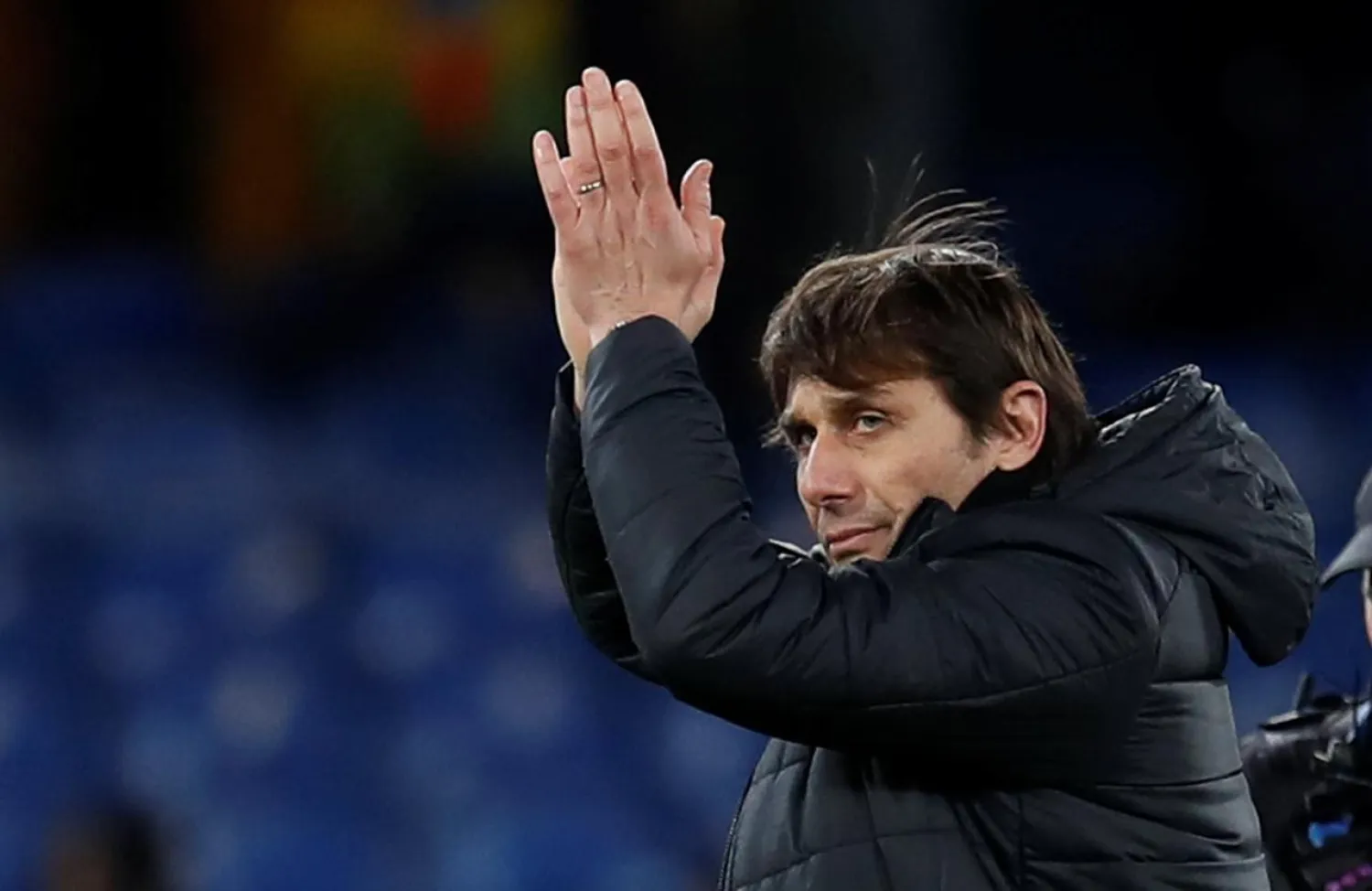
Chelsea manager Antonio Conte. (Reuters)
TT

Antonio Conte May Be Latest to Find How Little FA Cup Glory Means Now

Chelsea manager Antonio Conte. (Reuters)

“I didn’t bring the magic, it’s always been here,” Bob Stokoe said modestly after second division Sunderland had toppled mighty Leeds United in the 1973 FA Cup final. “I just came back to find it.”

Everyone knows what Stokoe said because the words are inscribed on the plinth of his statue outside the Stadium of Light. That is how big a deal winning the FA Cup used to be. When Stokoe died in 2004 there was never any doubt about the image that would be used to commemorate the club’s greatest post-war success. Opinion is divided over how accurately the sculptor captured the manager and the moment, but the worst-dressed man at Wembley leaping off the bench at the final whistle to race to his goalkeeper Jimmy Montgomery was already part of FA Cup final lore.

Things are a little different now. When Louis van Gaal won the FA Cup with Manchester United two years ago he barely had time to celebrate.

His moment of glory – well, the undoubted highlight of a mostly lackluster two years at Old Trafford – was cruelly compromised by the news already circulating around Wembley that José Mourinho had got his job. It was smart of Van Gaal to have his picture taken with Sir Alex Ferguson and the trophy, because a few days later he would not have had the chance.

Manchester City were no better in 2013, with news of Roberto Mancini’s departure breaking on Cup final day. The open secret was arguably a factor in City’s shock defeat by Wigan, though what was perfectly clear was that Mancini could not have saved his job by winning that game. In the Premier League/Champions League era only Arsène Wenger has been able to use FA Cup finals to earn a stay of execution, and even then there were significant factions at Arsenal who felt the end of season party at Wembley was merely window-dressing to cover up a larger pattern of failure.

Only 28 years ago, near the start of Ferguson’s reign at United, an FA Cup win represented the first success in England for a manager beginning to feel the pressure after three trophyless years, and even though it took a replay to see off Crystal Place it was enough to convince the board they had the right man. “I needed a trophy to buy time,” Ferguson said a couple of years later, before everyone realized quite how much time in the job he was going to get.

One has the distinct feeling that even a Chelsea win on Saturday is not going to buy Antonio Conte any more time at Stamford Bridge, indeed it is debatable whether the manager even wants to stick around for next season. He would doubtless like to finish the season on a high by adding the FA Cup to last season’s title win on an already impressive CV, and so would his players. Conte would then be able to point to two seasons in England and two major trophies, which is the sort of strike rate most Premier League teams and their supporters can only dream about, though the reality is the FA Cup alone no longer constitutes a successful season for a club in the Champions League bracket.

The Uefa competition has managed to hijack most of the end-of-season knockout glory, which is why Jürgen Klopp could be in line for a statue, or at least a specially commissioned new banner on the Kop, should Liverpool win a sixth European Cup next week in Kiev. The Champions League final now performs the day-of-destiny function the FA Cup used to enjoy. Win it and you are practically immortal; certainly you write your name into your club’s history.

Liverpool have not won the league since 1990, the year Ferguson was fretting over Crystal Palace in the Cup final, but absolutely no one will be complaining if the season ends with a victory over Real Madrid. Younger readers might find it difficult to imagine, but the FA Cup final used to be like that. In the public imagination, great deeds at Wembley would often transcend anything accomplished the same year in the league. Arsenal won the title on goal average in 1953, for example, but how many people remember that compared with the number who still revere the Stanley Matthews Cup final of the same year? Aston Villa fans will always remember 1981 as the last time they won the league (and subsequently the European Cup the following season), though the image that comes most readily to mind for most people is Ricky Villa’s goal for Tottenham at Wembley.

The good news is that only clubs with Champions League aspirations tend to look down on the FA Cup. The bad news is that because of the imbalance created within the domestic league over the last couple of decades the Cup is usually fought out between top-six sides with Champions League aspirations. This weekend’s final is a case in point, last season’s final was another, and in the 18 years of the new millennium the same five clubs have been Cup winners on no fewer than 16 occasions. The only exceptions have been Portsmouth and Wigan, each with harrowing tales to tell of what happened afterwards. The magic of the FA Cup still exists, just about, but it takes a bit of finding.

You need to be an underdog with a chance to make it work, someone able to regard a Cup-winning year as a proud entry in the club’s annals rather than just another hotel to book at the end of the season. Wigan fitted the bill almost perfectly, but for being relegated a matter of days later, yet the image of Ben Watson and his team-mates celebrating in the rain in 2013 is not quite the last example of Cup euphoria running over. Think of Alan Pardew and his touchline dad-dancing routine in 2016 when Palace took the lead with 12 minutes remaining.

It was premature, of course, but just for a few moments there was a man who could feel the magic, see his shot at glory. Had Palace managed to hang on Pardew might have had his own statue by now, in a pose as excruciatingly inexplicable as Stokoe’s memorable combination of tracksuit, raincoat and trilby. There is unlikely to be anything as joyously daft from either manager during Saturday’s final, which is a great pity. Wembley on Cup final day is exactly the place where one ought to get carried away.

The Guardian Sport


Irish Boxer Lee Reeves Dies at Age 31, Three Months after Dublin Title Fight Injury

Irish boxer Lee Reeves. Reuters
TT

Irish Boxer Lee Reeves Dies at Age 31, Three Months after Dublin Title Fight Injury

Irish boxer Lee Reeves. Reuters

Irish boxer Lee Reeves has died more than three months after being injured during a fight in Dublin, promoter Queensberry said Tuesday. He was 31.

"Everyone at Queensberry is devastated to learn of the passing of Lee Reeves," Queensberry Promotions said in a statement.

Reeves was hospitalized after being knocked out by compatriot Gary Cully in the 10th and final round of their Boxing Union of Ireland Celtic super-lightweight title fight on Aug. 1.

Reeves was carried from the ring on a stretcher after receiving initial treatment.

Queensberry had said after the fight that his condition was critical but stable.

“Lee was an immensely talented boxer, as well as a true role model and inspiration to his community,” the statement added Tuesday, according to The Associated Press. “Our deepest condolences go to Lee’s family, friends and all those who loved him. We ask that their privacy be respected at this incredibly difficult time. Rest in peace, Lee.”


Alonso to Enter Dakar Rally with Loeb and Aston Martin Team

November 5, 2026 Aston Martin's Fernando Alonso during a press conference ahead of the F1 Sao Paulo Grand Prix. (Reuters)
TT

Alonso to Enter Dakar Rally with Loeb and Aston Martin Team

November 5, 2026 Aston Martin's Fernando Alonso during a press conference ahead of the F1 Sao Paulo Grand Prix. (Reuters)

Double Formula One champion Fernando Alonso will compete in next January's Dakar Rally in an Aston Martin Dreadnought entry run by engineering partner Prodrive.

The 45-year-old Spaniard, a 32-time Grand Prix winner and two-time Le Mans 24 Hours winner, will be racing in the annual event for the second time after competing with Toyota in 2020, finishing 13th.

France's nine-time world rally champion Sebastien Loeb and Brazil's reigning world rally-raid champion Lucas Moraes will be his teammates in a three-car entry.

The 49th edition of the Dakar Rally will ‌be held in ‌Morocco from January 9 to 23, with a prologue and first ‌stage ⁠in Portugal, after ⁠being moved from Saudi Arabia due to security concerns.

The 24-round Formula One season is due to start in Bahrain in March after testing in late February.

Alonso, who will again have compatriot and five-time motorcycle Dakar winner Marc Coma as co-driver, is racing in the Las Vegas Grand Prix this weekend. He said he had turned his thoughts to Dakar after deciding to continue in Formula One with Aston Martin.

“In the end, the decision became simple. I wanted to embrace ⁠the challenge completely and take on both Formula One and the ‌Dakar Rally in the same year," he explained in ‌a statement.

"In 2020, Dakar was one of the most challenging and enjoyable experiences of my career. ‌I have enormous respect for this race and the specialists who have mastered it.

"Formula One ‌remains my priority. But I am a racing driver, and challenges like this are why I love competing. I’m looking forward to seeing what we can achieve."

LOEB CHASES FIRST DAKAR WIN

In October, Alonso told reporters at the Singapore Grand Prix that he felt the desert endurance race would be physically ‌incompatible with his Formula One commitments.

Loeb, 52, will also be chasing a first Dakar win after 10 previous attempts that have brought ⁠him 28 stage ⁠wins to date.

“Winning the Dakar is very important to me,” said the Frenchman, who will be partnered by Belgian Fabian Lurquin. “We have come close several times, and the motivation is there to keep working until we achieve it."

The Dreadnought is a digital-only tactical SUV created exclusively for gamers playing "Call of Duty: Modern Warfare 4" that will now be brought into the real world by Prodrive, Aston Martin's partners in endurance GT racing.

The Dakar will be Aston Martin Racing’s debut in the world rally-raid championship.

"Aston Martin's ambition for this program has been clear from the outset: to create a car capable of competing at the front of the world's toughest motorsport event," said Prodrive Chairman David Richards.

"By combining Aston Martin's vision with Prodrive's experience in rallying, endurance racing and Dakar competition, we have built a strong foundation. With an exceptional driver line-up and a highly capable engineering team, we look forward to seeing Dreadnought take on this remarkable challenge."


Owono Does Not Deserve 12-Match Ban Over De Miguel Death, Says Andorra Owner Pique

Equatorial Guinea's goalkeeper #01 Jesus Owono leaves the pitch at half time during the Africa Cup of Nations (CAN) Group E football match between Equatorial Guinea and Algeria at Moulay Hassan Stadium in Rabat on December 31, 2025. (AFP)
TT

Owono Does Not Deserve 12-Match Ban Over De Miguel Death, Says Andorra Owner Pique

Equatorial Guinea's goalkeeper #01 Jesus Owono leaves the pitch at half time during the Africa Cup of Nations (CAN) Group E football match between Equatorial Guinea and Algeria at Moulay Hassan Stadium in Rabat on December 31, 2025. (AFP)

FC Andorra owner Gerard ‌Pique said goalkeeper Jesus Owono did not deserve the 12-match suspension he received following the challenge that led to the death of Tenerife forward Jesus de Miguel.

Owono and De Miguel collided during a Spanish second-tier match on November 2. De Miguel was taken to intensive care and died the following day.

The disciplinary committee of the Spanish football federation (RFEF) banned Owono for violent conduct which resulted in serious ‌injury last week.

"Players, ‌former players, coaches, goalkeepers, everyone has ‌called ⁠it an accident," ⁠Pique said in a video posted on social media late on Monday.

"I truly believe that imposing the maximum sanction on Jesus for this action puts him in a situation he does not deserve, because he is not to blame for all of ⁠this having happened."

Former Barcelona player Pique ‌pointed to the three-match ‌ban handed to Albacete's Jose Corpas for accidentally kicking Sabadell ‌player Quadri Liameed in the head during a ‌recent match in Spain.

"Fortunately Quadri is fine, the consequences in this case were not fatal, and the committee decided to sanction Corpas with three matches," Pique added.

"With ‌all this, my reflection is: what is being sanctioned, the action or the ⁠consequences?"

The RFEF ⁠did not immediately respond to a request for comment outside regular business hours in Spain.

Owono, 25, has withdrawn from Equatorial Guinea's squad for Africa Cup of Nations qualifiers against Zimbabwe this month and Pique said it was unlikely the goalkeeper would return to action as soon as his suspension is up.

"Jesus is going to need far more than 12 matches before he is available and able to compete," he added. "No sanction is going to bring Demi (De Miguel) back to us."