


US Vows to Hit Iran with ‘Strongest Sanctions in History’

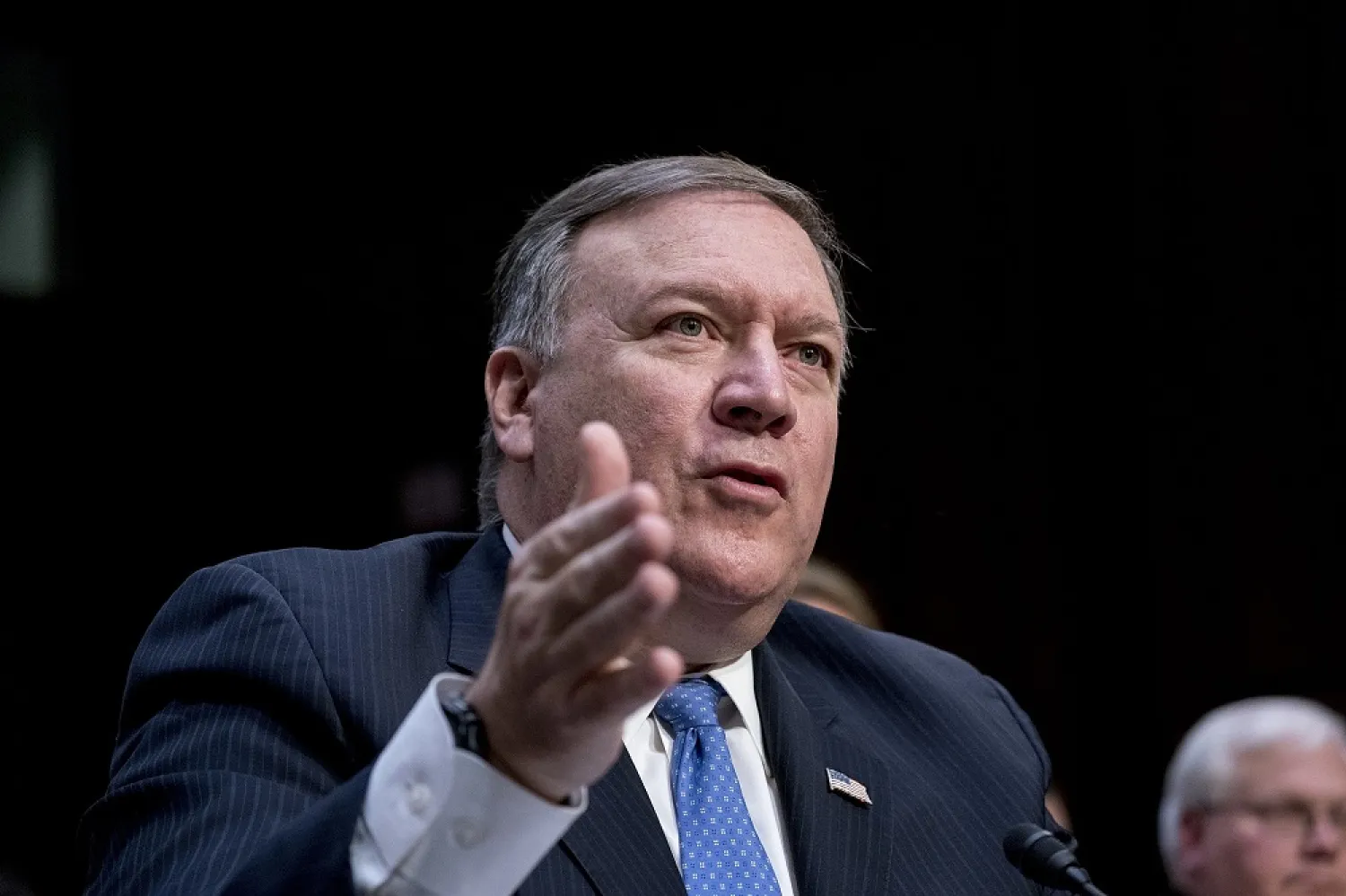
US Secretary of State Mike Pompeo. (AP)
TT

US Vows to Hit Iran with ‘Strongest Sanctions in History’

US Secretary of State Mike Pompeo. (AP)

US Secretary of State Mike Pompeo issued a severe warning to Iran on Monday, saying Washington would be ready to impose the “strongest sanctions in history” if it does not alter its regional policies.

In his first major foreign policy address since moving to the State Department from the CIA, the longtime Iran hawk and ardent opponent of the 2015 nuclear pact outlined an aggressive series of moves designed to counter Tehran, which he called the world's top sponsor of terror.

"Iran's leaders saw the deal as a starting gun for the march across the Middle East," Pompeo said.

Pompeo said the bet the deal would increase Middle East stability had been a bad one for America, Europe, the Middle East "and indeed for the entire world."

"We will apply unprecedented financial pressure on the Iranian regime. The leaders in Tehran will have no doubt about our seriousness," Pompeo said in a speech at the conservative Heritage Foundation think tank.

"This sting of sanctions will be painful if the regime does not change its course from the unacceptable and unproductive path it has chosen to one that rejoins the league of nations."

Pompeo said if Iran were to abide by the stricter terms, including ending its ballistic missile program and its interventions in regional conflicts from Yemen to Syria, the United States would lift its new sanctions.

"Iran will be forced to make a choice: either fight to keep its economy off life support at home or keep squandering precious wealth on fights abroad. It will not have the resources to do both," he said.

Pompeo also cautioned European firms against continuing to do business in Tehran, toughening up Washington's policy line after its withdrawal from the nuclear pact.

President Donald Trump has long said the original 2015 deal with Iran -- also signed by Britain, China, France, Germany and Russia -- did not go far enough, and now wants the Europeans and others to support his hardline strategy.

The deal was designed to prevent Iran from developing a nuclear weapon. The international community, including top US officials, have said Tehran had been in compliance.

But Trump despised the deal, pointing to other aspects of Iranian behavior not covered in the pact, and on May 8 he pulled America out despite intense diplomatic efforts by European allies who had beseeched him to stick with it by adding tougher new elements.

Instead of suggesting a re-negotiation of the Iran deal, Pompeo outlined 12 tough conditions from Washington for any "new deal" with Tehran to make sure it "will never again have carte blanche to dominate the Middle East."

These essentially address every aspect of Iran's missile program and what the US calls its "malign influence" across the region, including support for Syrian regime leader Bashar al-Assad, Lebanon’s “Hezbollah” and Houthi militias in Yemen.

"It must cease its threatening behavior against its neighbors," Pompeo said.

"This certainly includes its threats to destroy Israel, and its firing of missiles into Saudi Arabia" and the United Arab Emirates, he added.

He said Iran must "stop enrichment" of uranium and never preprocess plutonium. Iran must also allow nuclear "unqualified access to all sites throughout the country."

Iran must also "release all US citizens" missing in Iran or being held on "spurious charges," he added.

Laying out Trump's new approach, Pompeo said he could not put a timeline on how long the strategy might take.

"At the end of the day, the Iranian people will get to make their choice about their leadership," Pompeo continued. "If they make the decision quickly, that would be wonderful. If they choose not to do so, we will stay hard at this until we achieve the outcomes that I set forward today."

"It is America's hope that our labors toward peace and security will bear fruit for the long-suffering people of Iran," Pompeo stressed.

European allies heard how he expects their support for the new US plan -- but he offered nothing in return, and threatened economic fallout for anyone still dealing with Iran.

"We understand that our re-imposition of sanctions and the coming pressure campaign on the Iranian regime will pose financial and economic difficulties for a number of our friends," he said.

"We want to hear their concerns. But you know, we will hold those doing prohibited business in Iran to account."

The re-establishment of the US sanctions will force European companies to choose between investing in Iran or trading with the United States.

In reality, there is no choice -- European companies cannot afford to forsake the US market.

For now, the European Union is trying to persuade Iran to stay in the 2015 agreement, even without Washington's participation.



Top Trump Iran Negotiator Says Visits US Aircraft Carrier in Middle East

US Special Envoy Steve Witkoff delivers a press conference upon the signing of the declaration on deploying post-ceasefire force in Ukraine, during the so-called "Coalition of the Willing" summit, at the Elysee Palace in Paris, France, January 6, 2026. (Reuters)
TT

Top Trump Iran Negotiator Says Visits US Aircraft Carrier in Middle East

US Special Envoy Steve Witkoff delivers a press conference upon the signing of the declaration on deploying post-ceasefire force in Ukraine, during the so-called "Coalition of the Willing" summit, at the Elysee Palace in Paris, France, January 6, 2026. (Reuters)

US President Donald Trump's lead Iran negotiator Steve Witkoff on Saturday said he visited the USS Abraham Lincoln aircraft carrier currently in the Arabian Sea, with Washington and Tehran due to hold further talks soon.

"Today, Adm. Brad Cooper, Commander of US Naval Forces Central Command, Jared Kushner, and I met with the brave sailors and Marines aboard the USS Abraham Lincoln, her strike group, and Carrier Air Wing 9 who are keeping us safe and upholding President Trump's message of peace through strength," said Witkoff in a social media post.

Iranian Foreign Minister Abbas Araghchi said on Saturday he hoped talks with the United States would resume soon, while reiterating Tehran's red lines and warning against any American attack.


Israel’s Netanyahu Expected to Meet Trump in US on Wednesday and Discuss Iran

Israeli Prime Minister Benjamin Netanyahu delivers a speech during a special session to mark the 77th anniversary of the Knesset's establishment and the 60th anniversary of the dedication of the current building at the Knesset, the Israeli parliament, in Jerusalem, 02 February 2026. (EPA)
TT

Israel’s Netanyahu Expected to Meet Trump in US on Wednesday and Discuss Iran

Israeli Prime Minister Benjamin Netanyahu delivers a speech during a special session to mark the 77th anniversary of the Knesset's establishment and the 60th anniversary of the dedication of the current building at the Knesset, the Israeli parliament, in Jerusalem, 02 February 2026. (EPA)

Israeli Prime Minister Benjamin Netanyahu is expected to meet US President Donald Trump on Wednesday in Washington, where they will discuss negotiations with Iran, Netanyahu's office said on Saturday.

Iranian and US officials held indirect nuclear ‌talks in the ‌Omani capital ‌Muscat ⁠on Friday. ‌Both sides said more talks were expected to be held again soon.

A regional diplomat briefed by Tehran on the talks told Reuters Iran insisted ⁠on its "right to enrich uranium" ‌during the negotiations with ‍the US, ‍and that Tehran's missile capabilities ‍were not raised in the discussions.

Iranian officials have ruled out putting Iran's missiles - one of the largest such arsenals in the region - up ⁠for discussion, and have said Tehran wants recognition of its right to enrich uranium.

"The Prime Minister believes that any negotiations must include limiting ballistic missiles and halting support for the Iranian axis," Netanyahu's office said in a ‌statement.


Italy FM Rules Out Joining Trump’s ‘Board of Peace’

Italy's Minister for Foreign Affairs Antonio Tajani speaks to the press during the EPP Leaders’ meeting, in Zagreb, Croatia, 30 January 2026. (EPA)
TT

Italy FM Rules Out Joining Trump’s ‘Board of Peace’

Italy's Minister for Foreign Affairs Antonio Tajani speaks to the press during the EPP Leaders’ meeting, in Zagreb, Croatia, 30 January 2026. (EPA)

Italy will not take part in US President Donald Trump's "Board of Peace", Italian Foreign Minister Antonio Tajani said Saturday, citing "insurmountable" constitutional issues.

Trump launched his "Board of Peace" at the World Economic Forum in Davos in January and some 19 countries have signed its founding charter.

But Italy's constitution bars the country from joining an organization led by a single foreign leader.

Prime Minister Giorgia Meloni, a Trump ally, last month noted "constitutional problems" with joining, but suggested Trump could perhaps reopen the framework "to meet the needs not only of Italy, but also of other European countries".

Tajani appeared Saturday to rule that out.

"We cannot participate in the Board of Peace because there is a constitutional limit," he told the ANSA news agency.

"This is insurmountable from a legal standpoint," he said, the day after meeting US Secretary of State Marco Rubio and US Vice President JD Vance at the Olympics in Milan.

Although originally meant to oversee Gaza's rebuilding, the board's charter does not limit its role to the Palestinian territory and appears to want to rival the United Nations.