


Syria's Law 10… Demographic Change at Home, Concerns in Neighboring Countries

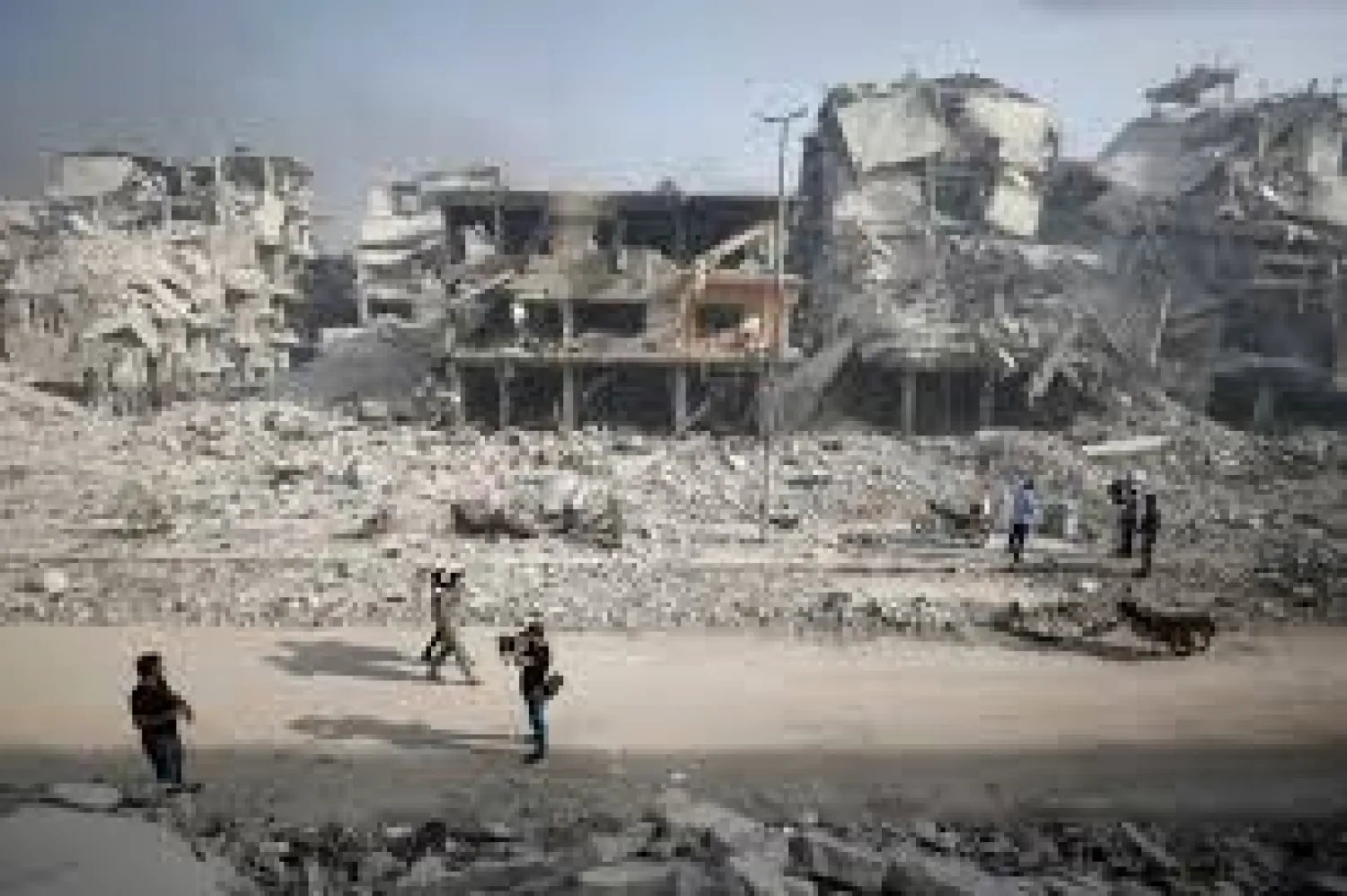
A Syrian army soldier walks past the rubble of damaged buildings in al-Hajar al-Aswad, Syria May 21, 2018. REUTERS/Omar Sanadiki
TT

Syria's Law 10… Demographic Change at Home, Concerns in Neighboring Countries

A Syrian army soldier walks past the rubble of damaged buildings in al-Hajar al-Aswad, Syria May 21, 2018. REUTERS/Omar Sanadiki

A new law allowing the Syrian regime to redevelop areas devastated by war has alarmed refugees and the countries that host them, prompting fears that people will lose their property and be less likely to return home, Reuters reported.

The terms of “Law 10” could make it difficult for refugees to prove property ownership, and in turn discourage some from returning.

Seven years into the war that has killed half a million people, the law signals the regime's intention to rebuild areas of Syria where the rebellion has been defeated even though large parts of the country remain outside its control.

The legislation came into effect in April as regime forces were on the brink of crushing the last insurgent enclaves near Damascus, consolidating Bashar al-Assad’s grip over nearly all of western Syria.

It allows people to prove they own property in the areas chosen for redevelopment and to claim compensation. However, aid groups say the chaos of war means few will be able to do so in the time specified. The law has yet to be applied.

The inability of the refugees to practically present what proves their possession (of their properties) during the given time limit might lead to them losing their properties and their sense of national identity.

This would deprive them of one of the main incentives for their return to Syria, said Lebanese Prime Minister Saad al-Hariri, whose country hosts more than a million Syrian refugees.

Hariri said the law “tells thousands of Syrian families to stay in Lebanon” by threatening them with property confiscation.

People forced to flee their homes - more than half the prewar population - will find it hard to make such claims, aid groups say.

Many refugees now face a major problem: whether to return home, even if they think it may be unsafe, and claim their property rights in person, or risk losing them along with a big incentive to go back to Syria in future.

“If it is applied to areas once held by the opposition from which the residents have been displaced or where land registries have been destroyed, it will in effect prevent the return of refugees,” said a briefing note circulated to EU states at a recent high-level meeting.

Assad said the law has been misinterpreted in order to inflame Western public opinion against his government. He told the Greek newspaper Kathimerini that the law “is not about dispossessing anyone”.

“You cannot, I mean even if he’s a terrorist, let’s say, if you want to dispossess someone, you need a verdict by the judicial system,” he said.

Assad’s opponents already accuse him of engineering “demographic change” by driving rebels and their families out of Syria’s cities, and say the law confiscates property and homes of the displaced.

Amnesty International has said it effectively deprives thousands of people of their homes and land.



Israeli Strikes Damage Hospital in Lebanon

File photo: Destroyed houses that were hit in an Israeli airstrike in Saksakiyeh village, south Lebanon, Friday, April 3, 2026. (AP Photo/Hussein Malla)
TT

Israeli Strikes Damage Hospital in Lebanon

File photo: Destroyed houses that were hit in an Israeli airstrike in Saksakiyeh village, south Lebanon, Friday, April 3, 2026. (AP Photo/Hussein Malla)

A hospital in the coastal Lebanese city of Tyre was damaged by Israeli airstrikes on nearby buildings that wounded 11 people, the health ministry said on Saturday.

The director of the Lebanese Italian Hospital told the state-run National News Agency (NNA) that it would "remain open to provide the necessary medical care" despite the damage.

Strikes destroyed two buildings nearby, an AFP correspondent saw, shattering windows and causing suspended ceilings to collapse in the hospital, the facility's management said.

A series of attacks hit the Tyre region on Saturday, including one on its port that struck a small boat and damaged others moored nearby, the AFP correspondent said.

Israel has been carrying out strikes across Lebanon and launched a ground invasion in the south after Hezbollah entered the war in the Middle East on the side of its backer Iran on March 2.

Tens of thousands of people have left Tyre, but around 20,000 remain, including 15,000 displaced from surrounding villages, despite Israeli evacuation warnings covering most of the city and a broad swathe of southern Lebanon.

The NNA also reported that Israeli forces abducted a man in Shebaa, near the Israeli border in the east, at around 3:00 am on Saturday.


Indonesia Slams 'Unacceptable' Peacekeeper Casualties in Lebanon

FILE PHOTO: UNIFIL vehicles drive on a main road in Qlayaa, amid escalating hostilities between Israel and Hezbollah, as the US-Israel conflict with Iran continues, in Qlayaa, southern Lebanon, March 27, 2026. REUTERS/Karamallah Daher/File Photo
TT

Indonesia Slams 'Unacceptable' Peacekeeper Casualties in Lebanon

FILE PHOTO: UNIFIL vehicles drive on a main road in Qlayaa, amid escalating hostilities between Israel and Hezbollah, as the US-Israel conflict with Iran continues, in Qlayaa, southern Lebanon, March 27, 2026. REUTERS/Karamallah Daher/File Photo

The Indonesian government on Saturday slammed as "unacceptable" an explosion that injured three of its peacekeepers in Lebanon within days of three other blue helmets from the Southeast Asian nation being killed.

The United Nations Interim Force in Lebanon (UNIFIL) said three peacekeepers were wounded in a blast that occurred inside a UN facility near Adaisseh on Friday afternoon, and rushed to hospital.

Two were seriously wounded.

The UN Information Center in Jakarta said the "origin of the explosion" was unknown but identified the injured soldiers as Indonesian.

"Repeated attacks or incidents of this kind are unacceptable," the Indonesian foreign ministry said in a statement.

"Regardless of their cause, these events underscore the urgent need to strengthen protection for UN peacekeeping forces amid an increasingly dangerous conflict situation."

The government urged the UN Security Council to investigate the events and "to immediately convene a meeting of troop-contributing countries to UNIFIL to conduct a review and take measures to enhance the protection of personnel serving with UNIFIL".

Friday's incident came just days after an Indonesian peacekeeper died when a projectile exploded on March 29 in southern Lebanon, where Israel and Hezbollah have been fighting since Lebanon was drawn into the Middle East war.

A UN security source told AFP on condition of anonymity Tuesday that fire from an Israeli tank was responsible for that attack.

A day later, two more Indonesian peacekeepers died after an explosion struck a UNIFIL logistics convoy, also in southern Lebanon.

The father of one of the two fallen soldiers, 33-year-old Zulmi Aditya Iskandar, said this week he was shocked that peacekeepers were losing their lives in the conflict.

"We were really sad and regretful, because this is a UN troop, a peacekeeping troop, not deployed for war," 60-year-old Iskandarudin told reporters at his house in West Java province.

The bodies of the three peacekeepers are scheduled to arrive in Jakarta on Saturday evening, according to the military.

The Indonesian National Armed Forces has said it will deploy more than 750 personnel to Lebanon next month as part of the scheduled UNIFIL peacekeeping troop rotation.


Strike Kills One Iraqi Fighter near Syria Border

Mourners attend the funeral of members of Iraq's Hashed al-Shaabi, who were killed in an airstrike in the town of al‑Qaim near the Syrian border, amid heightened regional tensions due to the US-Israel conflict with Iran, in Baghdad, Iraq, March 12, 2026. REUTERS/Stringer
TT

Strike Kills One Iraqi Fighter near Syria Border

Mourners attend the funeral of members of Iraq's Hashed al-Shaabi, who were killed in an airstrike in the town of al‑Qaim near the Syrian border, amid heightened regional tensions due to the US-Israel conflict with Iran, in Baghdad, Iraq, March 12, 2026. REUTERS/Stringer

An attack killed one fighter from the former paramilitary coalition Hashed al-Shaabi on Saturday, the alliance said, blaming the US and Israel.

Iraq has been dragged into the war between the United States, Israel and Iran, with strikes targeting both US interests and pro-Iran groups in the country, reported AFP.

"This treacherous attack resulted in the martyrdom of one PMF fighter and the wounding of four others, as well as a member of the ministry of defense," said a short statement from the group, which is also known as the Popular Mobilization Forces (PMF), adding it was a "Zionist-American attack".

The PMF is a coalition of armed groups -- formed in 2014 to fight extremists-- that is now part of Iraq's regular army, but also contains pro-Iran factions who have a reputation for acting independently.

PMF positions have been repeatedly targeted since the outbreak of war, with the group consistently blaming the attacks on the US and Israel.

According to the group's statement, the latest attack targeted a position in western Anbar province of the 45th Brigade, which belongs to the US-blacklisted, pro-Iran Kataeb Hezbollah group.

Kataeb Hezbollah is part of the umbrella movement known as the Islamic Resistance in Iraq, which has been claiming daily attacks since the start of the war on US interests in Iraq and the region.

The Pentagon has said helicopters have carried out strikes against pro-Iran armed groups in Iraq during the war.

Washington has strongly denied claims it has targeted Iraqi security forces.