


Net Spend: Buffon, De Gea and why Keepers are Massively Undervalued

Gianluigi Buffon. (AFP)
TT

Net Spend: Buffon, De Gea and why Keepers are Massively Undervalued

Gianluigi Buffon. (AFP)

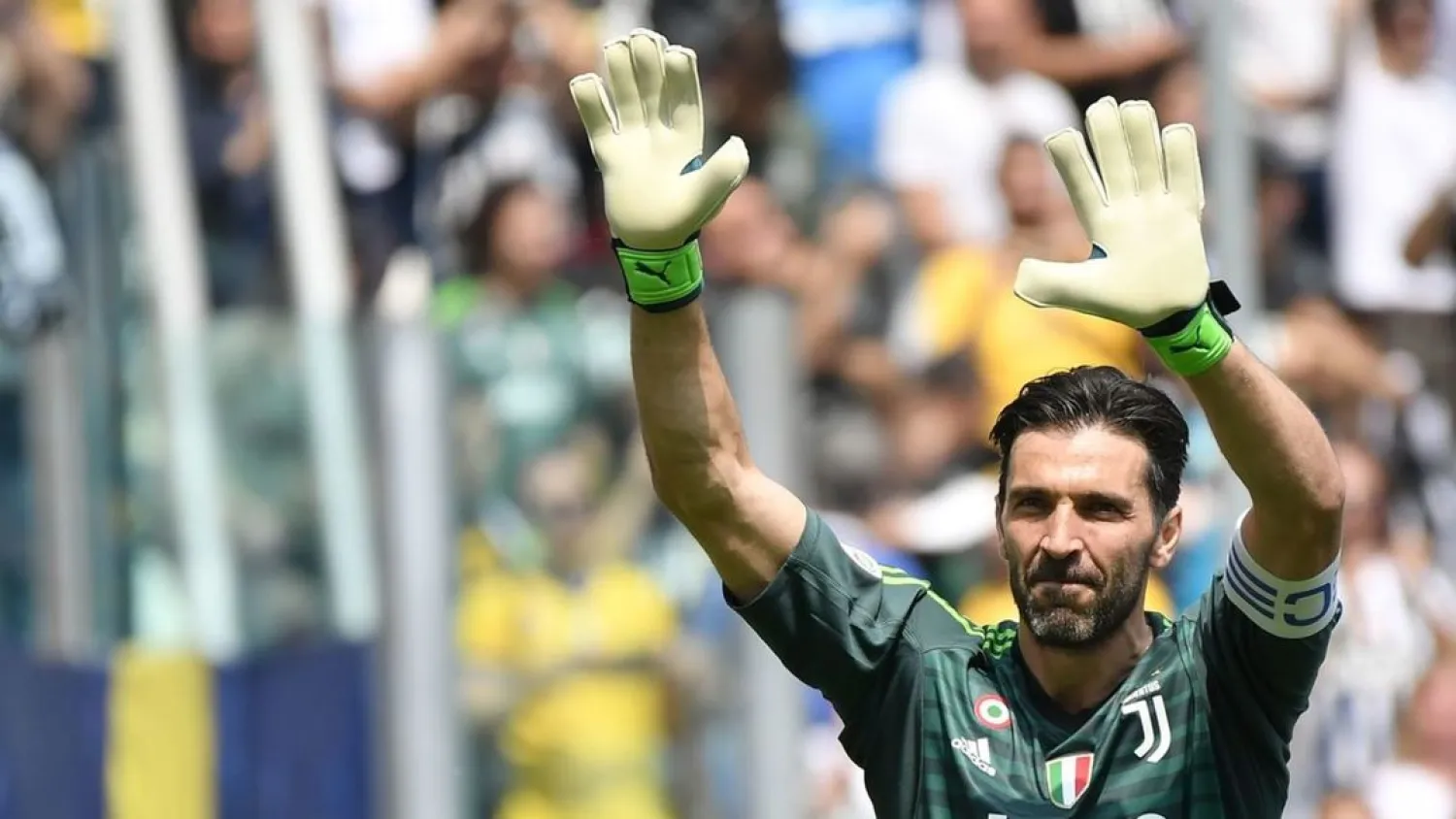
So arrivederci then, Gianluigi Buffon. Assuming there is no careering handbrake turn away from retirement, the match against Verona on May 19 was his last. It seems vaguely astonishing that he made his debut in 1995 – a teenage action hero clad in pink and black for Parma, fearlessly facing down George Weah, Roberto Baggio and the rest of Milan’s all-stars. Nearly 900 games later, he hung up his Puma One Grips having averaged a trophy for each year of his career.

And along with a World Cup, Uefa Cup, five Italian Cups, six Italian Super Cups, a European Under-21 title and multiple Scudetti, Buffon holds another honor. For he remains the only keeper in the 50 biggest transfers in history according to Transfermarkt (which tracks deals in Euros) – even though his €52m move to Juventus took place 17 years ago.

Back in 2001 that price seemed crazy. Now it looks like one of the bargains of the century. Yet few clubs have dared follow the Old Lady’s lead. Incredibly, Transfermarkt lists only 11 keepers who have cost more than €15m (£13.2m). In a world where Theo Walcott and Guido Carrillo both cost £20m that seems bizarre. But according to Nick Harris’s excellent Sporting Intelligence website it illustrates a wider trend. His numbers show that keepers are also paid less than defenders, midfielders and strikers – and have become less valued relative to outfield players too.

It seems obvious that some keepers are massively undervalued. The question is can we prove it?

Ted Knutson, who worked on player recruitment at Brentford and the Danish club FC Midtjylland and heads the football consultancy StatsBomb, believes so. As he explained during a presentation at South Bank University last week, keepers are often harder to evaluate than other positions. They need to sweep up, distribute the ball accurately and start attacks as well as keep clean sheets. Yet the data isn’t always there to properly assess their strengths and weaknesses.

Save percentage, for instance, matters little if every shot goes down a keeper’s throat. And while looking at how a keeper performs compared with the expected goals (xG) they are predicted to concede is more robust, it doesn’t take into account defensive pressure or the power of a shot.

Knutson recalled a chat with Bob Bradley, the former coach of Swansea, while interviewing him for the Midtjylland manager’s job. While amenable to using data, Bradley pointed out an obvious flaw with xG. “You can’t tell me that if I have two men on a guy having a header from six yards out that is a good chance,” he said. “I know for a fact it is a very hard to score.”

Knutson conceded he had a point. “But I have to look across 30 leagues across the world to find undervalued players,” he replied. “And I cannot duplicate your eyes across 20,000 players and multiple seasons.”

Now, however, Knutson believes he has a more reliable way of assessing chances and keepers. A key breakthrough is that the velocity of every Premier League shot can now be tracked (unsurprisingly Riyad Mahrez and Harry Kane lead the way in attempts from distance) – and his data also shows the exact position of each player when the ball was hit, and whether the keeper was moving, set, or on the ground.

This gives the scout or analyst a wealth of information. It means they can assess a keeper’s reaction time; how good their positioning is compared with other keepers across multiple leagues; and, ultimately, how good their saves are. It could, suggested Knutson, be a game changer.

Using this data, his StatsBomb colleague Derrick Yam then ranked keepers in the Premier League in 2017-18. Unsurprisingly David de Gea was right up there, conceding eight goals fewer than an average keeper would based on the shots he has faced. Arsenal’s Petr Cech ranked last, having conceded six goals more than expected (Liverpool’s Simon Mignolet was not far behind).

We all know De Gea is far better than Cech. Yet having such numbers gives us a much better idea of their respective worth. As Knutson says: “Conceding eight goals less a year than average is a massive amount. Flip it around and say an average striker scores 10 goals a year and is worth £20m. Depending on age and other factors, an extra eight league goals could make a striker three times as valuable.”

And if De Gea’s exceptional performances are repeatable across multiple seasons – and the evidence suggests they are – he and other top young keepers should be worth a minimum of £50m or £60m.

Longevity should be another factor in their favor. We know that players decline physically as they wade into their 30s. Yet keepers appear to cast off their powers at a slower rate, and what they lose in reactions they often make up for by reading the game better.

Certainly no one at Juventus will be counting the cost of signing Buffon all those years ago. Especially after he paraded a seventh successive Scudetto in front of an adoring Curva Sud Scirea.

The Guardian Sport


Chelsea Injuries up 44% After Club World Cup but Report Says Event Has Had ‘Minimal’ Impact

Chelsea's Reece James, center, lifts the trophy following the Club World Cup final soccer match between Chelsea and PSG at MetLife Stadium in East Rutherford, N.J., Sunday, July 13, 2025. (AP)
TT

Chelsea Injuries up 44% After Club World Cup but Report Says Event Has Had ‘Minimal’ Impact

Chelsea's Reece James, center, lifts the trophy following the Club World Cup final soccer match between Chelsea and PSG at MetLife Stadium in East Rutherford, N.J., Sunday, July 13, 2025. (AP)

Chelsea suffered a 44% spike in injuries after competing in the supersized Club World Cup this year, according to findings published on Tuesday.

But the newly expanded tournament has so far had a “minimal impact” on injuries overall, the latest edition of the Men’s European Football Injury Index found.

There was fierce opposition to FIFA's new flagship club event when it was confirmed in 2023 that it would increase from seven to 32 teams, with players' unions warning of physical and mental burnout of players due to an ever expanding match schedule. But FIFA pressed ahead and staged the tournament in the United States in June-July.

Chelsea went on to win the inaugural competition, receiving the trophy from US President Donald Trump at MetLife Stadium and taking home prize money of around $125 million. But, according to the Index, from June-October, Chelsea picked up more injuries — 23 — than any of the nine clubs from Europe's top leagues that participated in the Club World Cup.

They included star player Cole Palmer, and was a 44% increase on the same period last year.

While Chelsea, which played 64 games over the entire 2024-25 season, saw an increase in injuries, the Index, produced by global insurance firm Howden, found that overall there was a decrease.

“In principle you would expect this increased workload to lead to an increase in the number of injuries sustained, as a possible rise in overall injury severity,” the Index report said, but added: “The data would suggest a minimal impact on overall injury figures.”

Despite the figures, the authors of the report accept it was too early to assess the full impact of the Club World Cup, with the findings only going up to October.

“We would expect to see the impact to spike in that sort of November to February period,” said James Burrows, Head of Sport at Howden. “What we’ve seen previously is that’s where the impact is seen from summer tournaments."

Manchester City has sustained 22 since the tournament, which is the highest among the nine teams from Europe's top leagues — England, Spain, Italy, Germany and France.

Those teams have recorded 146 injuries from June-October, which is down on the previous year's figure of 174.

From August-October that number is 121, the lowest for that three-month period in the previous six years of the Index.


Sunderland Worst Hit by Losing Players to African Cup of Nations 

14 December 2025, United Kingdom, London: Sunderland's Habib Diarra (L) and Leeds United's Gabriel Gudmundsson battle for the ball during the English Premier League soccer match between Brentford and Leeds United at the Gtech Community Stadium. (dpa)
TT

Sunderland Worst Hit by Losing Players to African Cup of Nations 

14 December 2025, United Kingdom, London: Sunderland's Habib Diarra (L) and Leeds United's Gabriel Gudmundsson battle for the ball during the English Premier League soccer match between Brentford and Leeds United at the Gtech Community Stadium. (dpa)

Premier League Sunderland will have to do without six players over the next few weeks and are the club worst hit as the Africa Cup of Nations takes its toll on European clubs competing over the holiday season.

Sunderland, eighth in the standings, had four of their African internationals in action when they beat Newcastle United on Sunday, but like 14 other English top-flight clubs will now lose those players to international duty.

The timing of the African championship, kicking off in Morocco on Sunday and running through to January 18, has long been an irritant for coaches, with leagues in Belgium, France, Germany, Italy, Netherlands, Portugal, and Spain also affected.

Hosting the tournament in the middle of the season impacts around 58% of the players at the Cup of Nations, though the Confederation of African Football did try to mitigate the impact by moving the start to before Christmas, so it is completed before the next round of Champions League matches.

The impact on European clubs was also lessened by allowing them to release players seven days, rather than the mandatory 14 days, before the tournament, meaning they could play for their clubs last weekend.

Sunderland's Congolese Arthur Masuaku and Noah Sadiki, plus full back Reinildo (Mozambique), midfielder Habib Diarra (Mali), and attackers Chemsdine Talbi (Morocco) and Bertrand Traore (Burkina Faso) have now departed for Morocco.

Ironically, Mohamed Salah’s absence from Liverpool to play for Egypt should lower the temperature at the club after his recent outburst against manager Arne Slot, but Manchester United will lose three players in Noussair Mazraoui, Bryan Mbeumo and Amad Diallo, who scored in Monday’s 4-4 draw with Bournemouth.

France is again the country with the most players heading to the Cup of Nations, and with 51 from Ligue 1 clubs. But their absence is much less impactful than previously as Ligue 1 broke after the weekend’s fixtures and does not resume until January 2, by which time the Cup of Nations will be into its knockout stage.

There are 21 players from Serie A clubs, 18 from the Bundesliga, and 15 from LaLiga teams among the 24 squads at the tournament in Morocco.


Rodgers Takes Charge of Saudi Team Al-Qadsiah After Departure from Celtic 

Then-Celtic head coach Brendan Rodgers greets supporters after a Europa League soccer match between Red Star and Celtic at Rajko Mitic Stadium in Belgrade, Serbia, Sept. 24, 2025. (AP)
TT

Rodgers Takes Charge of Saudi Team Al-Qadsiah After Departure from Celtic 

Then-Celtic head coach Brendan Rodgers greets supporters after a Europa League soccer match between Red Star and Celtic at Rajko Mitic Stadium in Belgrade, Serbia, Sept. 24, 2025. (AP)

Brendan Rodgers has returned to football as the coach of Saudi Arabian club Al-Qadsiah, six weeks after resigning from Scottish champion Celtic.

Al-Qadsiah, whose squad includes Italian striker Mateo Retegui and former Real Madrid defender Fernandez Nacho, is in fifth place in the Saudi Pro League in its first season after promotion.

Rodgers departed Celtic on Oct. 27 and has opted to continue his managerial career outside Britain for the first time, having previously coached Liverpool, Leicester and Swansea.

In its statement announcing the hiring of Rodgers on Tuesday, Al-Qadsiah described him as a “world-renowned coach” and said his arrival “reflects the club’s ambitious vision and its rapidly growing sporting project.”

Aramco, the state-owned Saudi oil giant, bought Al-Qadsiah in 2023 in a move that has helped to transform the club’s status.

“This is a landmark moment for the club,” Al-Qadsiah chief executive James Bisgrove said. “The caliber of his experience and track record of winning reflects our ambition and long-term vision to establish Al-Qadsiah as one of Asia’s leading clubs.”

Rodgers is coming off winning back-to-back Scottish league titles with Celtic, where he won 11 major trophies across his two spells. He also won the FA Cup with Leicester.

Al-Qadsiah's last two coaches were former Liverpool striker Robbie Fowler and former Spain midfielder Michel.
