


New Iraqi Political Bloc Includes Wataniya Alliance, Prominent Sunni Figures

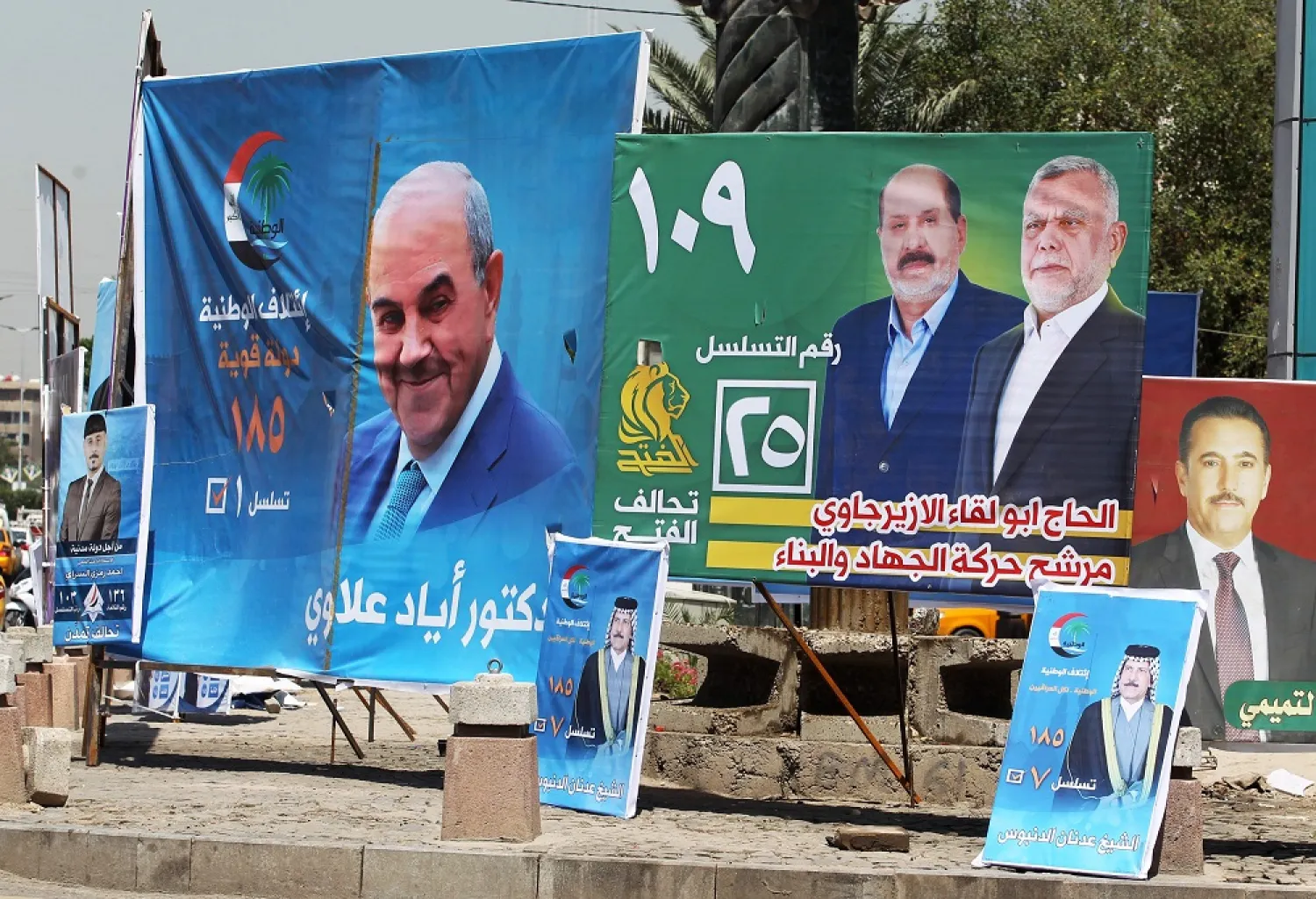
Iraqi elections posters. (AFP)
TT

New Iraqi Political Bloc Includes Wataniya Alliance, Prominent Sunni Figures

Iraqi elections posters. (AFP)

A number of leading Iraqi Sunni figures met on Monday in the residence of parliament Speaker Salim al-Jabouri to form a national bloc capable of confronting upcoming challenges, a statement from his office said.

Members of the Wataniya alliance, led by Vice President Ayad Allawi, attended the meeting, in addition to a number of deputies and political figures “wishing to strike joint agreements and deals,” said the statement.

Participants discussed the latest Iraqi developments, the results of the May 12 elections and allegations of vote fraud. They also tackled factors that may “help political blocs form a strong national government.”

In addition to Jabouri and Saleh Al-Mutlaq from the Wataniya alliance, the meeting was attended by Mohammed Tamim, an Arab Sunni lawmaker from Kirkuk, Ahmed Al Jubouri, member of the Tamadon (Civilized) alliance in Nineveh, Raed al-Dahlaki an MP from the National Iraqi Alliance, Qassem Al-Fahadawi, current Minister of Electricity and other Sunni figures.

The meeting was not attended by figures from al-Qarar Al-Iraqi Coalition, led by Iraqi Vice President Osama al-Nujaifi or Al-Hal (the Solution) alliance led by the brothers, Jamal and Mohammed al-Karbouli.

Head of the “Arab Project in Iraq”, Khamis Al Khanjar also did not attend.

Although the gatherers sought to give the meeting a national image, all the participants were Sunni political figures.

This confirmed views by some analysts that new political forces in Iraq are seeking to form a large Sunni bloc by allying with the Qarar (Decision) alliance, which won 13 seats, and al-Hal, which won around 10.

This united bloc would be able to negotiate with Shiite and Kurdish figures on the shape and nature of the next cabinet.

Other analysts predicted the collapse of the Wataniya alliance to the benefit of other Sunni leaderships, similar to what happened in 2010 with the Iraqiya coalition, headed by Allawi.

Sources close to Monday’s meeting told Asharq Al-Awsat that participants did not plan to form a large Sunni bloc.

According Hashem al-Haboubi, the deputy secretary general of the Iraqi National Accord movement, the new bloc would help strengthen the position of the Wataniya alliance and not the opposite.



EU Condemns Israel's West Bank Control Measures

The Israeli settlement of Har Homa, seen from the West Bank city of Bethlehem, Tuesday, Dec. 17, 2024. (AP)
TT

EU Condemns Israel's West Bank Control Measures

The Israeli settlement of Har Homa, seen from the West Bank city of Bethlehem, Tuesday, Dec. 17, 2024. (AP)

The European Union on Monday condemned new Israeli measures to tighten control of the West Bank and pave the way for more settlements in the occupied Palestinian territory, AFP reported.

"The European Union condemns recent decisions by Israel's security cabinet to expand Israeli control in the West Bank. This move is another step in the wrong direction," EU spokesman Anouar El Anouni told journalists.


Atrocities in Sudan's El-Fasher Were 'Preventable Human Rights Catastrophe'

Sudanese displaced people who left El Fasher after its fall, sit in the shade in Tawila at the Rwanda camp reception point on December 17, 2025. (Photo by AFP)
TT

Atrocities in Sudan's El-Fasher Were 'Preventable Human Rights Catastrophe'

Sudanese displaced people who left El Fasher after its fall, sit in the shade in Tawila at the Rwanda camp reception point on December 17, 2025. (Photo by AFP)

The atrocities unleashed on El-Fasher in Sudan's Darfur region last October were a "preventable human rights catastrophe", the United Nations said Monday, warning they now risked being repeated in the neighbouring Kordofan region.


"My office sounded the alarm about the risk of mass atrocities in the besieged city of El-Fasher for more than a year ... but our warnings were ignored," UN rights chief Volker Turk told the Human Rights Council in Geneva.


He added that he was now "extremely concerned that these violations and abuses may be repeated in the Kordofan region".


Arab League Condemns Israel's Decisions to Alter Legal, Administrative Status of West Bank

A general view shows the opening session of the meeting of Arab foreign ministers at the Arab League Headquarters (Reuters)
TT

Arab League Condemns Israel's Decisions to Alter Legal, Administrative Status of West Bank

A general view shows the opening session of the meeting of Arab foreign ministers at the Arab League Headquarters (Reuters)

The General Secretariat of the Arab League strongly condemned decisions by Israeli occupation authorities to impose fundamental changes on the legal and administrative status of the occupied Palestinian territories, particularly in the West Bank, describing them as a dangerous escalation and a flagrant violation of international law, international legitimacy resolutions, and signed agreements, SPA reported.

In a statement, the Arab League said the measures include facilitating the confiscation of private Palestinian property and transferring planning and licensing authorities in the city of Hebron and the area surrounding the Ibrahimi Mosque to occupation authorities.

It warned of the serious repercussions of these actions on the rights of the Palestinian people and on Islamic and Christian holy sites.

The statement reaffirmed the Arab League’s firm support for the legitimate rights of the Palestinian people, foremost among them the establishment of their independent state on the June 4, 1967 borders, with East Jerusalem as its capital.