
VAR: The Brave New World Bringing Distinct Echoes of Football’s Past

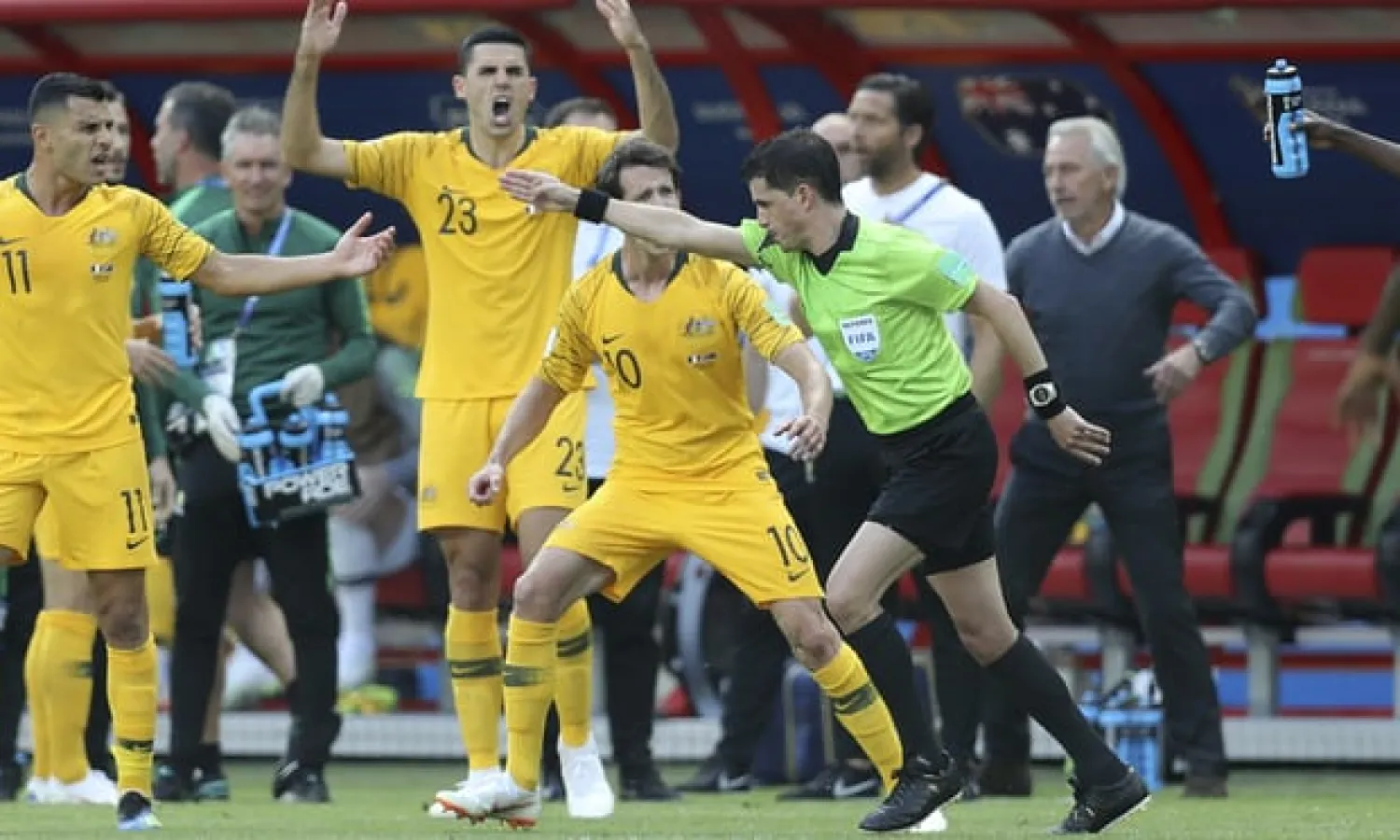
 Australian players react angrily as the Uruguayan referee, Andrés Cunha, awards France a penalty after consulting the VAR during the sides’ Group C match. Photograph: David Vincent/AP
Australian players react angrily as the Uruguayan referee, Andrés Cunha, awards France a penalty after consulting the VAR during the sides’ Group C match. Photograph: David Vincent/AP
TT

VAR: The Brave New World Bringing Distinct Echoes of Football’s Past

 Australian players react angrily as the Uruguayan referee, Andrés Cunha, awards France a penalty after consulting the VAR during the sides’ Group C match. Photograph: David Vincent/AP
Australian players react angrily as the Uruguayan referee, Andrés Cunha, awards France a penalty after consulting the VAR during the sides’ Group C match. Photograph: David Vincent/AP

Welcome, VAR, to the World Cup. Take a seat. We’ve been expecting you. On matchday three of Russia 2018, Fifa’s early-stage experiment with video technology stood briefly centre stage. This, finally, was the new world.

Although, in the event, the debate around two marginal penalty decisions for France and Argentina will be jarringly familiar to anyone with any experience of the previous 140 years or so of football refereeing. Plus ça change, plus c’est the same old story all over again: with the same argument, the same subjective calls, the same claims of injustice.

Saturday afternoon brought two games 650 miles apart. Both had similar incidents involving a trip in the area. Both saw two different applications of the process to two very similar scenarios.

In the early kick-off in Kazan, France were awarded a penalty shortly before the hour for a trip on Antoine Griezmann by the trailing leg of Josh Risdon. Initially no penalty was given by the on-field referee. Instantly the video assistant ref informed his colleague that the incident should be reviewed. A penalty was then awarded.

Three hours later in Moscow, Cristian Pavón went down in the Iceland penalty area after a challenge from Birkir Már Sævarsson. Once again play was waved on. This time there was no VAR interjection. Iceland took a goalkick and the game continued.

At which point enter, if not quite controversy, then evidence that a system designed to still the tedium of endless debate has its own potential for irresolvable differences of opinion.

The first point is that ultimately both refereeing decisions were correct, if only because neither was obviously wrong. Whatever one person with the right authority decides: that is correct. So far, so much the same.

The element of controversy comes because both incidents would seem to have the same level of claim on a video review, the second non-reviewed one arguably more so. Argentina’s fans will see a trip on Pavón. It is a matter of opinion, as ever. But replays suggest there was at least as much contact and/or reviewable grey area as in the Griezmann incident.

At the end of which VAR has offered us uncertainty and 50-50 judgment at one remove. We have simply kicked this endlessly tedious debate into some longer grass a little further off. The parameters have been narrowed. Obvious mistakes can be weeded out. But where once the subjectivity came on-field, now it comes in the VAR’s office.

Opponents of VAR will question whether it really is worth interrupting the game for this. Is it worth obsessing over the thoughts of the referees, incurring all the expense (financial and otherwise) of officials and screens, simply to introduce an incremental degree of semi-accuracy to an essentially random series of on-field collisions?

What we have learned from the first real VAR moment at this World Cup is that no two VARs are the same, that there will not be a uniform review standard. On top of this, as we always knew in a chaotic, always marginal game, that there is no objective truth to be rooted out. Papering as thickly as possible over the cracks is all that can be hoped for here.

At the end of which the VAR-flavoured universe looks not dissimilar to the previous one. Fans of both Australia and Argentina can leave their World Cup matches aggrieved over decisions made. The referees can claim to have made the correct decision simply by making one where one was required. The closest to a clear error is the decision by the VAR in Moscow not to seek a review of the Pavón trip. But even then his judgment call is simply that.

Debate. Matters of opinion. Hard luck stories. Football can’t help but provide this. No matter how finely we split the atom, its core will remain fluid and unstable. For now, with another VAR penalty awarded later in the day for Peru – correctly this time – it is simply time to buckle up and enjoy the ride with a technology that will always carry its own margins of uncertainty.

The Guardian Sport


Tottenham Hotspur Sack Head Coach Thomas Frank

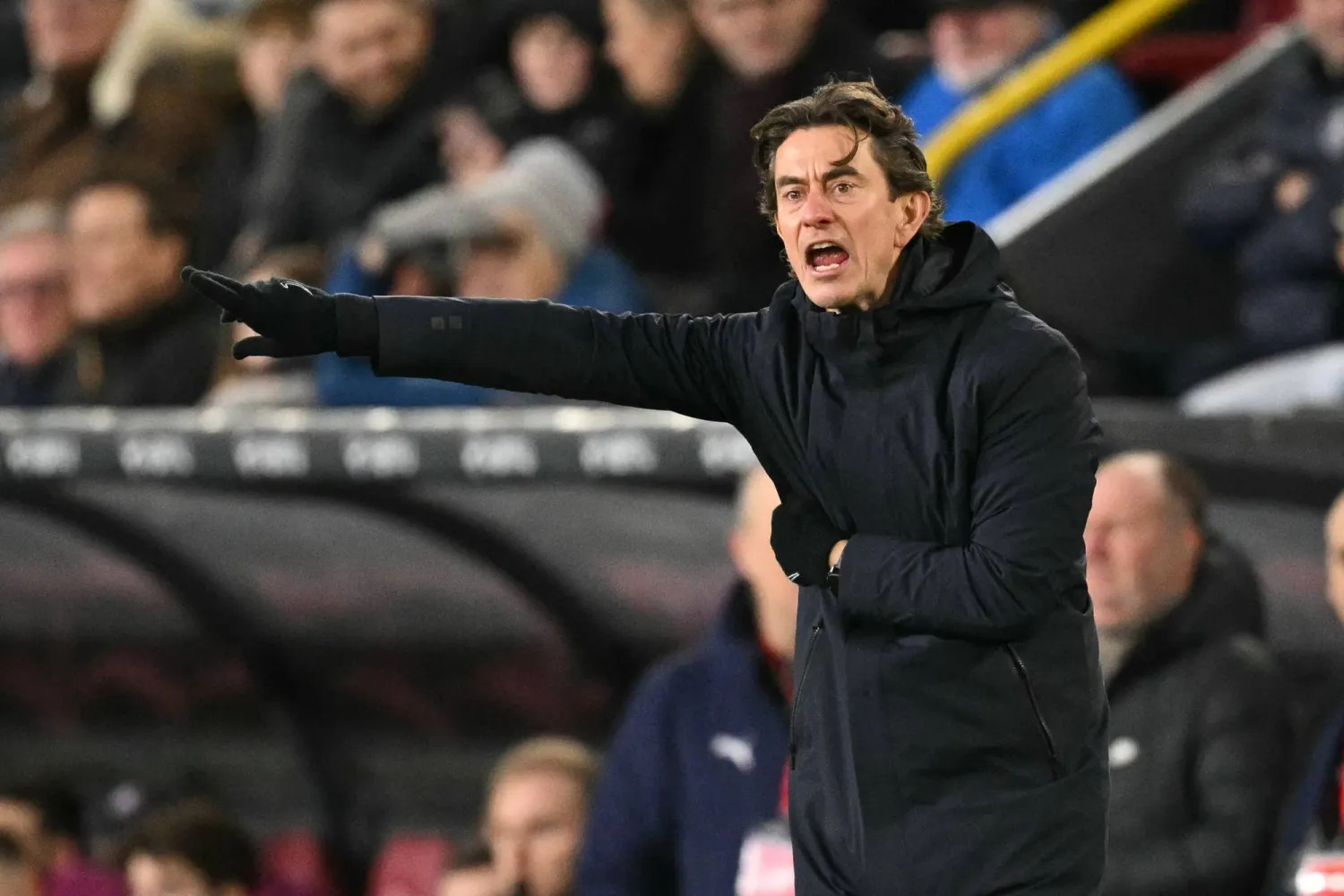
(FILES) Tottenham Hotspur's Danish head coach Thomas Frank gestures on the touchline during the English Premier League football match between Burnley and Tottenham Hotspur at Turf Moor in Burnley, north-west England on January 24, 2026. (Photo by Oli SCARFF / AFP)/
TT

Tottenham Hotspur Sack Head Coach Thomas Frank

(FILES) Tottenham Hotspur's Danish head coach Thomas Frank gestures on the touchline during the English Premier League football match between Burnley and Tottenham Hotspur at Turf Moor in Burnley, north-west England on January 24, 2026. (Photo by Oli SCARFF / AFP)/

Thomas Frank was fired by Tottenham on Wednesday after only eight months in charge and with his team just five points above the relegation zone in the Premier League.

Despite leading Spurs to the round of 16 in the Champions League, Frank has overseen a desperate domestic campaign. A 2-1 loss to Newcastle on Tuesday means Spurs are still to win in the league in 2026.

“The Club has taken the decision to make a change in the Men’s Head Coach position and Thomas Frank will leave today,” Tottenham said in a statement. “Thomas was appointed in June 2025, and we have been determined to give him the time and support needed to build for the future together.

“However, results and performances have led the Board to conclude that a change at this point in the season is necessary.”

Frank’s exit means Spurs are on the lookout for a sixth head coach in less than seven years since Mauricio Pochettino departed in 2019.


Marseille Coach De Zerbi Leaves After Humiliating 5-0 Loss to PSG 

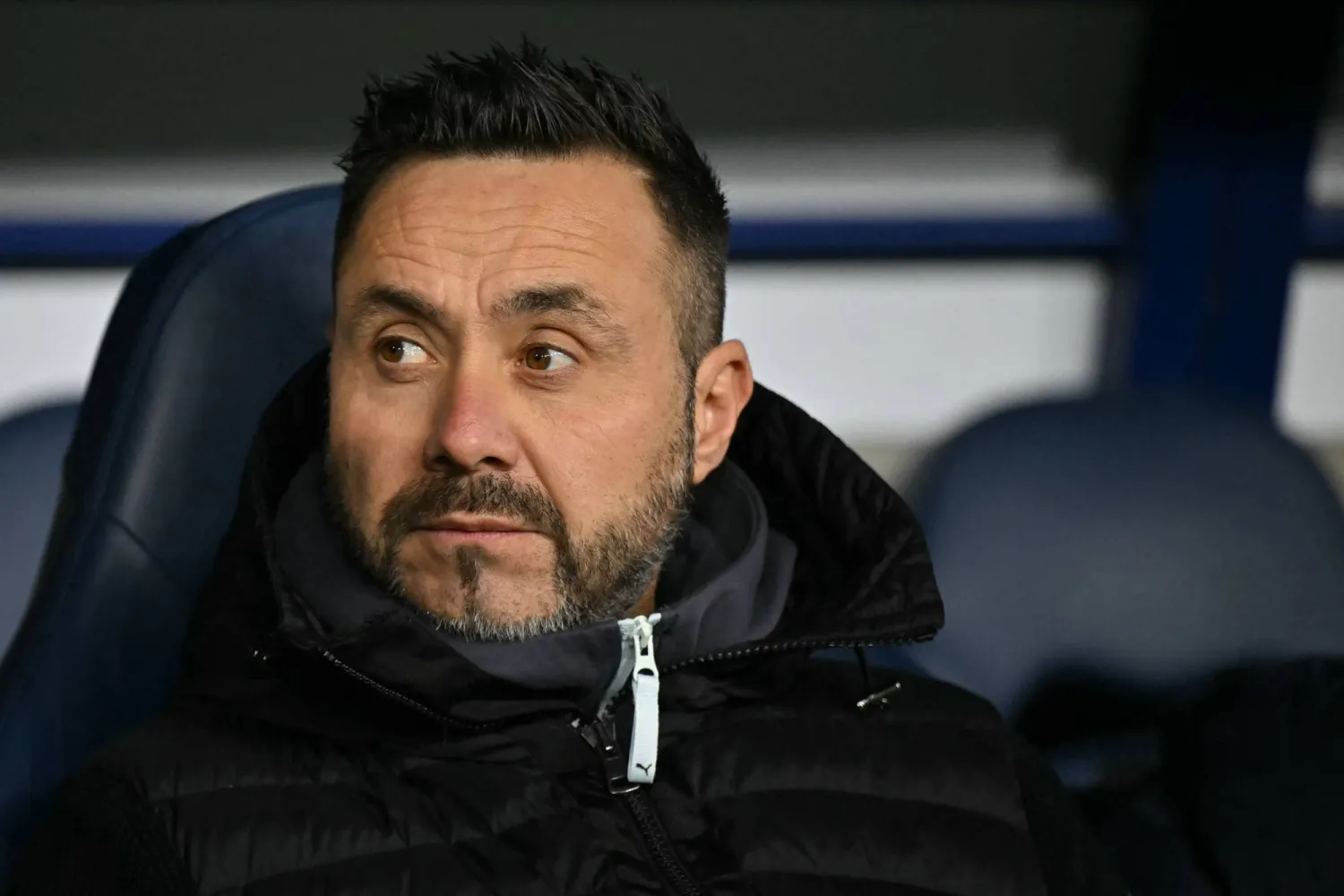
Marseille's Italian coach Roberto De Zerbi looks on from the technical area during the French Cup round of 32 football match between FC Bayeux and Olympique de Marseille (OM) at the Michel-d'Ornano Stadium in Caen on January 13, 2026. (AFP) 
TT

Marseille Coach De Zerbi Leaves After Humiliating 5-0 Loss to PSG 

Marseille's Italian coach Roberto De Zerbi looks on from the technical area during the French Cup round of 32 football match between FC Bayeux and Olympique de Marseille (OM) at the Michel-d'Ornano Stadium in Caen on January 13, 2026. (AFP) 

Marseille coach Roberto De Zerbi is leaving the French league club in the wake of a 5-0 thrashing at the hands of PSG in French soccer biggest game.

The nine-time French champions said on Wednesday that they have ended “their collaboration by mutual agreement.”

The heavy loss Sunday at the Parc des Princes restored defending champion PSG’s two-point lead over Lens after 21 rounds, with Marseille in fourth place after the humiliating defeat.

De Zerbi's exit followed another embarrassing 3-0 loss at Club Brugge two weeks ago that resulted in Marseille exiting the Champions League.

De Zerbi, who had apologized to Marseille fans after the loss against bitter rival PSG, joined Marseille in 2024 after two seasons in charge at Brighton. After tightening things up tactically in Marseille during his first season, his recent choices had left many observers puzzled.

“Following consultations involving all stakeholders in the club’s leadership — the owner, president, director of football and head coach — it was decided to opt for a change at the head of the first team,” Marseille said. “This was a collective and difficult decision, taken after thorough consideration, in the best interests of the club and in order to address the sporting challenges of the end of the season.”

De Zerbi led Marseille to a second-place finish last season. Marseille did not immediately announce a replacement for De Zerbi ahead of Saturday's league match against Strasbourg.

Since American owner Frank McCourt bought Marseille in 2016, the former powerhouse of French soccer has failed to find any form of stability, with a succession of coaches and crises that sometimes turned violent.

Marseille dominated domestic soccer in the late 1980s and early 1990s. It was the only French team to win the Champions League before PSG claimed the trophy last year. It hasn’t won its own league title since 2010.


Olympic Fans Hunt for Plushies of Mascots Milo and Tina as They Fly off Shelves 

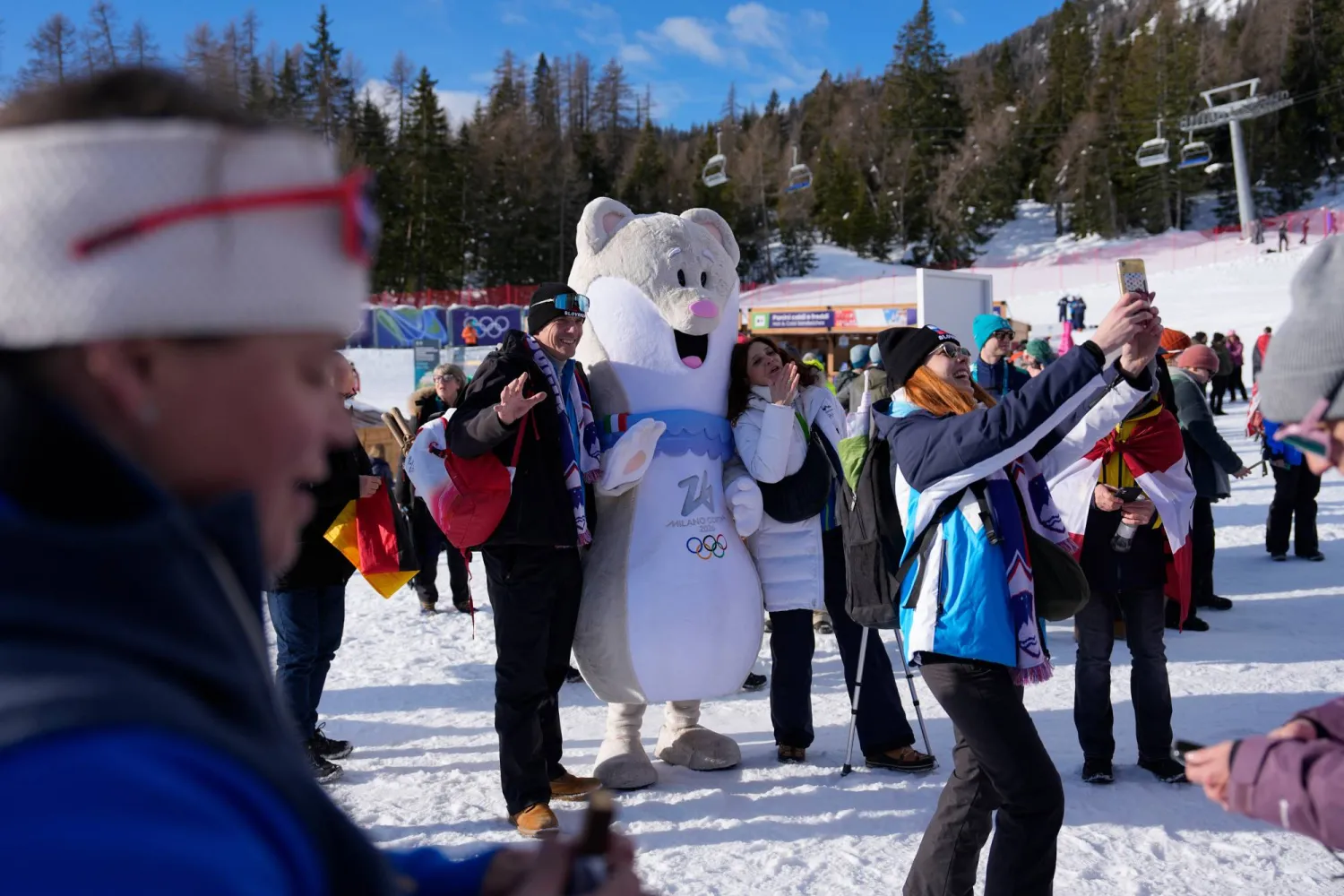
Fans take selfies with the Olympic mascot Tina at the finish area of an alpine ski, slalom portion of a women's team combined race, at the 2026 Winter Olympics, in Cortina d'Ampezzo, Italy, Tuesday, Feb. 10, 2026. (AP)
TT

Olympic Fans Hunt for Plushies of Mascots Milo and Tina as They Fly off Shelves 

Fans take selfies with the Olympic mascot Tina at the finish area of an alpine ski, slalom portion of a women's team combined race, at the 2026 Winter Olympics, in Cortina d'Ampezzo, Italy, Tuesday, Feb. 10, 2026. (AP)

For fans of the Milan Cortina Olympic mascots, the eponymous Milo and Tina, it's been nearly impossible to find a plush toy of the stoat siblings in Milan and Cortina d’Ampezzo.

Many of the official Olympics stores in the host cities are already sold out, less than a week into the Winter Games.

“I think the only way to get them is to actually win a medal,” Julia Peeler joked Tuesday in central Milan, where Tina and Milo characters posed for photos with fans.

The 38-year-old from South Carolina is on the hunt for the plushies for her niece. She's already bought some mascot pins, but she won't wear them on her lanyard. Peeler wants to avoid anyone trying to swap for them in a pin trade, a popular Olympic pastime.

Tina, short for Cortina, is the lighter-colored stoat and represents the Olympic Winter Games. Her younger brother Milo, short for Milano, is the face of the Paralympic Winter Games.

Milo was born without one paw but learned to use his tail and turn his difference into a strength, according to the Olympics website. A stoat is a small mustelid, like a weasel or an otter.

The animals adorn merchandise ranging from coffee mugs to T-shirts, but the plush toys are the most popular.

They're priced from 18 to 58 euros (about $21 to $69) and many of the major official stores in Milan, including the largest one at the iconic Duomo Cathedral, and Cortina have been cleaned out. They appeared to be sold out online Tuesday night.

Winning athletes are gifted the plush toys when they receive their gold, silver and bronze medals atop the podium.

Broadcast system engineer Jennifer Suarez got lucky Tuesday at the media center in Milan. She's been collecting mascot toys since the 2010 Vancouver Games and has been asking shops when they would restock.

“We were lucky we were just in time,” she said, clutching a tiny Tina. “They are gone right now.”

Friends Michelle Chen and Brenda Zhang were among the dozens of fans Tuesday who took photos with the characters at the fan zone in central Milan.

“They’re just so lovable and they’re always super excited at the Games, they are cheering on the crowd,” Chen, 29, said after they snapped their shots. “We just are so excited to meet them.”

The San Franciscan women are in Milan for the Olympics and their friend who is “obsessed” with the stoats asked for a plush Tina as a gift.

“They’re just so cute, and stoats are such a unique animal to be the Olympic mascot,” Zhang, 28, said.

Annie-Laurie Atkins, Peeler's friend, loves that Milo is the mascot for Paralympians.

“The Paralympics are really special to me,” she said Tuesday. “I have a lot of friends that are disabled and so having a character that also represents that is just incredible.”