


Black Brazilians are Ditching Hair Straighteners and White Standards of Beauty

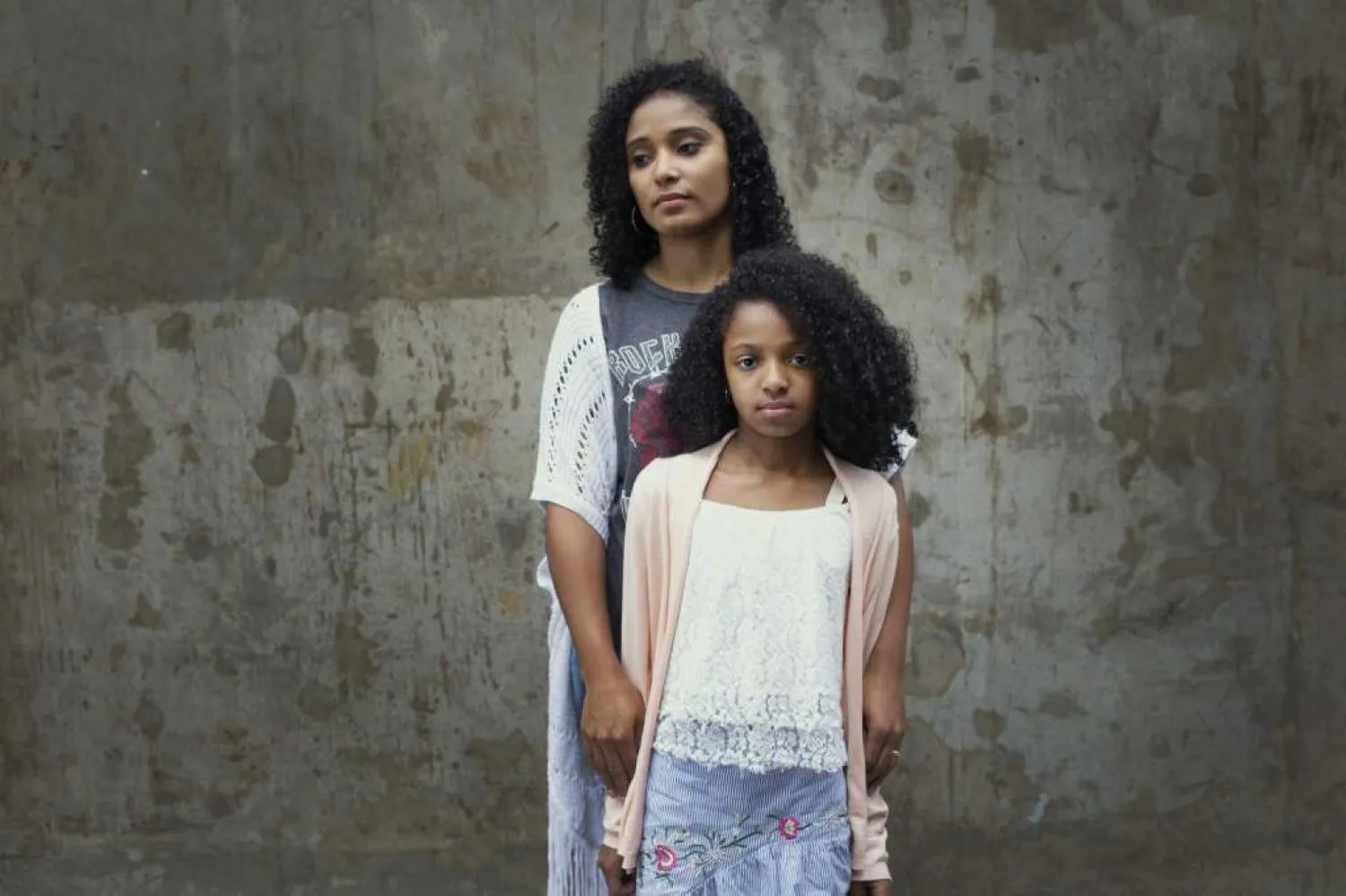
Aparecida Jesus and her daughter, Ana Luiza, in downtown Sao Paulo. (The Washington Post)
TT

Black Brazilians are Ditching Hair Straighteners and White Standards of Beauty

Aparecida Jesus and her daughter, Ana Luiza, in downtown Sao Paulo. (The Washington Post)

Bruna Aparecida smiled cautiously at her reflection as a hairdresser snipped the last strands of her straight hair. Her head was crowned with curls.

"I didn't know myself without straight hair," said Aparecida, 27, who used chemical relaxers for nearly a decade before deciding to go natural. She used to be the only black woman at the bank where she works who had kinky hair. Today, she is one of six.

"It's all the rage this year. Many of my friends are doing it," she said.

Black and brown Brazilians make up over half of the country's population, but you wouldn't know it by looking at the beauty industry. Brazil's innovative hair straightening treatments - sold around the world - have long chased white standards of beauty. Ten years ago, it was not unusual to find robed women packed into a room at a salon, covering their mouths with rags to avoid inhaling fumes while hairdressers doused their locks in formaldehyde for a pin-straight look. Now, a growing number of black Brazilians are ditching the hair straighteners and embracing their curls.

The resurgence of natural hair has mirrored a rise in black empowerment in Brazil. The number of Brazilians identifying as black grew 15 percent in four years, according to the 2016 census. Meanwhile, inspired by the movie "Black Panther," Afrofuturism - a movement that explores a futuristic vision of Africa and the African diaspora - has taken off, with movies, plays and music featuring black protagonists.

Yet racial inequality here remains stark. The average salary for a white citizen is nearly 50 percent higher than for a black citizen. Black and brown Brazilians made up 70 percent of the country's murder victims in 2016, according to the most recent government data made public. Earlier this year, the assassination of black Rio councilwoman Marielle Franco sparked a debate about racism and police brutality.

In this context, the Afro has emerged as a symbol of resistance.

The black beauty market has been growing an estimated 20 percent a year in Brazil, helped by products geared toward women transitioning to more natural looks, according to Kline Market Research Group. Online searches for "Afro hair" have tripled here in the past two years, according to Google Labs. #CabeloCrespo, a "kinky hair" hashtag once used on photos of straightening makeovers, now generates thousands of images of billowy Afros.

"I had no idea of the size of the market when I opened my salon," said Almiro Nunes, 44, owner of Curls Clinic, a beauty parlor in São Paulo that specializes in naturally curly hair. Nunes, who started with 10 clients eight years ago, sees an average of 60 clients a day and plans to expand to a second salon.

It's not just the salons that seem to have gotten the memo. Pharmacies and department stores that used to primarily stock shampoos for white clients now have whole sections dedicated to natural black hair. This has opened up options for black women and girls who felt they had no choice but to straighten their hair.

That was the case for Aline Bibiano, 27. Bullied by her white classmates for her "bad" hair, she started relaxing it at 8 years old. "I'd rather be in a wheelchair than have bad hair," she once told her mom.

When she decided to grow out her hair six years ago, she turned to the Internet for support. "I said, 'Is anyone else out there doing this?'" There, she discovered tips on how to go about the process, which can take three years. Today, Bibiano writes a popular column on curly and kinky hair for AllThingsHair.com, a site run by the beauty product company Unilever. "Women now have the references I didn't have," she said. "On Instagram and Facebook, girls are coming to terms with curly hair."

But the deep well of prejudice against black hair is just beginning to be drained. One in three Brazilian women said in a 2017 Google study that they have encountered prejudice because of their hair. Bibiano routinely deals with harassment.

For the millions of slaves trafficked into Brazil from western Africa, hairstyle conveyed marital status, religion, social position and ethnic identity. When they arrived in Brazil, their hair was promptly shaved.

"In order to distance the black slaves from their cultural origin, this shaving, done under the pretense of hygiene, had the intention of undermining any sense of ethnic belonging that those people could have carried in their relationship with their hair," said Amanda Braga, who wrote a book about the history of black beauty in Brazil.

"It was a way to make these black slaves anonymous in the new world, presenting them to a new continent without the references they had carried in their hairstyles."

For many black Brazilians, a return to natural hair is a way to reconnect to their heritage.

"It is a political act," said Andressa Maciel, a 26-year-old filmmaker. "My hair is the first thing people see. It says, 'This is Andressa, this is her ancestry.'" She sees her hair as a way to reclaim her African roots. "Racism makes you not want to be who you are. I want kids to see my hair. It needs to be in the mirror, so they know black hair is natural and beautiful. That they came from kings and queens."

Women like Maciel have found their muse in Taís Araújo, one of the first actresses to portray a wealthy woman with kinky hair, on a Brazilian television show a decade ago. Today, Araújo stars in "Mister Brau," a comedy about the misadventures of a well-to-do black couple who move into an elite all-white neighborhood in Rio de Janeiro. The show combines slapstick comedy with quotes from South African anti-apartheid leader Nelson Mandela, civil rights history and story lines about racism. When it came time to choose her hair style for the show, Araújo said it was a political decision.

"When we talk about the role of television, especially in Brazil, of open access television, we see that some sense of social responsibility can change a country," she said in an interview.

"Brazil has discovered its own identity. Cultural changes don't happen overnight. We are in that process and it is very beautiful to see." In recent weeks, she stood out from the other glossy haired models and celebrities gracing magazine covers on newsstands. Arms crossed, she looked defiantly at the camera from the cover of the women's magazine Claudia, sporting a massive mane.

Watching Araújo on television inspired Aparecida Jesus, 34, to free her straightened locks four years ago. Today, her 10-year-old daughter, Ana Luiza, is the same age as Jesus was when she first started using chemical relaxers. Ana Luiza gets bullied at school for her big hair, just like her mom did.

"I tell her, her hair is beautiful the way it is. I want to change the norm." On a recent afternoon, Ana Luiza watched as stylists expertly twisted and combed her mom's curls. "It was just supposed to be me today," said Jesus. "But now she wants her hair done, too."

The Washington Post


US Astronaut to Take her 3-year-old's Cuddly Rabbit Into Space

FILE PHOTO: An evening launch of a SpaceX Falcon 9 rocket carrying 20 Starlink V2 Mini satellites, from Space Launch Complex at Vandenberg Space Force Base is seen over the Pacific Ocean from Encinitas, California, US, June 23, 2024. REUTERS/Mike Blake/File Photo
TT

US Astronaut to Take her 3-year-old's Cuddly Rabbit Into Space

FILE PHOTO: An evening launch of a SpaceX Falcon 9 rocket carrying 20 Starlink V2 Mini satellites, from Space Launch Complex at Vandenberg Space Force Base is seen over the Pacific Ocean from Encinitas, California, US, June 23, 2024. REUTERS/Mike Blake/File Photo

When the next mission to the International Space Station blasts off from Florida next week, a special keepsake will be hitching a ride: a small stuffed rabbit.

American astronaut and mother, Jessica Meir, one of the four-member crew, revealed Sunday that she'll take with her the cuddly toy that belongs to her three-year-old daughter.

It's customary for astronauts to go to the ISS, which orbits 250 miles (400 kilometers) above Earth, to take small personal items to keep close during their months-long stint in space.

"I do have a small stuffed rabbit that belongs to my three-year-old daughter, and she actually has two of these because one was given as a gift," Meir, 48, told an online news conference.

"So one will stay down here with her, and one will be there with us, having adventures all the time, so that we'll keep sending those photos back and forth to my family," AFP quoted her as saying.

US space agency NASA says SpaceX Crew-12 will lift off on a SpaceX Falcon 9 rocket from Cape Canaveral in Florida to the orbiting scientific laboratory early Wednesday.

The mission will be replacing Crew-11, which returned to Earth in January, a month earlier than planned, during the first medical evacuation in the space station's history.

Meir, a marine biologist and physiologist, served as flight engineer on a 2019-2020 expedition to the space station and participated in the first all-female spacewalks.

Since then, she's given birth to her daughter. She reflected Sunday on the challenges of being a parent and what is due to be an eight-month separation from her child.

"It does make it a lot difficult in preparing to leave and thinking about being away from her for that long, especially when she's so young, it's really a large chunk of her life," Meir said.

"But I hope that one day, she will really realize that this absence was a meaningful one, because it was an adventure that she got to share into and that she'll have memories about, and hopefully it will inspire her and other people around the world," Meir added.

When the astronauts finally get on board the ISS, they will be one of the last crews to live on board the football field-sized space station.

Continuously inhabited for the last quarter century, the aging ISS is scheduled to be pushed into Earth's orbit before crashing into an isolated spot in the Pacific Ocean in 2030.

The other Crew-12 astronauts are Jack Hathaway of NASA, European Space Agency astronaut Sophie Adenot, and Russian cosmonaut Andrey Fedyaev.


iRead Marathon Records over 6.5 Million Pages Read

Participants agreed that the number of pages read was not merely a numerical milestone - SPA
TT

iRead Marathon Records over 6.5 Million Pages Read

Participants agreed that the number of pages read was not merely a numerical milestone - SPA

The fifth edition of the iRead Marathon achieved a remarkable milestone, surpassing 6.5 million pages read over three consecutive days, in a cultural setting that reaffirmed reading as a collective practice with impact beyond the moment.

Hosted at the Library of the King Abdulaziz Center for World Culture (Ithra) and held in parallel with 52 libraries across 13 Arab countries, including digital libraries participating for the first time, the marathon reflected the transformation of libraries into open, inclusive spaces that transcend physical boundaries and accommodate diverse readers and formats.

Participants agreed that the number of pages read was not merely a numerical milestone, but a reflection of growing engagement and a deepening belief in reading as a daily, shared activity accessible to all, free from elitism or narrow specialization.

Pages were read in multiple languages and formats, united by a common conviction that reading remains a powerful way to build genuine connections and foster knowledge-based bonds across geographically distant yet intellectually aligned communities, SPA reported.

The marathon also underscored its humanitarian and environmental dimension, as every 100 pages read is linked to the planting of one tree, translating this edition’s outcome into a pledge of more than 65,000 trees. This simple equation connects knowledge with sustainability, turning reading into a tangible, real-world contribution.

The involvement of digital libraries marked a notable development, expanding access, strengthening engagement, and reinforcing the library’s ability to adapt to technological change without compromising its cultural role. Integrating print and digital reading added a contemporary dimension to the marathon while preserving its core spirit of gathering around the book.

With the conclusion of the iRead Marathon, the experience proved to be more than a temporary event, becoming a cultural moment that raised fundamental questions about reading’s role in shaping awareness and the capacity of cultural initiatives to create lasting impact. Three days confirmed that reading, when practiced collectively, can serve as a meeting point and the start of a longer cultural journey.


Imam Turki bin Abdullah Royal Reserve Launches Fifth Beekeeping Season

Jazan’s Annual Honey Festival - File Photo/SPA
TT

Imam Turki bin Abdullah Royal Reserve Launches Fifth Beekeeping Season

Jazan’s Annual Honey Festival - File Photo/SPA

The Imam Turki bin Abdullah Royal Nature Reserve Development Authority launched the fifth annual beekeeping season for 2026 as part of its programs to empower the local community and regulate beekeeping activities within the reserve.

The launch aligns with the authority's objectives of biodiversity conservation, the promotion of sustainable environmental practices, and the generation of economic returns for beekeepers, SPA reported.

The authority explained that this year’s beekeeping season comprises three main periods associated with spring flowers, acacia, and Sidr, with the start date of each period serving as the official deadline for submitting participation applications.

The authority encouraged all interested beekeepers to review the season details and attend the scheduled virtual meetings to ensure organized participation in accordance with the approved regulations and the specified dates for each season.
