


What Does Didier Deschamps Want from his France Team? If Only He Knew

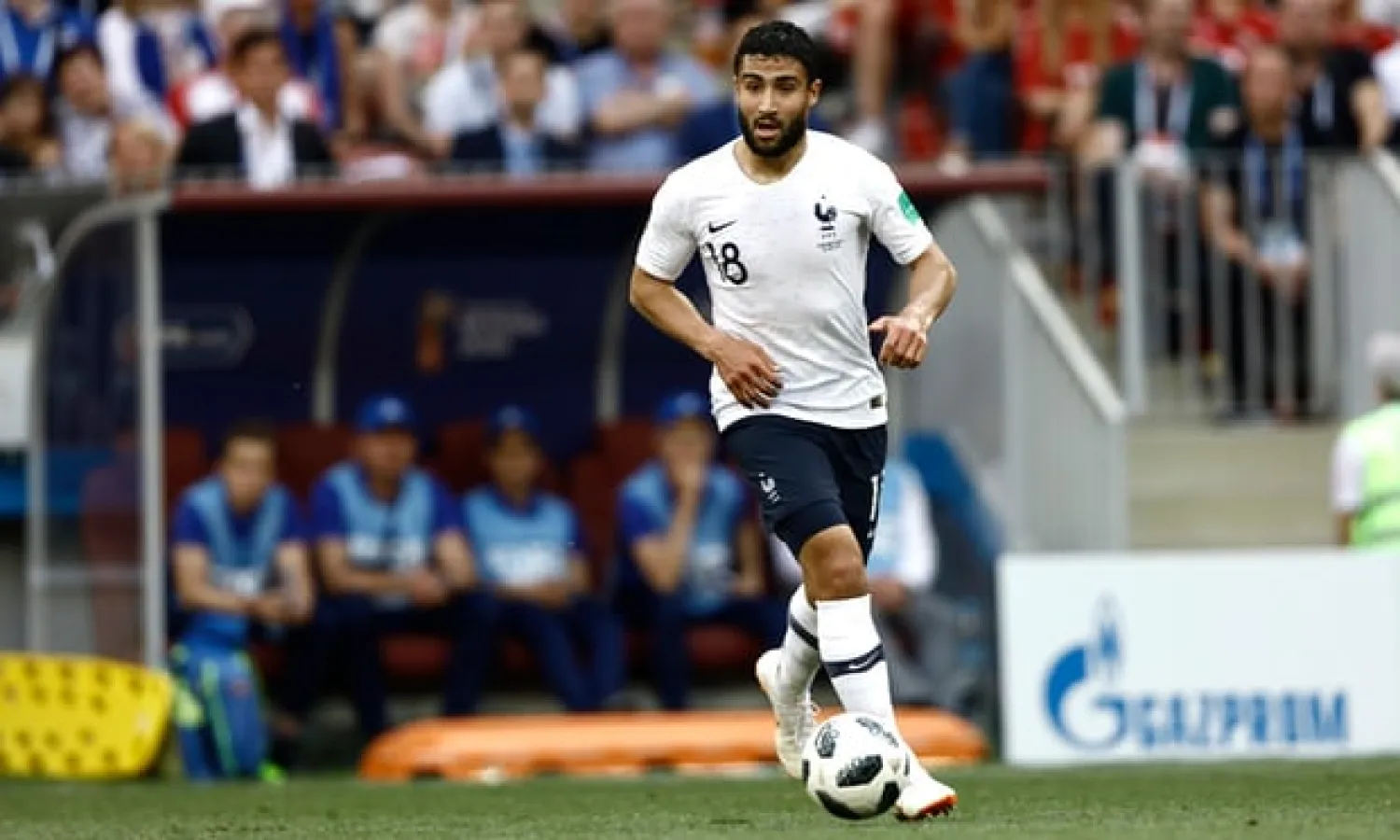
 Nabil Fekir stood out amid the dross in France’s goalless draw against Denmark. Photograph: NurPhoto/Getty Images
Nabil Fekir stood out amid the dross in France’s goalless draw against Denmark. Photograph: NurPhoto/Getty Images
TT

What Does Didier Deschamps Want from his France Team? If Only He Knew

 Nabil Fekir stood out amid the dross in France’s goalless draw against Denmark. Photograph: NurPhoto/Getty Images
Nabil Fekir stood out amid the dross in France’s goalless draw against Denmark. Photograph: NurPhoto/Getty Images

France and Denmark emphatically ended a streak of 36 matches without a goalless draw at Russia 2018. Their 90-minute standoff in Moscow took both sides through to the last-16 but it represented something of a nadir for this World Cup, with France somehow managing to double down on their slow, turgid opening to the tournament. The game also posed further selection questions for Didier Deschamps as he attempts to wrestle some form from his supremely talented yet cripplingly uninspired squad. Most notably: what should he do with Nabil Fékir, the only player who posed a consistent threat against Denmark.

With France already assured of a place in the last-16, Deschamps made some changes for the Denmark game. Steve Mandanda replaced the rested Hugo Lloris in goal; Djibril Sidibé and Presnel Kimpembe played in defence; Steven N’Zonzi took Paul Pogba’s place in midfield; and Thomas Lemar and Ousmane Dembélé played out wide in place of Blaise Matuidi and Kylian Mbappé. The tired and trusted 4-4-2 remained.

The hope was that this team would offer more balance. Lemar, who stood out on the left of the Monaco midfield when they stormed to the title in 2017, was meant to provide the intensity and pace opposite Ousmane Dembélé that Blaise Matuidi had not against Peru; N’Zonzi was there to offer more discipline and defensive coverage than Pogba, releasing Ngolo Kanté to press higher up and firefight across the midfield; and Djibril Sidibé was supposed to give the team some much-needed width from full-back. That was the theory anyway. However, yet again, France were lacking in attacking cohesion, did not move the ball quickly and did not press with enough vigour.

Chopping and changing players is nothing new for Deschamps. He tinkered his way through the group stages of Euro 2016 before stumbling across a setup that coalesced. When 1-0 down to the Republic of Ireland at half-time in the round of 16, Deschamps switched Kanté for Kingsley Coman and moved Antoine Griezmann inside to play off Olivier Giroud in a 4-4-2 formation. Within 20 minutes Griezmann had scored twice, Giroud had an assist and France were as good as through.

The hope before the Denmark game was that, having fumbled his way through the group again, Deschamps would once more discover some form in the depths of his squad. He did not have much luck.

Lemar’s timid club form continued on to the international arena; Sidibé was untroubled defensively yet barely made an impact in attacks; and Dembélé produced nothing more than a few nice touches. Nzonzi was the only starter to put Deschamps under genuine pressure to keep him in the team. He was assured on the ball, imposing and physical when necessary, and disciplined throughout alongside Kanté. Pogba, previously untouchable, is now under threat.

The standout player in the game was not one of the starters but Nabil Fékir, who came on for Griezmann midway through the second half. He looked characteristically positive and inventive, particularly in contrast to Griezmann, who has now put in three tired and wayward displays at this World Cup. Perhaps accentuated by the dross around him, Fékir came closest to awakening France, and the Luzhniki crowd, from their slumber. The Lyon captain again gave France a different dimension to Giroud’s physicality or the speed and directness of Mbappé or Dembélé. The same can be said of his previous cameo displays, particularly against Australia.

Fékir, like Griezmann, is far more comfortable in a central role. He has impressed when replacing Griezmann in recent fixtures and when he started at the tip of a diamond in France’s first warm-up game before the World Cup. However, it is difficult to see how he can make it into the first XI. Dropping Griezmann, although not undeserved on form, seems an unlikely option for Deschamps, and playing both of them leaves the manager with familiar and unpalatable tradeoffs.

If Griezmann were to join Giroud in attack with Fékir slotting in behind them at the tip of a diamond, Mbappé and Dembélé would have to miss out. Pairing Mbappé and Griezmann up front would squeeze Giroud out. Although an enticing proposition theoretically, it is a scenario that never lasts long under Deschamps. Giroud’s ability to act as a focal point and bring others into play – not to mention his record of 31 goals in 77 games for France – makes him difficult to drop.

A 4-4-2 with Mbappé and Fékir in wider roles would leave France exposed in both full-back and central midfield areas, despite the mobility and ferocity of Kanté and Nzonzi. That system would also mean that Mbappé, naturally a central striker, and Fékir would both be playing out of position. To his credit, Deschamps seems to have resisted the temptation to cram his best 11 players into a unwieldy team. Yet, leaving Griezmann, Pogba and Mbappé (arguably France’s three best players) all out at once may be a step too far for Deschamps.

It seems he will continue to experiment into the round of 16, like he did two years ago. Deschamps has been in charge for six years but his team still lacks an identity, the style of play floating somewhere between vague and non-existent – other than the reliance on a long list of gifted individuals. Deschamps’ on-the-fly management may eventually produce acceptable results in tournament, but this generation should really win a trophy soon.

Advertisement

Repeatedly muddling through with a last-minute, scattergun approach to team selection is not the best way to be successful but, unfortunately for this squad’s development, it might be enough for Deschamps to remain in charge after the tournament. Fékir may be shoehorned into the team and he might provide the spark to propel France into the last four, which would meet expectations. But, if France are to realise their potential, they will need a philosophy, a clear direction and a manager other than Didier Deschamps.

The Guardian Sport


Irish Boxer Lee Reeves Dies at Age 31, Three Months after Dublin Title Fight Injury

Irish boxer Lee Reeves. Reuters
TT

Irish Boxer Lee Reeves Dies at Age 31, Three Months after Dublin Title Fight Injury

Irish boxer Lee Reeves. Reuters

Irish boxer Lee Reeves has died more than three months after being injured during a fight in Dublin, promoter Queensberry said Tuesday. He was 31.

"Everyone at Queensberry is devastated to learn of the passing of Lee Reeves," Queensberry Promotions said in a statement.

Reeves was hospitalized after being knocked out by compatriot Gary Cully in the 10th and final round of their Boxing Union of Ireland Celtic super-lightweight title fight on Aug. 1.

Reeves was carried from the ring on a stretcher after receiving initial treatment.

Queensberry had said after the fight that his condition was critical but stable.

“Lee was an immensely talented boxer, as well as a true role model and inspiration to his community,” the statement added Tuesday, according to The Associated Press. “Our deepest condolences go to Lee’s family, friends and all those who loved him. We ask that their privacy be respected at this incredibly difficult time. Rest in peace, Lee.”


Alonso to Enter Dakar Rally with Loeb and Aston Martin Team

November 5, 2026 Aston Martin's Fernando Alonso during a press conference ahead of the F1 Sao Paulo Grand Prix. (Reuters)
TT

Alonso to Enter Dakar Rally with Loeb and Aston Martin Team

November 5, 2026 Aston Martin's Fernando Alonso during a press conference ahead of the F1 Sao Paulo Grand Prix. (Reuters)

Double Formula One champion Fernando Alonso will compete in next January's Dakar Rally in an Aston Martin Dreadnought entry run by engineering partner Prodrive.

The 45-year-old Spaniard, a 32-time Grand Prix winner and two-time Le Mans 24 Hours winner, will be racing in the annual event for the second time after competing with Toyota in 2020, finishing 13th.

France's nine-time world rally champion Sebastien Loeb and Brazil's reigning world rally-raid champion Lucas Moraes will be his teammates in a three-car entry.

The 49th edition of the Dakar Rally will ‌be held in ‌Morocco from January 9 to 23, with a prologue and first ‌stage ⁠in Portugal, after ⁠being moved from Saudi Arabia due to security concerns.

The 24-round Formula One season is due to start in Bahrain in March after testing in late February.

Alonso, who will again have compatriot and five-time motorcycle Dakar winner Marc Coma as co-driver, is racing in the Las Vegas Grand Prix this weekend. He said he had turned his thoughts to Dakar after deciding to continue in Formula One with Aston Martin.

“In the end, the decision became simple. I wanted to embrace ⁠the challenge completely and take on both Formula One and the ‌Dakar Rally in the same year," he explained in ‌a statement.

"In 2020, Dakar was one of the most challenging and enjoyable experiences of my career. ‌I have enormous respect for this race and the specialists who have mastered it.

"Formula One ‌remains my priority. But I am a racing driver, and challenges like this are why I love competing. I’m looking forward to seeing what we can achieve."

LOEB CHASES FIRST DAKAR WIN

In October, Alonso told reporters at the Singapore Grand Prix that he felt the desert endurance race would be physically ‌incompatible with his Formula One commitments.

Loeb, 52, will also be chasing a first Dakar win after 10 previous attempts that have brought ⁠him 28 stage ⁠wins to date.

“Winning the Dakar is very important to me,” said the Frenchman, who will be partnered by Belgian Fabian Lurquin. “We have come close several times, and the motivation is there to keep working until we achieve it."

The Dreadnought is a digital-only tactical SUV created exclusively for gamers playing "Call of Duty: Modern Warfare 4" that will now be brought into the real world by Prodrive, Aston Martin's partners in endurance GT racing.

The Dakar will be Aston Martin Racing’s debut in the world rally-raid championship.

"Aston Martin's ambition for this program has been clear from the outset: to create a car capable of competing at the front of the world's toughest motorsport event," said Prodrive Chairman David Richards.

"By combining Aston Martin's vision with Prodrive's experience in rallying, endurance racing and Dakar competition, we have built a strong foundation. With an exceptional driver line-up and a highly capable engineering team, we look forward to seeing Dreadnought take on this remarkable challenge."


Owono Does Not Deserve 12-Match Ban Over De Miguel Death, Says Andorra Owner Pique

Equatorial Guinea's goalkeeper #01 Jesus Owono leaves the pitch at half time during the Africa Cup of Nations (CAN) Group E football match between Equatorial Guinea and Algeria at Moulay Hassan Stadium in Rabat on December 31, 2025. (AFP)
TT

Owono Does Not Deserve 12-Match Ban Over De Miguel Death, Says Andorra Owner Pique

Equatorial Guinea's goalkeeper #01 Jesus Owono leaves the pitch at half time during the Africa Cup of Nations (CAN) Group E football match between Equatorial Guinea and Algeria at Moulay Hassan Stadium in Rabat on December 31, 2025. (AFP)

FC Andorra owner Gerard ‌Pique said goalkeeper Jesus Owono did not deserve the 12-match suspension he received following the challenge that led to the death of Tenerife forward Jesus de Miguel.

Owono and De Miguel collided during a Spanish second-tier match on November 2. De Miguel was taken to intensive care and died the following day.

The disciplinary committee of the Spanish football federation (RFEF) banned Owono for violent conduct which resulted in serious ‌injury last week.

"Players, ‌former players, coaches, goalkeepers, everyone has ‌called ⁠it an accident," ⁠Pique said in a video posted on social media late on Monday.

"I truly believe that imposing the maximum sanction on Jesus for this action puts him in a situation he does not deserve, because he is not to blame for all of ⁠this having happened."

Former Barcelona player Pique ‌pointed to the three-match ‌ban handed to Albacete's Jose Corpas for accidentally kicking Sabadell ‌player Quadri Liameed in the head during a ‌recent match in Spain.

"Fortunately Quadri is fine, the consequences in this case were not fatal, and the committee decided to sanction Corpas with three matches," Pique added.

"With ‌all this, my reflection is: what is being sanctioned, the action or the ⁠consequences?"

The RFEF ⁠did not immediately respond to a request for comment outside regular business hours in Spain.

Owono, 25, has withdrawn from Equatorial Guinea's squad for Africa Cup of Nations qualifiers against Zimbabwe this month and Pique said it was unlikely the goalkeeper would return to action as soon as his suspension is up.

"Jesus is going to need far more than 12 matches before he is available and able to compete," he added. "No sanction is going to bring Demi (De Miguel) back to us."
