
Thomas Meunier: Belgium's Wing-back as Happy in a Gallery as Playing

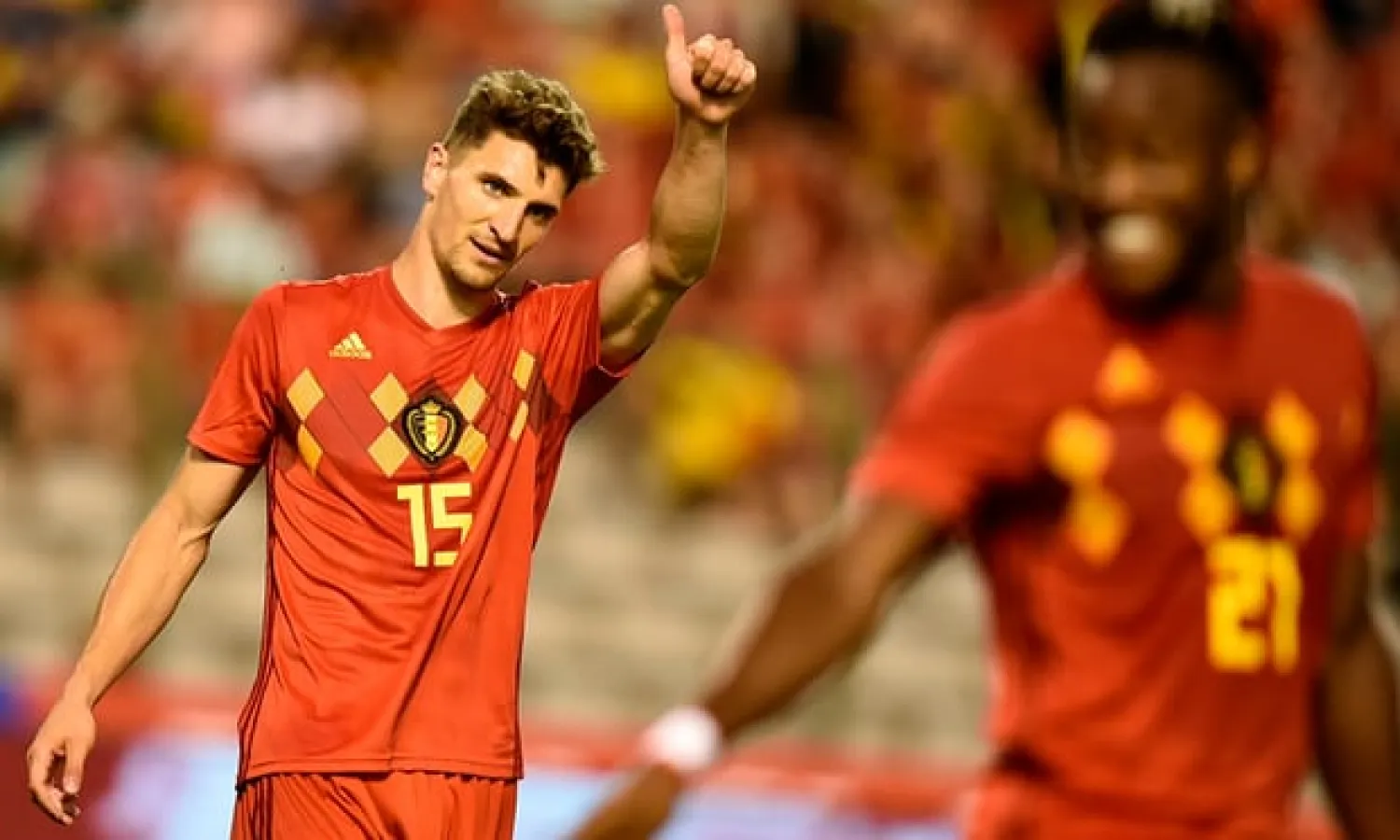
 Thomas Meunier idolised Brazilians like Ronaldo and Ronaldinho as a boy and grew up supporting Manchester United. Photograph: John Thys/AFP/Getty Images
Thomas Meunier idolised Brazilians like Ronaldo and Ronaldinho as a boy and grew up supporting Manchester United. Photograph: John Thys/AFP/Getty Images
TT

Thomas Meunier: Belgium's Wing-back as Happy in a Gallery as Playing

 Thomas Meunier idolised Brazilians like Ronaldo and Ronaldinho as a boy and grew up supporting Manchester United. Photograph: John Thys/AFP/Getty Images
Thomas Meunier idolised Brazilians like Ronaldo and Ronaldinho as a boy and grew up supporting Manchester United. Photograph: John Thys/AFP/Getty Images

Les Montres Molles in French; The Persistence of Memory in English. It is quite unusual to find a famous painting on the screen of a footballer’s phone, but when Thomas Meunier pushed his home button last year one of Salvador Dalí’s most recognisable works flashed up. “It’s my favourite”, he said. “It is the notion of time. It is surreal and stands out from the ordinary. Maybe that’s the reason it touches me.”

The Paris Saint-German right-back’s passion for art stretches to his youth. He grew up in Sainte-Ode, a small village in the Ardennes, where his grandmother – a teacher – schooled him in drawing and painting. “There was even a period when I said that I would become a cartoon artist,” Meunier said. “I was huge fan of Bugs Bunny.”

It could not quite sway him from another, deeper love, though. Football was the object of his affection from the age of five, when he walked into the family kitchen and asked his parents if he would join the local club. “When I had a ball at my feet, I was happy,” he remembered. At home, he practised his skills to the extent that any family member available – his grandmother if necessary – was pressed into goalkeeping duties. As a teenager, he watched YouTube videos of his heroes and spent hours trying to replicate their actions. The Brazilians were the ones he loved – Ronaldo, Rivaldo and Ronaldinho – as well as David Beckham and Paul Scholes. “A little bit of Cantona too, although I never saw him playing,” said Meunier, who supported Manchester United as a boy.

Local scouts cottoned on to his talent. He was too good for Sainte-Ode and, at 10, moved to Givry. Standard Liège were also monitoring him and, in 2004, offered him the chance to join their youth squad. He would not stay long, though; being released two years later was, he reflected later, the kind of experience that can make or break a career. “Some psychological challenges in my youth, like the divorce of my parents, have shaped my character,” he said. “If you are, just like me at that age, purely focused on football and your club tell you that you’re not good enough it can be a shock.”

He took a step backwards to Virton, a third division club closer to home. A first-team debut arrived in 2009, when he was 18, but could not support himself from football alone. He worked as a postman and, in 2010, became a warehouse worker at the car glass delivery factory Autover. At that point he earned €1,250 a month, but soon his income would skyrocket. The following year he joined Club Brugge for €200,000, and life turned upside down.

Meunier joined Brugge as a midfielder but was transformed into an attack-minded right-back. That development accelerated his journey to the top: his performances earned a place in the Belgium squad for Euro 2016 – he had previously played a few games for the under-15s and under-21s – and during the tournament he sealed a surprise move to PSG.

“When I arrived, not many team-mates knew me,” he recalled of his early days in Paris. “Thanks to the Euros there were maybe two players who remembered my name. Thiago Motta had played against Belgium with Italy. I wasn’t in the starting XI, but after the game I’d swapped shirts with him. He didn’t even remember.”

Playing in France’s capital gave him the chance to meet one of the idols he would try to copy during those years in the back garden. “Ronaldinho visited the club last season, I even have a picture with him,” he said. “Maybe that was one of the best days of my career. Sometimes I kiss my hands: that my job allows me to meet the people who made me fall in love with this game. Five years after Virton I was suddenly playing against Messi, Piqué and Iniesta – players I used to know from TV.”

Now an established figure, he has plenty to say about the negativity, aggression and violence football sometimes inspires – both in stadiums and on social media. “It’s a catastrophe”, he said last year. “The pessimism, the criticism, the hate they spout from the stands too. I can’t understand it.”

He received threats from PSG fans after “liking” a picture of a tifo from Marseille fans before they played Salzburg in the Europa League semi-final. It had been an innocent nod of approval from an art fan rather than anything ill-intended.

Nonetheless, Meunier is revelling in la vie Parisienne, particularly the museums. “It was a teacher who also opened my eyes in college,” he said. “I’m looking for emotions and sensations in a piece of art.”

And when he really likes it, the image even ends up on the screen of his phone. They might not be easy to find, but arty right-backs really do exist.

The Guardian Sport



Tottenham Hotspur Sack Head Coach Thomas Frank

(FILES) Tottenham Hotspur's Danish head coach Thomas Frank gestures on the touchline during the English Premier League football match between Burnley and Tottenham Hotspur at Turf Moor in Burnley, north-west England on January 24, 2026. (Photo by Oli SCARFF / AFP)/
TT

Tottenham Hotspur Sack Head Coach Thomas Frank

(FILES) Tottenham Hotspur's Danish head coach Thomas Frank gestures on the touchline during the English Premier League football match between Burnley and Tottenham Hotspur at Turf Moor in Burnley, north-west England on January 24, 2026. (Photo by Oli SCARFF / AFP)/

Thomas Frank was fired by Tottenham on Wednesday after only eight months in charge and with his team just five points above the relegation zone in the Premier League.

Despite leading Spurs to the round of 16 in the Champions League, Frank has overseen a desperate domestic campaign. A 2-1 loss to Newcastle on Tuesday means Spurs are still to win in the league in 2026.

“The Club has taken the decision to make a change in the Men’s Head Coach position and Thomas Frank will leave today,” Tottenham said in a statement. “Thomas was appointed in June 2025, and we have been determined to give him the time and support needed to build for the future together.

“However, results and performances have led the Board to conclude that a change at this point in the season is necessary.”

Frank’s exit means Spurs are on the lookout for a sixth head coach in less than seven years since Mauricio Pochettino departed in 2019.


Marseille Coach De Zerbi Leaves After Humiliating 5-0 Loss to PSG 

Marseille's Italian coach Roberto De Zerbi looks on from the technical area during the French Cup round of 32 football match between FC Bayeux and Olympique de Marseille (OM) at the Michel-d'Ornano Stadium in Caen on January 13, 2026. (AFP) 
TT

Marseille Coach De Zerbi Leaves After Humiliating 5-0 Loss to PSG 

Marseille's Italian coach Roberto De Zerbi looks on from the technical area during the French Cup round of 32 football match between FC Bayeux and Olympique de Marseille (OM) at the Michel-d'Ornano Stadium in Caen on January 13, 2026. (AFP) 

Marseille coach Roberto De Zerbi is leaving the French league club in the wake of a 5-0 thrashing at the hands of PSG in French soccer biggest game.

The nine-time French champions said on Wednesday that they have ended “their collaboration by mutual agreement.”

The heavy loss Sunday at the Parc des Princes restored defending champion PSG’s two-point lead over Lens after 21 rounds, with Marseille in fourth place after the humiliating defeat.

De Zerbi's exit followed another embarrassing 3-0 loss at Club Brugge two weeks ago that resulted in Marseille exiting the Champions League.

De Zerbi, who had apologized to Marseille fans after the loss against bitter rival PSG, joined Marseille in 2024 after two seasons in charge at Brighton. After tightening things up tactically in Marseille during his first season, his recent choices had left many observers puzzled.

“Following consultations involving all stakeholders in the club’s leadership — the owner, president, director of football and head coach — it was decided to opt for a change at the head of the first team,” Marseille said. “This was a collective and difficult decision, taken after thorough consideration, in the best interests of the club and in order to address the sporting challenges of the end of the season.”

De Zerbi led Marseille to a second-place finish last season. Marseille did not immediately announce a replacement for De Zerbi ahead of Saturday's league match against Strasbourg.

Since American owner Frank McCourt bought Marseille in 2016, the former powerhouse of French soccer has failed to find any form of stability, with a succession of coaches and crises that sometimes turned violent.

Marseille dominated domestic soccer in the late 1980s and early 1990s. It was the only French team to win the Champions League before PSG claimed the trophy last year. It hasn’t won its own league title since 2010.


Olympic Fans Hunt for Plushies of Mascots Milo and Tina as They Fly off Shelves 

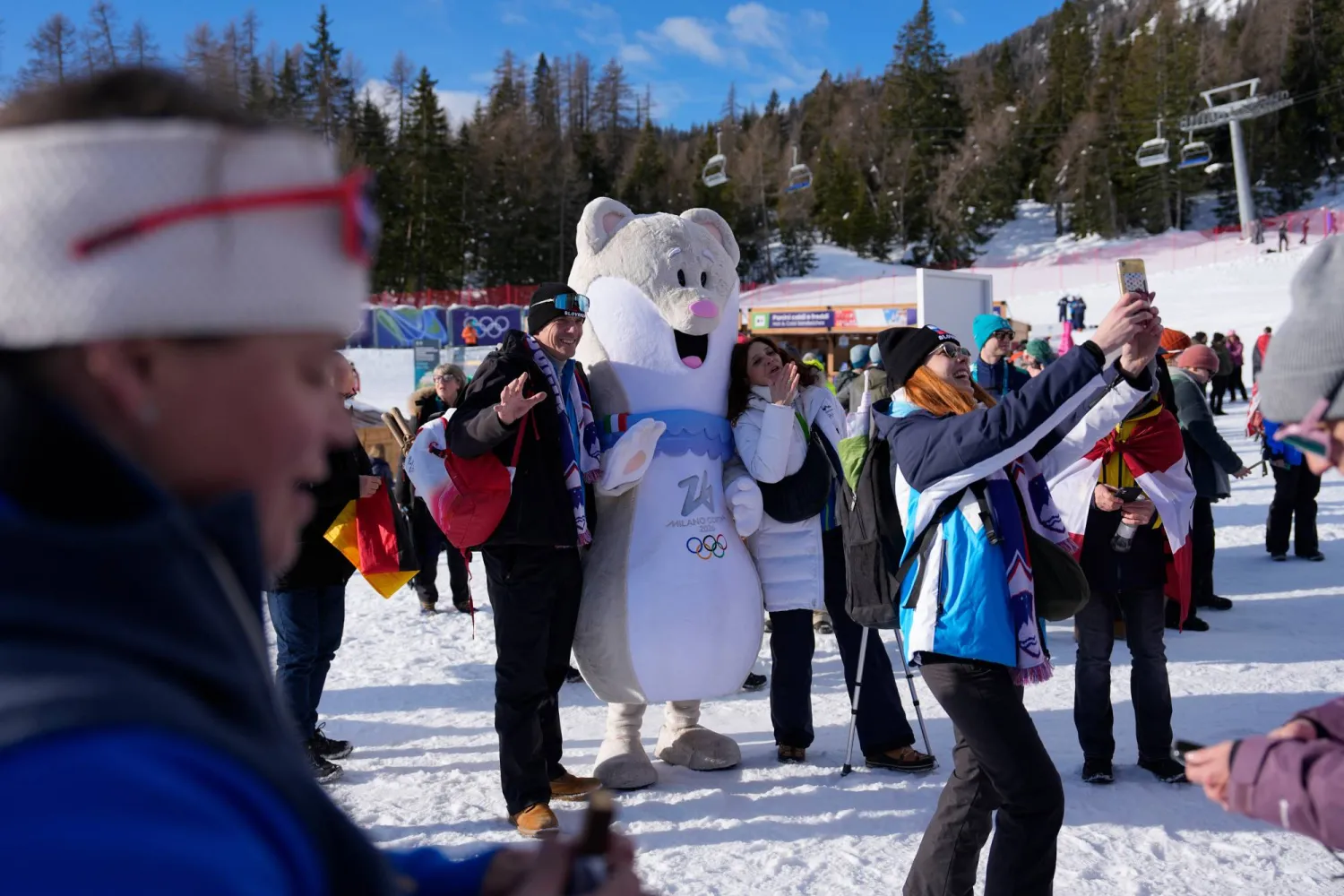
Fans take selfies with the Olympic mascot Tina at the finish area of an alpine ski, slalom portion of a women's team combined race, at the 2026 Winter Olympics, in Cortina d'Ampezzo, Italy, Tuesday, Feb. 10, 2026. (AP)
TT

Olympic Fans Hunt for Plushies of Mascots Milo and Tina as They Fly off Shelves 

Fans take selfies with the Olympic mascot Tina at the finish area of an alpine ski, slalom portion of a women's team combined race, at the 2026 Winter Olympics, in Cortina d'Ampezzo, Italy, Tuesday, Feb. 10, 2026. (AP)

For fans of the Milan Cortina Olympic mascots, the eponymous Milo and Tina, it's been nearly impossible to find a plush toy of the stoat siblings in Milan and Cortina d’Ampezzo.

Many of the official Olympics stores in the host cities are already sold out, less than a week into the Winter Games.

“I think the only way to get them is to actually win a medal,” Julia Peeler joked Tuesday in central Milan, where Tina and Milo characters posed for photos with fans.

The 38-year-old from South Carolina is on the hunt for the plushies for her niece. She's already bought some mascot pins, but she won't wear them on her lanyard. Peeler wants to avoid anyone trying to swap for them in a pin trade, a popular Olympic pastime.

Tina, short for Cortina, is the lighter-colored stoat and represents the Olympic Winter Games. Her younger brother Milo, short for Milano, is the face of the Paralympic Winter Games.

Milo was born without one paw but learned to use his tail and turn his difference into a strength, according to the Olympics website. A stoat is a small mustelid, like a weasel or an otter.

The animals adorn merchandise ranging from coffee mugs to T-shirts, but the plush toys are the most popular.

They're priced from 18 to 58 euros (about $21 to $69) and many of the major official stores in Milan, including the largest one at the iconic Duomo Cathedral, and Cortina have been cleaned out. They appeared to be sold out online Tuesday night.

Winning athletes are gifted the plush toys when they receive their gold, silver and bronze medals atop the podium.

Broadcast system engineer Jennifer Suarez got lucky Tuesday at the media center in Milan. She's been collecting mascot toys since the 2010 Vancouver Games and has been asking shops when they would restock.

“We were lucky we were just in time,” she said, clutching a tiny Tina. “They are gone right now.”

Friends Michelle Chen and Brenda Zhang were among the dozens of fans Tuesday who took photos with the characters at the fan zone in central Milan.

“They’re just so lovable and they’re always super excited at the Games, they are cheering on the crowd,” Chen, 29, said after they snapped their shots. “We just are so excited to meet them.”

The San Franciscan women are in Milan for the Olympics and their friend who is “obsessed” with the stoats asked for a plush Tina as a gift.

“They’re just so cute, and stoats are such a unique animal to be the Olympic mascot,” Zhang, 28, said.

Annie-Laurie Atkins, Peeler's friend, loves that Milo is the mascot for Paralympians.

“The Paralympics are really special to me,” she said Tuesday. “I have a lot of friends that are disabled and so having a character that also represents that is just incredible.”