


Open-Air Museums Become Widespread in the US

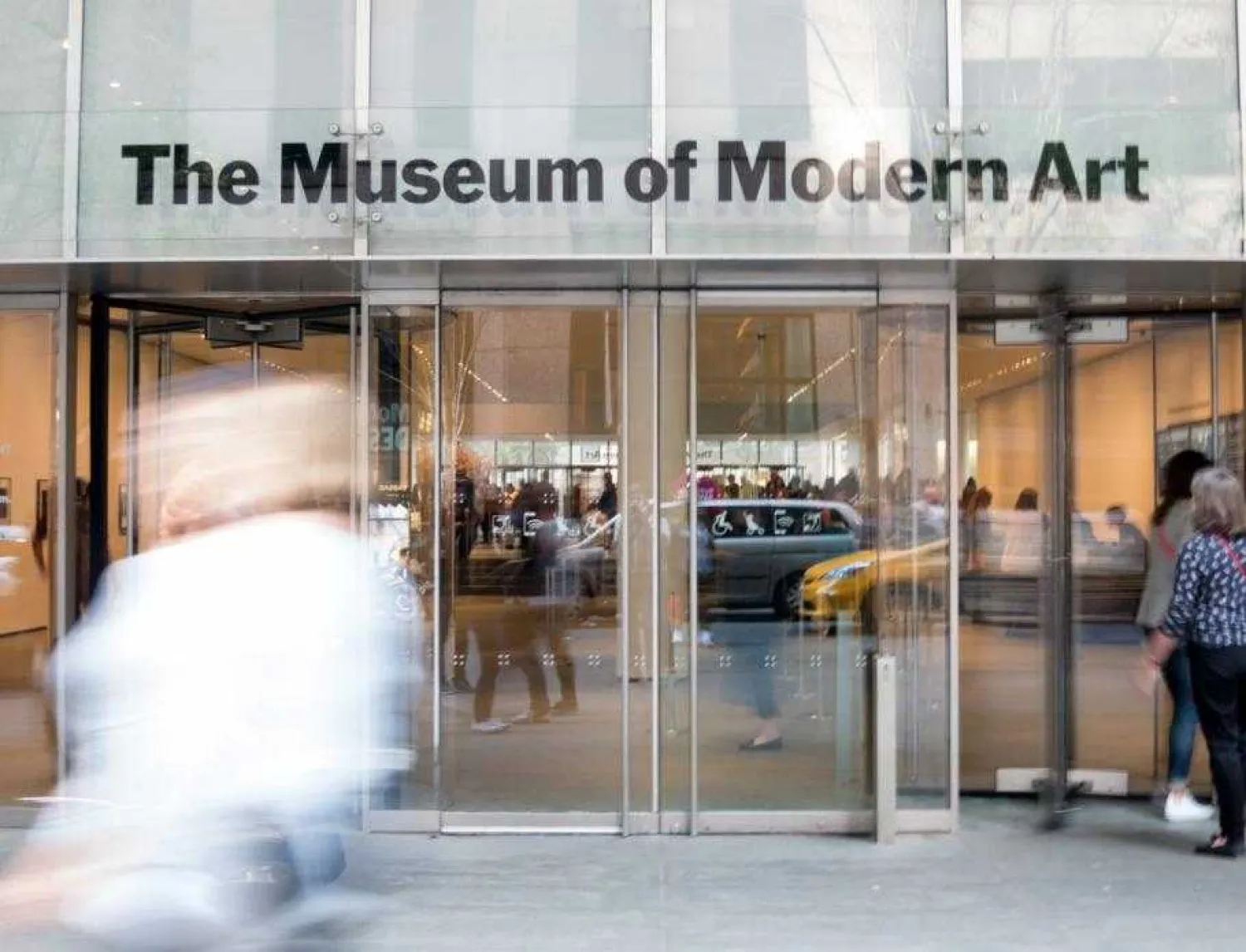
People walking outside the main entrance of the Museum of Modern Art in Manhattan / Heather Shimmin / Shutterstock, Inc.
TT

Open-Air Museums Become Widespread in the US

People walking outside the main entrance of the Museum of Modern Art in Manhattan / Heather Shimmin / Shutterstock, Inc.

If anyone wanted to see Vincent Van Gogh's famous "The Starry Night" painting, he will see a lot more other things at the Museum of Modern Art in New York known as MoMA, such as visitor heads, phone screens, and shoulders from behind.

Tourists may see this painting, yet, it would be no more than putting a "done" mark next to another plan on their trip’s to-do list.

Because the MoMA has become so crowded with tourists, it now invites its visitors to spend a "quiet morning" at the museum starting 7:30 am to avoid crowds.

The museum says: "For these early special-price hours, we encourage visitors to take time to watch leisurely, clear their minds, turn off their phones, and inspire to the rest of the day, or even for the days of next week.”

Commenting on the crowded art museums in Paris, New York and Amsterdam, the Financial Times newspaper reported in January "It would be better for everyone if the number of visitors was reduced or organized, with an expected decent silence from all of us."

Glenstone Museum in Potomac, Maryland, located at about an hour from Washington DC, took these feelings into consideration when designing its ideal building.

On the hill behind the entrance stands a statue of a dinosaur sculpted by Jeff Koons, followed by another statue by Richard Serra.

The museum curators feel that art, as well as those who enjoy watching it, should have the opportunity to smell fresh air.

Although the access to the Glenston Museum is free, reservations must be made in advance and early on its website. The aim is to provide a "quiet, non-crowded" atmosphere to enjoy the art, architecture and landscape surrounding the place.

According to the German News Agency, the "art close to the garden" concept is not an American invention. In Germany, for example, there are the Waldfrieden sculptures garden in Wuppertal and the Buchheim Museum on the Starnberger Lake which are a combination of outdoor art, architecture and nature.

However, in the United States, this vast country, art takes on a new dimension in open air.

For instance, there is the Storm King Art Center, which extends on an area that equals about 280 football fields. Over the past 50 years, works by more than 80 artists such as Alexander Calder, Sol LeWitt, Roy Lichtenstein and Nam June Paik have been exhibited, among others, in the middle of landscapes like of flowered hills and meadows.

The Storm King Center is about an hour drive north of New York City and has marked a place among the world's largest sculpture gardens.

If you keep driving north along the Hudson River, you will reach the town of Beacon, to a brick factory, where the Nabisco maker once made boxes for his products. The building now houses the Dia Art Museum.

In the spacious, light-flooded rooms, you can enjoy the grandeur of modern and contemporary art, watching the works of Walter de Maria, Dan Flavin, Gerhard Richter and Bruce Nauman.

Going deeper into the Northeast, the Massachusetts Museum of Contemporary Art (Mass MoCA) attracts visitors who come to see works of artists such as Anselm Kiefer and Joseph Beuys.

Mass MoCA and some 100 other museums participated in April's in an event dubbed "Slow Art Day" to promote quieter and slower meditation at exhibitions.

The goal was to give visitors 10 minutes to see only five works of art, compared to the average of the standard time of 15 to 30 seconds, then, visitors discuss what they saw in the works of art.

Many tourists who are restricted by a tight schedule may find that a full-day trip takes a very long time.

They might come out with a lasting impression of 30 works of art that they had to make an effort to watch, better than walking fast among 300 great paintings.

At the Glenstone Museum, special emphasis is given to the outdoor experience, with tours organized in the surrounding forest.

Spokesperson Emily Grebenstein says: “We do not think there is anything similar in the United States.”

In an outdoor tour, Elijah Mejeski explains that clay houses were made by the landscape artist Andy Goldsworthy, but also tells that this land was once a farm of sheep.

In October, the Glenstone Museum will be expanded to include an artificial lake, with further plans to set up lounges and a picnic area. The most radical example of outdoor art in the United States is Crystal Bridges.

Alice Walton, the heir to Walmart, one of the richest women in the country, with a fortune of $40 billion, has built a complex of art museum, forests, sculpture gardens and fountains in an unknown location in southern Arkansas. To find it, look for the city of Bentonville, with a population of 47,000.




Caffeinated Beverages May Help Protect the Brain, Study Says

A cup of coffee and a cappuccino are seen at a Juan Valdez store in Bogota, Colombia June 5, 2019. (Reuters)
TT

Caffeinated Beverages May Help Protect the Brain, Study Says

A cup of coffee and a cappuccino are seen at a Juan Valdez store in Bogota, Colombia June 5, 2019. (Reuters)

Drinking a few cups of caffeinated coffee or tea every day may help in a small way to preserve brain power and prevent dementia, researchers reported on Monday.

People with the highest daily intake of caffeinated coffee had an 18% lower risk of developing dementia compared to those with the lowest such intake, according to a study based on responses to questionnaires by 132,000 U.S. adults spanning four decades.

The study, published in JAMA, also found that the people with the highest intake had a lower rate - by nearly 2 percentage points - of ‌self-perceived memory ‌or thinking problems compared to those with ‌the ⁠lowest intake.

Results were ‌similar with caffeinated tea, but not with decaffeinated beverages, the researchers said.

While the findings are encouraging, the study does not prove caffeine helps protect the brain, they said.

The magnitude of caffeine's effect, if any, was small, and there are other better-documented ways to protect cognitive function as people age, study leader Dr. Daniel Wang ⁠of Harvard Medical School said in a statement.

Lifestyle factors linked with lower risks of ‌dementia include physical exercise, a healthy diet ‍and adequate sleep, according to previous ‍research.

"Our study suggests that caffeinated coffee or tea consumption can ‍be one piece of that puzzle," Wang said.

The findings were most pronounced in participants who consumed two to three cups of caffeinated coffee or one to two cups of caffeinated tea daily, the researchers reported.

Those who drank caffeinated coffee also showed better performance on some objective tests of cognitive function, according to the ⁠study funded by the National Institutes of Health.

Further research is needed to validate the factors and mechanisms responsible for the findings, the researchers said.

They noted that bioactive ingredients in coffee and tea such as caffeine and polyphenols have emerged as possible factors that reduce nerve cell inflammation and damage while protecting against cognitive decline.

"We also compared people with different genetic predispositions to developing dementia and saw the same results - meaning coffee or caffeine is likely equally beneficial for people with high and low genetic risk of developing ‌dementia," study coauthor Dr. Yu Zhang of the Harvard T.H. Chan School of Public Health said in a statement.


AlUla Announces Exceptional Ramadan Experiences

These programs come as part of efforts to enhance AlUla’s tourism experience - SPA
TT

AlUla Announces Exceptional Ramadan Experiences

These programs come as part of efforts to enhance AlUla’s tourism experience - SPA

AlUla Governorate is welcoming the holy month of Ramadan this year with a wide range of diverse tourism experiences that reflect the area’s distinctive character and rich cultural heritage, reinforcing its position as one of the Kingdom’s most prominent destinations to visit during the holy month.

During Ramadan, AlUla offers an integrated experience catering to different visitor preferences, including guided stargazing experiences, cultural events, and night markets, in addition to traditional dining experiences for Iftar and Suhoor, embodying the depth of AlUla’s cultural heritage and local identity.

The Ramadan programs in AlUla include a variety of standout events, such as Ramadan experiences at Maraya Hall, a cultural market, and live performances in the atmosphere of Ashar Valley, alongside heritage tours in AlUla Old Town that narrate stories of AlUla and its Ramadan customs, including the award-winning Incense Road Experience, SPA reported.

The programs also feature seasonal art exhibitions hosted across multiple cultural venues, including Design Space AlUla, the fourth edition of Desert X AlUla, and the Arduna exhibition at AlUla Oasis, in addition to experiences combining art, nature, and stargazing at Daimumah Oasis in collaboration with AlUla Manara.

Visitors are also offered tours to prominent archaeological sites, including Hegra, Dadan, and Jabal Ikmah, to explore ancient sites dating back centuries BCE and view unique rock inscriptions, as well as adventure experiences ranging from dinner and stargazing in Sharaan, hot-air balloon rides, mountain hiking trails, and safari tours.

These programs come as part of efforts to enhance AlUla’s tourism experience during the holy month of Ramadan and provide diverse options that meet visitor expectations, contributing to the growth of tourism activity and showcasing the governorate’s natural and cultural assets.


NCW Releases over 10,000 Animals under Reintroduction Programs

The releases carried out by the center over the past years included more than 80 priority wildlife species - SPA
TT

NCW Releases over 10,000 Animals under Reintroduction Programs

The releases carried out by the center over the past years included more than 80 priority wildlife species - SPA

The National Center for Wildlife (NCW) announced that the total number of wildlife animals released under its breeding and reintroduction programs for locally threatened species has exceeded 10,000 animals, an achievement reflecting the scale of the center’s sustained efforts to develop wildlife, restore ecosystems, and enhance biodiversity across various regions of the Kingdom.

The releases carried out by the center over the past years included more than 80 priority wildlife species, including reem gazelles (sand gazelles), Arabian oryx, Idmi gazelles, mountain ibex, houbara bustards, ostriches, and sandgrouse, as part of efforts aimed at supporting the recovery of natural populations of these species and enhancing their sustainability within their environmental and historical ranges, SPA reported.

CEO of NCW Dr. Mohammad Qurban noted that release operations are among the key tools for restoring ecosystems and reducing ecological imbalance, as the return of wildlife to their natural habitats contributes to protecting biodiversity and improving environmental quality, which in turn supports habitat integrity, the continuity of plant and animal components, and the enhancement of ecosystem functions over the long term.

NCW continues to implement its strategic plans to develop wildlife, protect endangered species, and enhance the efficiency of natural habitat management through expanding breeding programs, enhancing applied scientific research, building national capacities, and applying the best international practices in biodiversity management, in addition to raising environmental awareness, engaging local communities, and supporting eco-tourism, thereby contributing to achieving the objectives of the Saudi Green Initiative and Saudi Vision 2030, and the National Environment Strategy, toward thriving and sustainable wildlife, biodiversity, and ecosystems.