


Israel Tells Hamas: Incendiary Kites or War

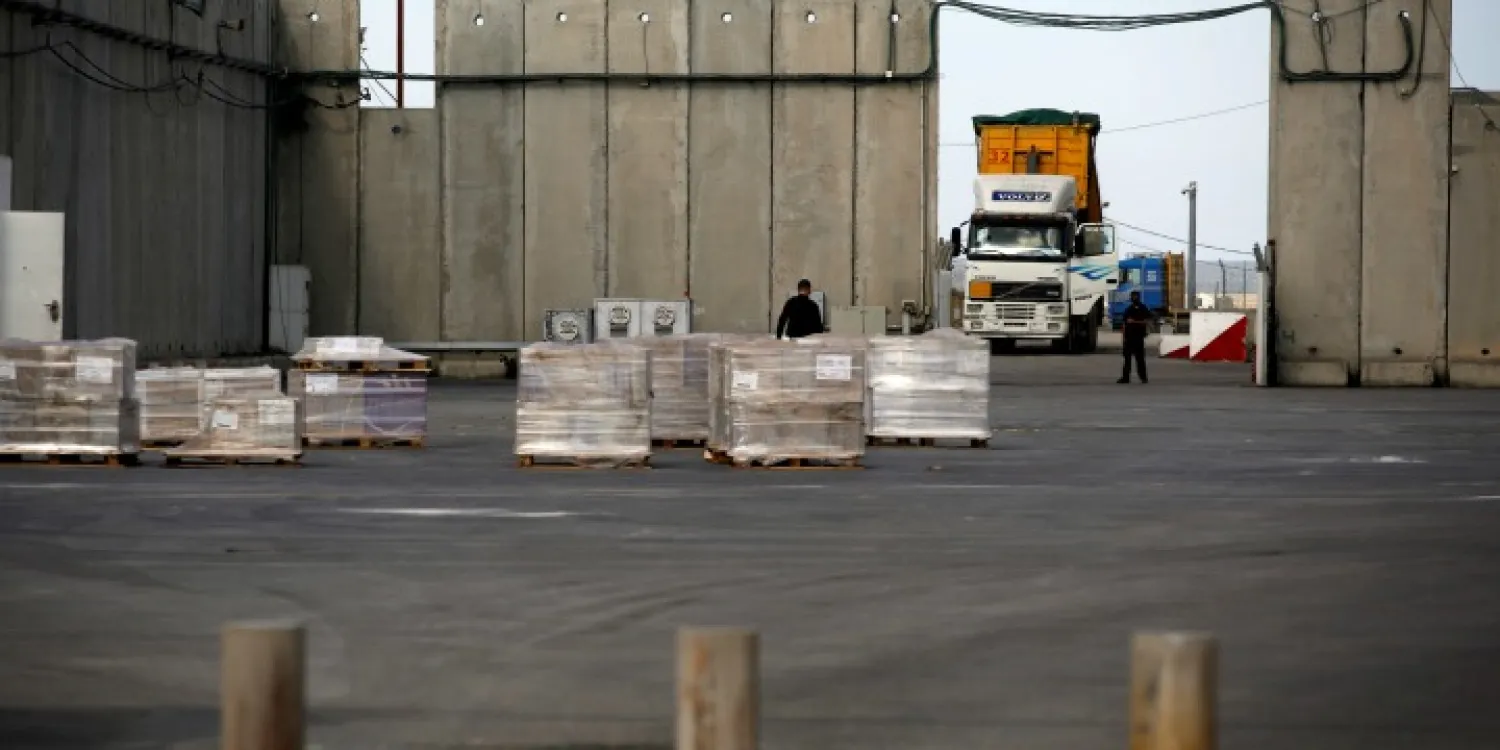
A truck parks next to a security barrier inside the Kerem Shalom border crossing terminal between Israel and Gaza Strip, January 16, 2018. (Reuters)
TT

Israel Tells Hamas: Incendiary Kites or War

A truck parks next to a security barrier inside the Kerem Shalom border crossing terminal between Israel and Gaza Strip, January 16, 2018. (Reuters)

Israel has put Hamas before two choices; either putting an end to burning kites sent to Israel or starting a new round of battles that could include occupying Gaza Strip.

Defense Minister Avigdor Liberman said Tuesday that Israeli army knows what to do and when to do it, adding that it is ready and prepared for any mission. Lieberman made the statement while visiting a military drill for a possible war on the Strip.

"If we have to launch a military campaign, we will be able to defeat any enemy,” he asserted.

"We will determine the rules of the game, and no one else," he said in response to remarks made by Hamas chief of political office Ismail Haniyeh, who said during Saturday's clashes that resistance factions determine the rules of the game.

The drill, which is to last until Thursday, simulates the capturing of Gaza City by Israeli troops. It sees troops from the armored, infantry, engineering and artillery corps train for a variety of scenarios inside enemy territory including handling the local civilian population.

The maneuvers are dubbed “Gates of Steel”, and a senior Southern Command official told Israel Hayom ‎Monday that most likely Israel will not go into war over incendiary kites and ‎balloons.

"We don't want war. The desired situation is one ‎where we don't have to deal with incendiary kites, ‎balloons and drones, but we gauge our response ‎according to the situation on the ground. We will ‎intensify our response gradually until it all ‎stops," he added.‎

Lieberman’s threats came shortly after he decided to completely close Kerem Shalom crossing, banning fuel imports, and only allowing food and medicine to be sent if each shipment is individually approved.

“In light of the continued terror attempts by the Hamas terrorist organization, Defense Minister Avigdor Lieberman, in consultation with the chief of staff, has decided to close the Kerem Shalom crossing to imports of oil and gas until this Sunday,” statement published by Lieberman’s office said.

“The crossing will continue to transfer food and medicine [shipments] that are individually approved,” it added.

The new restrictions are added to previous ones imposed by Israel last week, when exports of products from Gaza were suspended and most products were barred from entering the Strip. The army said the closure would continue as long as Palestinians continued to fire kites and balloons at Israel.

A truce sponsored by Egypt last Saturday did not discuss incendiary planes, which have threatened the ceasefire agreement.

Israeli Prime Minister Benjamin Netanyahu said he would not allow kites to continue under the cease-fire agreement, and Hamas responded that they were not included in the deal.

Late March, Palestinians began using incendiary kites during the Marches of Return, causing the burning of about 30,000 dunams of Israeli farms in the vicinity of Gaza. Israel tried to stop the kites without any success, and then it announced in the latest round of escalation on Saturday, that the cease-fire in Gaza must include the kites or there won’t be one. Israeli officials agreed at a meeting of the Israeli cabinet to target and stop flaming kites any cost.

In an attempt to spare Gaza a new war, Cairo pressed Hamas and gave it days to end or significantly reduce the phenomenon of burning kites and balloons from the Gaza Strip towards the adjacent Israeli areas.

Meanwhile, Israeli daily Yedioth Ahronoth reported Hamas responded and informed the Egyptian intelligence service that it was actually working to reduce the number of burning balloons sent to Israel, but was unable to end it all at once.

A source in the Gaza Strip told the newspaper that Hamas cannot stop sending the flaming balloons, because this will harm its credibility among the people of the Strip and its supporters in general, and therefore it will do so gradually.

Indeed, the number of flaming kites and balloons launched from Gaza has been reduced over the past three days, following the announcement of a truce between Hamas and Israel.

Egypt’s stance also came in line with that of UN Special Coordinator for the Middle East Peace Process Nickolay Mladenov, who warned Hamas of a devastating war because of the kites.

An Egyptian source familiar with the file of Egyptian relations with Palestine and Israel told Asharq Al-Awsat that Israel is trying to test Cairo by closing Kerem Shalom crossing, despite the heavy economic losses it causes to Tel Aviv. He added that Israel wants Egypt to permanently open Rafah crossing.

The source explained that Cairo understands that "the understandings accompanying the ceasefire and truce in the Gaza Strip between Hamas and Israel, is not strong and may not last long."

Over the coming ten days, Egypt will discuss with Fatah movement to get answers on what Hamas suggested during an earlier session of talks with Egyptian intelligence officials. A tripartite meeting is underway that will include representatives of the Islamic Jihad, Fatah, and Hamas.

“Cairo will provide facilities for Gaza Strip, but without putting pressure on the Egyptian decision in any way,” he added.

Hamas warned of "serious consequences" of Israel's recent decisions.

“The Israeli occupation’s closure of the Kerem Shalom crossing and depriving Gaza of the most simple necessities of life is a crime against humanity that will be added to its list of crimes at the expense of the Palestinian people including those living in the Strip,” said Hamas announced in a statement posted on its official website.

These vengeful measures reflect the degree of the oppression and the ugliness of the crime that Gaza is facing, that will have dangerous consequences for which the occupation will bear full responsibility, asserted the statement.

In a similar situation, the Islamic Jihad warned that increasing pressure on Gaza would put the region on the “brink of an explosion”.



Building Collapse in Lebanon's Tripoli Kills 13, Search for Missing Continues

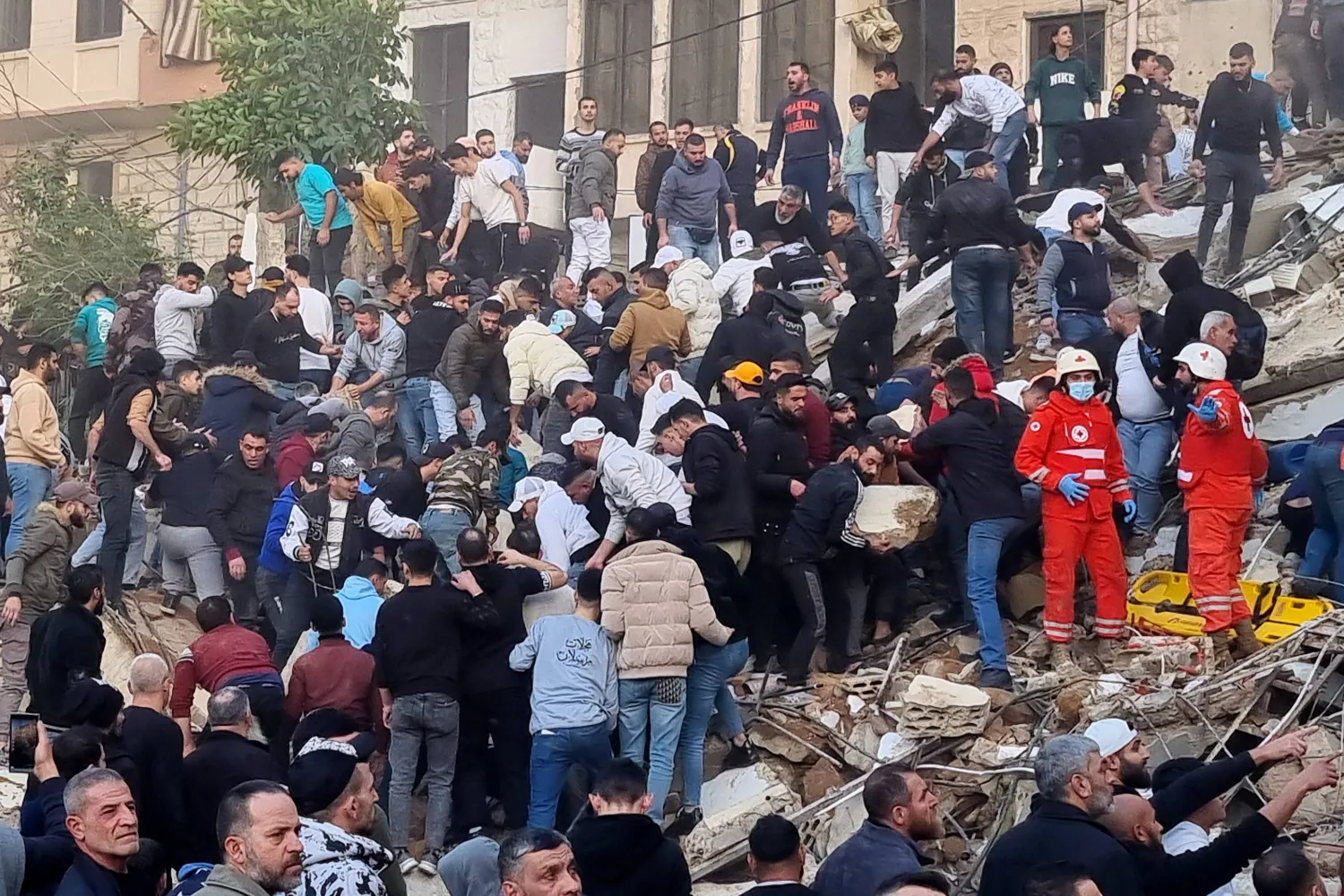
Rescue workers and residents search for survivors in the rubble of a building that collapsed in the northern city of Tripoli, Lebanon, Sunday, Feb. 8, 2026. (AP Photo)
TT

Building Collapse in Lebanon's Tripoli Kills 13, Search for Missing Continues

Rescue workers and residents search for survivors in the rubble of a building that collapsed in the northern city of Tripoli, Lebanon, Sunday, Feb. 8, 2026. (AP Photo)

The death toll from the collapse of a residential building in the Lebanese city of Tripoli rose to 13, as rescue teams continued to search for missing people beneath the rubble, Lebanon's National News ‌Agency reported ‌on Monday. 

Rescue ‌workers ⁠in the ‌northern city's Bab al-Tabbaneh neighborhood have also assisted nine survivors, while the search continued for others still believed to be trapped under the ⁠debris, NNA said. 

Officials said on ‌Sunday that two ‍adjoining ‍buildings had collapsed. 

Abdel Hamid Karameh, ‍head of Tripoli's municipal council, said he could not confirm how many people remained missing. Earlier, the head of Lebanon's civil defense rescue ⁠service said the two buildings were home to 22 residents, reported Reuters. 

A number of aging residential buildings have collapsed in Tripoli, Lebanon's second-largest city, in recent weeks, highlighting deteriorating infrastructure and years of neglect, state media reported, ‌citing municipal officials. 


Salam Concludes Visit to South Lebanon: Region Must Return to State Authority

Lebanon's Prime Minister Nawaf Salam (L) holds bouquets of flower as he stands next to the mayor of the heavily-damaged southern village of Kfar Shouba, near the border with Israel, during his visit on February 8, 2026. (AFP)
TT

Salam Concludes Visit to South Lebanon: Region Must Return to State Authority

Lebanon's Prime Minister Nawaf Salam (L) holds bouquets of flower as he stands next to the mayor of the heavily-damaged southern village of Kfar Shouba, near the border with Israel, during his visit on February 8, 2026. (AFP)

Lebanese Prime Minister Nawaf Salam vowed on Sunday to work on rebuilding infrastructure in southern villages that were destroyed by Israel during its last war with Hezbollah.

On the second day of a tour of the South, he declared: “We want the region to return to the authority of the state.”

He was warmly received by the locals as he toured a number of border villages that were destroyed by Israel during the conflict. His visit included Kfar Kila, Marjeyoun, Kfar Shouba and Kfar Hamam. He kicked off his tour on Saturday by visiting Tyre and Bint Jbeil.

The visit went above the differences between the government and Hezbollah, which has long held sway over the South. Throughout the tour, Salam was greeted by representatives of the “Shiite duo” of Hezbollah and its ally the Amal movement, as well as MPs from the Change bloc and others opposed to Hezbollah.

In Kfar Kila, the locals raised a banner in welcome of the PM, also offering him flowers and an olive branch. The town was the worst hit during the war with Israel, which destroyed nearly 90 percent of its buildings and its forces regularly carrying out incursions there.

Salam said the town was “suffering more than others because of the daily violations and its close proximity to the border.”

He added that its residents cannot return to their homes without the reconstruction of its infrastructure, which should kick off “within the coming weeks.”

“Our visit underlines that the state and all of its agencies stand by the ruined border villages,” he stressed.

“The government will continue to make Israel commit” to the ceasefire agreement, he vowed. “This does not mean that we will wait until its full withdrawal from occupied areas before working on rehabilitating infrastructure.”

Amal MP Ali Hassan Khalil noted that the people cannot return to their town because it has been razed to the ground by Israel and is still coming under its attacks.

In Marjeyoun, Salam said the “state has long been absent from the South. Today, however, the army has been deployed and we want it to remain so that it can carry out its duties.”

“The state is not limited to the army, but includes laws, institutions, social welfare and services,” he went on to say.

Reconstruction in Marjeyoun will cover roads and electricity and water infrastructure. The process will take months, he revealed, adding: “The state is serious about restoring its authority.”

“We want this region to return to the fold of the state.”

MP Elias Jarade said the government “must regain the trust of the southerners. This begins with the state embracing and defending its people,” and protecting Lebanon’s sovereignty.

MP Firas Hamdan said the PM’s visit reflects his keenness on relations with the South.

Ali Murad, a candidate who ran against Hezbollah and Amal in Marjeyoun, said the warm welcome accorded to Salam demonstrates that the “state needs the South as much as the people of the South need the state.”

“We will always count on the state,” he vowed.

Hezbollah MP Hussein Jishi welcomed Salam’s visit, hoping “it would bolster the southerners’ trust in the state.”

Kataeb leader MP Sami Gemayel remarked that the warm welcome accorded to the PM proves that the people of the South “want the state and its sovereignty. They want legitimate institutions that impose their authority throughout Lebanon, without exception.”


Three Dead After Flooding Hits Northwest Syria

A child watches as civil defense teams open flooded roads in Idlib. (SANA)
TT

Three Dead After Flooding Hits Northwest Syria

A child watches as civil defense teams open flooded roads in Idlib. (SANA)

Two children and a Syrian Red Crescent volunteer have died as a result of flooding in the country's northwest, state media said on Sunday.

The heavy rains in Syria's Idlib region and the coastal province of Latakia have also wreaked havoc in displacement camps, according to authorities, who have launched rescue operations and set up shelters in the areas.

State news agency SANA reported "the death of a Syrian Arab Red Crescent volunteer and the injury of four others as they carried out their humanitarian duties" in Latakia province.

The Syrian Red Crescent said in a statement that the "a mission vehicle veered into a valley", killing a female volunteer and injuring four others, as they went to rescue people stranded by flash floods.

"A fifth volunteer was injured while attempting to rescue a child trapped by the floodwaters," it added.

SANA said two children died on Saturday "due to heavy flooding that swept through the Ain Issa area" in the north of Latakia province.

Authorities said Sunday they were working to clear roads in displacement camps in flooded parts of Idlib province.

The emergencies and disaster management ministry said 14 displacement camps in part of Idlib province were affected, with tents swamped, belongings swept away and around 300 families directly impacted.

Around seven million people remain internally displaced in Syria, according to the United Nations refugee agency, some 1.4 million of them living in camps and sites in the country's northwest and northeast.

The December 2024 ouster of longtime ruler Bashar al-Assad after more than 13 years of civil war revived hopes for many to return home, but the destruction of housing and a lack of basic infrastructure in heavily damaged areas has been a major barrier.