
Privacy as a Product: Trading Your Personal Data to Get a Discount on a Car

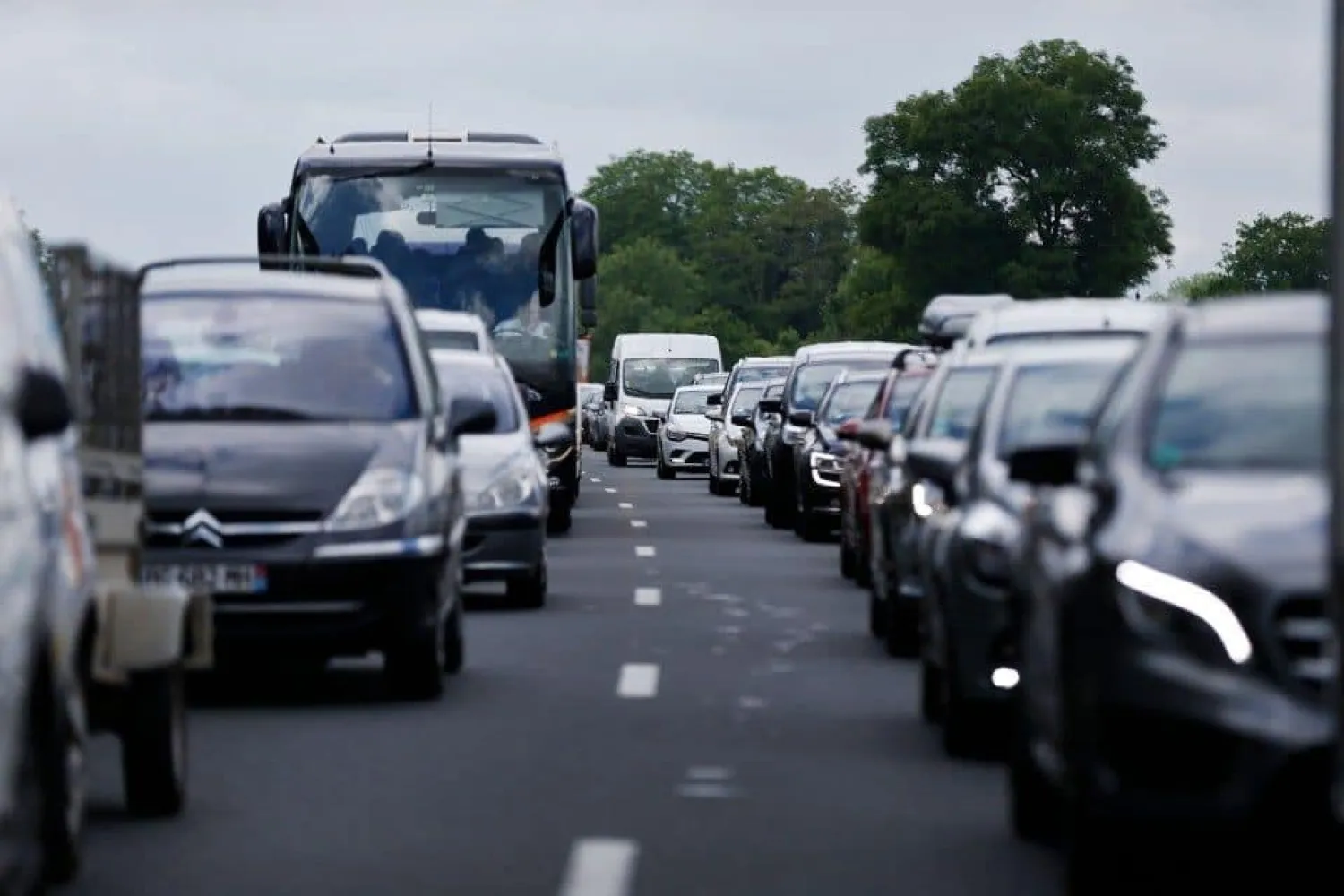
Motorists sit in a traffic jam this month near Annebault, in northwestern France, their cars collecting data on their movements all the while. (Charly Triballeau/AFP/Getty Images)
TT

Privacy as a Product: Trading Your Personal Data to Get a Discount on a Car

Motorists sit in a traffic jam this month near Annebault, in northwestern France, their cars collecting data on their movements all the while. (Charly Triballeau/AFP/Getty Images)

The debate over privacy can leave consumers feeling torn between two bad options: disengage with the virtual world and maintain our anonymity or engage with the Internet and put our identity, finances, safety and perhaps even our democracy at risk.

John Ellis, an auto futurist and formerly global technologist for Ford Motor Co., thinks we may have overlooked a third option.

In his book, “The Zero Dollar Car,” he argues that consumers should start thinking about their privacy as a product. Instead of concealing our private data, he argues, we should be able to sell it to companies, using the profits to lower the price of goods and services that feed off the information we produce.

Ellis thinks the best way to start is with the modern car, a machine that has been transformed from a means of transportation into a sophisticated computer on wheels that offers even more access to our personal habits and behaviors than smartphones do.

Today’s vehicles, experts say, can determine where you shop, the weather on your street, how often you wear your seat belt, what you were doing moments before a crash — even where you like to eat and how much you weigh.

If car companies are going to harvest such valuable information, Ellis asks, shouldn’t they pay for it? We spoke with Ellis to find out more about how companies are using our data and why trading that data for money could drastically reduce the price of cars, appliances and other technology. The Q&A was edited for length and clarity.

Q: The average new car costs more than $33,000. If we were able to sell our data to car companies, how much do you realistically think the price of cars might drop? Is zero dollars a real possibility?

In my book I show how the lifetime value of vehicle data is in the thousands of dollars. For a combustion engine car, it may be the case that we never get to zero dollars. But so what? Taking the price of a vehicle from $33,000 to maybe $20,000 is still a worthwhile discussion and exercise.

But what about when you don’t buy the vehicle and instead buy a seat? As in with Uber or Lyft. What if the value of your data was such that a particular ride could be subsidized to the point where the ride was zero dollars? That is definitely possible and more than likely.

And when the vehicle is autonomous? Imagine you are a Starbucks customer. You order a coffee from home and the coffee is brought to you in a car and you are given a ride to work with the coffee. The cost of the ride is zero dollars (because of your loyalty). That is a future that is more likely than not and one we have to be concerned with today if we want to get data and privacy policies “right.”

Q: One of the radical ideas you also propose is the notion that we should start thinking about our privacy as a product. To treat privacy any differently, you argue, defies human nature. What do you mean by the idea that our privacy has become a product?

Imagine if, when offered the opportunity to take the zero-dollar pricing, we said: “No, thank you. I want to pay full price.” Why might someone do that? By saying no, we explicitly state that our data is not for sale. We in essence are purchasing privacy. That is to say, we enter into a product contract for privacy.

Now imagine that we extend this to any of the products that are offered for zero dollars. What if they were also offered in a full-price version? Consumers who choose the full-price offer would be buying privacy. Privacy as a product.

A perfect example of this is Facebook. When I wrote the book in 2017, the concepts I put forth were prescient. Mark Zuckerberg recently admitted that if Facebook users wanted to keep their personal data private, Facebook could charge them to use the social network. If you don’t want privacy, you can continue using Facebook for zero dollars.

Q: One of my favorite moments from your Ted Talk is this hypothetical in which a car buyer is offered the chance to sell six sensors — GPS, rain, windshield wiper, headlights status, traction control and barometer — to the National Oceanic and Atmospheric Administration. Why would NOAA, a municipality or even a company want to give me cash for my vehicle’s windshield-wiper sensor?

Well, NOAA is a scientific agency with the U.S. Department of Commerce that monitors the weather, including the prediction of serious storms like hurricanes, tornadoes and blizzards.

If given access to vehicle data such as the six sensors you mentioned, NOAA would have accurate, up-to-the-minute weather reports from all the vehicles in every region of the country. Rather than seek federal funding to build another weather station, why not purchase the data from cars?

With the growth of vehicle sensors creating all kinds of data, tech companies understand that everything — from incoming messages and intelligence gathered by what drivers are saying on their in-car microphones to weather, the routes being taken and road conditions — could be sold to, for example, corporations and public utilities.

And to a technology company like Google, which can harvest, analyze and process data, these sensors, when combined with location, intentions and preferences, are incredibly valuable. This explains why Google has the automotive strategy it does.

Q: So, there are more than 100 sensors in a modern car that generate significant amounts of data. Should drivers be worried about the information these sensors are vacuuming up?

All the sensors in a modern car are there because of the careful consideration of the automotive engineers who want to improve the safety of the vehicle, manage vehicle emissions and deliver passengers. At no time were they trying to figure out how to monetize the sensor data. But there are others who really want that data. Technology companies have rushed to get into the car and access your data. The car, in effect, is more relevant to technology companies than the smartphone is.

Q: We know that data from our cars is as valuable as, if not more valuable than, data from smartphones. What are some examples of how tech companies are using cars as a conduit to customers?

Google and Apple created Android Auto and Apple CarPlay with the intention of extending their services into the car, and in exchange they get data on the music you like to play, your behaviors and preferences while commuting or on a road trip, voice data and location data that helps to triangulate a seemingly infinite number of insights about you to sell back to advertisers to serve up ads at precisely the appropriate moment.

The car is interesting because you’re inside it; your use of the car confirms specific behaviors and preferences. Car sensors generate data that can reveal your location, movement, destination, stores you visit, speed you travel, routes you take, people you meet. This is all incredibly valuable data to companies that buy and sell ads. Having access to this data is important to Google as it differentiates itself from other companies by helping advertisers deliver the right ad, to the right person, at the right time.

Outside of Google and Apple, you have technology companies such as Voyomotive, Mojio and ZenDrive developing solutions for accessing the available rich vehicle data and then building solutions related to insurance, advertising and vehicle ownership and maintenance.

Q: Is anyone regulating Google’s data collection in vehicles?

The rules around data collection and use are changing. Companies in Europe must follow the General Data Protection Regulation, or GDPR, and disclose in simple terms how companies are using personal data and give Europeans the right to be forgotten by deleting all their data online.

In May, voters in California succeeded through petition in getting the California Consumer Privacy Act on the ballot in November — a measure that would allow Californians to see what data about them is being collected, give them the right to stop companies from selling their data, and hold companies accountable for data breaches.

It should be noted that this is not just about Google. The 2017 Equifax breach showed more than 143 million people just how much data is being collected and moreover, how little — if any — say we have in that process.

The Washington Post


Greece Headed for ‘Record Year’ for Tourism, Says Minister

Tourists descent Propylaia, the ancient gate of the Acropolis archaeological site in Athens on June 21, 2023. (AFP)
TT

Greece Headed for ‘Record Year’ for Tourism, Says Minister

Tourists descent Propylaia, the ancient gate of the Acropolis archaeological site in Athens on June 21, 2023. (AFP)

Greece is on track for "another record year" for tourism in 2025, despite ongoing labor shortages in a key sector of its economy, Tourism Minister Olga Kefalogianni said on Sunday.

Between January and the end of September, the Mediterranean nation -- long beloved by tourists for its sunny islands and rich archaeological sites -- welcomed 31.6 million visitors, a four-percent increase compared with the same period in 2024, according to Bank of Greece data published in late November.

"Overall, we expect 2025 to be another record year for tourism in our country," Kefalogianni said in an interview with the Greek news agency ANA.

The conservative minister also expressed hope for another bumper year in 2026.

"The indicators for 2026 are already particularly encouraging and allow us to be optimistic," she said.

Since the Covid-19 pandemic, Greece has been breaking annual records in tourism revenues and the number of foreign visitors.

Across 2024, 40.7 million people visited Greece, up 12.8 percent from 2023.

But the uptick has sparked concern over the unchecked construction in several hotspots, while Athens locals have complained that the proliferation of short-term holiday lets has caused rents to skyrocket.

Climate change-fueled heatwaves and increasingly devastating wildfires also pose a threat to the sector, which Prime Minister Kyriakos Mitsotakis has trumpeted since taking office in 2019 in a bid to revive the economy after the financial crisis.

According to the Institute of the Greek Tourism Confederation (INSETE), tourism directly contributed around 13 percent of GDP in 2024 and indirectly to more than 30 percent of GDP.


Iraq Says International Firms in Kurdistan Obliged to Transfer Crude Under Deal

A handout picture released by Iraq's Prime Minister's Media Office on January 2, 2025, shows a partial view of the oil refinery of Baiji north of Baghdad, during the inauguration ceremony of the fourth and fifth units. (Iraqi Prime Minister's Media Office / AFP)
TT

Iraq Says International Firms in Kurdistan Obliged to Transfer Crude Under Deal

A handout picture released by Iraq's Prime Minister's Media Office on January 2, 2025, shows a partial view of the oil refinery of Baiji north of Baghdad, during the inauguration ceremony of the fourth and fifth units. (Iraqi Prime Minister's Media Office / AFP)

Iraq’s state oil marketer SOMO said on Sunday international producers in Kurdistan were still obliged to send it their crude under a September export agreement, after Norway's DNO said it would not take part in the agreement. 

SOMO said its statement was in response to a Reuters report in ‌September which ‌quoted DNO as ‌saying ⁠it would ‌sell directly to the Kurdish region and had no immediate plans to ship through the Iraq-Türkiye pipeline. 

The September deal between Iraq's oil ministry, Kurdistan's ministry of natural resources and producing companies stipulated that SOMO ⁠will export crude from Kurdish oil fields through ‌the Türkiye pipeline. 

At the ‍time, DNO - the ‍largest international oil producer active in ‍Kurdistan - welcomed the deal but did not sign it, saying it wanted more clarity on how outstanding debts would be paid. 

It said it would continue to sell directly to the semi-autonomous region of ⁠Kurdistan. 

SOMO said on Sunday the Kurdistan ministry of natural resources had reaffirmed its commitment to the deal "under which all international companies engaged in extraction and production in the region's fields are required to deliver the quantities of crude oil they produce in the region to SOMO, except for the quantities allocated ‌for local consumption in the region." 


How 2025 Decisions Redrew the Future of Riyadh’s Real Estate Market

Construction is seen at a real estate project in Riyadh. (SPA)
TT

How 2025 Decisions Redrew the Future of Riyadh’s Real Estate Market

Construction is seen at a real estate project in Riyadh. (SPA)

The Saudi capital underwent an unprecedented structural shift in its real estate market in 2025, driven by a forward-looking agenda led by Prince Mohammed bin Salman, Crown Prince and Prime Minister. Far from incremental regulation, the year’s measures amounted to a deep corrective overhaul aimed at dismantling long-standing distortions, breaking land hoarding, expanding affordable housing supply, and firmly rebalancing landlord-tenant relations.

Together, the decisions ended years of speculation fueled by artificial scarcity and pushed the market toward maturity, one grounded in real demand, fair pricing, and transparency.

Observers dubbed 2025 a “white revolution” for Saudi real estate. The reforms severed the link between property and short-term speculation, restoring housing as a sustainable residential and investment product. Below is a detailed outline of the most significant of these historic decisions:

1- Unlocking land, boosting supply

In March, authorities lifted restrictions on sale, subdivision, development permits, and planning approvals for 81 million square meters north of Riyadh. A similar decision in October freed another 33.24 million square meters to the west.

The Royal Commission for Riyadh City was also mandated to deliver 10,000 - 40,000 fully serviced plots annually at subsidized prices capped at SAR 1,500 per square meter, curbing price manipulation and offering real alternatives for citizens.

2- Rent controls and contractual fairness

To stabilize households and businesses, the government froze annual rent increases for residential and commercial leases in Riyadh for five years starting in September. Enforced through the upgraded “Ejar” platform, the move halted arbitrary hikes while aligning growth with residents’ quality of life.

3- Tougher fees

An improved White Land Tax took effect in August, extending beyond vacant plots to include unoccupied built properties. Annual fees rose to as much as 10% of land value for parcels of 5,000 square meters or more within urban limits, raising the cost of land hoarding and incentivizing prompt development.

4- Investment openness and digital governance

A revised foreign ownership regime allowed non-Saudis - individuals and companies - to own property in designated zones under strict criteria, injecting international liquidity. Transparency was reinforced by the launch of the “Real Estate Balance” platform, providing real-time price indicators based on actual transactions and curbing phantom pricing.

5- Quality and urban standards

Policy shifted from quantity to quality with mandatory application of the Saudi Building Code and sustainability standards for all new developments, ensuring long-term operational value and preventing low-quality sprawl.

Structural shift

Sector specialists told Asharq Al-Awsat the measures represent a qualitative leap in market management, moving Riyadh from a scarcity and speculation-led cycle to a balanced market governed by genuine demand, efficient land use, disciplined contracts, and transparent indicators.

Khaled Al-Mobid, CEO of Menassat Realty Co., said the reforms were timely and corrective after years of rapid price escalation. He noted early positives: slowing price growth, a return to realistic negotiations, increased supply in some districts, and better-quality offerings focused on intrinsic value rather than quick appreciation.

Abdullah Al-Moussa, a real estate expert and broker, described the steps as addressing root causes, not symptoms.

He observed a behavioral shift, especially in northern Riyadh, from “hold and wait” to reassessment, alongside calmer price momentum, renewed interest in actual development, and clearer rental dynamics.

Saqr Al-Zahrani, another market expert, told Asharq Al-Awsat that the reforms tackled structural imbalances by breaking artificial scarcity created by undeveloped land banks.

Opening vast tracts north and west and introducing market-wide indicators restored “organized abundance,” aligning prices with real demand and purchasing power without heavy-handed intervention, he remarked.

He added that recent months have seen weaker demand for raw land and stalled auctions, contrasted with rising interest in off-plan sales and partnerships with developers.

Banks, too, have reprioritized toward projects with operational viability, lifting overall supply quality despite a temporary slowdown in some transactions.

Consumers, meanwhile, are showing greater patience and interest in self-build options, signaling a maturing market awareness.

Outlook

Experts expect the effects to continue through 2027, delivering broad price stability with limited corrections in overheated locations rather than sharp declines.

Homeownership, especially among young buyers, is projected to rise as capital shifts from land speculation to long-term development.

The 2025 decisions were not short-term fixes but the launch of a new social and economic trajectory for Riyadh’s property market, redefining real estate as a housing service and value-adding investment, not a speculative vessel.

As Riyadh advances toward becoming one of the world’s ten largest city economies, its real estate reset offers a model for aligning regulation with quality of life, transparency, and sustainable growth.