


Luke Shaw: ‘People Can Say I’m Fat but I’ve Never Been Out of Shape’

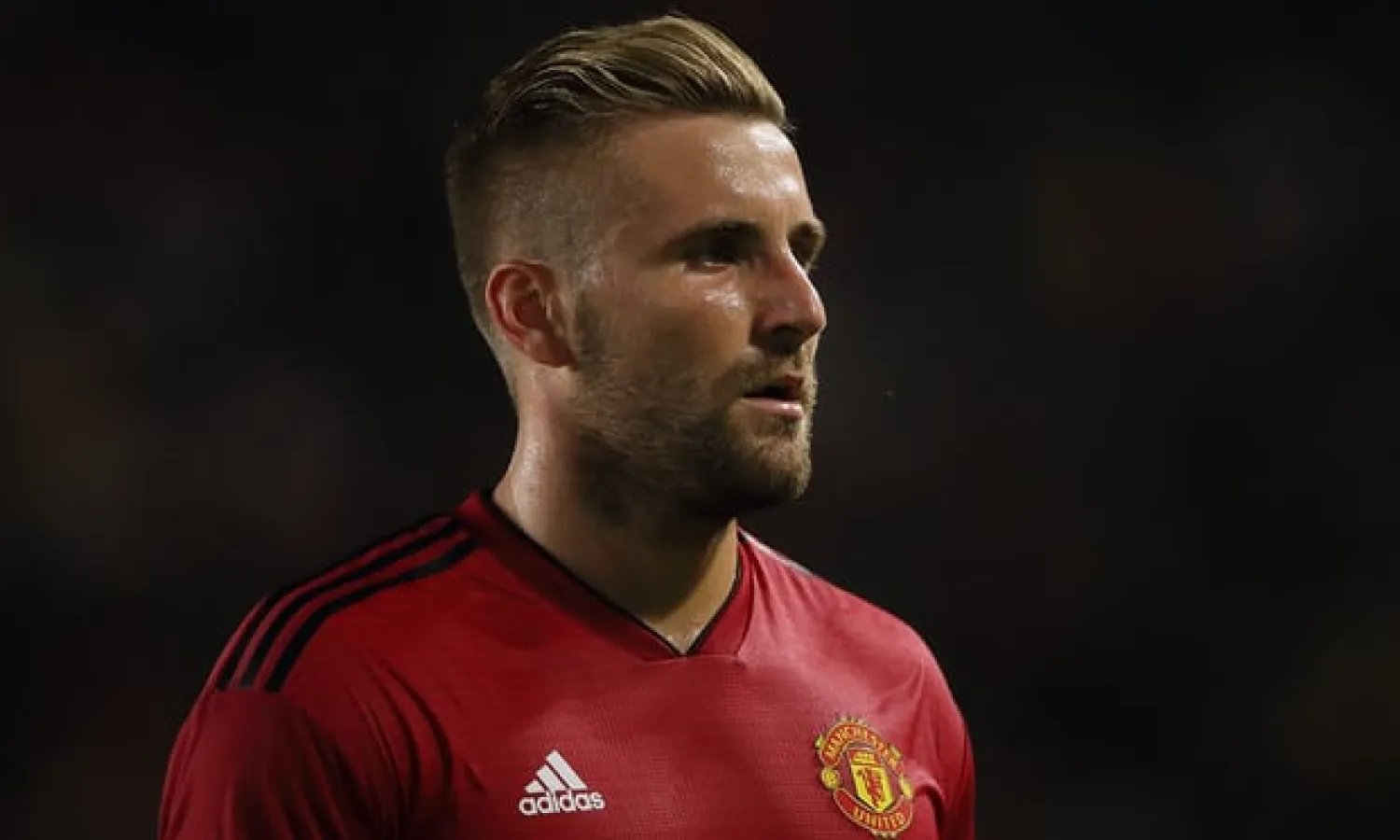
 Luke Shaw is in the last year of his deal at Old Trafford. Photograph: Matthew Ashton - AMA/Getty Images
Luke Shaw is in the last year of his deal at Old Trafford. Photograph: Matthew Ashton - AMA/Getty Images
TT

Luke Shaw: ‘People Can Say I’m Fat but I’ve Never Been Out of Shape’

 Luke Shaw is in the last year of his deal at Old Trafford. Photograph: Matthew Ashton - AMA/Getty Images
Luke Shaw is in the last year of his deal at Old Trafford. Photograph: Matthew Ashton - AMA/Getty Images

Luke Shaw is honest regarding the criticism he attracts for perceived weight issues.

Speaking at the Montage hotel in Beverly Hills, where Manchester United are based for their US summer tour, Shaw is about to embark on a make-or-break year at Old Trafford. The defender is in great shape physically after a personal pre-season programme in Dubai this month but, more than anything, he would rather his physique was not constantly judged.

“I guess you’ve just got to take it because there is always going to be negative criticism and positive but both of them can make you stronger,” he says. “I’ve been unlucky because I’ve had a few ups and downs with different managers but I would say I’ve never been out of shape. Honestly, I feel really good and I’m raring to go, and the minutes [on tour] are only going to help me become fitter.”

Shaw, who has started all three of United’s games in the US, is entering the final year of a contract he signed in 2014, when he arrived at Old Trafford from Southampton for a fee in excess of £27m and with the then 18-year-old an England left‑back. He was expected to occupy the same position at United for a decade or more but his career there has yet to fire.

Shaw has endured injury, notably a broken leg in September 2015 that ended his season. And from the moment Louis van Gaal, José Mourinho’s predecessor, branded him overweight during the 2014 summer tour of the US, the charge has dogged him.

“People can say I’m fat but I know my own body,” Shaw says. “I always look big because I’m bigger built – I’ve got that Wayne Rooney type of body.”

The trip to Dubai illustrates the player’s determination to compete with Ashley Young for United’s starting left-back slot, and if a picture he posted on social media is anything to go by the 23-year-old has been doing all the right things.

“I worked hard and not just for them [critics],” says Shaw, who is likely to start United’s Premier League curtain-raiser with Leicester City on 10 August because of Young’s post-World Cup break. “I’m working harder than ever and in the first game I want to look 10 times better than in that picture.”

Like Van Gaal before him Mourinho has been critical of Shaw’s weight, leading to accusations of bullying on the Portuguese’s part and the player at one stage last year believing he had no future at United. But as Shaw reveals, the current United manager has been hugely supportive of his summer fitness regime, going as far as to send him encouraging text messages.

“I was in Dubai with my girlfriend. It was funny – I was on my phone flicking through stuff. I got the text and accidentally clicked straight away [to reveal he read it]. The manager was probably thinking: ‘Jesus Christ!’I said to my girlfriend: ‘I’ve just opened it and I must look so weird now.’ It was fine. I left it a little bit to reply because I didn’t want to look too eager. It was a breath of fresh air when he texted me. I wasn’t expecting it. I spoke to him and it was really positive.”

Shaw runs through his routine in Dubai. “We had to wake up early because it was hitting 45 degrees by 10 o’clock – it was quite painful the first day as we did do it in that heat. I would train and go in the gym. Then relax during the day and run on the beach and do core work in the evening before the sun went down.”

With Shaw’s deal ending next summer he could leave United on a free if the club do not offer him fresh terms. “That’s what’s most frustrating,” he says. “You don’t want to be in this situation but I know I have got the quality to [truly] become a Manchester United player. Because at the moment it would be easy to sort of give up, after what happened in the last year or so.”

Shaw is referencing Mourinho’s public admonishments regarding his approach to training and performances in matches. “It would be easy for me to quit and say: ‘I want to go.’ Of course, if the manager comes and says: ‘You’re not a player for Manchester United, you’re not a player for me,’ then I’ll accept that and find another place.

“I want to earn a contract. I don’t want a contract because in the next year I’m a free agent, so they might look to tie me down. I know the club believe me – I’ve spoken with them, the manager, I’ve had discussions, meetings. If they really wanted to they could’ve cashed in. I’m going to fight for it this year and I want to be in that starting team.”

Shaw appeared to hit a nadir in March when he was hauled off by Mourinho at half-time of the 2-0 victory against Brighton. It seemed his Old Trafford career may be over. Yet there were four further appearances. “There were no doubts but there has been emotion,” the player says. “I was very upset but he [Mourinho] only does stuff like that because he knows what I can do. We’ve had this conversation. He said he knows I can be the best but he sometimes feels frustrated that I’m not doing that.

“He knows what I can do. That was one of the texts he sent me in the off-season: ‘I know what you can do – you can be the best but you’ve just got to work on a couple of things.’ That’s why it pushes me on more. He says these things because he knows I can do it. He knows I can play for Manchester United.

“It’s horrible at times because people only see those things he says [in public]. That’s fine because I’m a grown man and I can take stuff like that. I’m used to it. But the stuff inside the training ground, no one sees apart from me. It still gives me confidence.”

The Guardian Sport



Saudi Interior Minister Approves New Strategy of the Supreme Authority for Industrial Security

Saudi Minister of Interior and Chairman of the Board of the Supreme Authority for Industrial Security Prince Abdulaziz bin Saud bin Naif bin Abdulaziz. (SPA)
TT

Saudi Interior Minister Approves New Strategy of the Supreme Authority for Industrial Security

Saudi Minister of Interior and Chairman of the Board of the Supreme Authority for Industrial Security Prince Abdulaziz bin Saud bin Naif bin Abdulaziz. (SPA)

Saudi Minister of Interior and Chairman of the Board of the Supreme Authority for Industrial Security Prince Abdulaziz bin Saud bin Naif bin Abdulaziz approved on Sunday the authority's new strategy, which aims to strengthen the regulatory and legislative environment in the fields of industrial security and build an investment-attractive and expertise-localizing system based on effective strategic partnerships.

The strategy contributes to fostering a culture of security and safety at the national level and includes a set of qualitative initiatives aimed at raising safety and sustainability levels in facilities under the authority's supervision.

It comprises more than twenty qualitative initiatives, including empowering non-profit organizations operating in industrial security and developing a specialized research ecosystem, as well as initiatives designed to establish an integrated, leading, and sustainable national industrial security system.


‘It’s All Over’: How Iran Abandoned Assad to His Fate Days Before Fall

 Iran was a staunch backer of Bashar al-Assad but quickly withdrew its forces once as opposition forces took over Syria. (AFP)
Iran was a staunch backer of Bashar al-Assad but quickly withdrew its forces once as opposition forces took over Syria. (AFP)
TT

‘It’s All Over’: How Iran Abandoned Assad to His Fate Days Before Fall

 Iran was a staunch backer of Bashar al-Assad but quickly withdrew its forces once as opposition forces took over Syria. (AFP)
Iran was a staunch backer of Bashar al-Assad but quickly withdrew its forces once as opposition forces took over Syria. (AFP)

As city after city fell to a lightning opposition offensive in Syria last December, Iranian forces and diplomats supporting Bashar al-Assad saw the writing on the wall, abandoning the longtime ruler days before his ousting, sources told AFP.

During Syria's civil war, which erupted in 2011 following the government's brutal repression of pro-democracy protests, Iran was one of Damascus's biggest backers, sending Assad military advisers and forces from its Revolutionary Guards.

Iranian and allied regional fighters -- mainly from Lebanon's Hezbollah, but also from Iraq and Afghanistan -- had held key locations and helped prop up Assad, only to melt away in the face of opposition forces' headlong rush towards the capital.

Syrian officers and soldiers served under the Iranian Guards, whose influence grew during the conflict as Assad's power waned.

A former Syrian officer assigned to one of the Guards' security headquarters in Damascus said that on December 5 last year, his Iranian superior summoned him to an operations center in the Mazzeh district the following day to discuss an "important matter".

The former officer, requesting anonymity due to fears for his safety, said his superior, known as Hajj Abu Ibrahim, made a bombshell announcement to around 20 Syrian officers and soldiers gathered for the meeting.

"From today, there will be no more Iranian Revolutionary Guards in Syria. We're leaving," they were told.

"It's all over. From today, we are no longer responsible for you."

He said they were ordered to burn or otherwise destroy sensitive documents and remove hard drives from computers.

- Border bottleneck -

The announcement came as the opposition forces were making huge gains, but it still took the Syrian soldiers by surprise, he said.

"We knew things hadn't been going well, but not to that extent."

They received one month's salary in advance and went home.

Two days later the opposition forces captured Damascus without a fight after Assad fled to Russia.

Two Syrian employees of Iran's consulate in Damascus, requesting anonymity for security reasons, also described a hasty Iranian exit.

The consulate was empty by the evening of December 5 as Iranian diplomats scarpered across the border to Beirut, they told AFP.

Several Syrian employees "who held Iranian nationality left with them, accompanied by senior Revolutionary Guards officers", according to one of the former employees.

At Jdeidet Yabus, Syria's main border crossing with Lebanon, taxi drivers and former staff reported a massive bottleneck on December 5 and 6, with an eight-hour wait to clear the frontier.

Both of the former consulate employees said the Iranians told their Syrian personnel to stay home and paid them three months' salary.

The embassy, consulate and all Iranian security positions were deserted by the morning of December 6, they said.

- Russian base -

During the war, forces under Iranian command were concentrated in sensitive areas inside Damascus and its suburbs, particularly the Sayyida Zeinab area, home to an important Shiite shrine, and around Damascus airport, as well as near the Lebanese and Iraqi borders.

Parts of the northern city of Aleppo and locations elsewhere in the province were also major staging areas for personnel and fighters.

At a site that used to be a key military base for Iranian forces south of Aleppo, Colonel Mohammad Dibo said that when the city fell early in the opposition campaign, "Iran stopped fighting".

Iranian forces "had to withdraw suddenly after the quick collapse" of Assad's military, said Dibo, who took part in the opposition offensive and now serves in Syria's new army.

On the heavily damaged walls of the abandoned base, an AFP journalist saw Iranian and Hezbollah slogans, and a painting of a sword tearing through an Israeli flag.

Tehran's foe Israel had launched hundreds of strikes on Syria over the course of the war, mainly saying it was targeting Assad's army and Iran-backed groups.

The former Syrian army officer who requested anonymity said that on December 5, a senior Iranian military official known as Hajj Jawad and several Iranian soldiers and officers were evacuated to Russia's Hmeimim base on the Mediterranean coast, then flown back to Tehran.

At the abandoned site near Aleppo, Dibo said that after the city's fall, "some 4,000 Iranian military personnel were evacuated via Russia's Hmeimim base" where they had taken refuge.

Others fled overland through Iraq or Lebanon, he said.

Their exit was so rushed that "when we entered their bases" in Aleppo province, "we found passports and identity documents belonging to Iranian officers who didn't even have time to retrieve them."


Netanyahu Says He Will Not Quit Politics if He Receives a Pardon

Israeli Prime Minister Benjamin Netanyahu adjusts his headphones during a joint press conference with German Chancellor Friedrich Merz (not pictured) in Jerusalem, 07 December 2025. (EPA)
TT

Netanyahu Says He Will Not Quit Politics if He Receives a Pardon

Israeli Prime Minister Benjamin Netanyahu adjusts his headphones during a joint press conference with German Chancellor Friedrich Merz (not pictured) in Jerusalem, 07 December 2025. (EPA)

Israeli Prime Minister Benjamin Netanyahu said on Sunday that he would not retire from politics if he receives a pardon from the country’s president in his years-long corruption trial.

Asked by a reporter if planned on retiring from political life if he receives a pardon, Netanyahu replied: “no.”

Netanyahu last month asked President Isaac Herzog for a pardon, with lawyers for the prime minister arguing that frequent court appearances were hindering Netanyahu’s ability to govern and that a pardon would be good for the country.

Pardons in Israel have typically been granted only after legal proceedings have concluded and the accused has been convicted. There is no precedent for issuing a pardon mid-trial.

Netanyahu has repeatedly denied wrongdoing in response to the charges of bribery, fraud and breach of trust, and his lawyers have said that the prime minister still believes the legal proceedings, if concluded, would result in a complete acquittal.

US President Donald Trump wrote to Herzog, before Netanyahu made his request, urging the Israeli president to consider granting the prime minister a pardon.

Some Israeli opposition politicians have argued that any pardon should be conditional on Netanyahu retiring from politics and admitting guilt. Others have said the prime minister must first call national elections, which are due by October 2026.