


First Phase of US Sanctions Re-Imposed on Iran

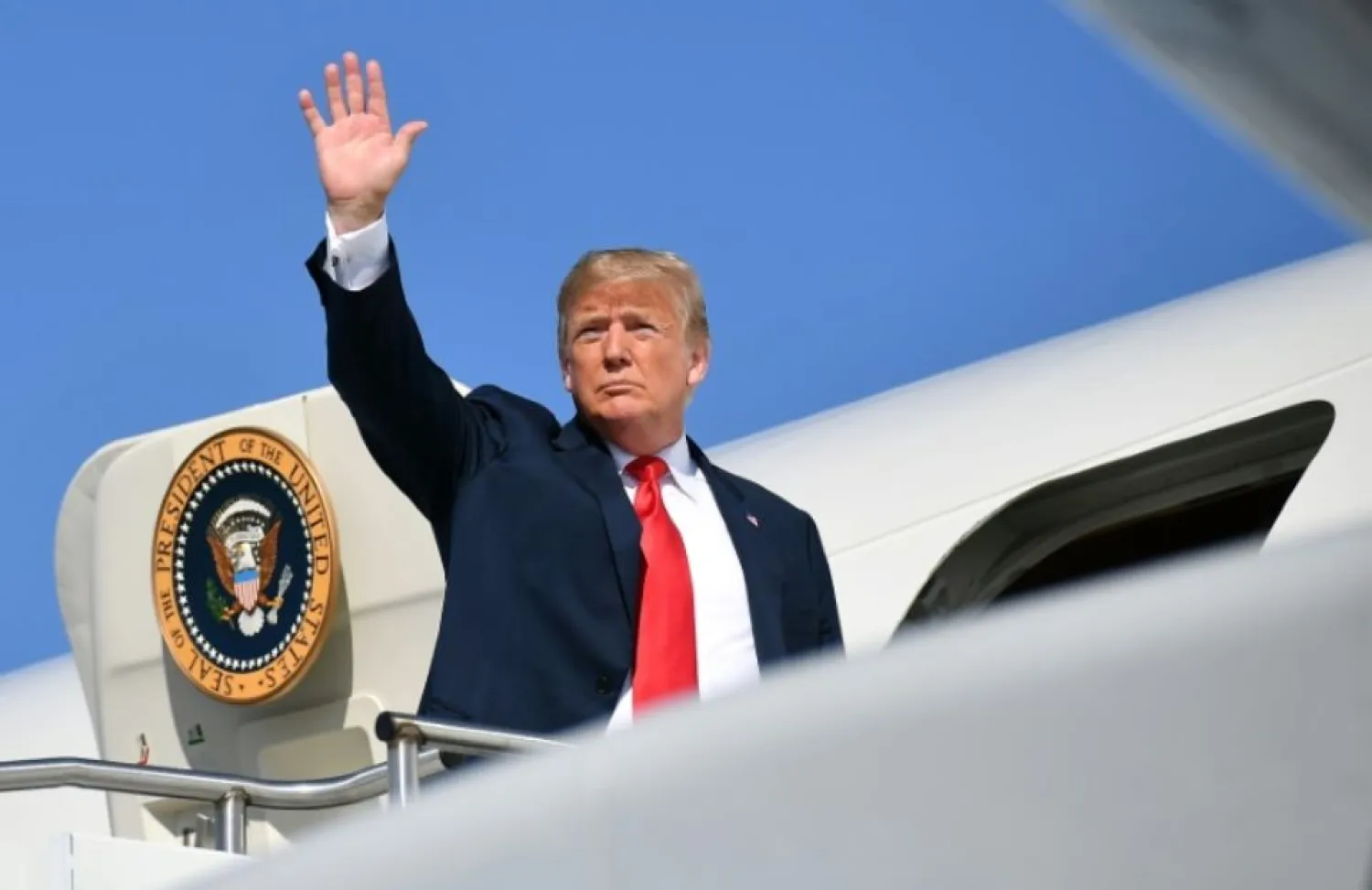
US President Donald Trump. (AFP)
TT

First Phase of US Sanctions Re-Imposed on Iran

US President Donald Trump. (AFP)

The first phase of re-imposed US sanctions took effect on Tuesday under an executive order signed by President Donald Trump.

The sanctions financial transactions that involve US dollars, Iran's automotive sector, the purchase of commercial planes and metals including gold.

A second round of sanctions targeting Iran's oil sector and central bank are to be reimposed on November 4.

The stiff economic sanctions ratchet up pressure on Tehran despite statements of deep dismay from European allies, three months after Trump pulled the US out of the 2015 deal that limited Iran's nuclear activities.

Trump declared the landmark 2015 agreement had been "horrible," leaving the Iranian government flush with cash to fuel conflict in the Middle East.

As the sanctions loomed Monday, Trump said in a statement, "We urge all nations to take such steps to make clear that the Iranian regime faces a choice: either change its threatening, destabilizing behavior and reintegrate with the global economy, or continue down a path of economic isolation."

He warned that those who will not wind down their economic ties to Iran "risk severe consequences."
The Europeans did not like any of it.

Despite Trump's claims, the accord "is working and delivering on its goal" of limiting Iran's nuclear program, said a statement by European Union foreign policy chief Federica Mogherini and the foreign ministers of France, Germany and the United Kingdom.

The ministers said the Iran deal is "crucial for the security of Europe, the region and the entire world," and the European Union issued a "blocking statute" Monday to protect European businesses from the impact of the sanctions.

A senior administration official, briefing reporters under ground rules requiring anonymity, said the United States is "not particularly concerned" by EU efforts to protect European firms from the sanctions.

Iranian President Hassan Rouhani said that his country still can rely on China and Russia to keep its oil and banking sectors afloat. Speaking in a television interview, he also demanded compensation for decades of American "intervention" in Iran.

Months of uncertainty surrounding the sanctions have already further hurt Iran's economy. The country's rial currency has tanked, and the downturn has sparked protests across the nation.

US officials insisted the American government stands with the people of Iran and supports many of their complaints against their own government.

National security adviser John Bolton said Iran's leadership is on "very shaky ground," but he insisted economic pressure from the Trump administration is not an attempt at "regime change."

Secretary of State Mike Pompeo said sanctions are an important pillar in US policy toward Iran and will remain in place until the Iranian government radically changes course.

"They've got to behave like a normal country. That's the ask. It's pretty simple," said Pompeo, en route Sunday from a three-nation trip to Southeast Asia.

Israeli Prime Minister Benjamin Netanyahu, a firm foe of the Iranian government, said the sanctions symbolize "the determination to block Iran's regional aggression as well as its continuous plans to arm itself with nuclear weapons."

He called on the countries of Europe to join the US, saying, "The time has come to stop talking; the time has come to do."

The US has long designated Iran as the world's foremost state sponsor of terrorism, Pompeo noted Sunday, adding that Tehran cannot expect to be treated as an equal in the international community until it halts such activities.

He said that "there's no evidence today of a change in their behavior," and in the meantime "we're going to enforce the sanctions."



Top Trump Iran Negotiator Says Visits US Aircraft Carrier in Middle East

US Special Envoy Steve Witkoff delivers a press conference upon the signing of the declaration on deploying post-ceasefire force in Ukraine, during the so-called "Coalition of the Willing" summit, at the Elysee Palace in Paris, France, January 6, 2026. (Reuters)
TT

Top Trump Iran Negotiator Says Visits US Aircraft Carrier in Middle East

US Special Envoy Steve Witkoff delivers a press conference upon the signing of the declaration on deploying post-ceasefire force in Ukraine, during the so-called "Coalition of the Willing" summit, at the Elysee Palace in Paris, France, January 6, 2026. (Reuters)

US President Donald Trump's lead Iran negotiator Steve Witkoff on Saturday said he visited the USS Abraham Lincoln aircraft carrier currently in the Arabian Sea, with Washington and Tehran due to hold further talks soon.

"Today, Adm. Brad Cooper, Commander of US Naval Forces Central Command, Jared Kushner, and I met with the brave sailors and Marines aboard the USS Abraham Lincoln, her strike group, and Carrier Air Wing 9 who are keeping us safe and upholding President Trump's message of peace through strength," said Witkoff in a social media post.

Iranian Foreign Minister Abbas Araghchi said on Saturday he hoped talks with the United States would resume soon, while reiterating Tehran's red lines and warning against any American attack.


Israel’s Netanyahu Expected to Meet Trump in US on Wednesday and Discuss Iran

Israeli Prime Minister Benjamin Netanyahu delivers a speech during a special session to mark the 77th anniversary of the Knesset's establishment and the 60th anniversary of the dedication of the current building at the Knesset, the Israeli parliament, in Jerusalem, 02 February 2026. (EPA)
TT

Israel’s Netanyahu Expected to Meet Trump in US on Wednesday and Discuss Iran

Israeli Prime Minister Benjamin Netanyahu delivers a speech during a special session to mark the 77th anniversary of the Knesset's establishment and the 60th anniversary of the dedication of the current building at the Knesset, the Israeli parliament, in Jerusalem, 02 February 2026. (EPA)

Israeli Prime Minister Benjamin Netanyahu is expected to meet US President Donald Trump on Wednesday in Washington, where they will discuss negotiations with Iran, Netanyahu's office said on Saturday.

Iranian and US officials held indirect nuclear ‌talks in the ‌Omani capital ‌Muscat ⁠on Friday. ‌Both sides said more talks were expected to be held again soon.

A regional diplomat briefed by Tehran on the talks told Reuters Iran insisted ⁠on its "right to enrich uranium" ‌during the negotiations with ‍the US, ‍and that Tehran's missile capabilities ‍were not raised in the discussions.

Iranian officials have ruled out putting Iran's missiles - one of the largest such arsenals in the region - up ⁠for discussion, and have said Tehran wants recognition of its right to enrich uranium.

"The Prime Minister believes that any negotiations must include limiting ballistic missiles and halting support for the Iranian axis," Netanyahu's office said in a ‌statement.


Italy FM Rules Out Joining Trump’s ‘Board of Peace’

Italy's Minister for Foreign Affairs Antonio Tajani speaks to the press during the EPP Leaders’ meeting, in Zagreb, Croatia, 30 January 2026. (EPA)
TT

Italy FM Rules Out Joining Trump’s ‘Board of Peace’

Italy's Minister for Foreign Affairs Antonio Tajani speaks to the press during the EPP Leaders’ meeting, in Zagreb, Croatia, 30 January 2026. (EPA)

Italy will not take part in US President Donald Trump's "Board of Peace", Italian Foreign Minister Antonio Tajani said Saturday, citing "insurmountable" constitutional issues.

Trump launched his "Board of Peace" at the World Economic Forum in Davos in January and some 19 countries have signed its founding charter.

But Italy's constitution bars the country from joining an organization led by a single foreign leader.

Prime Minister Giorgia Meloni, a Trump ally, last month noted "constitutional problems" with joining, but suggested Trump could perhaps reopen the framework "to meet the needs not only of Italy, but also of other European countries".

Tajani appeared Saturday to rule that out.

"We cannot participate in the Board of Peace because there is a constitutional limit," he told the ANSA news agency.

"This is insurmountable from a legal standpoint," he said, the day after meeting US Secretary of State Marco Rubio and US Vice President JD Vance at the Olympics in Milan.

Although originally meant to oversee Gaza's rebuilding, the board's charter does not limit its role to the Palestinian territory and appears to want to rival the United Nations.