Iran’s Ethnic, Religious Minorities Face Persecution, Sectarian Discrimination

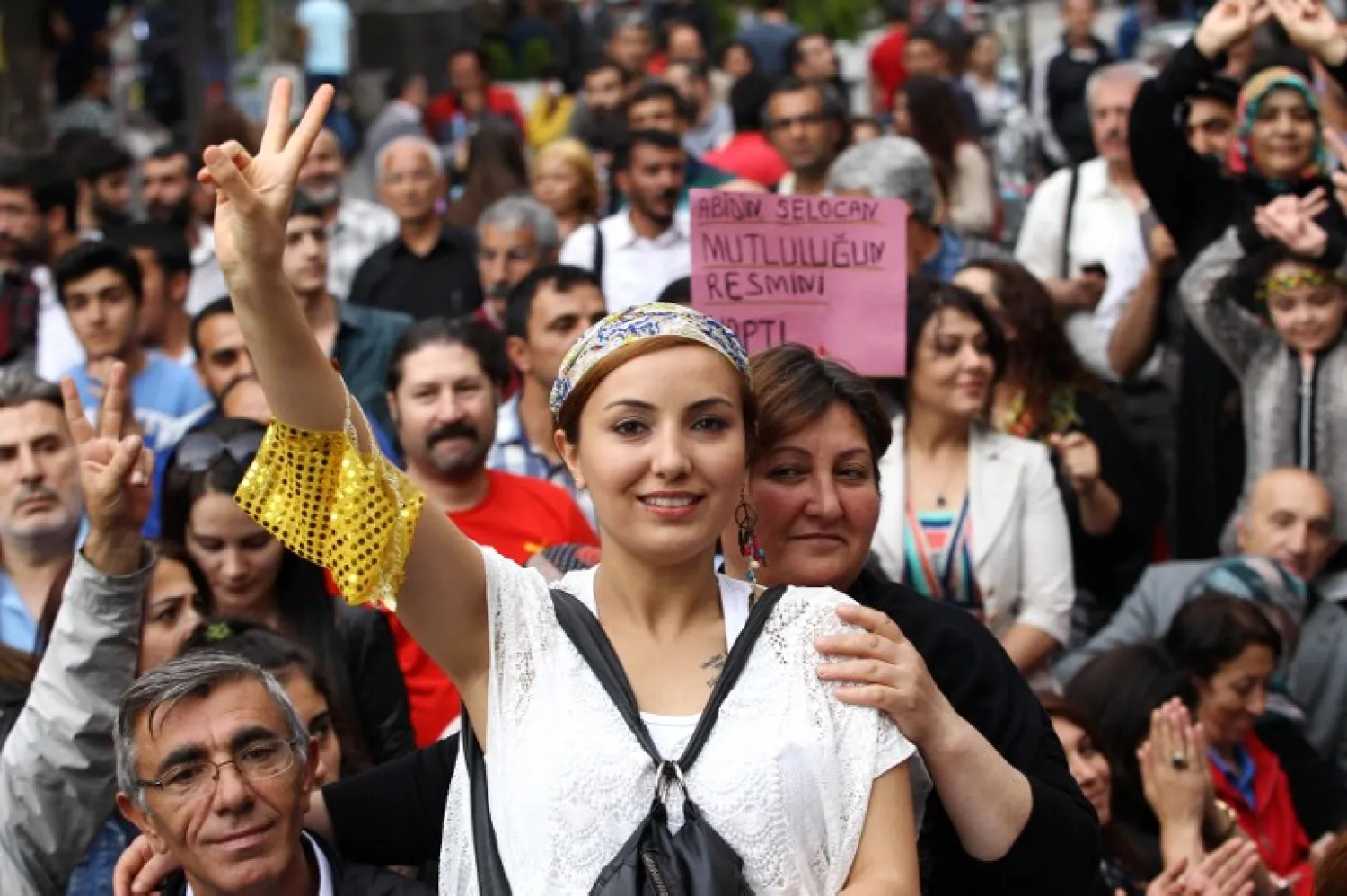
A supporter of pro-Kurdish People's Democracy Party (HDP) makes a victory sign as she celebrates the results of the HDP party as part of the legislative election in Ankara, on June 9, 2015. (AFP photo/Adem Altan)
TT

Iran’s Ethnic, Religious Minorities Face Persecution, Sectarian Discrimination

A supporter of pro-Kurdish People's Democracy Party (HDP) makes a victory sign as she celebrates the results of the HDP party as part of the legislative election in Ankara, on June 9, 2015. (AFP photo/Adem Altan)

The non-Persian population in Iran has faced many problems that were accumulated even before the establishment of the Iranian republic. The demands of the oppressed minorities surfaced immediately after the overthrow of the Shah regime in 1979.

The era of Shah Mohammad Reza Pahlavi, from 1926 till 1979, witnessed repression against national demands. Today, the current system continues with the same approach, treating the minorities with discrimination and humiliation.

Iran comprises six main ethnic groups: Persians, Turks, Kurds, Arabs, Baloch and Turkmens. They are spread throughout Iran, each with its own language, culture, customs and traditions.

There are no official statistics about the numbers of non-Persian people. Tehran authorities consider national affiliations as a threat to the country’s unity. Therefore, various governments have adopted security measures to counter national activities, and worked to obliterate ethnic minorities by changing the demographic fabric of their regions.

Early in the era of Mohammad Reza Pahlavi, the son of the founder of the Pahlavi state, Iran experienced a series of unrest in the non-Persian provinces after the new shah followed his father’s footsteps in establishing a national rule that did not recognize the rights of non-Persian minorities, under the pretext of strengthening unity in the country.

The provinces of Azerbaijan and Kurdistan witnessed the declaration of two independent republics. Following the exile of Shah Reza, non-Persian groups found the ground for the formation of communities and civil institutions on cultural and social bases, and quickly developed into political organizations and parties that took on the task of restoring their national rights.

But these demands were rejected by the central government in Tehran, which refused to communicate and respond to the telegrams of the Democratic Party of Azerbaijan. “I will pay no attention to these telegrams even if they were a hundred,” the Iranian prime minister said at the time.

Consequently, neglect and humiliation by Tehran led to the growing nationalist movement in Azerbaijan, leading to the formation of the National Government of Azerbaijan, which took over large parts of the region and formed a local administration. This happened with the support of the Soviets. Forces of the former Soviet Union had been deployed throughout Iran since World War II, especially following the British-Soviet invasion to overthrow the Shah.

In Kurdistan, a similar autonomous region was established in 1946 under the name of the "Republic of Mahabad" led by the head of the Kurdistan Democratic Party, Qazi Muhammad, with the support of Mullah Mustafa Barzani. However, the young republic lasted only 11 months; it was toppled by Iranian forces in conjunction with the departure of the Soviet forces. The Iranian authorities executed Qazi Muhammad and a group of his comrades, while Mullah Mustafa Barzani withdrew with his fighters from the area.

The Shah regime, after suppressing the nationalist movements in Azerbaijan and Kurdistan, established for a new phase of repression against national demands in Azerbaijan, Kurdistan, Baluchistan, Ahwaz and the Turkmen desert. Under these circumstances, the political activity of the oppressed during the reign of Reza went underground. Indeed, the Shah’s regime carried out public executions against many political activists.

Moreover, Shah Mohammad Reza turned his back on his Arab neighbors when he fully allied with Israel and opened an Israeli embassy in Tehran, establishing extensive relations with it, contrary to the desire of public opinion in Iran and the interests of neighboring countries.

These hostile positions paved the way for the formation of a ground for opponents of the Shah's regime in countries affected by his policies, especially Iraq and Syria.

The atmosphere of openness that Iran witnessed in the first year following the overthrow of the Shah led to the launch of a local debate and the formation of national organizations and committees. This strengthened the position of political activists, who demanded that the new government give them the rights they have been denied for many years.

The positions of the new leaders in Tehran ranged from absolute rejection to promises of achieving some national demands at a later stage.

But once the Khomeini regime tightened its grip on the country, it started suppressing the non-Persian provinces.

In Kurdistan, the Iranian Revolutionary Guards forces moved into the province and clashed with armed rebels in Kurdish cities. The clashes continued sporadically until 1983 and left more than 10,000 people dead.

With the start of the war between Iran and Iraq, the Khomeini authorities firmly confronted any activity opposed to the regime, which soon eliminated all the forces that participated in the revolution against the Shah.

Not only did the Khomeini regime confront opposition activists at home, but they pursued them in exile and carried out multiple political assassinations in different parts of the world, especially in France, Germany and Iraq.

After the war, especially after the reformists (led by Mohammad Khatami) came to power, non-Persian people took advantage of the relatively open atmosphere to submit their demands.

The authorities did not meet the basic demands of non-Persian peoples, and various governments continued to make mere promises.

With the arrival of President Hassan Rouhani to power, he appointed an assistant in the affairs of nationalities and minorities, former intelligence minister Ali Younesi. But Younesi does not seem interested in resolving the issues of the non-Persian communities, as he has come from the same security services that have long confronted national activists with executions, imprisonment, exile and assassinations.


Two Men Re-Arrested for Suspected Spying for Iran in Airbase Scare

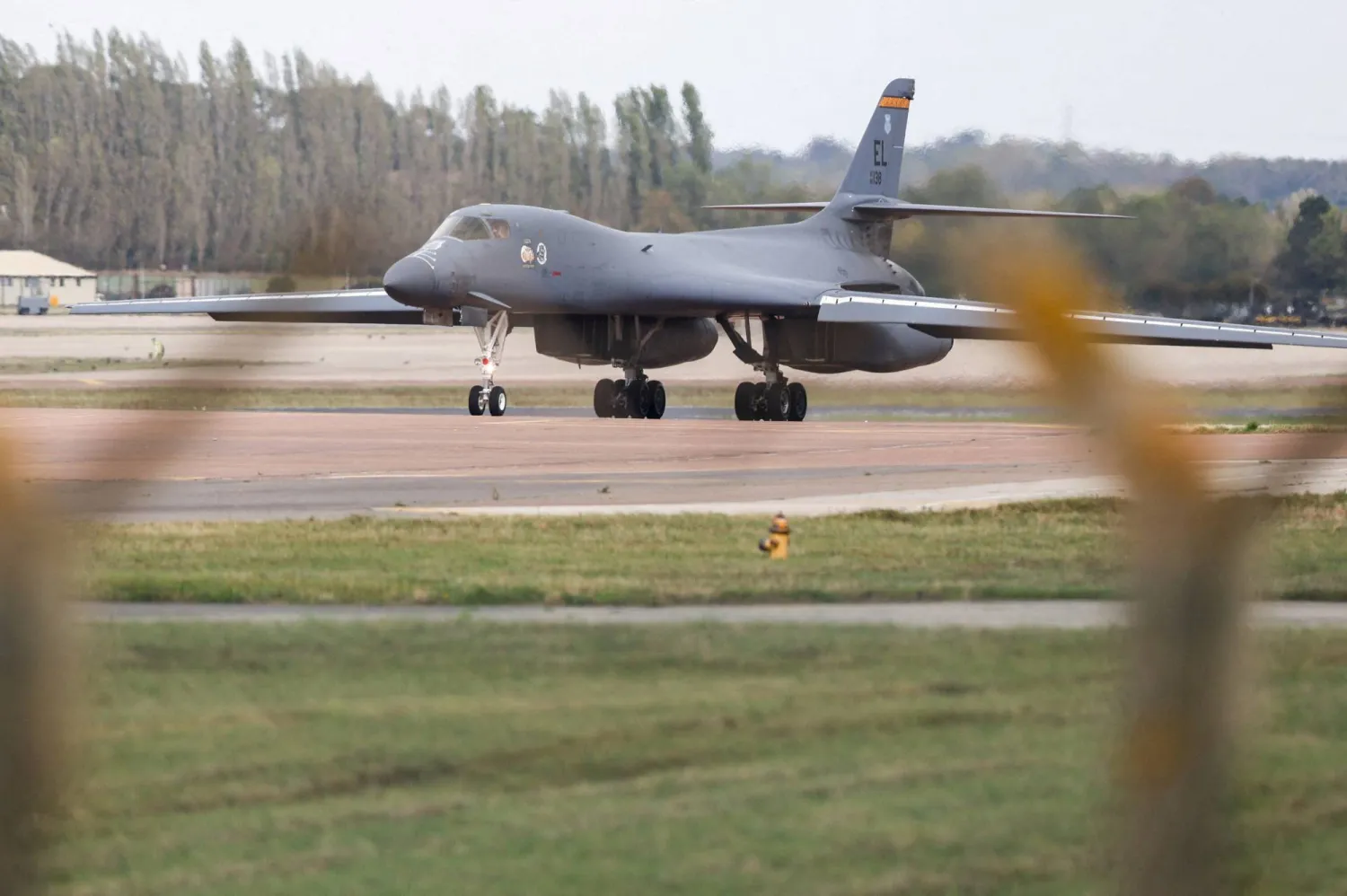
A B‑1B Lancer bomber arrives at RAF Fairford airbase in Fairford, Gloucestershire, Britain, September 29, 2026. (Reuters)
TT

Two Men Re-Arrested for Suspected Spying for Iran in Airbase Scare

A B‑1B Lancer bomber arrives at RAF Fairford airbase in Fairford, Gloucestershire, Britain, September 29, 2026. (Reuters)

British police said on Tuesday they had re-arrested two men on suspicion of assisting Iranian intelligence as part of their investigation into activity at the RAF Fairford air base ‌last month. 

Counter ‌Terrorism Policing said ‌in ⁠a statement that ⁠they had re-arrested a 24-year-old British national, who was initially arrested outside the military base in southwest England in the early hours ⁠of September 27. 

Police said ‌they ‌had also arrested a 25-year-old British-Iranian ‌dual national who had ‌previously been arrested in London. 

Assistant Commissioner Laurence Taylor, Head of National Counter Terrorism Policing in the ‌UK, said in a statement, "we consider it highly likely ⁠that ⁠there is Iranian state involvement." 

British Prime Minister Andy Burnham last week said that the activity at RAF Fairford, which had been used by US bombers to carry out strikes on Iran, was likely to have been coordinated in Iran. 


IRGC: 2 Tankers Hit Mines, Set Ablaze South of Hormuz

FILED - 27 December 2011, ---, --: FILE PHOTO - A satellite picture provided by the National Aeronautics and Space Administration (NASA), shows the Arabian Gulf, the Strait of Hormuz, and the Gulf of Oman. Photo: -/The Visible Earth/NASA/dpa
TT

IRGC: 2 Tankers Hit Mines, Set Ablaze South of Hormuz

FILED - 27 December 2011, ---, --: FILE PHOTO - A satellite picture provided by the National Aeronautics and Space Administration (NASA), shows the Arabian Gulf, the Strait of Hormuz, and the Gulf of Oman. Photo: -/The Visible Earth/NASA/dpa

Two tankers were set ablaze and brought to a halt south of the Strait of ⁠Hormuz after hitting Iranian ⁠mines, the Revolutionary Guards' Navy said ⁠in a statement shared by state media on Tuesday, without saying when the tankers were hit.

The statement also ⁠said a ⁠US drone was downed by Iran on Monday night.

Diplomatic efforts between Iran and the United States have stalled over issues including the future of the Strait of Hormuz.

On Monday, Iranian Foreign Minister Abbas Araghchi said Washington was responsible for insecurity in the strait, usually a key transport route for oil and gas but which Iran has sought to blockade during the war launched by the US and Israel in February.

Pakistan has played a key mediating role in the so far unsuccessful attempts to end the war. In June, it helped broker a short-lived memorandum of understanding, which Tehran insists should still form the basis of any peace deal.


Police Charge Driver with Intentionally Causing Serious Injury to Australian Federal Lawmaker

A TV crew works in front of a portrait of Australian politician Helen Haines (C) outside her office in the northern regional city of Wangaratta, about 250 kilometres north-east of Melbourne on October 20, 2026. (Photo by William WEST / AFP)
TT

Police Charge Driver with Intentionally Causing Serious Injury to Australian Federal Lawmaker

A TV crew works in front of a portrait of Australian politician Helen Haines (C) outside her office in the northern regional city of Wangaratta, about 250 kilometres north-east of Melbourne on October 20, 2026. (Photo by William WEST / AFP)

Police on Tuesday charged a driver with intentionally causing serious injury to an Australian federal lawmaker who is a critical condition after being struck by a car.

A police statement said Brendan Nugent, 43, was charged with intentionally causing serious injury, dangerous driving causing serious injury and causing harm to a federal official.

Helen Haines, a 65-year-old independent politician, was in hospital in a critical but stable condition after being struck by a car outside her office in the city of Wangaratta in Victorian state on Monday, police said.

Prime Minister Anthony Albanese praised a barber who helped restrain the driver.

Haines was struck by a Toyota Land Cruiser SUV.

The incident shocked Australians as political violence is rare there and politicians have always been accessible to the public. Most lawmakers are not accompanied by security officers and go about their work and personal lives on their own.

The suspect’s father, Rod Nugent, released a statement Tuesday describing Haines as a “deeply respected, valued and much loved member of our local community.”

“Helen has been our friend for more than 20 years and what happened to her yesterday is devastating and unfathomable,” the father said.

Haines’s family released a statement expressing thanks for the “swift assistance of bystanders” as well as health workers and police.

Haines, who was first elected to Parliament in 2019 and had been reelected twice since, was initially taken to a hospital in Wangaratta, a city of 30,000 people. She was airlifted later on Monday to a hospital in the state capital, Melbourne, 236 kilometers away.