


ISIS has Morphed into Covert Global Network, UN Warns

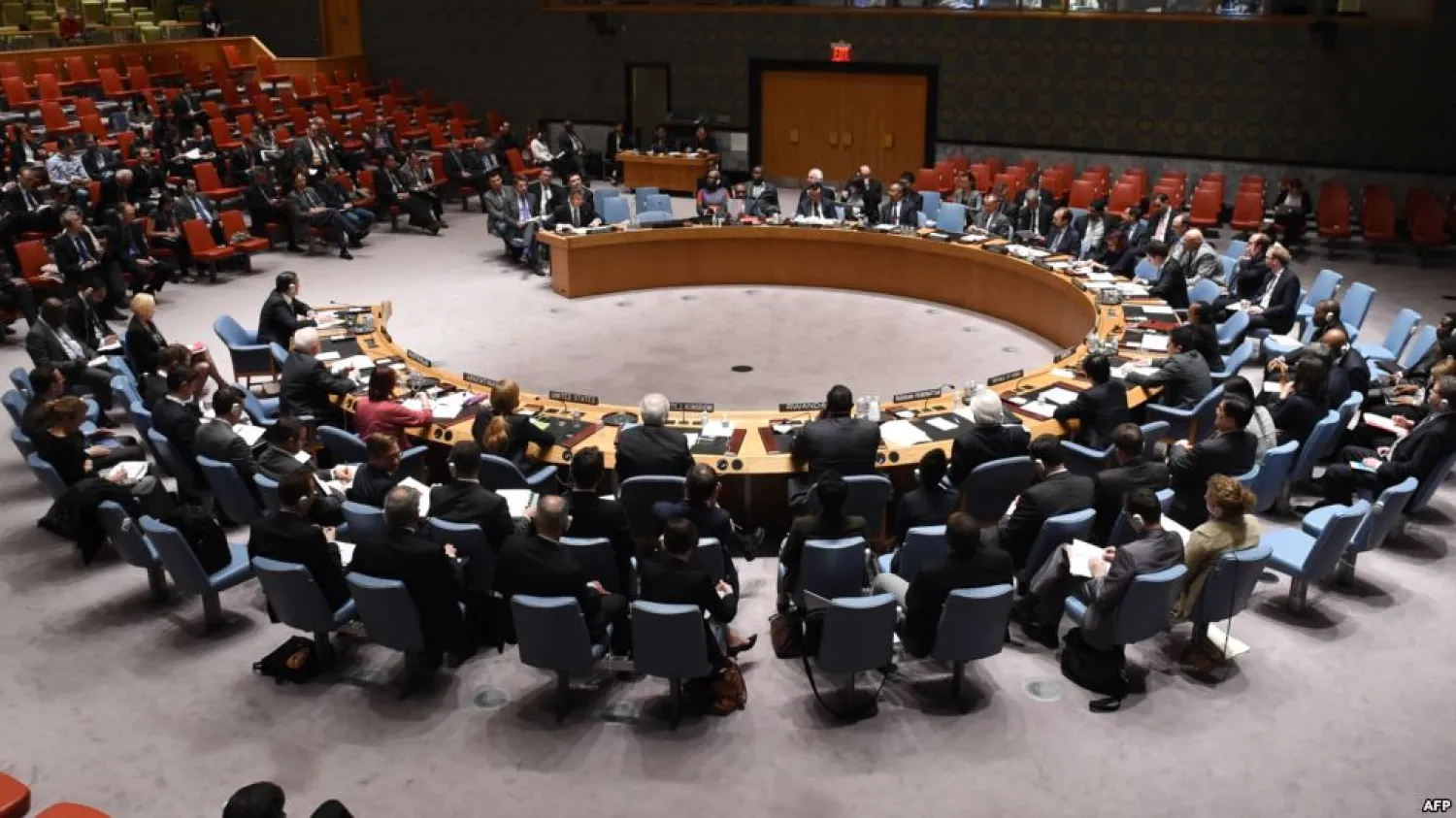
The UN Security Council in session. AFP file photo
TT

ISIS has Morphed into Covert Global Network, UN Warns

The UN Security Council in session. AFP file photo

Undersecretary-General for Counter-Terrorism Vladimir Voronkov has warned that despite suffering “significant” losses, the membership of ISIS is estimated at more than 20,000 in Iraq and Syria.

He said ISIS has morphed from a regional group into a covert global network, with a weakened yet enduring core in the two countries.

Voronkov spoke at the Security Council on Thursday while presenting the UN Secretary-General’s report on the threat posed by ISIS to international peace and security and the range of United Nations efforts in support of member states in countering the threat.

He said that the so-called ISIS “caliphate” has been in headlong retreat in Syria since its defeat at the end of 2017. Its membership, estimated at more than 20,000 in those countries, is split evenly between Iraq and Syria, with some fighters fully engaged militarily and others concealed in “sympathetic communities” and urban areas.

The group’s leadership has also decentralized to mitigate further losses, and is thus likely to survive in the two countries in the medium term, due to the ongoing conflict and complex stabilization challenges, Voronkov told the Council.

There were significant numbers of ISIS-affiliated fighters in Afghanistan, South-East Asia, West Africa, Libya, and to a lesser extent in Sinai, Yemen, Somalia and the Sahel, he said.

“The international community must renew their efforts to effectively counter the rapidly evolving and transnational threat from ISIS,” he stressed.

Also briefing the Council, Assistant Secretary-General Michele Coninsx, who heads the Executive Directorate of the Council's Counter-Terrorism Committee, said the UN is supporting member states with the most up-to-date technologies to secure their borders, providing guidance for the effective use of these technologies in full compliance with international human rights law.

“We also continue to forge new and innovative partnerships with the private sector, including in particular in the area of information and communications technologies,” she said, stressing that such engagement is essential, for example, with respect to gathering digital evidence in terrorism cases.

Joana Cook, Senior Research Fellow at the International Centre for the Study of Radicalization and Political Violence, King’s College, London, briefed Council members on a report she recently co-authored with Gina Vale.

She said that her research findings demonstrated — for the first time and with evidence — that some 41,490 foreign citizens across 80 countries became affiliated with ISIS. One in four ISIS fighters are women and minors, she told the Council.

Britain's new Foreign Secretary Jeremy Hunt, who chaired the meeting, said: “ISIS has not been vanquished and the root causes of its emergence have yet to be resolved.”

Advocating a renewed focus on the root causes of ISIS’ emergence, he said that means doing more to support peace and reconciliation in Iraq and a political solution in Syria.

As for US Ambassador Nikki Haley, she described the terrorist group as "an enemy that adapts, and one that will seek out the world's ungoverned spaces."

The United States is working with its partners to help victims rebuild in Iraq and Syria, while restoring electricity and other services and thereby allowing 150,000 Syrians to return to Raqqa, the diplomat said.

She pledged that Washington will deepen its partnerships with countries fighting terrorism.


Russia: Man Suspected of Shooting Top General Detained in Dubai

An investigator works outside a residential building where the assassination attempt on Russian Lieutenant General Vladimir Alexeyev took place in Moscow, Russia February 6, 2026. REUTERS/Anastasia Barashkova
TT

Russia: Man Suspected of Shooting Top General Detained in Dubai

An investigator works outside a residential building where the assassination attempt on Russian Lieutenant General Vladimir Alexeyev took place in Moscow, Russia February 6, 2026. REUTERS/Anastasia Barashkova

Russia's Federal Security Service (FSB) said on Sunday that the man suspected of shooting top Russian military intelligence officer Vladimir Alexeyev in Moscow has been detained in Dubai and handed over to Russia.

Lieutenant General Vladimir Alexeyev, deputy head of the GRU, ⁠Russia's military intelligence arm, was shot several times in an apartment block in Moscow on Friday, investigators said. He underwent surgery after the shooting, Russian media ⁠said.

The FSB said a Russian citizen named Lyubomir Korba was detained in Dubai on suspicion of carrying out the shooting.

Russian Foreign Minister Sergei Lavrov accused Ukraine of being behind the assassination attempt, which he said was designed to sabotage peace talks. ⁠Ukraine said it had nothing to do with the shooting.

Alexeyev's boss, Admiral Igor Kostyukov, the head of the GRU, has been leading Russia's delegation in negotiations with Ukraine in Abu Dhabi on security-related aspects of a potential peace deal.


Factory Explosion Kills 8 in Northern China

Employees work on an electric vehicle (EV) production line at the Volkswagen Anhui factory in Hefei, Anhui province, China, February 4, 2026. REUTERS/Florence Lo
TT

Factory Explosion Kills 8 in Northern China

Employees work on an electric vehicle (EV) production line at the Volkswagen Anhui factory in Hefei, Anhui province, China, February 4, 2026. REUTERS/Florence Lo

An explosion at a biotech factory in northern China has killed eight people, Chinese state media reported Sunday, increasing the total number of fatalities by one.

State news agency Xinhua had previously reported that seven people died and one person was missing after the Saturday morning explosion at the Jiapeng biotech company in Shanxi province, citing local authorities.

Later, Xinhua said eight were dead, adding that the firm's legal representative had been taken into custody.

The company is located in Shanyin County, about 400 kilometers west of Beijing, AFP reported.

Xinhua said clean-up operations were ongoing, noting that reporters observed dark yellow smoke emanating from the site of the explosion.

Authorities have established a team to investigate the cause of the blast, the report added.

Industrial accidents are common in China due to lax safety standards.
In late January, an explosion at a steel factory in the neighboring province of Inner Mongolia left at least nine people dead.


Iran Warns Will Not Give Up Enrichment Despite US War Threat

Traffic moves through a street in Tehran on February 7, 2026. (Photo by ATTA KENARE / AFP)
TT

Iran Warns Will Not Give Up Enrichment Despite US War Threat

Traffic moves through a street in Tehran on February 7, 2026. (Photo by ATTA KENARE / AFP)

Iran will never surrender the right to enrich uranium, even if war "is imposed on us,” its foreign minister said Sunday, defying pressure from Washington.

"Iran has paid a very heavy price for its peaceful nuclear program and for uranium enrichment," Abbas Araghchi told a forum in Tehran.

"Why do we insist so much on enrichment and refuse to give it up even if a war is imposed on us? Because no one has the right to dictate our behavior," he said, two days after he met US envoy Steve Witkoff in Oman.

The foreign minister also declared that his country was not intimidated by the US naval deployment in the Gulf.

"Their military deployment in the region does not scare us," Araghchi said.
