Race to Create Smart, High-Tech Devices for the Over-65 Crowd

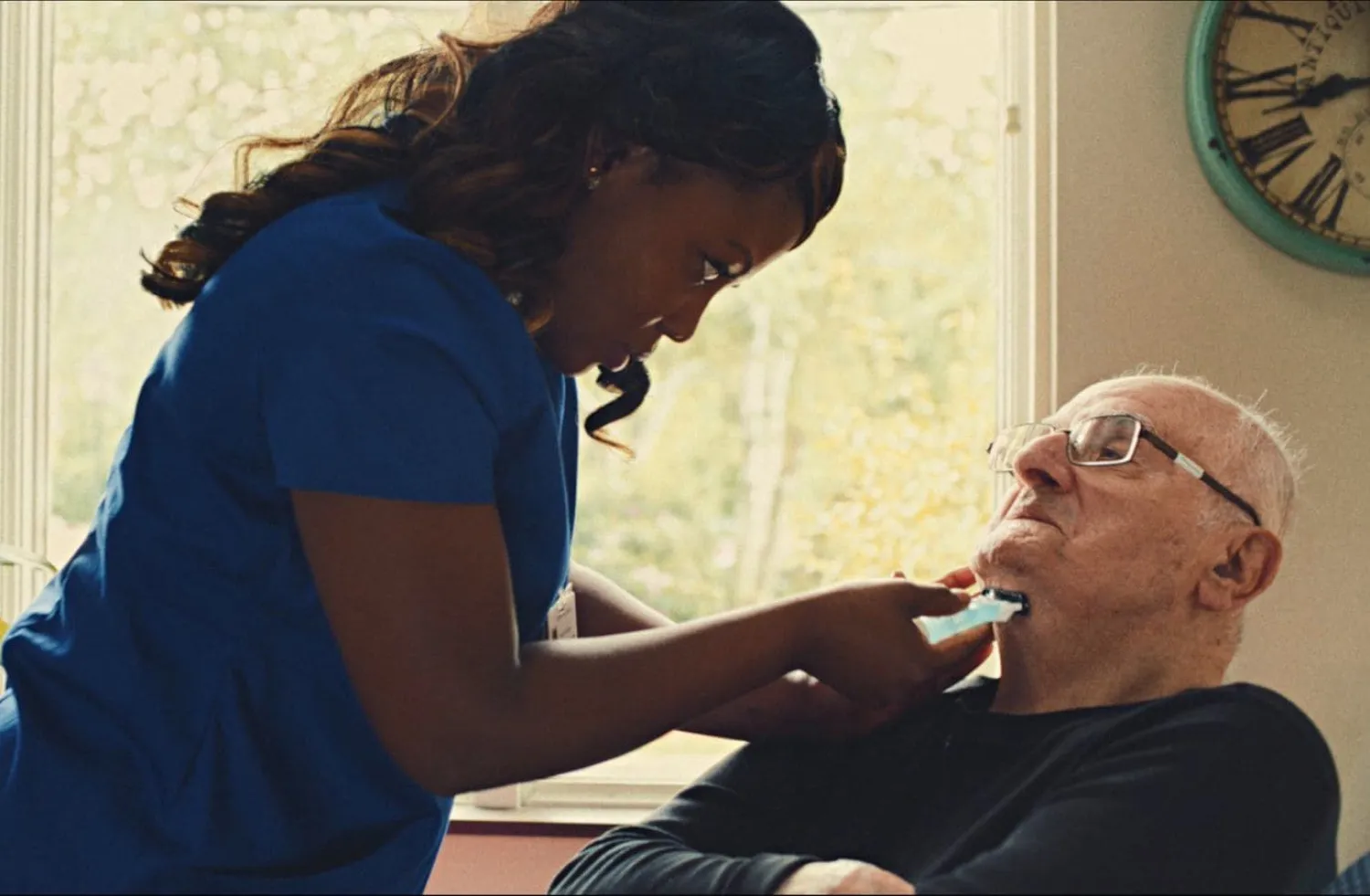
Gillette’s Treo has an extra-wide handle and comes with a tube of clear gel that eliminates the need for running water or shaving cream. (Courtesy of Proctor and Gamble)
TT

Race to Create Smart, High-Tech Devices for the Over-65 Crowd

Gillette’s Treo has an extra-wide handle and comes with a tube of clear gel that eliminates the need for running water or shaving cream. (Courtesy of Proctor and Gamble)

Executives at Gillette have for decades defined shaving as a rite of passage.

The company famously mails out free razors — with “welcome to manhood” cards — to millions of men a year on their 18th birthdays. Its ads focus on the experience passing from father to son (sometimes with the help of famous faces like quarterbacks Archie and Eli Manning).

But in recent years, executives have begun to see another milestone emerge in their customers’ lives: the moment when sons begin shaving their aging fathers.

“We started seeing it all over social media — men posting about washing, grooming and shaving their fathers,” said Matt Hodgson, a design engineer at Procter and Gamble, which owns Gillette. “It’s a very difficult and emotional thing to do.”

It turned out there are a number of logistical challenges, too. Those who are bedridden don’t have easy access to running water to rinse blades or wash off shaving cream. Traditional blades are quick to nick delicate skin.

“We’re specialists in developing razors and yet all the products we could find were for shaving yourself,” Hodgson said. “When you turn the razor outward, it doesn’t work as well anymore. It was clear we needed to create something completely new.”

After three years of observation, design and testing, Gillette is preparing to release the first razor built for caregivers to shave others. The Gillette Treo has an extra-wide handle and comes with a tube of clear gel that eliminates the need for running water or shaving cream.

The brand, which is losing younger customers to online start-ups like Harry’s, is looking for opportunities to reach the country’s fastest-growing demographic: Americans 65 and older.

The number of senior citizens in the United States is expected to nearly double by 2050, creating a fast-growing niche for retailers and manufacturers. Best Buy, which is investing heavily in technology for aging adults, is spending $800 million on GreatCall, the tech company behind the senior-friendly Jitterbug phone, which comes with extra-large buttons and screens, and alerts first responders when there’s an emergency. (The acquisition, scheduled to be finalized this fall, would be the largest in Best Buy’s history.) Other companies are creating hairbrushes and combs with extendable handles, toothbrushes with three-sided heads, and sensor-packed shoes that can detect falls, all aimed at elderly consumers and those who care for them.

“The tide is turning: Retailers are starting to realize there’s a big opportunity here that they’re not paying attention to,” said Georganne Bender, a consultant who helps retailers accommodate aging shoppers. “For so long everyone’s been focused on the younger customer, but if you look at the stats, baby boomers still control 70 percent of the country’s disposable income.”

Spending by Americans age 50 and up is expected to rise 58 percent to $4.74 trillion in the next 20 years, according to AARP. (Spending by 25- to 50-year-olds, by comparison, is expected to grow 24 percent.) At the same time, the number of adults taking care of elderly parents is expected to rise steadily in coming years.

“It’s become a gold rush,” said Danny Silverman, chief marketing officer of e-commerce analytics firm Clavis Insight. “Whether you’re a hairbrush-maker or a technology company, you’re thinking about how you can meet the needs of an aging population.”

Rethinking stores

Retailers around the country are taking steps to make their stores more friendly to older shoppers. CVS has begun adding magnifying glasses to its shelves, while Target has increased the font size on pharmacy labels. Others have started using brighter lights and nonslip, matte flooring in their stores.

“Starting in your mid-60s, you need a lot more light to see,” Bender said. “So many stores are way too dark — we tell them, ‘You’ve got all these people with very deep pockets who can’t see your product.’”

At Best Buy, the focus is increasingly on aging Americans who live at home.

Step one: Make it easier for adults to keep tabs on their aging parents. The company’s Assured Living program, introduced a year ago, uses a network of sensors to alert caretakers to changes in routine.

Did Mom take her medicine? Is she still in bed? Is her room overheated, or her door unlocked? The retailer says cabinet sensors, under-bed sensors, smart thermostats and security cameras can help adults “proactively monitor” their parents’ safety at home. Wearable pendants, meanwhile, can alert caregivers — or emergency workers — when there’s been a fall.

“Part of the target market for us is the frail population: People who are still healthy and living at home, whose health can seriously deteriorate if they fall or if there’s a heat wave,” Hubert Joly, chairman and chief executive of Best Buy, said in a call with reporters last week. He added that the data from those devices could also be useful for medical professionals and insurance providers.

But privacy experts raised concerns about how the personal data is collected and used.

“It’s kind of like the Wild West right now: There are so many types of tracking technology, but nobody has stopped to ask aging consumers how they feel about it or what they want,” said Colin Milner, chief executive of the International Council on Active Aging. “The biggest question when it comes to wearables is, where does the data go? Who has access to that data? This technology is useful but there are also a lot of unanswered questions.”

It is important, others added, that elderly people and their caregivers be able to decide how much monitoring — and data-sharing — they’re comfortable with. Sharing sleep patterns and nutritional habits with medical researchers, for example, may be a good idea.

“But with targeted advertisers? Probably not,” said Irina Raicu, director of Internet ethics at the Markkula Center for Applied Ethics at Santa Clara University.

“Sometimes these products are introduced in the context of helping the elderly, but what they really do is normalize the giving up of privacy for all of us,” she said. “In the context of aging adults, safety does sometimes become more important than privacy, but it is important that these are informed decisions.”

Best Buy’s acquisition of GreatCall is bound to draw the same questions. The service, which has nearly 1 million subscribers and annual revenue of $300 million, specializes in easy-to-use devices that can help connect the elderly with caregivers or emergency personnel. In addition to two Jitterbug phones — one with a touch screen, the other a flip phone — the company also makes wearable devices that allow older adults to alert family or first responders in case of an emergency.

On its website, GreatCall says its 5Star urgent-response service regularly collects data on users’ locations, and also tracks medical conditions, medications and other personal information for a variety of purposes, including analysis and research. A spokeswoman for GreatCall said the company has a “strict” privacy policy but declined to comment further.

Real-world testing
It takes Amanda Galasso 12 minutes — and multiple razors and basins of water — to shave each nursing home resident. It is a messy and often painful endeavor, both for her and the men whose faces she is shaving.

“Patients are constantly pushing away my hand, and there are a lot of nicks because the razors pull on delicate skin,” said Galasso, a nursing assistant at Cherry Hill Manor in Rhode Island. “It’s upsetting for everybody.”

Earlier this year, Galasso was one of dozens of caretakers to help Gillette test its Treo prototype. The difference, she says, was immediate: The razor was easy to maneuver, and residents remained calm during their shaves. The best part: It took her just three minutes to shave each patient.

“You think, oh, it’s just a shave, how hard can it be?” the 29-year-old said. “But everything — brushing teeth, trimming nails, washing hair — is that much more difficult when you’re working someone who’s in bed and can’t move around very much.”

That lack of mobility was the first thing Hodgson, of Gillette, noticed three years ago when he began watching caretakers shaving their patients.

“The one thing that struck me right away is that they’re not being shaved in the bathroom,” he said.

There were other issues too: Bedsheets and pillows often ended up covered in shaving cream, and razors were quick to clog up. Patients with Alzheimer’s or dementia were often scared.

“It was all of those things that struck me, that made me realize we can do better,” he said.

He and his team widened the razor’s handle so that it could be held like a paintbrush, making it easier to maneuver around delicate surfaces. They used a cartridge that had been designed for parts of the world with limited access to water, which meant there was less need to rinse out the blade in between strokes. And they added a tube of clear shaving gel the could double as a moisturizer after the shave.

“The clear gel means you can see right through to the skin,” Hodgson said. “You’re not having to guess through a thick white foam.”

The disposable razors — which nursing homes prefer because they’re more hygienic than reusable ones — can also be easily disassembled and recycled, he said.

The Treo is expected to hit store shelves in the coming months. After that, Hodgson said Procter & Gamble plans to look for ways to simplify hair-washing, laundry and ear care for aging adults.

“This is an important and growing market for us,” he said. “The Treo is just our first solution.”

The Washington Post


An Iconic Puzzle Comes Home as Production of the Rubik’s Cube Returns to Hungary

Hungarian architect and inventor Ernő Rubik attends the opening event of Rubik's Cube production line of the Jasz-Plasztik plastic processing company in Jaszbereny, Hungary, 10 November 2026. (EPA)
TT

An Iconic Puzzle Comes Home as Production of the Rubik’s Cube Returns to Hungary

Hungarian architect and inventor Ernő Rubik attends the opening event of Rubik's Cube production line of the Jasz-Plasztik plastic processing company in Jaszbereny, Hungary, 10 November 2026. (EPA)

More than half a century ago, a Hungarian architect, sculptor and professor invented what would become one of the world's most popular and beloved puzzles whose appeal has spanned generations: the colorful, mind-bending, six-sided Rubik's Cube.

Now, after selling more than half a billion units and becoming a worldwide cultural touchstone, production of the cube is returning to Hungary, where its inventor, Ernő Rubik, first conceived of the iconic object that bears his name.

Hungary “is the home of the cube. The cube was born here,” Rubik, 82, said on Tuesday at the opening of a new, fully automated Rubik's Cube production line in the Hungarian city of Jászberény.

The journey of the Rubik's Cube began in 1974, when Rubik was teaching design at the Academy of Applied Arts and Design in Budapest. Seeking to create a three-dimensional object that was “infinite,” he said, he completed a prototype — then made of wood — of a cube that could rotate on multiple axes and was made up of 27 blocks.

Recognizing its consumer value, Rubik soon began producing more of the puzzles. Beginning in 1977, an initial 5,000 units of what was then called the “Magic Cube” were sold at specialty shops in the Hungarian capital.

The invention — or what Rubik prefers to describe as a “discovery” — gained popularity, and after having difficulties procuring materials for the cubes in then-socialist Hungary, he realized: “We were not prepared for that size of production ... We can’t fulfill the needs of the market worldwide.”

The cube was licensed to a British and then a US toy company, and its production was moved abroad. By the early 1980s, its popularity had exploded in what Rubik called “the first big wave,” in which he said 200 million units were sold between 1980 and 1983.

While sales of the cube dipped after its initial success, it still attracts plenty of users eager to try their hand at solving the puzzle. Millions are sold every year.

At the new production line in Hungary, a series of robotic arms assembles the cubes and tests them for functionality and durability — a level of automation Rubik said was “very different” than in the early days when the cubes were assembled by hand.

The new line in Jászberény plans to produce 1 million cubes annually.

Steve Radewych, a senior vice president with Canadian toy company Spin Master, which owns the Rubik's Cube trademark, said at Tuesday's opening that the theme of the day was: “Back to its roots: The cube comes home.”

“Ernő, your discovery is more than a toy,” Radewych told Rubik. “It's a global social phenomenon.”

Radewych noted the “incredible staying power” of the Rubik's Cube, and the fact that the puzzle continues to hold the fascination of young people even today.

“The cube represents an intellectual journey, a symbol of intelligence, problem-solving and cognitive discipline,” he added, which “has brought joy — and frustration — to many generations.”

The cube has enjoyed another surge in popularity in recent years as global competitions have proliferated, measuring who can solve the puzzle the fastest.

The current record, set only last month in China by nine-year-old Xuanyi Geng, is 2.51 seconds, according to the World Cube Association, which organizes and certifies competitions across the world.

Rubik, who does not consider himself a speed competitor, said that for him, the cube represents a “transformable sculpture,” the place where art and engineering meet and users can manipulate and change the cube in nearly endless variations.

“If you are doing something, creating something, you have the chance to do something that is meaningful — that’s one part — and beautiful,” he said.


SpaceX Starship Test to Attempt First-Ever Spaceship ‘Catch'

SpaceX's mega rocket Starship is stacked and prepared for a test flight from Starbase, Texas, Thursday, Nov. 12, 2026. (AP)
TT

SpaceX Starship Test to Attempt First-Ever Spaceship ‘Catch'

SpaceX's mega rocket Starship is stacked and prepared for a test flight from Starbase, Texas, Thursday, Nov. 12, 2026. (AP)

Elon Musk's SpaceX was poised Friday to carry out its latest test of the world's biggest and most powerful rocket, the Starship, with plans for a groundbreaking "catch" of the spaceship following a day in orbit.

A successful capture of the Starship upper stage would mark a significant milestone in the space industry's decades-long pursuit of fully reusable spacecraft that can drastically reduce mission costs and make frequent travel possible.

"If successful, this will mark the first full recovery of an orbital launch system and a breakthrough moment in making Starship a reliable, rapidly reusable rocket," SpaceX said.

For the 15th Starship test flight Friday, SpaceX aims to recover both stages of the massive 124-meter (407-foot) launch vehicle.

The company has caught the booster, dubbed Super Heavy, on three previous occasions, with the first stage descending vertically back to the launch site shortly after blastoff and nestling into mechanical "chopstick" arms.

It will now attempt to do the same with the spaceship. Some versions of the vessel are designed to launch internet satellites and data centers into orbit, while others will be made to ferry people to the Moon and Mars.

A spacecraft that can be fully reused is the "Holy Grail" of the space industry, said Clayton Swope, an aerospace expert at the Center for Strategic and International Studies.

"No one's really been able to do that so far," he said. "People have been trying to do that since the (NASA) space shuttle. But the space shuttle ended up being kind of a compromise because a lot of the vehicle wasn't reusable."

Reusing the Starship spacecraft would require the vessel to withstand the extreme heat of reentering Earth's atmosphere and then return to service without extensive refurbishment.

- Refueling challenge -

Musk, the world's richest person, has already revolutionized the space sector with the partially reusable Falcon rockets, which are regularly employed to launch satellites and carry astronauts to the International Space Station.

The Starship project, however, has been plagued by years-long delays as SpaceX grapples with novel engineering challenges -- even as NASA is counting on the spaceship to serve as a lunar lander for its Artemis program.

Other technical challenges include transferring fuel to Starship in orbit -- a requirement for any journey to the Moon or Mars.

Following SpaceX's high-profile stock market debut in June, the company carried out the first orbital flight of Starship in September, though the mission was cut short due to an engine issue.

It is also investing heavily in additional launch sites for its mega-rocket in Louisiana and Florida.

- Complex capture -

Friday's launch is scheduled to take place at SpaceX's "Starbase" in southern Texas at 4:45 pm (2245 GMT).

Following liftoff and the mid-air separation of the two stages, SpaceX plans to bring Super Heavy back to Earth six and a half minutes later, catching it at the launch site on the Gulf of Mexico coastline.

The spaceship will continue to reach Earth's orbit, where it will deploy 26 satellites into Musk's Starlink satellite internet constellation that has become a major revenue stream for SpaceX.

It will then circle the planet 14 times, before returning 22 hours later and -- SpaceX hopes -- descending safely into the chopstick arms.

This capture attempt is more complex than that of the booster, as the spaceship will be descending much faster and from a much greater altitude.

SpaceX has said it would proceed with these maneuvers only if conditions are optimal, and in the past has made last-minute changes to test flights under Musk's "fail fast" strategy of learning through crashes, explosions and other mishaps.

As of late Thursday, the US Federal Aviation Administration had not yet given its final approval for the test flight.


Delhi Overtakes Lahore as World’s Most Polluted City as Air Quality Drops

Traffic moves on a smoggy morning as air pollution spikes in New Delhi, India, November 13, 2026. (Reuters)
TT

Delhi Overtakes Lahore as World’s Most Polluted City as Air Quality Drops

Traffic moves on a smoggy morning as air pollution spikes in New Delhi, India, November 13, 2026. (Reuters)

India's capital Delhi overtook Lahore in Pakistan to become the world's most polluted city on Friday, with air quality reaching hazardous levels and visibility dropping as smog blanketed the city of 20 million people.

Air quality index (AQI) in Delhi was "hazardous" at 334, making ‌it the ‌most polluted global major ‌city, ⁠according to Swiss group ⁠IQAir, which measures air quality levels based on the concentration of toxins.

An AQI reading up to 50 is considered good with little or no ⁠health risk.

India's official ‌Central Pollution ‌Control Board pegged the AQI higher at ‌403 and rated it "severe".

The ‌Swiss and Indian readings vary due to the different AQI scales and methodologies used to calculate and ‌classify air pollution levels.

Cars and motorcycles emerged from dense ⁠smog, ⁠which also appeared to obscure streetlights on the city's main roads, videos from news agency ANI showed.

Pollution is a seasonal problem in many parts of northern India and neighboring Pakistan, as the cold, heavy air of winter traps vehicle emissions, construction dust and smoke from agricultural burning.