


Isolated North Cyprus Reels from Plunging Turkish Lira

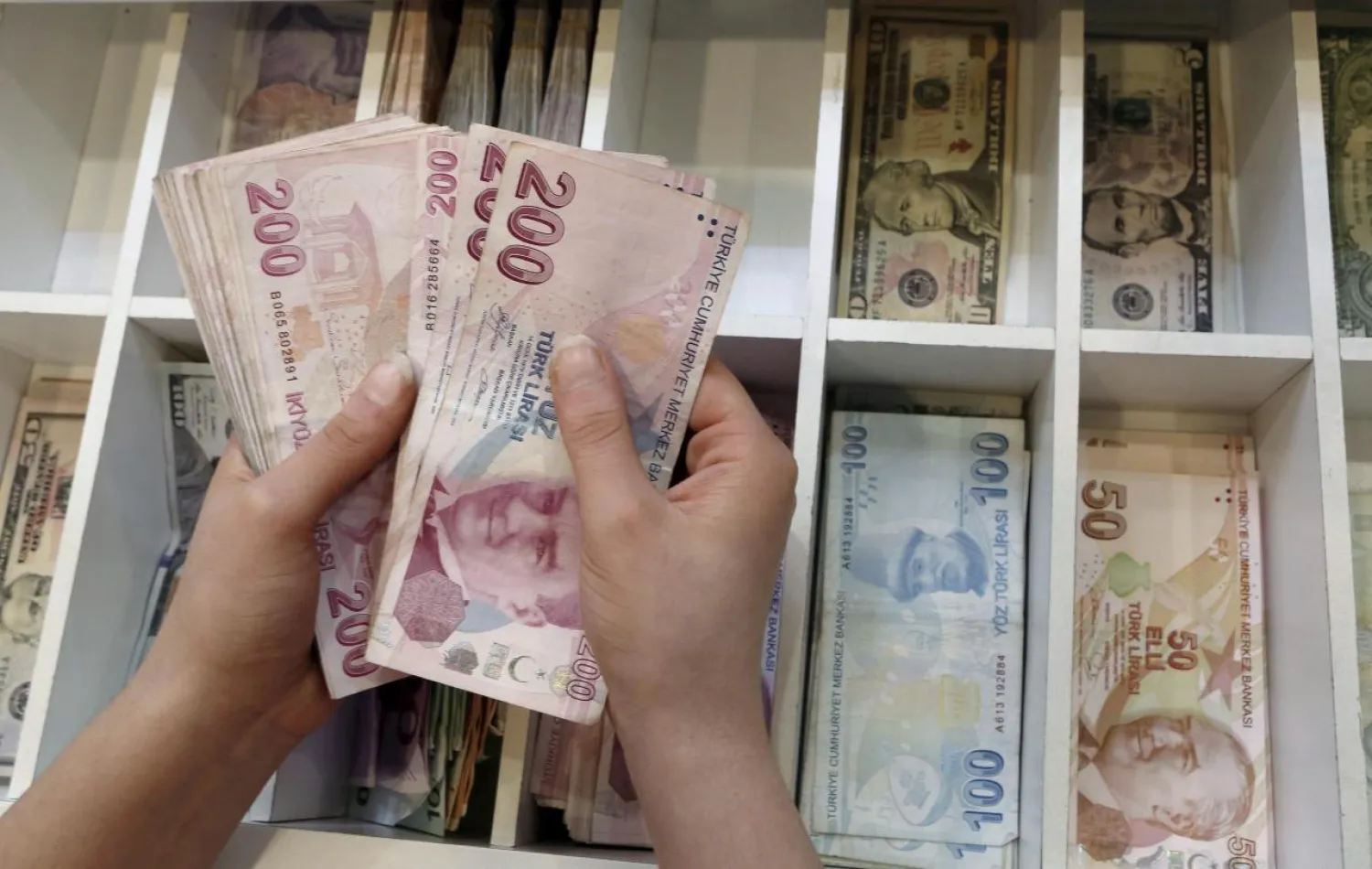
A money changer counts Turkish lira bills at an currency exchange office in central Istanbul, Turkey. (Reuters)
TT

Isolated North Cyprus Reels from Plunging Turkish Lira

A money changer counts Turkish lira bills at an currency exchange office in central Istanbul, Turkey. (Reuters)

Hit by the tanking Turkish lira, breakaway northern Cyprus is struggling to fend off a crisis largely outside the control of the isolated enclave, which relies on Ankara for its economic survival.

The currency, which has been hammered by market fears over Turkey's economy and a diplomatic row with the United States, has nearly halved in value against the dollar this year.

That has left tiny northern Cyprus, which uses the lira, in a tight spot.

With no control over the value of the currency or interest rates, "it's very, very difficult for an economy like us" to cope with the sudden devaluation, economy minister Ozdil Nami told AFP.

"This crisis is not of our own making."

The northern third of the Mediterranean island has been largely cut off from the rest of the world since 1974 when Turkey invaded following a Greek Cypriot coup seeking union with Greece.

The UN-patrolled "Green Line" dividing the island was only opened to two-way traffic in 2003.

Today Greek Cypriots are flocking across the border to fill up with cheap petrol following the lira's plunge, causing long queues at checkpoints in Nicosia, the world's last divided capital.

The influx is little solace for coffee shop owner Mehmet in the north of the city.

"All of my costs have gone up 50 percent in the past few weeks and my savings have basically lost half their worth," he said.

Meanwhile the cost in Turkish lira of his son's university tuition in Britain has nearly doubled.

"I can manage at the moment, but as the time passes, people won't have the means," said Mehmet, who did not want to give his real name.

Ankara is the only country to recognize the self-declared Turkish Republic of Northern Cyprus, home to around 300,000 people.

Authorities in the enclave have implemented a series of steps aimed at "maintaining the cash flow in the economy", Nami said.

Heavy subsidies on petrol and cigarettes, significant cuts to consumption and property taxes, and incentives for foreign real-estate investors are all part of the plan along with austerity measures.

Ministers and lawmakers have agreed to a 20-percent pay cut for six months, Nami said, and public sector unions have accepted a 15 percent reduction in overtime payments.

But prices in stores are steadily rising and big-budget items like property, cars and electronic goods -- all priced in foreign currencies -- are now unaffordable for most Turkish Cypriots.

"It is impossible for us to combat this crisis," said Erdal Guryay, an associate professor of economics at a private university in north Cyprus and a former board member at the TRNC's central bank.

"We have no tools and we have nowhere else to go because we are an unrecognized state... the effects of the crisis on the TRNC are much greater than in Turkey," Guryay said.

"We are a very small, isolated island. We're poor in natural resources and we're dependent on imports -- nearly everything comes from outside," he added.

The only direct flights from the north are to Turkey. The TRNC's main port suffers the same restrictions.

Supermarket chain owner Mehmet Benli said tighter budgets among Turkish Cypriots mean his sales are down 30 percent, a trend he "expects to get worse".

The government's new measures "aren't even a plaster on an open wound", he added.

But while Turkish Cypriots are struggling, their Greek Cypriot counterparts are flooding across the border to cash in on subsidized goods and fill up their cars.

"Before the crisis, Greek Cypriots never bought anything here. They'd only come to look at historical sites, but now they're here doing their shopping," said Guryay, the economist.

Petrol stations in the north are packed with cars bearing Greek Cypriot number plates.

"I have more Greek Cypriot customers than Turkish Cypriots... some of them are coming for the first time," said Mustafa Demdelen, who runs a petrol station near the main car crossing in Nicosia.

"Petrol is about half the price it is across the border," said the 66-year-old, estimating his new customers had netted him a "50 to 60 percent increase in overall sales" since the crisis began.

Supermarket owner Benli estimated that at weekends 80 percent of profits at his location closest to the division line come from Greek Cypriots.

"This is the positive side of the crisis," said Guryay.

"But if the crisis continues, which I expect it will, prices will continue to rise and the Greek Cypriots will stop coming."



Zelenskiy Says Ukraine Faces Foreign Aid Shortfall of up to 50 billion Euros Next Year

Ukrainian President Volodymyr Zelensky. File Photo/The AP
TT

Zelenskiy Says Ukraine Faces Foreign Aid Shortfall of up to 50 billion Euros Next Year

Ukrainian President Volodymyr Zelensky. File Photo/The AP

Ukraine is facing a foreign aid shortfall of 45-50 billion euros ($53-59 billion) in 2026, President Volodymyr Zelenskiy said on Thursday, Reuters reported.

He added that if Kyiv did not receive a first tranche of a loan secured by Russian assets by next spring, it would have to significantly cut drone production.

Speaking in Brussels as EU leaders were set to take a decision on Moscow's seized sovereign wealth, Zelenskiy said this would mean that Ukraine would have far fewer drones than Russia, and would not be able to conduct long-range strikes on Russian energy facilities.


China Says Arms Trade With Cambodia, Thailand Unrelated to Border Conflict

Flags flutter at an entrance of Thai-Chinese Rayong Industrial Zone in Rayong province, east of Bangkok, Thailand, April 7, 2016. REUTERS/Chaiwat Subprasom
TT

China Says Arms Trade With Cambodia, Thailand Unrelated to Border Conflict

Flags flutter at an entrance of Thai-Chinese Rayong Industrial Zone in Rayong province, east of Bangkok, Thailand, April 7, 2016. REUTERS/Chaiwat Subprasom

China said on Thursday its arms trade with Thailand and Cambodia is unrelated to the current conflict between the Southeast Asian neighbours, with which Beijing has close ties.

"We hope relevant parties will refrain from making subjective speculation and malicious hype," the Chinese Defense Ministry said in response to reports that Thai troops seized Chinese-made weapons from Cambodian positions as border clashes between the two nations reignited, Reuters reported.

Beijing hopes the two countries can reach a ceasefire as soon as possible, the ministry said, adding that China will continue to advocate for peace and talks.

Border clashes between Thailand and Cambodia resumed this month and have killed more than 40 people and displaced over half a million in both countries.

China's Foreign Minister Wang Yi, in separate calls with his Thai and Cambodian counterparts on Thursday, also called for an immediate ceasefire and criticised "false information" that he said was aimed at smearing China's ties with the two countries.

"As a friend and close neighbour of both Cambodia and Thailand, China least wants to see the two sides engage in armed conflict, and is deeply saddened by civilian casualties caused by the clashes," the Foreign Ministry quoted Wang as saying.

China will continue to play a constructive role in facilitating peace, Wang said, urging both countries to protect the safety of Chinese projects and personnel.

Beijing last week warned Chinese citizens to leave border areas after media reports of injuries.

The Chinese Foreign Ministry said on Wednesday a special envoy for Asian affairs would be visiting Cambodia and Thailand on Thursday to conduct mediation.


UK Police Arrest Pro-Palestinian Protesters as Authorities Toughen Hate Speech Law Enforcement

Police officers carry a protester during a protest to support Palestine Action in London, Saturday, Sept. 6, 2025. (AP Photo/ Joanna Chan)
TT

UK Police Arrest Pro-Palestinian Protesters as Authorities Toughen Hate Speech Law Enforcement

Police officers carry a protester during a protest to support Palestine Action in London, Saturday, Sept. 6, 2025. (AP Photo/ Joanna Chan)

Police in London arrested two people who called for “intifada” during a pro-Palestinian protest, which followed a decision by authorities to toughen enforcement of hate speech laws after a deadly attack on a Hanukkah celebration in Australia.

The arrests Wednesday came hours after police in London and Manchester, England, announced a crackdown on protesters using slogans such as “globalize the intifada.” The Arabic word intifada is generally translated as “uprising.”

While pro-Palestinian demonstrators say the slogan describes the worldwide protests against the war in Gaza, Jewish leaders say it inflames tensions and encourages attacks on Jews, including the attack that killed 15 people on Sunday at Bondi Beach in Sydney, The Associated Press said.

London Metropolitan Police Commissioner Mark Rowley and Greater Manchester Police Chief Constable Stephen Watson said they decided to take a tougher stance after Bondi Beach and an Oct. 2 attack on a Manchester synagogue that left two people dead.

“We know communities are concerned about placards and chants such as `globalize the intifada,’ and those using it at future protest or in a targeted way should expect the Met and GMP to take action,” they said in a joint statement released Wednesday. “Violent acts have taken place, the context has changed — words have meaning and consequence.”

In the hours before Wednesday night’s demonstration in support of Palestine Action, a pro-Palestinian group that was banned as a terrorist organization earlier this year, London police warned protesters to be aware of the earlier announcement.

Two protesters were arrested for “racially aggravated public order offenses” after they shouted slogans calling for intifada during the protest outside the Ministry of Justice on Wednesday night, the Metropolitan Police Service said on social media. A third person was arrested for trying to interfere with the initial arrests.

The term “intifada” is used to describe two major Palestinian uprisings against Israeli policy in the West Bank and Gaza Strip, the first beginning in 1987 and the second beginning in 2000. During the recent conflict in Gaza, the slogan “globalize the intifada” has been widely used by pro-Palestinian protesters around the world.

The debate over such language comes after antisemitic hate crime and online abuse soared in Britain following the Hamas-led attack on Israel on Oct. 7, 2023, and the Israeli military campaign in Gaza that followed.

Around 1,200 people were killed and 251 taken hostage during the initial attack on Israel. More than 70,660 Palestinians have been killed during the ensuing Israeli campaign in Gaza, according to the territory’s health ministry.