



Hasm Admits Muslim Brotherhood's Failure in Egypt

A security personnel stands guard, during the forensics team investigation of a bombing in Alexandria, Egypt March 24, 2018. REUTERS/Fawzy Abdel Hamied
TT

Hasm Admits Muslim Brotherhood's Failure in Egypt

A security personnel stands guard, during the forensics team investigation of a bombing in Alexandria, Egypt March 24, 2018. REUTERS/Fawzy Abdel Hamied

The Hasm movement, a branch of the Muslim Brotherhood, distanced itself from the party in what observers said was a predictable move given the Brotherhood’s waning influence.

Hasm spokesman Khaled Seifeddine denied to the Klmtuhaq magazine that the movement was seeking to return to the Egyptian political scene.

He acknowledged that the Brotherhood had failed in Egypt, saying that it had also failed to connect with the Egyptian people.

He then added that Hasm was not affiliated with the Brotherhood.

Experts in extremist parties refuted the claim, however, telling Asharq Al-Awsat that Hasm had emerged from the Brotherhood.

Moreover, Hasm members had confessed during investigations with Egypt’s judiciary that they had received weapons and explosives training from the Brotherhood.

Hasm was a product of Muslim Brotherhood youths and first emerged after the Rabiah al-Adawiya sit-ins were dispersed in 2013.

Twitter had in October 2017 shut the Hasm’s account for inciting hatred and violence.

Political Islam parties expert Ahmed Ban said that Hasm came to the scene after the ouster of Muslim Brotherhood President Mohammed Morsi in 2013.

It tried to portray itself as a liberal party, but had in fact carried out attacks in the country against security forces. It also attempted to assassinate assistant general prosecutor Zakaria Abdulaziz and Egypt’s former mufti.

Britain had designated Hasm as a terrorist group in 2016 and the United States did the same in 2017.



EU Condemns Israel's West Bank Control Measures

The Israeli settlement of Har Homa, seen from the West Bank city of Bethlehem, Tuesday, Dec. 17, 2024. (AP)
TT

EU Condemns Israel's West Bank Control Measures

The Israeli settlement of Har Homa, seen from the West Bank city of Bethlehem, Tuesday, Dec. 17, 2024. (AP)

The European Union on Monday condemned new Israeli measures to tighten control of the West Bank and pave the way for more settlements in the occupied Palestinian territory, AFP reported.

"The European Union condemns recent decisions by Israel's security cabinet to expand Israeli control in the West Bank. This move is another step in the wrong direction," EU spokesman Anouar El Anouni told journalists.


Atrocities in Sudan's El-Fasher Were 'Preventable Human Rights Catastrophe'

Sudanese displaced people who left El Fasher after its fall, sit in the shade in Tawila at the Rwanda camp reception point on December 17, 2025. (Photo by AFP)
TT

Atrocities in Sudan's El-Fasher Were 'Preventable Human Rights Catastrophe'

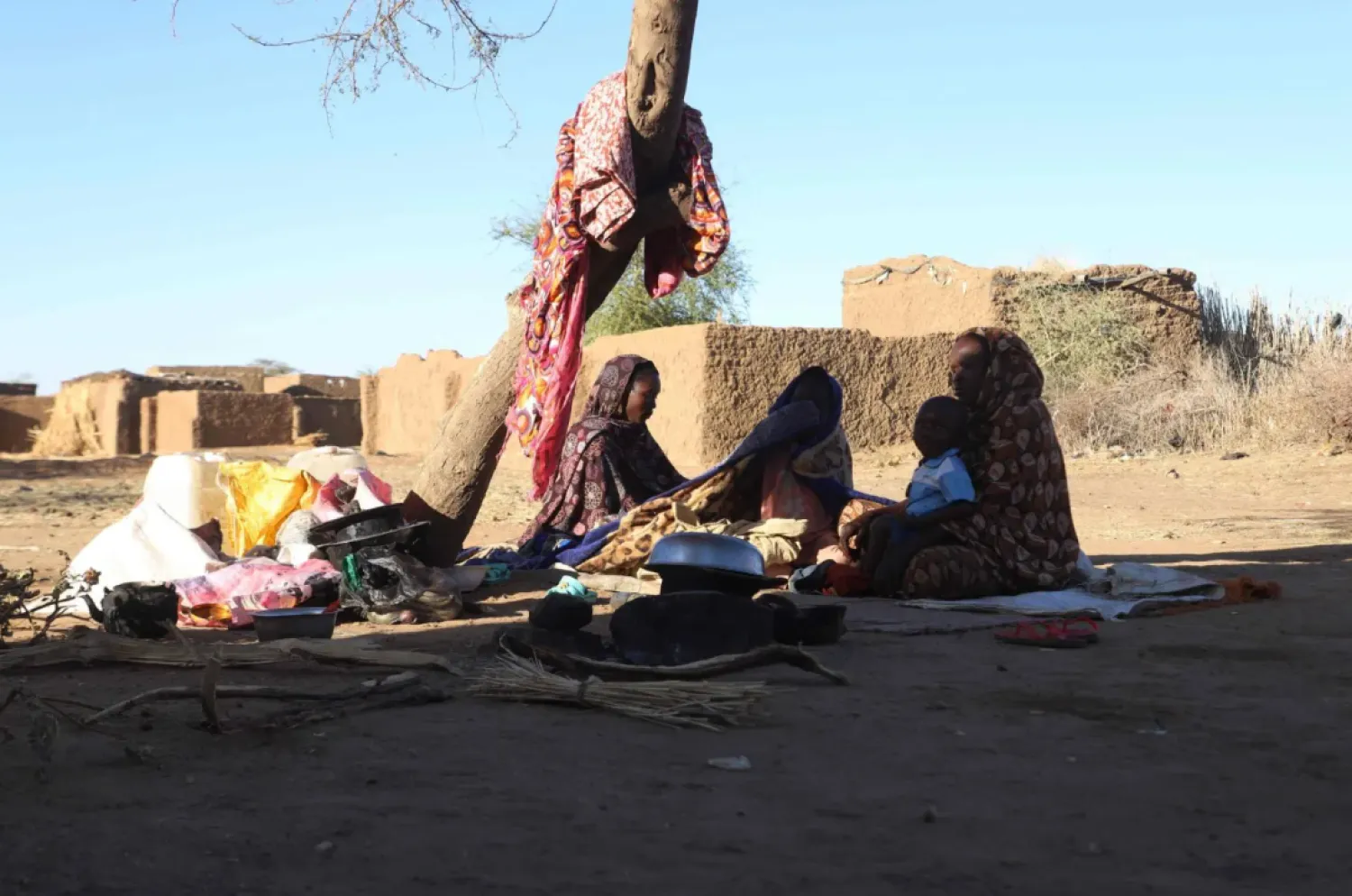
Sudanese displaced people who left El Fasher after its fall, sit in the shade in Tawila at the Rwanda camp reception point on December 17, 2025. (Photo by AFP)

The atrocities unleashed on El-Fasher in Sudan's Darfur region last October were a "preventable human rights catastrophe", the United Nations said Monday, warning they now risked being repeated in the neighbouring Kordofan region.


"My office sounded the alarm about the risk of mass atrocities in the besieged city of El-Fasher for more than a year ... but our warnings were ignored," UN rights chief Volker Turk told the Human Rights Council in Geneva.


He added that he was now "extremely concerned that these violations and abuses may be repeated in the Kordofan region".


Arab League Condemns Israel's Decisions to Alter Legal, Administrative Status of West Bank

A general view shows the opening session of the meeting of Arab foreign ministers at the Arab League Headquarters (Reuters)
TT

Arab League Condemns Israel's Decisions to Alter Legal, Administrative Status of West Bank

A general view shows the opening session of the meeting of Arab foreign ministers at the Arab League Headquarters (Reuters)

The General Secretariat of the Arab League strongly condemned decisions by Israeli occupation authorities to impose fundamental changes on the legal and administrative status of the occupied Palestinian territories, particularly in the West Bank, describing them as a dangerous escalation and a flagrant violation of international law, international legitimacy resolutions, and signed agreements, SPA reported.

In a statement, the Arab League said the measures include facilitating the confiscation of private Palestinian property and transferring planning and licensing authorities in the city of Hebron and the area surrounding the Ibrahimi Mosque to occupation authorities.

It warned of the serious repercussions of these actions on the rights of the Palestinian people and on Islamic and Christian holy sites.

The statement reaffirmed the Arab League’s firm support for the legitimate rights of the Palestinian people, foremost among them the establishment of their independent state on the June 4, 1967 borders, with East Jerusalem as its capital.