


Kevin Beattie Obituary

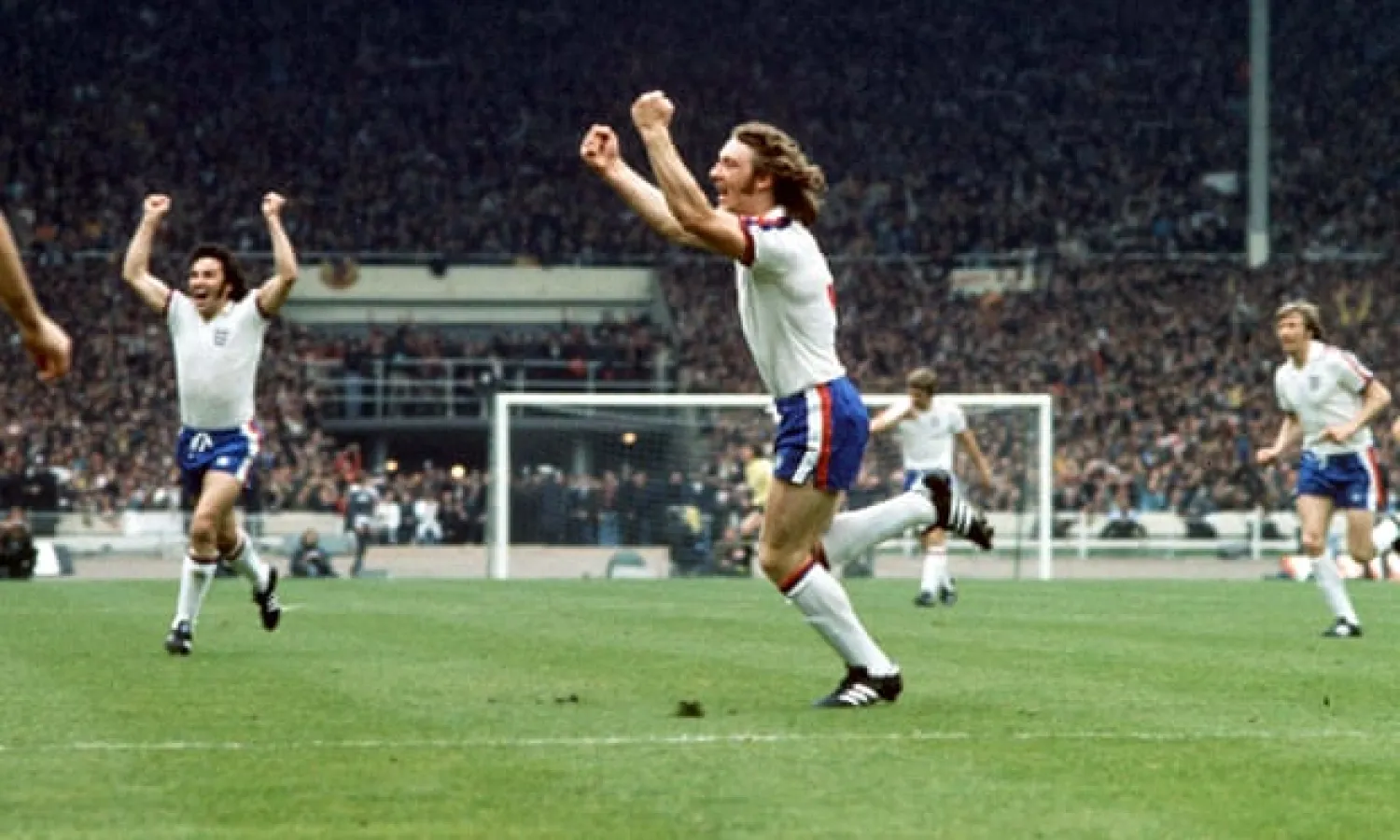
 Kevin Beattie celebrates a goal for England during a 5-1 win against Scotland at Wembley in the British Home Championship, 1975. Photograph: Colorsport/Rex/Shutterstock
Kevin Beattie celebrates a goal for England during a 5-1 win against Scotland at Wembley in the British Home Championship, 1975. Photograph: Colorsport/Rex/Shutterstock
TT

Kevin Beattie Obituary

 Kevin Beattie celebrates a goal for England during a 5-1 win against Scotland at Wembley in the British Home Championship, 1975. Photograph: Colorsport/Rex/Shutterstock
Kevin Beattie celebrates a goal for England during a 5-1 win against Scotland at Wembley in the British Home Championship, 1975. Photograph: Colorsport/Rex/Shutterstock

When Ipswich Town were a footballing power in the late 1970s and early 80s, Kevin Beattie was at the core of their success. A central defender of unusual poise and class, he was the best player in a team that not only won the FA and Uefa cups but gave the great Liverpool side of that era a run for their money in the league.

Beattie, who has died aged 64 of a heart attack, was hailed by Ipswich fans as the club’s greatest ever player. But a greater measure of his standing was the universal respect he generated among his peers, who recognised not just his great technical prowess but the courage, strength and application that went with it. His ability to win the ball and then distribute it with calm precision drew comparisons with Bobby Moore, and of his generation there were few English footballers more highly rated within the game.

Yet given the level of acclaim that came his way, Beattie played a surprisingly small number of games for England – nine in total. Injuries were mostly to blame; he was often forced to withdraw after being selected, and at 28 had to make an early retirement with a longstanding and serious knee problem. What he failed to achieve on the international stage, however, he made up for on the domestic front with Ipswich, in 225 league appearances across a highly successful decade for the side. He remained close to the club for the rest of his life, including for a number of years as a football analyst on BBC Radio Suffolk.

Despite his long affiliation with Ipswich, Beattie was born in Carlisle. His background was a poor one – his father, a coalman, and his mother, a cleaner, had nine children, and his father’s heavy drinking took up much of the household income, often meaning Kevin did not eat for two or three days running. He left St Patrick’s Roman Catholic senior school, where he occasionally played truant because he had no shoes to wear, at 14 to work in factory and warehouse jobs.

Spotted by a scout playing in local leagues, at 15 Beattie was invited to talks with the Liverpool manager Bill Shankly, but when he arrived in the city the club had forgotten to send anyone to meet him, and with no money to get to the ground he returned on the first train home. Shortly afterwards Ipswich jumped in to exploit Liverpool’s missed opportunity and their manager, Bobby Robson, is said to have told his chief scout that he would lose his job if he failed to rendezvous with the youngster. Beattie turned up at the interview wearing his father’s shoes, and when Ipswich signed him as an apprentice in 1970, Robson’s first act was to make sure he was properly shod.

Beattie turned professional in 1971 and the following year made his debut, aged 18, in a 2-1 win against Manchester United. He was the inaugural winner of the Professional Footballers’ Association (PFA) Young Player of the Year award in 1974, and was playing for England – in a 5-0 win against Cyprus – by 1975.

Immensely strong, athletic, and extremely quick over the first 10 yards, Beattie was a superb tackler, could spring impressively high when heading the ball, and had a powerful left-footed shot. “He was quite annoying, really, because everything came so easy for him,” said his Ipswich colleague Roger Osborne. “He was just stronger, fitter and better than anyone else. He didn’t have to try.”In the season before Beattie’s debut, Ipswich were placed 13th in the First Division, but in all but one of the nine campaigns in which he featured, the club finished no worse than sixth, including runners-up to Aston Villa in 1980-81. With Beattie in the side they also won the FA Cup final in 1978 – a 1-0 victory against Arsenal, courtesy of an Osborne goal – and while he did not play in the two legs of the 5-4 Uefa Cup final victory over the Dutch club AZ Alkmaar three years later, he was eventually awarded a medal by Uefa to recognise his contributions earlier in the competition.

He had played in what turned out to be his last match for Ipswich shortly before that final, when he broke his arm in an FA Cup semi-final against Manchester City. By then, years of problems with his knees had already taken their toll, ending his England career in 1977 and increasingly interfering with his club availability. After the fifth in a series of unsuccessful operations in 1981 Beattie was forced to call time with Ipswich at the end of the year.

He tried short-lived comebacks in lower leagues with Colchester United and Middlesbrough during 1982-83, then moved into non-league football in the mid-80s, interspersed with brief periods at three minor teams in Scandinavia.

Despite having received £50,000 from a testimonial match with Ipswich and a fee for acting as Michael Caine’s body double in the football sequences of the 1981 film Escape to Victory, Beattie lived for much of the rest of his life in straitened circumstances. In recent years, however, he had received financial help from the PFA and had put his life on a more even keel, acting as a full-time carer to his wife, Margaret, as her multiple sclerosis worsened.

Affable and down to earth even at the height of his fame, Beattie remained a popular figure in Ipswich, and returned to the public eye through his matchday work on local radio from 2008 onwards. In 2012 he was given a 12-week curfew as punishment for benefit fraud, having failed to declare his modest radio earnings for fear that he would lose income support.

He is survived by Margaret (nee Boldy), whom he married in the early 70s, and by their three daughters, Emma, Sarah and Louise.

The Guardian Sport


Tottenham Hotspur Sack Head Coach Thomas Frank

(FILES) Tottenham Hotspur's Danish head coach Thomas Frank gestures on the touchline during the English Premier League football match between Burnley and Tottenham Hotspur at Turf Moor in Burnley, north-west England on January 24, 2026. (Photo by Oli SCARFF / AFP)/
TT

Tottenham Hotspur Sack Head Coach Thomas Frank

(FILES) Tottenham Hotspur's Danish head coach Thomas Frank gestures on the touchline during the English Premier League football match between Burnley and Tottenham Hotspur at Turf Moor in Burnley, north-west England on January 24, 2026. (Photo by Oli SCARFF / AFP)/

Thomas Frank was fired by Tottenham on Wednesday after only eight months in charge and with his team just five points above the relegation zone in the Premier League.

Despite leading Spurs to the round of 16 in the Champions League, Frank has overseen a desperate domestic campaign. A 2-1 loss to Newcastle on Tuesday means Spurs are still to win in the league in 2026.

“The Club has taken the decision to make a change in the Men’s Head Coach position and Thomas Frank will leave today,” Tottenham said in a statement. “Thomas was appointed in June 2025, and we have been determined to give him the time and support needed to build for the future together.

“However, results and performances have led the Board to conclude that a change at this point in the season is necessary.”

Frank’s exit means Spurs are on the lookout for a sixth head coach in less than seven years since Mauricio Pochettino departed in 2019.


Marseille Coach De Zerbi Leaves After Humiliating 5-0 Loss to PSG 

Marseille's Italian coach Roberto De Zerbi looks on from the technical area during the French Cup round of 32 football match between FC Bayeux and Olympique de Marseille (OM) at the Michel-d'Ornano Stadium in Caen on January 13, 2026. (AFP) 
TT

Marseille Coach De Zerbi Leaves After Humiliating 5-0 Loss to PSG 

Marseille's Italian coach Roberto De Zerbi looks on from the technical area during the French Cup round of 32 football match between FC Bayeux and Olympique de Marseille (OM) at the Michel-d'Ornano Stadium in Caen on January 13, 2026. (AFP) 

Marseille coach Roberto De Zerbi is leaving the French league club in the wake of a 5-0 thrashing at the hands of PSG in French soccer biggest game.

The nine-time French champions said on Wednesday that they have ended “their collaboration by mutual agreement.”

The heavy loss Sunday at the Parc des Princes restored defending champion PSG’s two-point lead over Lens after 21 rounds, with Marseille in fourth place after the humiliating defeat.

De Zerbi's exit followed another embarrassing 3-0 loss at Club Brugge two weeks ago that resulted in Marseille exiting the Champions League.

De Zerbi, who had apologized to Marseille fans after the loss against bitter rival PSG, joined Marseille in 2024 after two seasons in charge at Brighton. After tightening things up tactically in Marseille during his first season, his recent choices had left many observers puzzled.

“Following consultations involving all stakeholders in the club’s leadership — the owner, president, director of football and head coach — it was decided to opt for a change at the head of the first team,” Marseille said. “This was a collective and difficult decision, taken after thorough consideration, in the best interests of the club and in order to address the sporting challenges of the end of the season.”

De Zerbi led Marseille to a second-place finish last season. Marseille did not immediately announce a replacement for De Zerbi ahead of Saturday's league match against Strasbourg.

Since American owner Frank McCourt bought Marseille in 2016, the former powerhouse of French soccer has failed to find any form of stability, with a succession of coaches and crises that sometimes turned violent.

Marseille dominated domestic soccer in the late 1980s and early 1990s. It was the only French team to win the Champions League before PSG claimed the trophy last year. It hasn’t won its own league title since 2010.


Olympic Fans Hunt for Plushies of Mascots Milo and Tina as They Fly off Shelves 

Fans take selfies with the Olympic mascot Tina at the finish area of an alpine ski, slalom portion of a women's team combined race, at the 2026 Winter Olympics, in Cortina d'Ampezzo, Italy, Tuesday, Feb. 10, 2026. (AP)
TT

Olympic Fans Hunt for Plushies of Mascots Milo and Tina as They Fly off Shelves 

Fans take selfies with the Olympic mascot Tina at the finish area of an alpine ski, slalom portion of a women's team combined race, at the 2026 Winter Olympics, in Cortina d'Ampezzo, Italy, Tuesday, Feb. 10, 2026. (AP)

For fans of the Milan Cortina Olympic mascots, the eponymous Milo and Tina, it's been nearly impossible to find a plush toy of the stoat siblings in Milan and Cortina d’Ampezzo.

Many of the official Olympics stores in the host cities are already sold out, less than a week into the Winter Games.

“I think the only way to get them is to actually win a medal,” Julia Peeler joked Tuesday in central Milan, where Tina and Milo characters posed for photos with fans.

The 38-year-old from South Carolina is on the hunt for the plushies for her niece. She's already bought some mascot pins, but she won't wear them on her lanyard. Peeler wants to avoid anyone trying to swap for them in a pin trade, a popular Olympic pastime.

Tina, short for Cortina, is the lighter-colored stoat and represents the Olympic Winter Games. Her younger brother Milo, short for Milano, is the face of the Paralympic Winter Games.

Milo was born without one paw but learned to use his tail and turn his difference into a strength, according to the Olympics website. A stoat is a small mustelid, like a weasel or an otter.

The animals adorn merchandise ranging from coffee mugs to T-shirts, but the plush toys are the most popular.

They're priced from 18 to 58 euros (about $21 to $69) and many of the major official stores in Milan, including the largest one at the iconic Duomo Cathedral, and Cortina have been cleaned out. They appeared to be sold out online Tuesday night.

Winning athletes are gifted the plush toys when they receive their gold, silver and bronze medals atop the podium.

Broadcast system engineer Jennifer Suarez got lucky Tuesday at the media center in Milan. She's been collecting mascot toys since the 2010 Vancouver Games and has been asking shops when they would restock.

“We were lucky we were just in time,” she said, clutching a tiny Tina. “They are gone right now.”

Friends Michelle Chen and Brenda Zhang were among the dozens of fans Tuesday who took photos with the characters at the fan zone in central Milan.

“They’re just so lovable and they’re always super excited at the Games, they are cheering on the crowd,” Chen, 29, said after they snapped their shots. “We just are so excited to meet them.”

The San Franciscan women are in Milan for the Olympics and their friend who is “obsessed” with the stoats asked for a plush Tina as a gift.

“They’re just so cute, and stoats are such a unique animal to be the Olympic mascot,” Zhang, 28, said.

Annie-Laurie Atkins, Peeler's friend, loves that Milo is the mascot for Paralympians.

“The Paralympics are really special to me,” she said Tuesday. “I have a lot of friends that are disabled and so having a character that also represents that is just incredible.”
