Israel’s Netanyahu to Meet Putin to Discuss Syria

Israeli PM Benjamin Netanyahu attends the weekly cabinet meeting at his office in Jerusalem October 7, 2018. (Reuters)
TT

Israel’s Netanyahu to Meet Putin to Discuss Syria

Israeli PM Benjamin Netanyahu attends the weekly cabinet meeting at his office in Jerusalem October 7, 2018. (Reuters)

Israeli Prime Minister Benjamin Netanyahu announced on Sunday that he will meet with Russian President Vladimir Putin to address the conflict in Syria.

Netanyahu said he had spoken with Putin and the two agreed "to meet soon in order to continue the important inter-military security coordination".

He did not specify a date for their meeting.

Speaking at the start of a cabinet session, Netanyahu again pledged to stop "Iran from establishing a military presence in Syria and to thwart the transfer of lethal weapons to Hezbollah in Lebanon".

The meeting will be the first between them since the accidental downing of a Russian plane led to tensions.

The plane was downed by Syrian air defenses, which fired in response to an Israeli raid in the country.

Putin and Netanyahu have spoken at least three times by phone since the September 17 incident.

Fifteen Russians were killed in the downing that Moscow blamed on Israel, accusing its pilots of using the larger Russian plane as cover.

Israel disputes the Russian findings and says its jets were back in Israeli airspace when the plane was downed.

Russia announced new security measures to protect its military in Syria, including supplying the Syrian regime with S-300 air defense systems and jamming radars of nearby warplanes.

Israeli officials have said the new system could be defeated by Israel’s stealth fighters and possibly destroyed on the ground, and they have pledged to press on with efforts to prevent military entrenchment by Iran in Syria.

But since the Russian plane was shot down, there have been no reports of Israeli air strikes in Syria.

The apparent pause has raised speculation in the Israeli media that Israel was either holding back at Russia’s request or paused the attacks over concern they would fuel tensions with Moscow.

Israel has carried out hundreds of strikes in Syria against Iranian military targets and advanced arms deliveries to Hezbollah.

Russia and Israel set up a hotline in 2015 to avoid accidental clashes in Syria.


EU Condemns Israel's West Bank Control Measures

The Israeli settlement of Har Homa, seen from the West Bank city of Bethlehem, Tuesday, Dec. 17, 2024. (AP)
TT

EU Condemns Israel's West Bank Control Measures

The Israeli settlement of Har Homa, seen from the West Bank city of Bethlehem, Tuesday, Dec. 17, 2024. (AP)

The European Union on Monday condemned new Israeli measures to tighten control of the West Bank and pave the way for more settlements in the occupied Palestinian territory, AFP reported.

"The European Union condemns recent decisions by Israel's security cabinet to expand Israeli control in the West Bank. This move is another step in the wrong direction," EU spokesman Anouar El Anouni told journalists.


Atrocities in Sudan's El-Fasher Were 'Preventable Human Rights Catastrophe'

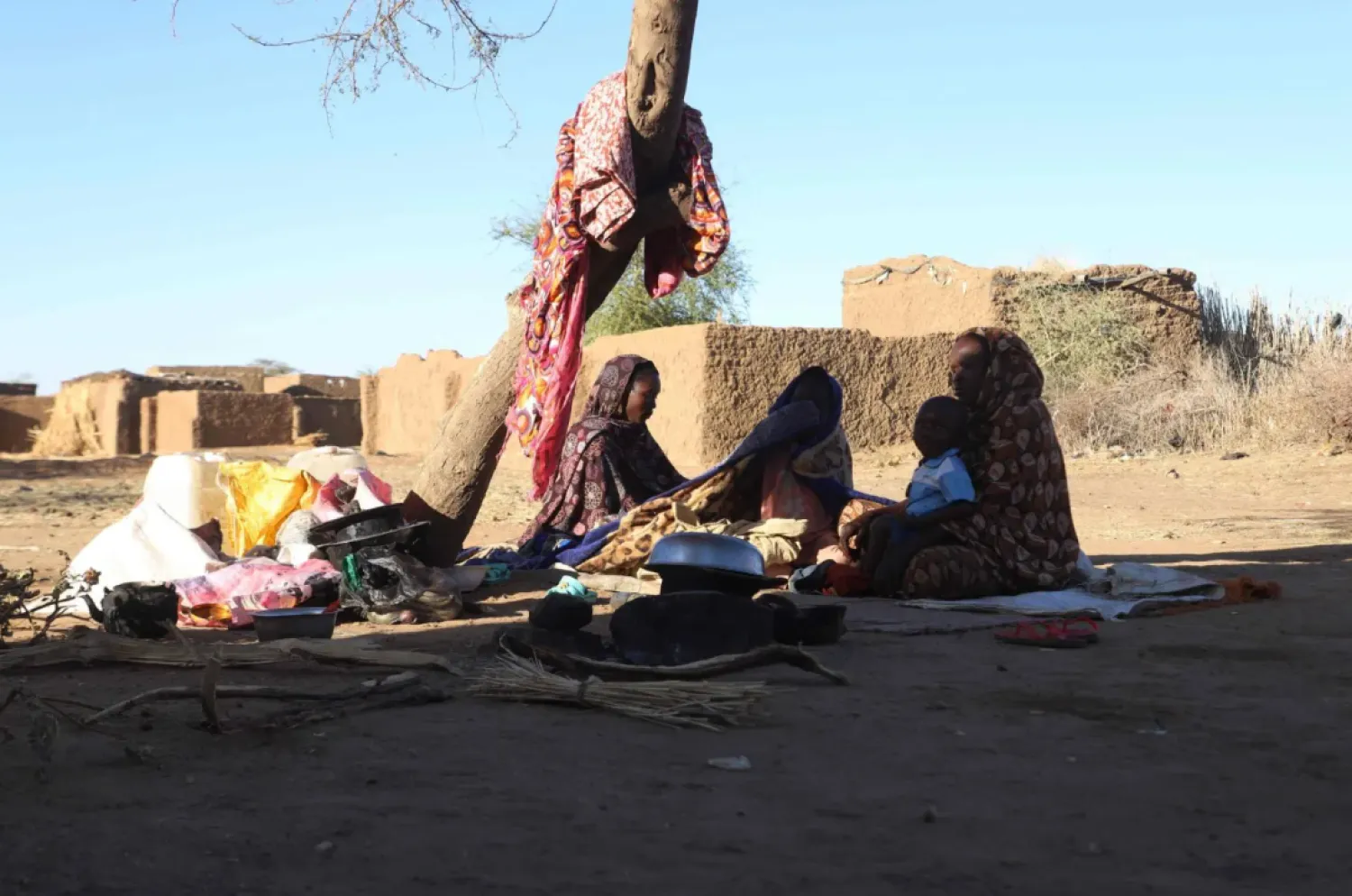
Sudanese displaced people who left El Fasher after its fall, sit in the shade in Tawila at the Rwanda camp reception point on December 17, 2025. (Photo by AFP)
TT

Atrocities in Sudan's El-Fasher Were 'Preventable Human Rights Catastrophe'

Sudanese displaced people who left El Fasher after its fall, sit in the shade in Tawila at the Rwanda camp reception point on December 17, 2025. (Photo by AFP)

The atrocities unleashed on El-Fasher in Sudan's Darfur region last October were a "preventable human rights catastrophe", the United Nations said Monday, warning they now risked being repeated in the neighbouring Kordofan region.


"My office sounded the alarm about the risk of mass atrocities in the besieged city of El-Fasher for more than a year ... but our warnings were ignored," UN rights chief Volker Turk told the Human Rights Council in Geneva.


He added that he was now "extremely concerned that these violations and abuses may be repeated in the Kordofan region".


Arab League Condemns Israel's Decisions to Alter Legal, Administrative Status of West Bank

A general view shows the opening session of the meeting of Arab foreign ministers at the Arab League Headquarters (Reuters)
TT

Arab League Condemns Israel's Decisions to Alter Legal, Administrative Status of West Bank

A general view shows the opening session of the meeting of Arab foreign ministers at the Arab League Headquarters (Reuters)

The General Secretariat of the Arab League strongly condemned decisions by Israeli occupation authorities to impose fundamental changes on the legal and administrative status of the occupied Palestinian territories, particularly in the West Bank, describing them as a dangerous escalation and a flagrant violation of international law, international legitimacy resolutions, and signed agreements, SPA reported.

In a statement, the Arab League said the measures include facilitating the confiscation of private Palestinian property and transferring planning and licensing authorities in the city of Hebron and the area surrounding the Ibrahimi Mosque to occupation authorities.

It warned of the serious repercussions of these actions on the rights of the Palestinian people and on Islamic and Christian holy sites.

The statement reaffirmed the Arab League’s firm support for the legitimate rights of the Palestinian people, foremost among them the establishment of their independent state on the June 4, 1967 borders, with East Jerusalem as its capital.