


Manama Dialogue Reiterates Importance of Bab al-Mandeb Security

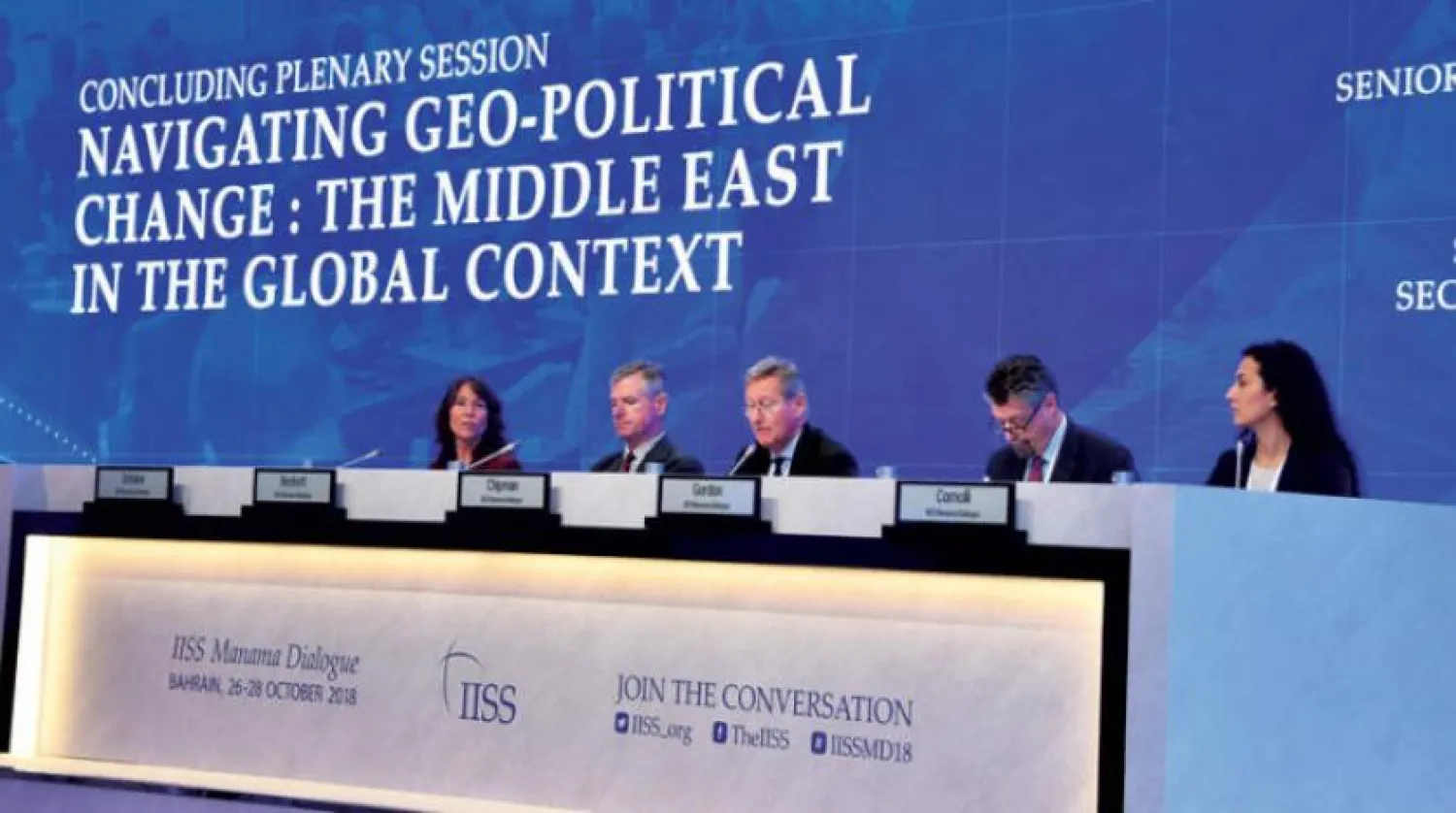
A session during Manama Dialogue (Asharq Al-Awsat)
TT

Manama Dialogue Reiterates Importance of Bab al-Mandeb Security

A session during Manama Dialogue (Asharq Al-Awsat)

Security and stability in the Middle East, the war on terrorism and establishing alliances that enable countries of the region to confront it, were among most important issues addressed by the 14th International Institute for Strategic Studies (IISS) Manama Dialogue.

Through the sessions and discussions, the Forum stressed the importance of maintaining the security of Bab al-Mandeb Strait for the region and the world.

About 12 percent of the international trade passes annually through the Strait.

Manama Dialogue also highlighted the important role of the Horn of Africa for the Middle East and the Gulf region in particular, as an important source of natural resources, and a region for investment opportunities and building strategic, security and political partnerships.

In the closing session held Sunday evening, participants discussed the Palestinian-Israeli conflict as the basis of the problems in the Middle East, where they considered ending this conflict would eliminate all forces of extremism and terrorism in the region.

IISS Senior Adviser for Geo-Economics and Strategy, David Gordon, discussed three topics during his speech: relations between the Middle East and the People's Republic of China, Chinese-US Relations, and the evolution of China's Silk Road strategy.

During the "Security and Competitiveness in the Horn of Africa" meeting, Senior IISS Fellow for Conflict, Security and Development, Virginia Comolli, confirmed that the Manama Dialogue in its latest version offered great opportunities to explore new horizons in the African continent.

She also pointed out that there are strong relations between the Gulf Arab countries and the African continent, which extend to include trade relations.

Comolli also praised the Peace Agreement between Ethiopia and Eritrea after years of conflict, noting that, through its efforts, Saudi Arabia played a major role in achieving peace.

The African Union remains a very strong institution and the relations between the Horn of Africa and the Gulf States are flourishing, asserted Comolli.

For his part, Executive Director of IISS–Middle East, retired Lieutenant General Sir Thomas Beckett, said that terrorism is one of the challenges facing the region, so alliances must be formed to address it.

He explained that US policy focuses on ensuring the defeat of ISIS terrorist organization, in addition to the withdrawal of Iranian-led forces from Syrian territory.

Beckett also asserted the need to activate reconstruction as a tool to reduce conflicts and restore stability to the Syrian people.

IISS Deputy Director-General Kori Schake explained that the Middle East is a sensitive area that is completely different from the rest of the world and needs to be dealt with in a different way.

She added that through the discussions in the Manama dialogue sessions, the Palestinian issue has been strongly reintroduced to the core of the discussions, lauding the positive dialogues included in the Manama Dialogue.


Saudi Arabia Condemns Terrorist Attack on Islamabad Mosque

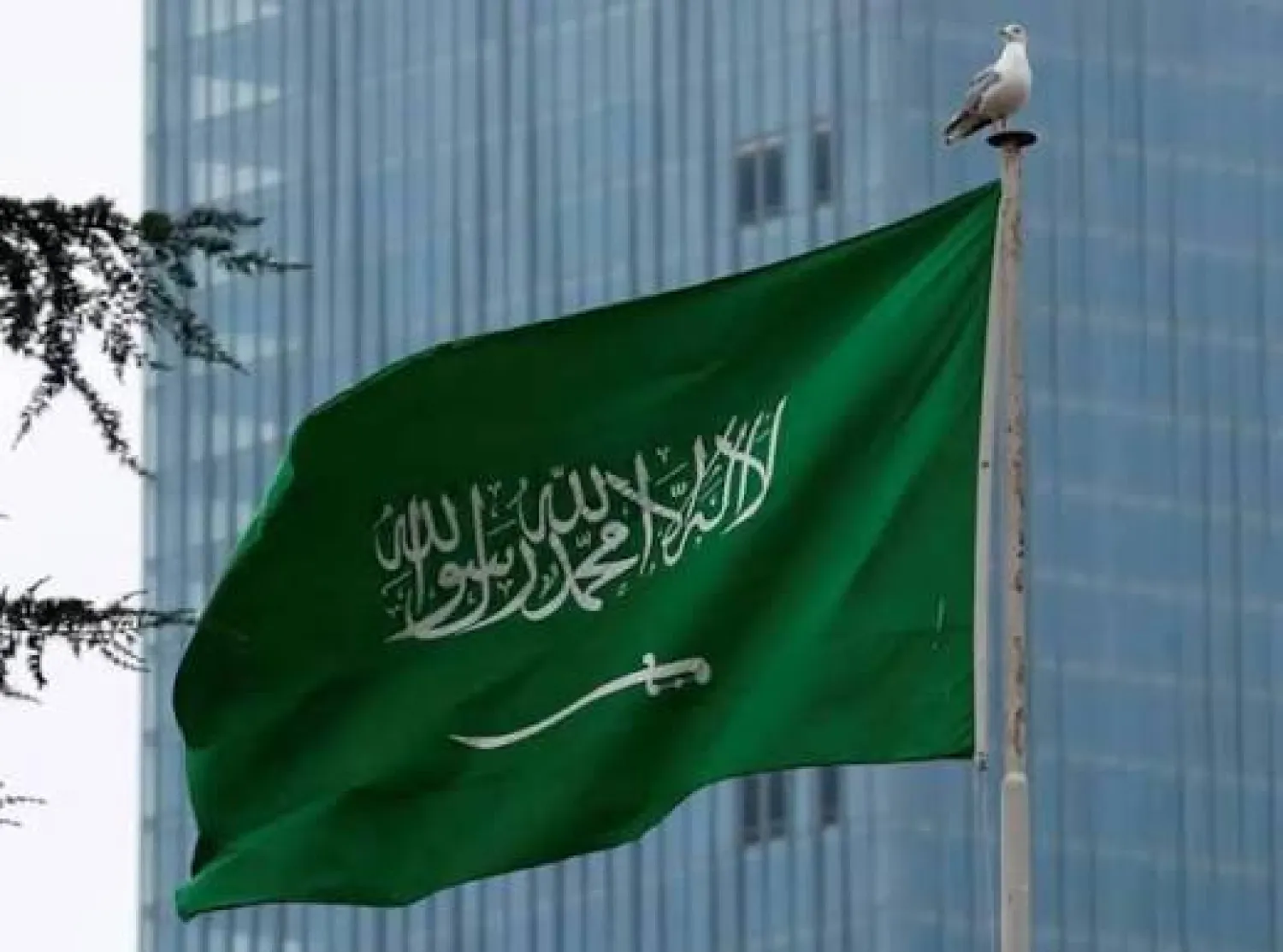
File photo of the Saudi flag/AAWSAT
TT

Saudi Arabia Condemns Terrorist Attack on Islamabad Mosque

File photo of the Saudi flag/AAWSAT

The Saudi Ministry of Foreign Affairs expressed the Kingdom’s strong condemnation of the terrorist bombing that targeted a mosque on Friday in Pakistan’s capital, Islamabad, resulting in multiple deaths and injuries.

The ministry reaffirmed the Kingdom’s firm rejection of attacks on places of worship, the intimidation of innocent civilians, and the shedding of innocent blood, stressing Saudi Arabia’s solidarity with Pakistan against all forms of violence, extremism, and terrorism.

It also extended condolences and sympathy to the families of the victims, as well as to the government and people of Pakistan, wishing the injured a speedy recovery.

A suicide blast at a mosque in Pakistan's capital Islamabad killed at least 31 people and wounded scores more during Friday prayers.


MWL Denounces Mosque Bombing in Pakistan’s Capital

The Muslim World League (MWL) logo
TT

MWL Denounces Mosque Bombing in Pakistan’s Capital

The Muslim World League (MWL) logo

The Muslim World League (MWL) condemned the terrorist bombing that targeted a mosque in Pakistan’s capital, Islamabad, the Saudi Press Agency said Saturday.

In a statement, MWL Secretary-General and Chairman of the Organization of Muslim Scholars Mohammed Al-Issa denounced the attack as a grave crime that violates all religious and humanitarian values, stressing the sanctity of human life and places of worship.

He reaffirmed the MWL’s rejection of violence and terrorism in all forms and expressed full solidarity with Pakistan in safeguarding its security and stability. Al-Issa also offered condolences to the victims’ families and the Pakistani people, praying for mercy for the deceased and a swift recovery for the injured.

A suicide blast at a mosque in Pakistan's capital Islamabad killed at least 31 people and wounded scores more during Friday prayers.


Arab, Slovenia FMs Discuss Gaza Peace Efforts

The foreign ministers meet in Ljubljana on Friday. (SPA)
TT

Arab, Slovenia FMs Discuss Gaza Peace Efforts

The foreign ministers meet in Ljubljana on Friday. (SPA)

The foreign minister of several Arab countries and Slovenia met in Ljubljana on Friday to discuss efforts to boost regional and international security and stability, with focus on the Gaza Strip.

The meeting was attended by Saudi FM Prince Faisal bin Farhan bin Abdullah, Jordanian Deputy Prime Minister and Minister of Foreign Affairs and Expatriates Ayman Safadi, Egyptian FM Dr. Badr Abdelatty, Bahraini FM Abdullatif Al-Zayani, and Qatari FM Sultan Al Muraikhi and Slovenian Deputy Prime Minister and Minister of Foreign and European Affairs Tanja Fajon.

The FMs stressed the need to respect and fully implement the Gaza ceasefire agreement. They discussed the need to deliver sufficient and sustainable humanitarian aid to the enclave.

They tackled efforts to ensure the success of the peace plan launched by US President Donald Trump, and progress towards the establishment of an independent and sovereign Palestinian state within the 1967 borders, with East Jerusalem as its capital, based on the two-state solution.

The ministers discussed the situation in the occupied West Bank, stressing the need to halt illegal unilateral Israeli measures there and Israeli violations against Islamic and Christian holy sites in occupied Jerusalem, which are deepening tensions and undermining all de-escalation efforts.

The ministers commended Slovenia's support for the legitimate rights of the Palestinian people and its recognition of the State of Palestine based on the two-state solution.

The talks also addressed developments in the region, ways to reduce tensions through negotiation and dialogue, and efforts to resolve the Russian-Ukrainian crisis.