


JIAT Underscores Methodology of its Operations

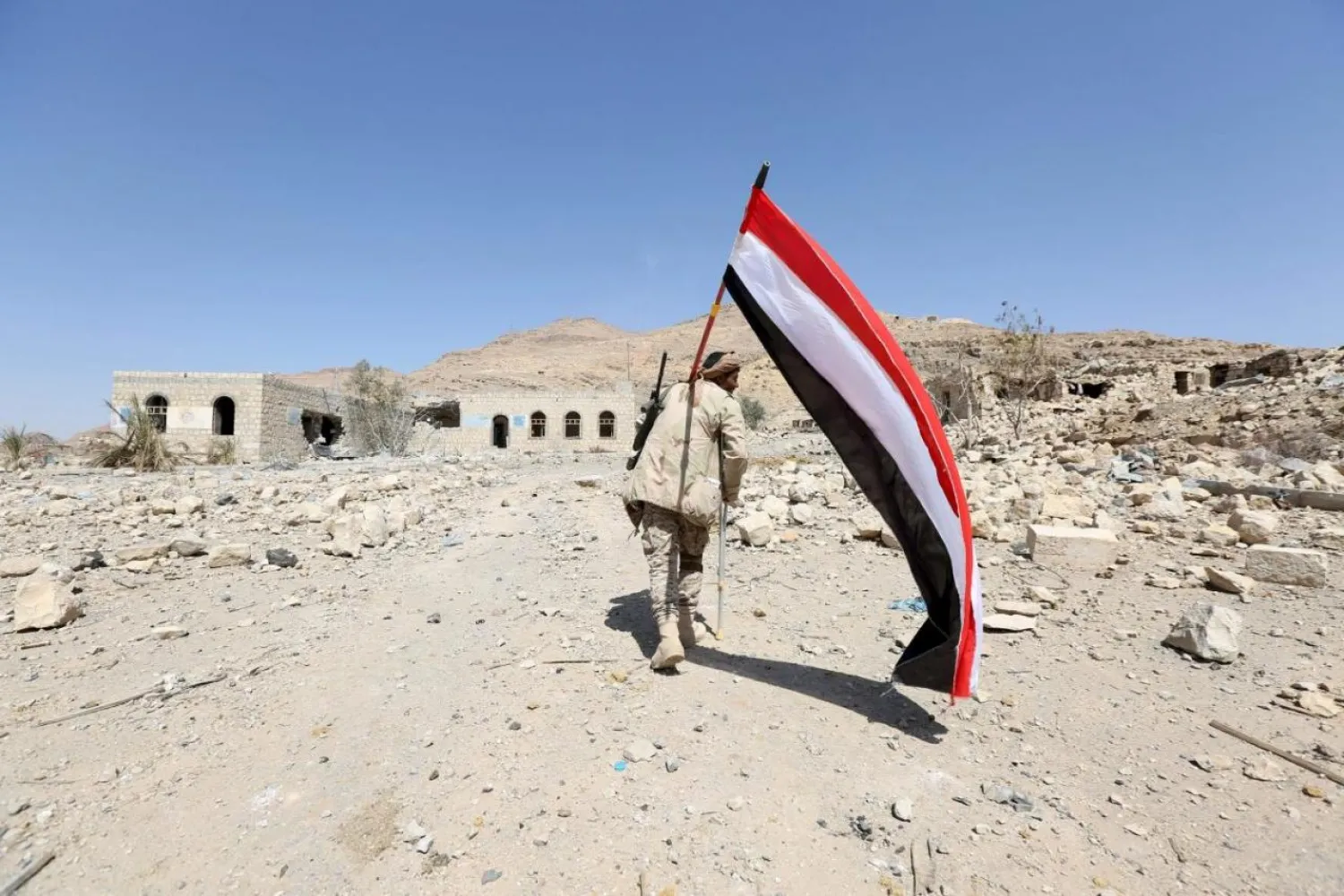
A pro-government soldier in Yemen. (Reuters)
TT

JIAT Underscores Methodology of its Operations

A pro-government soldier in Yemen. (Reuters)

The Joint Incident Assessment Team (JIAT) in Yemen stressed on Tuesday that it follows a legal methodology in its operations, reported the Saudi Press Agency.

JIAT official spokesman Counselor Mansour Al-Mansour, confirmed that the team, through the Operations Department and its legal Counselors, follows a legal methodology in the evaluation process based on the principles and standards adopted by International Humanitarian Law.

He noted that the Team is also acquainted with the best practices on the monitoring of serious violations of International Humanitarian Law during military operations, as well as examining the extent to which the coalition forces complied with the rules of engagement adopted and enforced by the Saudi-led Arab coalition forces.

During a press conference held at the Armed Forces Officers Club in Riyadh, Mansour reviewed the results of the seven incidents claims made by international organizations and the media regarding mistakes committed by the Coalition Forces to Support Legitimacy in Yemen during its military operations in Yemen.

He stressed the integrity of the procedures followed by the Coalition, which took into account the rules of engagement, International Humanitarian Law and customary rules.

In relation to the house in Aldhihar Directorate, Ibb Regarding the letter of The National Commission To Investigate Alleged Violations To Human Rights on Yemen stated that on August 28, 2015, a house belonging to a citizen located in Jabal Ruba park was targeted by a missile. The attack completely destroyed the house and killed seven residents and seriously injured one. It was also confirmed that the targeted area had no military target.

JIAT verified the incident, examined all related documents, including the Procedures; Rules of Engagement, Daily Mission Schedule, satellite images, video recordings; and assessed all gathered evidence.

JIAT found that the house is located in northern Ibb city, and there was no air mission in that location. The closest target struck by the Coalition was a gathering of the Iran-backed Houthi militias some 2.5 kilometers north of the claimed location.

In light of that, JIAT found that the Coalition did not target the claimed house.

It then refuted a number of other allegations that the Coalition had deliberatly struck civilian targets, saying that the forces had adhered to International Humanitarian Law and other rules of engagement.



Tunisia Flood Death Toll Rises to Five

 A man removes water from his flooded home in La Goulette, near the Tunisian capital Tunis. AFP 
 A man removes water from his flooded home in La Goulette, near the Tunisian capital Tunis. AFP 
TT

Tunisia Flood Death Toll Rises to Five

 A man removes water from his flooded home in La Goulette, near the Tunisian capital Tunis. AFP 
 A man removes water from his flooded home in La Goulette, near the Tunisian capital Tunis. AFP 

Authorities in Tunisia said flooding caused by three days of exceptional rainfall has killed five people, causing property damage in several provinces and leaving schools and businesses shut and transportation disrupted after parts of the country experienced their heaviest rainfall in years.

The death toll rose to five, Khalil Mechri, a civil defense spokesman told AFP. “Two people swept away by floodwaters, while a woman drowned in her home,” he said.

Mechri said since the flooding started, the emergency services pumped water from 466 inundated homes and have rescued 350 people trapped by floodwaters.

Tunisian media said four fishermen were missing on Wednesday. A fifth was rescued in Teboulba, south of Monastir, while authorities are searching for the remaining crew.

Mechri said while the bad weather was now less intense, “the level of alert remains high.”

President Kais Saied visited several affected areas on Tuesday, including Moknine and Teboulba, local media said.

Footage and videos widely circulated on social media showed significant flooding to homes and roads, with cars stranded in water, particularly in the capital, Tunis.

Authorities suspended classes on Wednesday in public and private schools and universities in 15 of the country's 24 governorates because of the weather. Transportation was also disrupted in several areas.

Abderazak Rahal, head of forecasting at the National Institute of Meteorology (INM), told AFP some Tunisian regions had not seen so much rain since 1950.

“We have recorded exceptional amounts of rainfall for the month of January,” Rahal said, with the regions of Monastir, Nabeul and greater Tunis the hardest hit.

The latest rainfall has proved record-breaking, but Tunisian streets often flood after heavy downpours, largely because of the state of the country's infrastructure.

Drainage and stormwater networks are often old and poorly maintained, particularly in rapidly expanding urban areas, with waste sometimes clogging the system.

Rapid urbanization of some areas has also led to less rainwater being absorbed into the ground, increasing runoff.

The dramatic deluge comes as Tunisia grapples with a seven-year drought, worsened by climate change and marked by a sharp decline in water reserves in dams nationwide.

In neighboring Algeria, several regions have also been hit by massive downpours and floods.

Algerian civil defense authorities said they had recovered the body of a man in his sixties who died in flooding in the northwestern province of Relizane.


Lebanon: Israel Launches New Phase of Escalation in the South

Lebanese residents flee after an Israeli air strike on the town of Qennarit in the South on Wednesday (AP). 
TT

Lebanon: Israel Launches New Phase of Escalation in the South

Lebanese residents flee after an Israeli air strike on the town of Qennarit in the South on Wednesday (AP). 

Israel has intensified its military campaign in areas north of the Litani River in South Lebanon over the past two weeks, carrying out air strikes at least twice a week—well above the tempo seen before the start of the year.

The intensified moves have been accompanied by near-daily surveillance and pursuit operations, signaling a sharper escalation as the Lebanese army prepares to launch the second phase of its plan to place weapons under state control north of the Litani.

After heavy strikes on Monday targeting areas north of the river, the Israeli army issued evacuation warnings on Wednesday afternoon for residents of five towns in southern Lebanon. The alerts came hours after Israeli strikes that killed two people, whom Israel said were Hezbollah members.

Local sources monitoring the developments told Asharq Al-Awsat that Israeli air raids now occur every two to three days — at least twice weekly — double the frequency recorded last year.

Previously, strikes were largely confined to areas south of the Litani and its banks at a rate of about once a week, often on Thursdays. The current campaign includes strikes on valleys and village outskirts, alongside repeated evacuation warnings in several towns north of the river. The warnings increasingly target large buildings and entire neighborhoods, with heavy munitions causing widespread damage to property and surrounding areas.

On Wednesday afternoon, the Israeli army issued evacuation orders in two phases for five villages north of the Litani, triggering the displacement of hundreds of residents. Israeli army Arabic-language spokesperson Avichay Adraee said the military would strike Hezbollah infrastructure to counter what he described as attempts to rebuild its activities in the region.

He identified targets in Jarjoua and Kfar Kila in Nabatieh district and Qennarit in Sidon district, about 40 kilometers from the border, and urged residents to evacuate immediately. After strikes destroyed the targeted buildings and damaged nearby structures, further evacuation orders were issued for Ansar and Zrariyeh, around 30 kilometers from the Israeli border.

The Lebanese army is expected next month to submit a plan to the government outlining mechanisms for disarming Hezbollah north of the Litani, following its announcement that it had dismantled the group’s weapons in border areas south of the river.

Earlier in January, the army said it had completed the first phase of the plan, aimed at placing weapons exclusively under state control, and asserted that it had established operational control over areas south of the Litani — roughly 30 kilometers from the Israeli border — except for territories still under Israeli occupation.

Israel has questioned the adequacy of these measures, describing them as insufficient. Under the ceasefire agreement, Israel was expected to withdraw from South Lebanon but has maintained its presence at five strategic positions, which Lebanon continues to demand it vacate.


Lebanese Army Affirms Commitment to Protect Borders with Syria

Lebanese Army Commander General Rodolphe Haykal holds a meeting of the High Supervision Committee on the Border Protection Assistance Program in the presence of British, US and Canadian Ambassadors to Lebanon (Lebanese Army Directorate of Orientation) 
TT

Lebanese Army Affirms Commitment to Protect Borders with Syria

Lebanese Army Commander General Rodolphe Haykal holds a meeting of the High Supervision Committee on the Border Protection Assistance Program in the presence of British, US and Canadian Ambassadors to Lebanon (Lebanese Army Directorate of Orientation) 

The Lebanese Army on Wednesday reaffirmed its commitment to protect the border with Syria, stressing that achieving this goal successfully “requires qualitative military support.”

The announcement came in parallel with preparations to hold a fundraising conference in support of the country’s army, scheduled to be held in Paris on March 5.

The Lebanese Army is deployed along its northern and eastern border with Syria, where its forces work on implementing security measures and combat smuggling.

Other tasks include deployment on the southern border with Israel, implementing the Lebanese government’s plan to dismantle all armed militias, as well as protecting internal stability and combating drug smuggling.

In this regard, a meeting of the Higher Supervisory Committee on the Assistance Program for Land Borders Protection was held in Yarzeh, in the presence of Lebanese Army Commander General Rodolphe Haykal, British Ambassador to Lebanon Hamish Cowell, US Ambassador, Michel Issa, Canadian Ambassador Gregory Galligan, and members of the joint working team.

In a statement, the Lebanese Army Command said the meeting highlighted the implemented phases of the program and the necessary steps to support the LAF units tasked with protecting Lebanon’s eastern and northern borders and combat smuggling and illegal activities.

The British embassy said in a statement that the ambassadors underlined the LAF’s pivotal role in maintaining security and stability during a period of significant challenge.

They stressed the need to support the military institutions to further strengthen Lebanon’s security, stability, and territorial integrity.

“The Committee convened to review progress and challenges in securing Lebanon’s eastern and northern borders, and reaffirmed support for the LAF’s (Lebanese Army’s) efforts to reinforce state authority at this critical time,” the British embassy said.

For his part, General Haykal said, “We are committed to protect the borders and we have made many efforts and sacrifices to this end.”

However, he added, “achieving this goal successfully requires qualitative military support, given the size of challenges on the northern and eastern borders.”

Haykal hailed the US, British, and Canadian authorities for their continuous support to the army, which plays a fundamental role in enhancing the capabilities of military units and enabling them to carry out their missions amid the current challenges.