



Libya: Sarraj Hints at Compromise on Army Commander

Italy's Prime Minister Giuseppe Contee welcomes Libya's Prime Minister Fayez al-Sarraj as he arrives at the venue of the international conference on Libya in Palermo, Italy, November 12, 2018. (Reuters)
TT

Libya: Sarraj Hints at Compromise on Army Commander

Italy's Prime Minister Giuseppe Contee welcomes Libya's Prime Minister Fayez al-Sarraj as he arrives at the venue of the international conference on Libya in Palermo, Italy, November 12, 2018. (Reuters)

Prime Minister of the Government of National Accord (GNA) Fayez al-Sarraj hinted at the possibility of reaching a compromise with Libyan National Army (LNA) Commander Khalifa Haftar on the powers and functions of the Army Commander in the aftermath of the Palermo international conference on Libya.

Sarraj stated that Haftar wants to be commander of a unified Libyan Army. However, the 2015 UN-sponsored Skhirat peace agreement stipulates that the prime minister is also the army chief.

Corriere della Sera newspaper quoted the head of the GNA as saying that a compromise could be reached. He did not provide further details.

The country and Libyans "need a constitution that includes the electoral law, without which it is impossible to hold the presidential and legislative elections scheduled for the spring of next year,” Sarraj asserted.

On the other hand, Khalid al-Mishri, head of the Tripoli-based High Council of State (HCS), claimed that during this week’s Palermo meeting, which he didn’t attend, Haftar conditioned that he should become the top commander of the army.

Mishri indicated that he agrees with Sarraj’s government on refusing such a request.

In other news, about 80 migrants aboard a Panama-flagged merchant vessel have been stranded in the sea since Friday. The ship was carrying a shipment of cars into the port city of Misrata, some 200 kilometers east of the Libyan capital.

A member of the committee responsible for resolving the matter and commander of central sector of Libyan coast guard, Toufiq Amhamed, told the German News Agency (DPA) that negotiations with migrants are underway. He explained that Tripoli’s Public Prosecution commissioned the prosecutor, Alzarouk Ibrahim, to pursue the negotiations to remove the migrants in a peaceful and voluntary manner.

Amhamed expected to reach a solution soon to convince the migrants of voluntarily disembarking the ship because of what he described as their "bad psychological conditions.”

He asserted Libyan authorities’ refusal to resort to force despite their ability to do so, denying reports that some boats carrying migrants had left due to bad sea conditions these days.

Earlier in November, some 94 migrants refused to leave a ship after they were rescued in coordination with the Libyan coast guard, 62 miles north of Misrata.

But then negotiations led by a Libyan commission and international organizations succeeded in getting off 14 immigrants on Wednesday, including a woman and a child. The rest of the migrants are demanding to be transferred to Europe, or allow their voluntarily return to their countries or a third country.

In an unrelated matter, Libyan families in Sirte, ISIS’ former stronghold, have been informed that dozens of their children were still missing, even though the city had been liberated from terrorists.

Member of Care of Families of Martyrs and Missing Persons Committee in Sirte, Saleh Sultan, stated that the fate of 66 residents remains unknown.

He called on the security authorities and the city's dignitaries to coordinate with the judicial authorities in Tripoli and Misrata to uncover the fate of the missing citizens.

Sultan asserted the importance of conducting medical examinations and DNA tests on discovered bodies.


EU Condemns Israel's West Bank Control Measures

The Israeli settlement of Har Homa, seen from the West Bank city of Bethlehem, Tuesday, Dec. 17, 2024. (AP)
TT

EU Condemns Israel's West Bank Control Measures

The Israeli settlement of Har Homa, seen from the West Bank city of Bethlehem, Tuesday, Dec. 17, 2024. (AP)

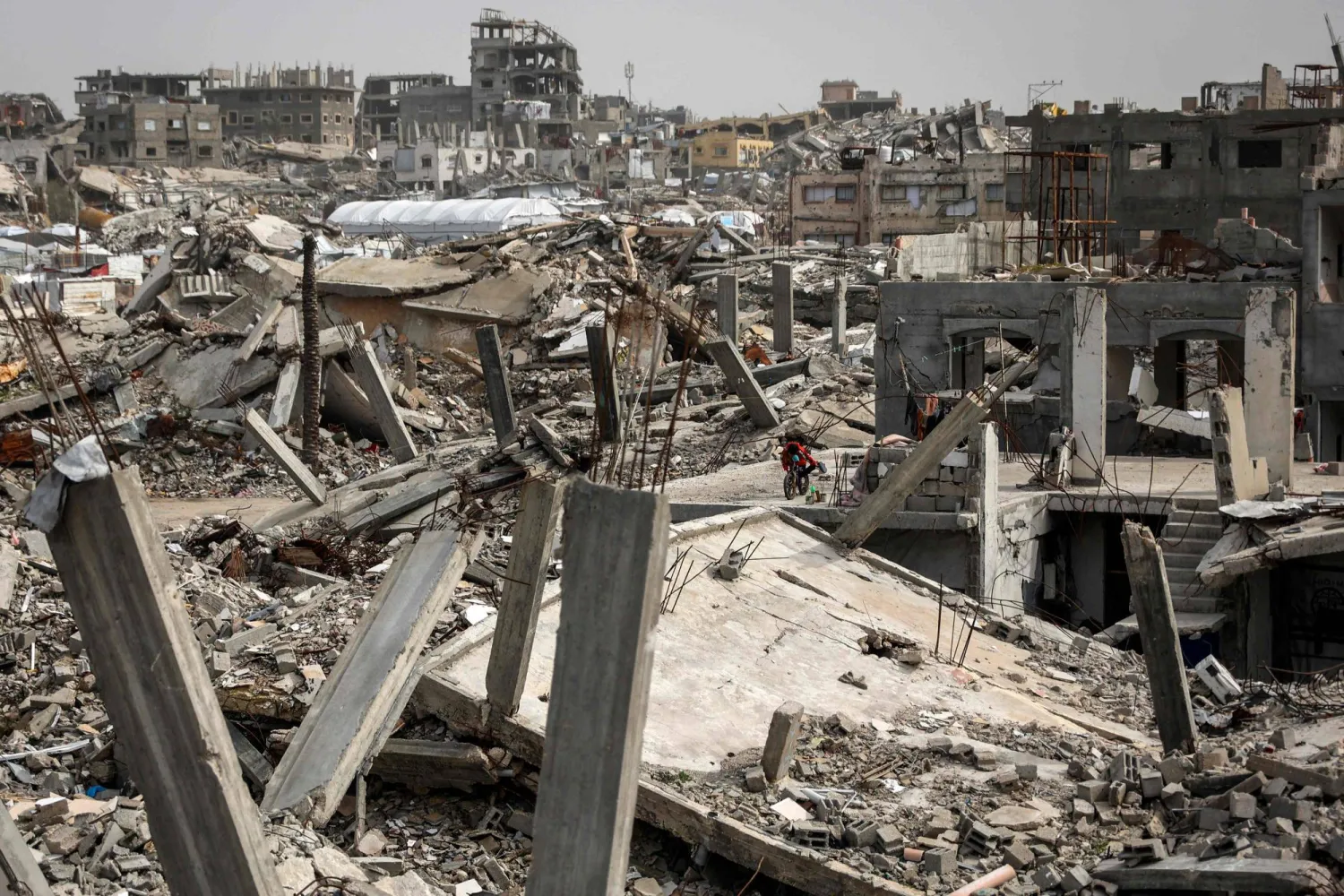
The European Union on Monday condemned new Israeli measures to tighten control of the West Bank and pave the way for more settlements in the occupied Palestinian territory, AFP reported.

"The European Union condemns recent decisions by Israel's security cabinet to expand Israeli control in the West Bank. This move is another step in the wrong direction," EU spokesman Anouar El Anouni told journalists.


Atrocities in Sudan's El-Fasher Were 'Preventable Human Rights Catastrophe'

Sudanese displaced people who left El Fasher after its fall, sit in the shade in Tawila at the Rwanda camp reception point on December 17, 2025. (Photo by AFP)
TT

Atrocities in Sudan's El-Fasher Were 'Preventable Human Rights Catastrophe'

Sudanese displaced people who left El Fasher after its fall, sit in the shade in Tawila at the Rwanda camp reception point on December 17, 2025. (Photo by AFP)

The atrocities unleashed on El-Fasher in Sudan's Darfur region last October were a "preventable human rights catastrophe", the United Nations said Monday, warning they now risked being repeated in the neighbouring Kordofan region.


"My office sounded the alarm about the risk of mass atrocities in the besieged city of El-Fasher for more than a year ... but our warnings were ignored," UN rights chief Volker Turk told the Human Rights Council in Geneva.


He added that he was now "extremely concerned that these violations and abuses may be repeated in the Kordofan region".


Arab League Condemns Israel's Decisions to Alter Legal, Administrative Status of West Bank

A general view shows the opening session of the meeting of Arab foreign ministers at the Arab League Headquarters (Reuters)
TT

Arab League Condemns Israel's Decisions to Alter Legal, Administrative Status of West Bank

A general view shows the opening session of the meeting of Arab foreign ministers at the Arab League Headquarters (Reuters)

The General Secretariat of the Arab League strongly condemned decisions by Israeli occupation authorities to impose fundamental changes on the legal and administrative status of the occupied Palestinian territories, particularly in the West Bank, describing them as a dangerous escalation and a flagrant violation of international law, international legitimacy resolutions, and signed agreements, SPA reported.

In a statement, the Arab League said the measures include facilitating the confiscation of private Palestinian property and transferring planning and licensing authorities in the city of Hebron and the area surrounding the Ibrahimi Mosque to occupation authorities.

It warned of the serious repercussions of these actions on the rights of the Palestinian people and on Islamic and Christian holy sites.

The statement reaffirmed the Arab League’s firm support for the legitimate rights of the Palestinian people, foremost among them the establishment of their independent state on the June 4, 1967 borders, with East Jerusalem as its capital.