Iraq, US's Schlumberger Agree to Drill Wells in Majnoon Oilfield

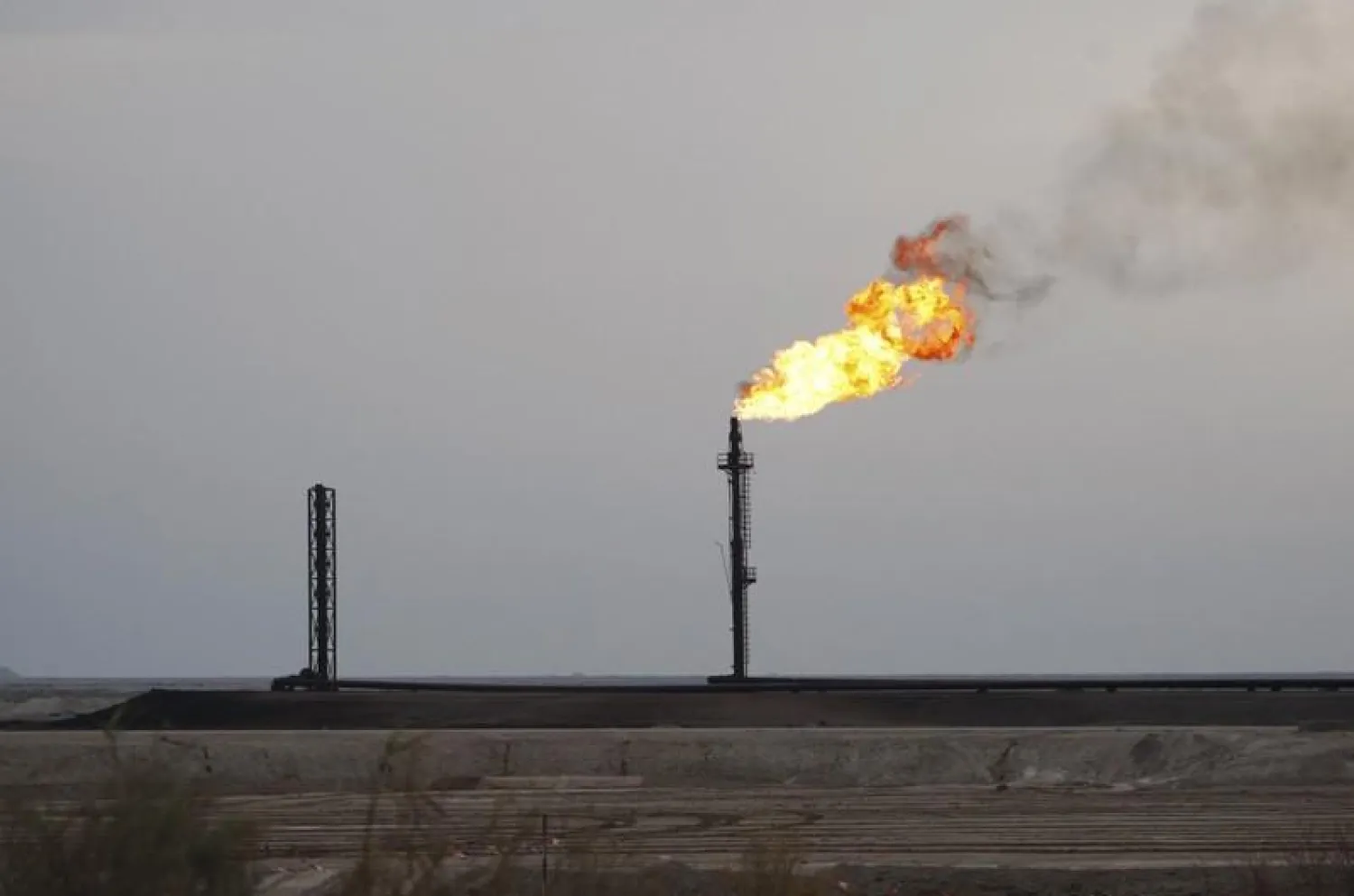
FILE PHOTO: A flame rises from a tower at Majnoon oilfield in Iraq's southern province of Basra February 7, 2012. REUTERS/Atef Hassan
TT

Iraq, US's Schlumberger Agree to Drill Wells in Majnoon Oilfield

FILE PHOTO: A flame rises from a tower at Majnoon oilfield in Iraq's southern province of Basra February 7, 2012. REUTERS/Atef Hassan

Iraq and US company Schlumberger Ltd agreed to drill 40 wells in the giant Majnoon oilfield, the Oil Ministry said on Wednesday.

Iraqi Oil Minister Thamir Ghadhban stated that the agreement was made with the oil services firm in order to boost production from Majnoon.

Also, another deal was also signed on Wednesday between Basra Oil Co, which manages Majnoon, and Oil Exploration Co, two state-run Iraqi firms, to conduct a seismic survey in Majnoon.

“Carrying out a three-dimensional seismic survey by the Oil Exploration Company in Majnoon will help to obtain accurate data and boost production at the field,” Ghadhban said, Reuters reported.

In June, Royal Dutch Shell exited Majnoon in southern Iraq and handed the field’s operations to Basra Oil.

Crude oil output from Majnoon is more than 240,000 barrels per day (bpd), the statement said.

According to Reuters, Iraq is the second-largest producer in the Organization of the Petroleum Exporting Countries after Saudi Arabia and pumps around 4.6 million bpd, below its capacity, in line with global, OPEC-led supply cuts aimed at supporting prices.


Pakistan Central Bank Receives $2 billion from Saudi Arabia as Part of Broader Financial Support Package

Mohammed Al-Jadaan and Muhammad Aurangzeb following the agreement for Saudi Arabia to provide an additional $3 billion in support to Pakistan (X).
TT

Pakistan Central Bank Receives $2 billion from Saudi Arabia as Part of Broader Financial Support Package

Mohammed Al-Jadaan and Muhammad Aurangzeb following the agreement for Saudi Arabia to provide an additional $3 billion in support to Pakistan (X).

Pakistan announced that it has received $2 billion from Saudi Arabia’s Ministry of Finance as part of a broader financial support package.

Earlier, Pakistan’s Finance Minister, Muhammad Aurangzeb, said that Saudi Arabia had committed to depositing an additional $3 billion, while extending an existing $5 billion loan for three years instead of renewing it annually.

This support comes as Pakistan faces repayment of $3.5 billion to the United Arab Emirates, putting pressure on its reserves, which stand at about $16.4 billion.

Saudi Arabia has a history of assisting Pakistan during economic crises, including a $6 billion support package in 2018 that included deposits and deferred oil payments.


Gold Rises as Middle East Optimism Calms Inflation Fears

Samples of gold displayed in a program affiliated with the Brazilian Federal Police specializing in tracking gold in Brasilia (Reuters)
TT

Gold Rises as Middle East Optimism Calms Inflation Fears

Samples of gold displayed in a program affiliated with the Brazilian Federal Police specializing in tracking gold in Brasilia (Reuters)

Gold prices rose on Thursday as growing optimism about a possible end to conflicts in the Middle East calmed inflation worries and improved prospects for lower interest rates.

Spot gold rose 0.5% to $4,815.15 per ounce by 0926 GMT, after rising to a one-month high in the previous session. US gold futures for June delivery gained 0.3% to $4,836.50.

"For the month of March gold was under pressure because of the need for liquidity in the metal following the war, but that is kind of mostly run its course, that need for liquidity," said Nitesh Shah, commodity strategist at WisdomTree.

Shah added that he expects gold prices to remain very well supported as concerns surrounding central bank independence and dollar debasement risk still remain prevalent, Reuters reported.

Optimism grew on Thursday that the war in the Middle East may be near an end, with a key Pakistani mediator in Tehran and the administration of US President Donald Trump talking up hopes for a deal that would open the crucial Strait of Hormuz.

Crude oil prices were up more than 1% on Thursday, but remained well below the $100-a-barrel mark.

"Gold remains supported amid renewed optimism around de-escalation. The pullback in oil prices is easing some of the inflation concerns that weighed on prices earlier in the conflict. The move reflects a broader shift in market focus," ING analysts said.

Global equities vaulted past their previous all-time highs in Asian trading as optimism grew about a deal to end the Iran war.

Gold prices fell to as low as $4,097.99 an ounce on March 23 as high inflation concerns due to soaring energy prices raised expectations of a more hawkish approach to intrest rates by the US Federal Reserve, weighing on the non-yielding metal's demand.

Prices have since recovered as investors now see a more than 34% chance of at least one US interest rate cut by 2026-end, up from 32% a day prior, as per CME's FedWatch Tool.

Among other metals, spot silver rose 1.4% to $80.12 per ounce, platinum gained 1% to $2,130.25, and palladium was up 0.9% at $1,587.25.


UK Economy Surged Ahead of Iran War, but Energy Shock to Test Resilience

Buses pass in front of the Bank of England building in London (Reuters)
TT

UK Economy Surged Ahead of Iran War, but Energy Shock to Test Resilience

Buses pass in front of the Bank of England building in London (Reuters)

Britain's economy put on a burst of growth in February, suggesting it was in slightly better shape before the start of the Iran war than many economists had feared, official figures showed on Thursday.

Gross domestic product expanded 0.5% month-on-month in February, the biggest increase since January 2024, the Office for National Statistics said. Economists polled by Reuters had forecast a much more modest reading of 0.2%.

While the figures are likely to cheer finance minister Rachel Reeves, economists said Britain remained ⁠vulnerable to the fallout from ⁠the Middle East conflict, being highly dependent on imported energy and prone to higher inflation than peers.

"Unfortunately, the latest energy price shock has likely pulled the rug on this momentum, with another year of above-target inflation and a softening labour market likely to come," said Fergus Jiminez-England, associate economist from the National Institute for Economic and Social Research.

Britain suffered the sharpest cut to economic growth forecasts for large rich economies by the International ⁠Monetary Fund due largely to the Iran war, in forecasts published on Tuesday.

"Growth increased further in the three months to February led by broad-based increases across services," ONS chief economist Grant Fitzner said.

"Meanwhile car production recovered from the effects of the autumn cyber incident."

Economic growth for the three months to February was 0.5%, the ONS said, putting Britain's economy on track for a conspicuously strong first quarter, for a third year running.

That pattern has led to suspicions among some economists that the ONS' process of seasonal adjustment has gone awry following unusually large swings in output during the COVID-19 pandemic - something the ONS rejects.

"We're confident in our figures and seasonal adjustment processes," ⁠an ONS spokesperson ⁠said on Thursday, adding that statisticians had looked thoroughly at the issue.

James Smith, economist at ING, said he still doubted whether the ONS had fully accounted for the influence of the last period of high inflation in its seasonal adjustment process, and the timing of price increases.

"We wrote in our reaction to the January data that February or March could see a strong bounce back for exactly this reason," Smith said.

"Suffice to say, all of this is old news anyway, given the crisis we find ourselves in today."

Separate ONS data showed Britain's total trade deficit, excluding the volatile movements of precious metals, rose in inflation-adjusted terms in February to 5.627 billion pounds ($7.62 billion), its highest since November 2024.

The widening was driven by imports rising to their second-highest reading on record, after December 2022.