


Kurds Urge Larger French Role After US Leaves Syria

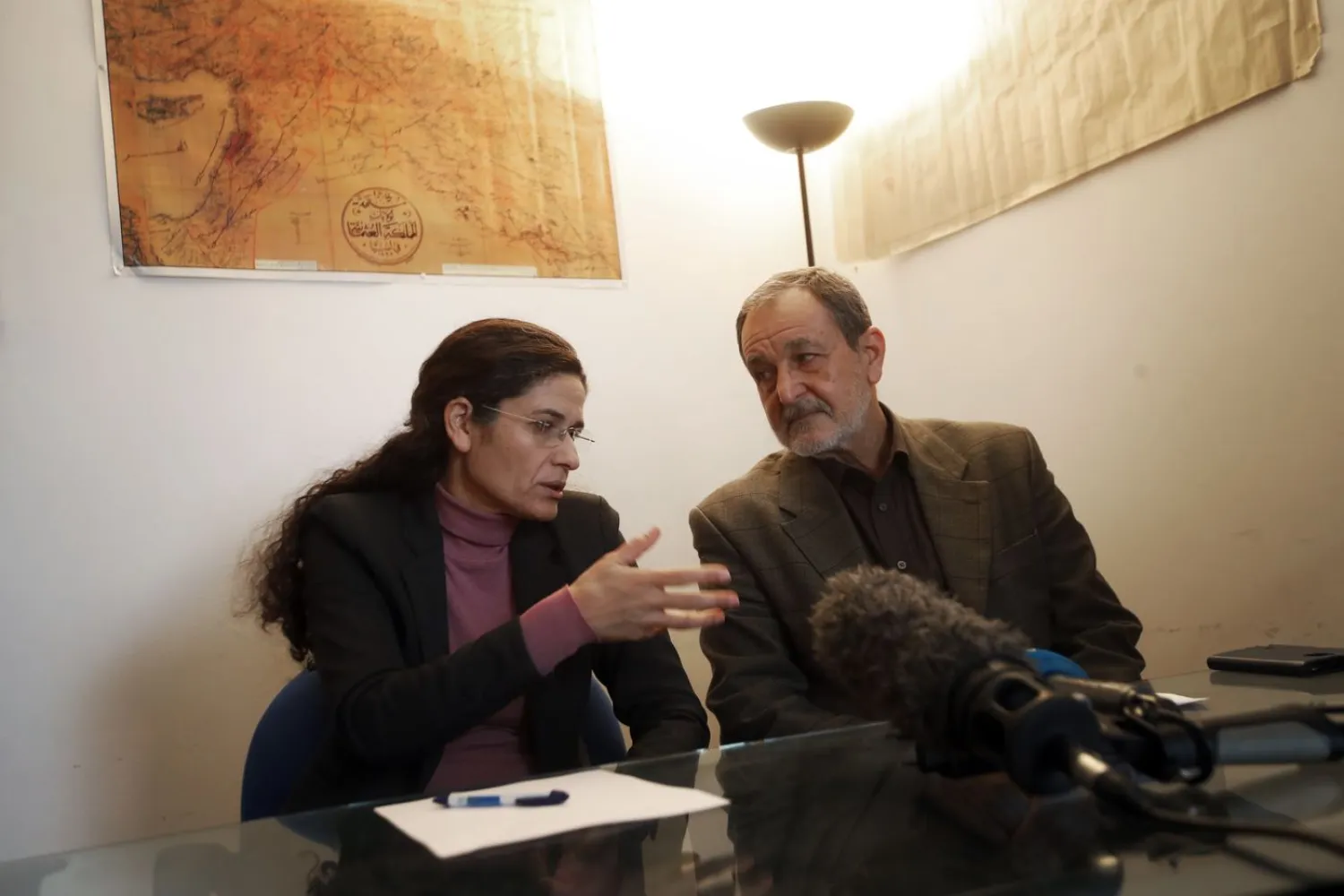
Co-chairs of the Kurdish-led Syrian Democratic Council Ilham Ahmad, left, and Riad Darrar attend a press conference in Paris, Friday, Dec. 21, 2018. Against the advice of many in his own administration, President Donald Trump is pulling US troops out of Syria.(AP Photo/Christophe Ena)
TT

Kurds Urge Larger French Role After US Leaves Syria

Co-chairs of the Kurdish-led Syrian Democratic Council Ilham Ahmad, left, and Riad Darrar attend a press conference in Paris, Friday, Dec. 21, 2018. Against the advice of many in his own administration, President Donald Trump is pulling US troops out of Syria.(AP Photo/Christophe Ena)

A senior Kurdish politician Friday called on France to play a larger role in Syria following the withdrawal of US troops from the country, warning that Kurdish fighters may have to withdraw from the front lines in the fight against the ISIS terrorist group.

Ilham Ahmed also suggested that the main Kurdish militia may no longer be able to hold the hundreds of ISIS militants detained in its prisons in northeastern Syria in the case of a Turkish attack, noting they might head to Turkey and from there to the rest of the world.

The group known as the Syrian Democratic Forces is known to hold hundreds of militants from various nationalities, including Europeans, in detention centers across areas under their control in northern Syria, and their families have been rounded up in camps run by the group. The Kurds have not decided how to handle them, since their home countries don't want them back and also don't recognize Kurdish-run courts.

"We fear things will get out control and we would no longer be able to contain them (ISIS militants) in the area, and this would open the door to their renewed spread and movement toward the Turkish border and from there to the rest of the world," Ahmed said. She was in Paris as part of a delegation attending talks on the planned US military withdrawal from Syria and Turkey's warnings that it may launch a military operation against Kurdish forces in northeastern Syria.

The delegation met with French President Emanuel Macron's representative to Syria, Francois Senemand.

Ahmed said France as a NATO member has a moral obligation to prevent Turkey from attacking Kurds.

Her comments reflected the desperation and turmoil within the Kurdish forces following President Donald Trump's surprise announcement that he would withdraw the 2,000 troops in Syria. The announcement came at a particularly tense moment in northern Syria. Turkish President Recep Tayyip Erdogan has repeatedly warned of launching a new offensive against the Kurds and in recent days has stepped up the rhetoric, threatening that an assault could begin "at any moment."

Turkey views the People's Protection Units, or YPG, the main component of the Syrian Democratic Forces, as a terrorist group and an extension of the insurgency within its borders. U.S. support for the group has strained ties between the two NATO allies.

On Friday, Turkish President Recep Tayyip Erdogan said the announcement from Washington about a pullout as well as "diplomatic and security contacts" forced Turkey to delay its plans for an operation against the US-backed Kurdish militia east of the Euphrates river.

Speaking in Istanbul in an address to business groups, he said however, that the delay would "not be open-ended."

Trump's abrupt decision has been widely seen as an abandonment of a loyal ally, even though the US partnership with the Kurds against the Islamic State group in Syria was always considered a temporary marriage of convenience. With US air support, the Kurds drove ISIS out of much of northern and eastern Syria in a costly four-year campaign.

"The decision to pull out under these circumstances will lead to a state of instability and create a political and military void in the region and leave its people between the claws of enemy forces," a statement by the Kurdish-led group and main US ally in Syria said Thursday.

Underscoring the ongoing fight against ISIS, a Kurdish news agency and the Syrian Observatory for Human Rights war monitor reported that IS launched a counteroffensive in the area on the outskirts of Hajin, the last town controlled by ISIS in Syria which the SDF recaptured a week ago.

Turkish Foreign Minister Mevlut Cavusoglu on Friday said his country welcomed the decision by Trump to withdraw US troops from Syria.

Cavusoglu spoke during a visit to Malta in comments that were broadcast on Turkish television. They marked the first official reaction to the US decision to pull out its troops.

The minister spoke of a need to coordinate the withdrawal with the US and said all countries need to be vigilant in the fight against the remnants of the Islamic State group.

Cavusoglu also warned that the withdrawal should not create a vacuum that could be filled by terrorist groups.

The German government, meanwhile, said it wasn't consulted by Washington before the US announced the troop withdrawal.

Government spokeswoman Ulrike Demmer told reporters in Berlin on Friday that Germany would have appreciated prior consultations.

Demmer said the US decision could affect the dynamics of the conflict, adding that "much remains to be done" for a final victory over the Islamic State group.

She said the United States is an "important ally" but declined to say whether Germany also considers it a "reliable" one.

German Defense Ministry spokesman Jens Flosdorff said the decision has no immediate impact on Germany's aerial surveillance missions over Syria.


Israeli Strikes Damage Hospital in Lebanon

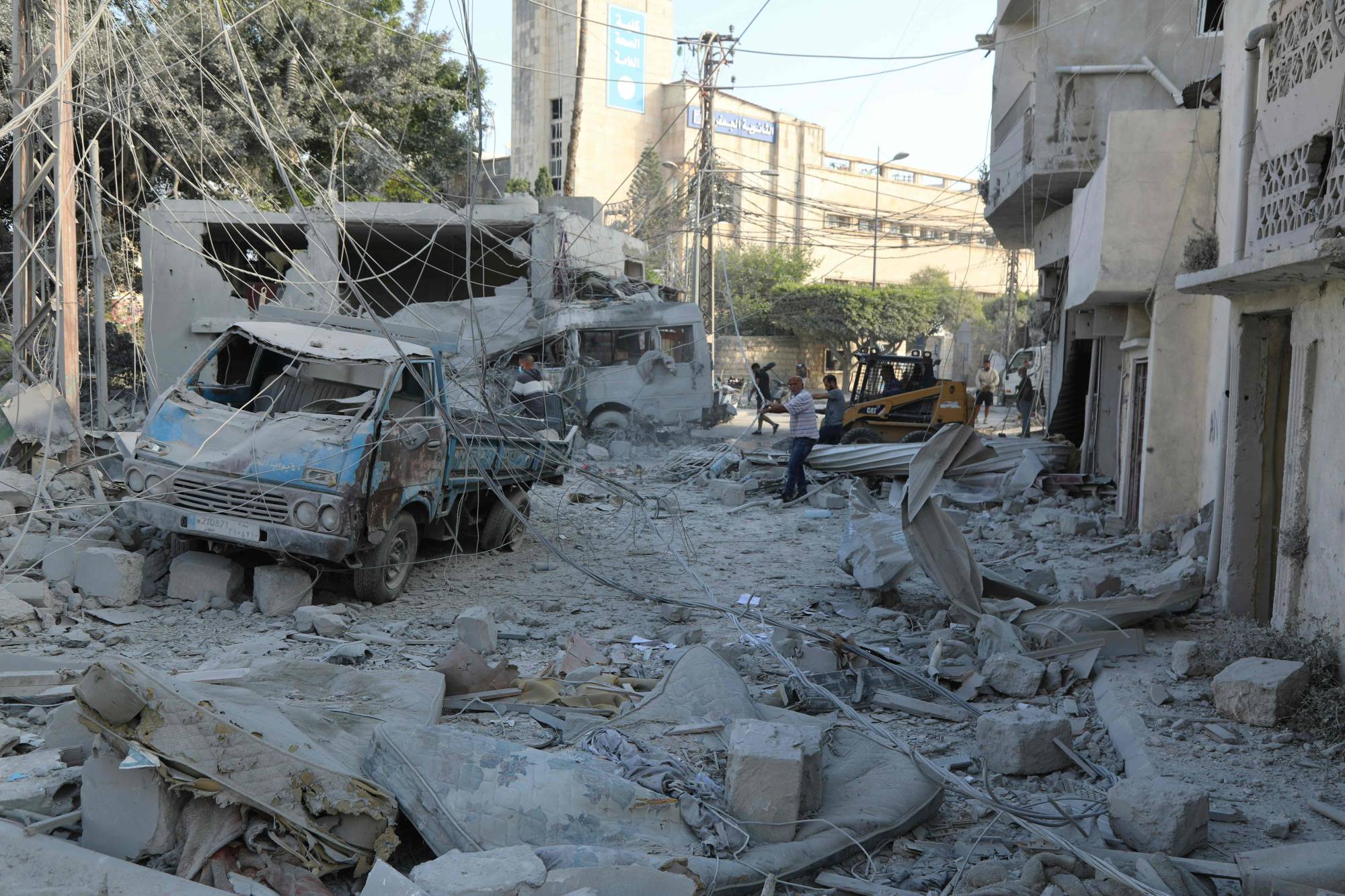
File photo: Destroyed houses that were hit in an Israeli airstrike in Saksakiyeh village, south Lebanon, Friday, April 3, 2026. (AP Photo/Hussein Malla)
TT

Israeli Strikes Damage Hospital in Lebanon

File photo: Destroyed houses that were hit in an Israeli airstrike in Saksakiyeh village, south Lebanon, Friday, April 3, 2026. (AP Photo/Hussein Malla)

A hospital in the coastal Lebanese city of Tyre was damaged by Israeli airstrikes on nearby buildings that wounded 11 people, the health ministry said on Saturday.

The director of the Lebanese Italian Hospital told the state-run National News Agency (NNA) that it would "remain open to provide the necessary medical care" despite the damage.

Strikes destroyed two buildings nearby, an AFP correspondent saw, shattering windows and causing suspended ceilings to collapse in the hospital, the facility's management said.

A series of attacks hit the Tyre region on Saturday, including one on its port that struck a small boat and damaged others moored nearby, the AFP correspondent said.

Israel has been carrying out strikes across Lebanon and launched a ground invasion in the south after Hezbollah entered the war in the Middle East on the side of its backer Iran on March 2.

Tens of thousands of people have left Tyre, but around 20,000 remain, including 15,000 displaced from surrounding villages, despite Israeli evacuation warnings covering most of the city and a broad swathe of southern Lebanon.

The NNA also reported that Israeli forces abducted a man in Shebaa, near the Israeli border in the east, at around 3:00 am on Saturday.


Indonesia Slams 'Unacceptable' Peacekeeper Casualties in Lebanon

FILE PHOTO: UNIFIL vehicles drive on a main road in Qlayaa, amid escalating hostilities between Israel and Hezbollah, as the US-Israel conflict with Iran continues, in Qlayaa, southern Lebanon, March 27, 2026. REUTERS/Karamallah Daher/File Photo
TT

Indonesia Slams 'Unacceptable' Peacekeeper Casualties in Lebanon

FILE PHOTO: UNIFIL vehicles drive on a main road in Qlayaa, amid escalating hostilities between Israel and Hezbollah, as the US-Israel conflict with Iran continues, in Qlayaa, southern Lebanon, March 27, 2026. REUTERS/Karamallah Daher/File Photo

The Indonesian government on Saturday slammed as "unacceptable" an explosion that injured three of its peacekeepers in Lebanon within days of three other blue helmets from the Southeast Asian nation being killed.

The United Nations Interim Force in Lebanon (UNIFIL) said three peacekeepers were wounded in a blast that occurred inside a UN facility near Adaisseh on Friday afternoon, and rushed to hospital.

Two were seriously wounded.

The UN Information Center in Jakarta said the "origin of the explosion" was unknown but identified the injured soldiers as Indonesian.

"Repeated attacks or incidents of this kind are unacceptable," the Indonesian foreign ministry said in a statement.

"Regardless of their cause, these events underscore the urgent need to strengthen protection for UN peacekeeping forces amid an increasingly dangerous conflict situation."

The government urged the UN Security Council to investigate the events and "to immediately convene a meeting of troop-contributing countries to UNIFIL to conduct a review and take measures to enhance the protection of personnel serving with UNIFIL".

Friday's incident came just days after an Indonesian peacekeeper died when a projectile exploded on March 29 in southern Lebanon, where Israel and Hezbollah have been fighting since Lebanon was drawn into the Middle East war.

A UN security source told AFP on condition of anonymity Tuesday that fire from an Israeli tank was responsible for that attack.

A day later, two more Indonesian peacekeepers died after an explosion struck a UNIFIL logistics convoy, also in southern Lebanon.

The father of one of the two fallen soldiers, 33-year-old Zulmi Aditya Iskandar, said this week he was shocked that peacekeepers were losing their lives in the conflict.

"We were really sad and regretful, because this is a UN troop, a peacekeeping troop, not deployed for war," 60-year-old Iskandarudin told reporters at his house in West Java province.

The bodies of the three peacekeepers are scheduled to arrive in Jakarta on Saturday evening, according to the military.

The Indonesian National Armed Forces has said it will deploy more than 750 personnel to Lebanon next month as part of the scheduled UNIFIL peacekeeping troop rotation.


Strike Kills One Iraqi Fighter near Syria Border

Mourners attend the funeral of members of Iraq's Hashed al-Shaabi, who were killed in an airstrike in the town of al‑Qaim near the Syrian border, amid heightened regional tensions due to the US-Israel conflict with Iran, in Baghdad, Iraq, March 12, 2026. REUTERS/Stringer
TT

Strike Kills One Iraqi Fighter near Syria Border

Mourners attend the funeral of members of Iraq's Hashed al-Shaabi, who were killed in an airstrike in the town of al‑Qaim near the Syrian border, amid heightened regional tensions due to the US-Israel conflict with Iran, in Baghdad, Iraq, March 12, 2026. REUTERS/Stringer

An attack killed one fighter from the former paramilitary coalition Hashed al-Shaabi on Saturday, the alliance said, blaming the US and Israel.

Iraq has been dragged into the war between the United States, Israel and Iran, with strikes targeting both US interests and pro-Iran groups in the country, reported AFP.

"This treacherous attack resulted in the martyrdom of one PMF fighter and the wounding of four others, as well as a member of the ministry of defense," said a short statement from the group, which is also known as the Popular Mobilization Forces (PMF), adding it was a "Zionist-American attack".

The PMF is a coalition of armed groups -- formed in 2014 to fight extremists-- that is now part of Iraq's regular army, but also contains pro-Iran factions who have a reputation for acting independently.

PMF positions have been repeatedly targeted since the outbreak of war, with the group consistently blaming the attacks on the US and Israel.

According to the group's statement, the latest attack targeted a position in western Anbar province of the 45th Brigade, which belongs to the US-blacklisted, pro-Iran Kataeb Hezbollah group.

Kataeb Hezbollah is part of the umbrella movement known as the Islamic Resistance in Iraq, which has been claiming daily attacks since the start of the war on US interests in Iraq and the region.

The Pentagon has said helicopters have carried out strikes against pro-Iran armed groups in Iraq during the war.

Washington has strongly denied claims it has targeted Iraqi security forces.
