Red Sea Project Master Plan Wins Seal of Approval

First Phase to Open by 2022

Red Sea Project Master Plan Wins Seal of Approval
TT

Red Sea Project Master Plan Wins Seal of Approval

Red Sea Project Master Plan Wins Seal of Approval

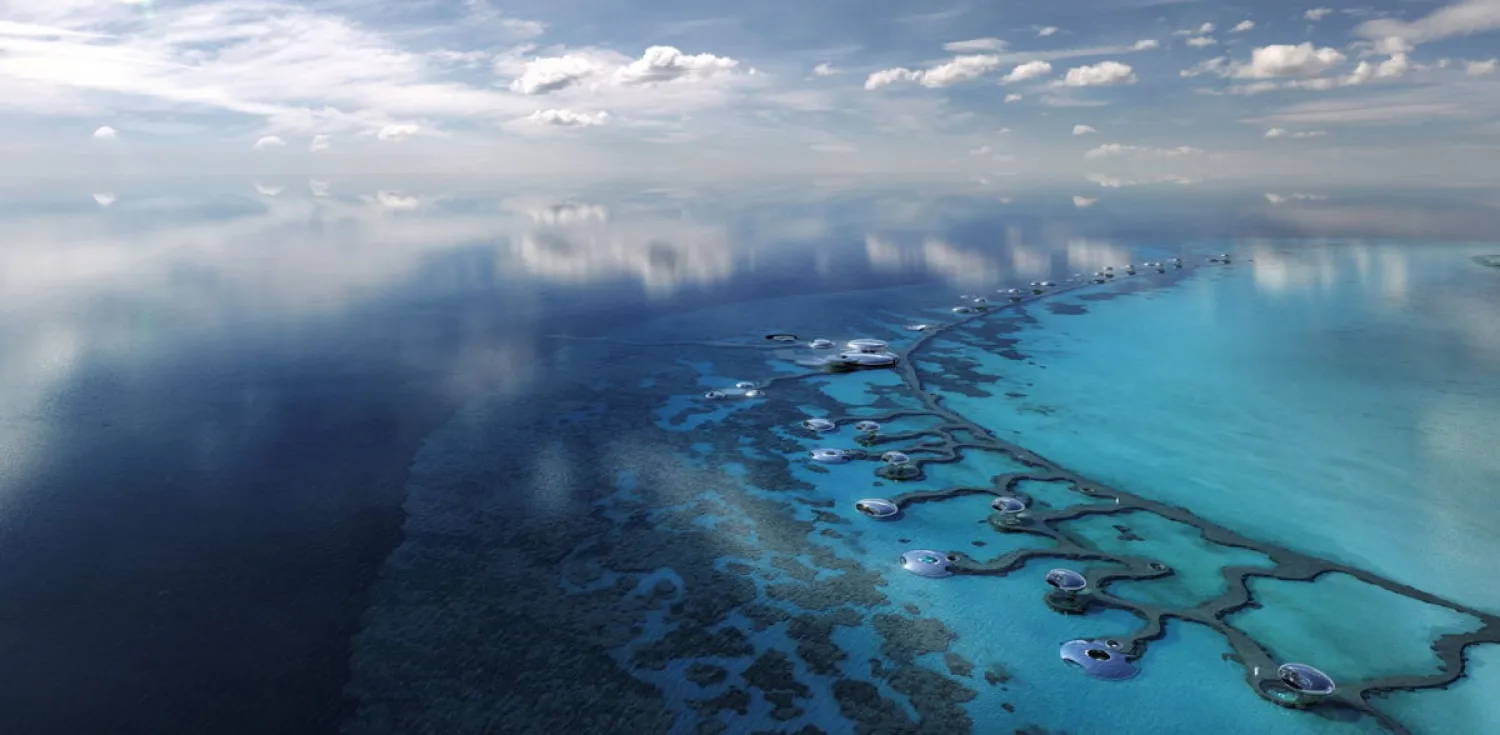
The Red Sea Development Company (TRSDC), the developer of one of the world’s most ambitious tourism projects, has received the approval of the Board of Directors for the project master plan.

The master plan was developed in partnership with WATG and Buro Hapold and included design concepts from some of the world’s most prominent architecture firms. The first phase of the project, scheduled for completion in 2022, includes 14 luxury and hyper-luxury hotels providing 3,000 rooms across five islands and two inland resorts. Phase One will also include yacht marinas, leisure and lifestyle amenities and an airport to serve the destination, as well as the necessary supporting logistics and utilities infrastructure.

The plan was informed by a series of wide-ranging environmental studies to ensure that the ecologically sensitive area is fully protected during and after development. The final master plan, which preserves some 75 percent of the destination’s islands for conservation and designates nine islands as sites of significant ecological value, required several redesigns throughout the process to avoid potentially disrupting endangered species native to the area.

“The design concepts that we have presented to the Board will provide visitors with a uniquely diverse, immersive experience while setting new standards in sustainable development, and positioning Saudi Arabia on the global tourism map,” said John Pagano, CEO of TRSDC. “With the master plan approved, we are now identifying investors and partners who are interested in working with us on realizing the objectives of the project and who share our commitment to enhance, not exploit, the natural ecosystems that make the destination so unique.”

The Red Sea Project is an integral component in Saudi Arabia's Vision 2030 strategy. The project is expected to create up to 70,000 new jobs and to contribute as a much as 22 billion Saudi riyals (USD 5.3 billion) to the nation’s GDP, by creating investment opportunities for the private sector and developing the Kingdom’s tourism industry while preserving the nation’s precious cultural and environmental heritage.

The destination will be fully completed in 2030. The approved master plan will steer the development of 22 of the 90+ islands at the destination, providing up to 10,000 hotel rooms across island resorts, mountain retreats and desert hideaways. The destination will also offer luxury residential properties and a wide range of commercial, retail and recreational facilities.

The master plan is underpinned by an extensive smart destination management system that will support a wide range of seamless, highly personalized products and services designed to appeal to the modern luxury traveller. The system will also help to manage visitor flows to ensure that everyone who comes to the destination can enjoy an experience free of over-crowding and delays.

TRSDC employed the world’s first destination-scale computer simulation techniques, created in Saudi Arabia, to assess the impact of development and future tourism on the environment. The resulting plan now targets up to 30% net increase in biodiversity over the next two decades compared to a “business as usual” scenario. This amounts to a conservation outcome equivalent to designating the site as a Marine Protected Area.

Technology further underpins the destination’s sustainability initiatives, with a suite of sensors and monitoring devices in place to track and measure variations in environmental factors such as water salinity, temperature, visibility and tidal flows among others.

TRSDC is developing a range of policies including zero waste-to-landfill, zero discharge to the sea, and zero single-use plastics, and has made a commitment to achieve 100% carbon neutrality. The destination will rely solely on renewable energy and have no connection to the national grid.

“The leadership of the Kingdom has shown great foresight in its insistence on balanced development of this pristine destination,” said John Pagano. “Our plan not only envisions a stunning luxury destination, it also takes tangible, measurable steps to enhance that destination for future generations to enjoy and cherish.”


Saudi Stocks Rebound 0.9%, Recouping Previous Session's Losses

An investor monitors stock market data on a screen at the Saudi Exchange (Tadawul) in Riyadh (Reuters)
TT

Saudi Stocks Rebound 0.9%, Recouping Previous Session's Losses

An investor monitors stock market data on a screen at the Saudi Exchange (Tadawul) in Riyadh (Reuters)

Saudi stocks closed higher on Monday, recovering some of the losses sustained in the previous session as heavyweight shares strengthened and the banking sector advanced.

The benchmark Tadawul All Share Index (TASI) rose 0.90% to close at 10,106 points, gaining 90 points. Total trading value reached approximately SAR 3.5 billion ($933 million).

The index had fallen 0.8% on Sunday amid selling pressure on heavyweight stocks.

Anaam International Holding Group, Fitaihi Holding Group and Raoom were among the session's top gainers, rising between 7% and 9% to close at SAR 11.93, SAR 2.11 and SAR 72.30, respectively.

On the losing side, Almunajem Foods led the declines, shedding 9.20% to SAR 49.94, followed by Saudi Paper Manufacturing Co., which fell 6.18% to SAR 48.88, and Alamar Foods, which dropped 4.63% to SAR 44.06.

At the sector level, banks led the gains, advancing 1.60%, supported by a 2.06% rise in Bank AlJazira shares, which closed at SAR 10.89.


Tesla to Refund Many Cybertruck Deposits as Demand Exceeds Production, Musk Says

Tesla Cybertruck electric vehicles sit parked in a storage lot in San Diego, California on April 11, 2025. (AFP)
TT

Tesla to Refund Many Cybertruck Deposits as Demand Exceeds Production, Musk Says

Tesla Cybertruck electric vehicles sit parked in a storage lot in San Diego, California on April 11, 2025. (AFP)

Tesla will have to refund Cybertruck deposits for many customers as orders far exceed production capacity, CEO Elon Musk said, following last week's announcement that the electric vehicle maker is winding down the pickup truck's production at its Texas factory.

"We will try ‌to make ‌as many as ‌possible ⁠before shutting down the ⁠line in about 8 months, but will have to return deposits for a lot of people," the billionaire said in a post on X on Monday.

The comments ⁠come after Musk said ‌Tesla would ‌add an extra production shift to fulfill outstanding ‌Cybertruck orders before dismantling the production ‌line next year to expand output of its Cybercab robotaxi.

The production winddown is slated for mid-2027, Musk announced on ‌Friday, with the resources being redirected to the Cybercab, a vehicle ⁠central ⁠to the automaker's autonomous-driving ambitions.

Tesla began delivering the Cybertruck in late 2023, but demand has fallen far short of Musk's expectations. US sales fell 48% to 20,237 units last year, according to Kelley Blue Book, well below Musk's earlier projection that annual Cybertruck sales could reach 250,000 vehicles.


China Extends Suspension of New Rare Earth Controls Until January

A mining machine is seen at the Bayan Obo mine containing rare earth minerals, in Inner Mongolia, China July 16, 2011. (Reuters)
TT

China Extends Suspension of New Rare Earth Controls Until January

A mining machine is seen at the Bayan Obo mine containing rare earth minerals, in Inner Mongolia, China July 16, 2011. (Reuters)

China on Monday announced a two-month extension of export-control waivers due to expire this month, preserving part of a wide-ranging deal struck after a summit between Presidents Xi Jinping and Donald Trump.

China introduced export controls on certain rare earths ‌in April 2025, ‌only to expand ‌them ⁠further in October ⁠of that year, dramatically widening their scope and also adding new controls on certain diamonds with industrial applications and lithium battery technology.

The measures were then ⁠paused for one year last ‌November after ‌a summit in South Korea ‌between Xi and Trump.

The Ministry of ‌Commerce said in a short statement on Monday that the pause would be extended for two months ‌until January 10. It gave no other details.

The extension ⁠is ⁠part of a broader suspension of trade countermeasures and tariffs announced by China on Monday as it negotiates with Washington over an enduring trade deal.

Trump is set to travel to Shenzhen in southern China later this month for an APEC leaders summit, where he is expected to meet with Xi.