


Russia Assures Arab Capitals of Curbing Iran Influence in Syria Before Normalization

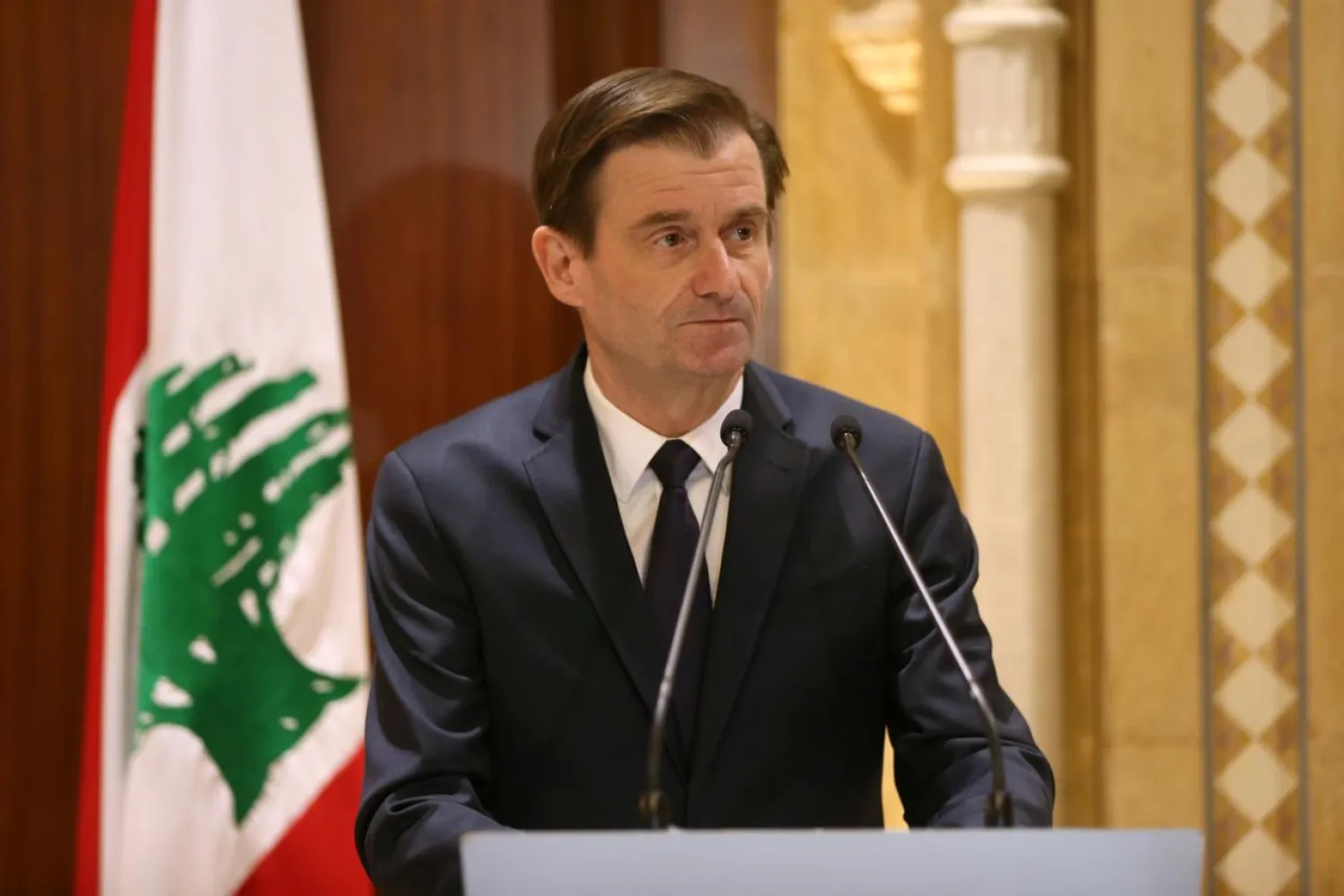
US Under-Secretary of State for Political Affairs of the Department of State talks during a news conference in Beirut, Lebanon January 14, 2019. REUTERS/Mohamed Azakir
TT

Russia Assures Arab Capitals of Curbing Iran Influence in Syria Before Normalization

US Under-Secretary of State for Political Affairs of the Department of State talks during a news conference in Beirut, Lebanon January 14, 2019. REUTERS/Mohamed Azakir

Lebanese parliamentarians quoted an Arab ambassador to Beirut as saying that his government, along with other Arab governments, have received assurances from senior authorities in Moscow that Russia was serious in curbing Iranian influence in Syria. This comes as several Arab states are currently studying the possibility to normalize relations with Damascus.

The deputies told Asharq Al-Awsat that the United Arab Emirates, which reopened its embassy in Damascus, would only be appointing a Chargé d'Affaires at the current stage, instead of an ambassador.

The ambassador said that it was too early to upgrade the diplomatic representation between the UAE and Syria and that the role of the UAE embassy remained within the scope of providing humanitarian assistance and relief to those in need, due to the deterioration of their living and social conditions as a result of the war.

In this context, a Lebanese politician, who took part in the meetings held by US Under-Secretary of State David Hale with Lebanese state officials, said that the US envoy spoke clearly about Washington’s position towards the willingness of Arab countries to reopen their embassies in Damascus.

The politician quoted Hale as saying that the US administration did not encourage Arab countries to reopen their embassies, because such a move could lead the regime in Syria to decrease its support for international efforts to find a solution to the crisis, hence delay the launching of the reconstruction process.

In other words, the same politician said that Washington did not encourage steps to reopen embassies without any political price in return.

Quoting Hale, the politician said the visit of US Secretary of State Mike Pompeo to a number of countries in the region has resulted in the initiative of several Arab countries to postpone the opening of embassies in Damascus at the present time.

The Lebanese politician said he did not believe that the normalization of relations between Arab countries and Damascus would curb the Iranian political and military influence, stressing that Moscow and Tehran would not be pushed towards any clash in Syria.



Iraqi Guards Threatened by ISIS Prisoners

US military vehicles move along a road in a convoy transporting ISIS detainees being transferred to Iraq from Syria, on the outskirts of Qahtaniyah in Syria's northeastern Hasakah province on February 7, 2026. (Photo by Delil SOULEIMAN / AFP)
TT

Iraqi Guards Threatened by ISIS Prisoners

US military vehicles move along a road in a convoy transporting ISIS detainees being transferred to Iraq from Syria, on the outskirts of Qahtaniyah in Syria's northeastern Hasakah province on February 7, 2026. (Photo by Delil SOULEIMAN / AFP)

Iraq is continuing to transfer prisoners believed to be mostly ISIS members to its own detention facilities under a previous arrangement with Washington and the US-led coalition fighting the group, Iraqi security sources said.

The move is aimed at preventing jailbreaks following unrest last month in parts of northeastern Syria, which host camps and prisons holding thousands of ISIS fighters and their families.

Iraqi security officials said some detainees threatened Iraqi soldiers and guards during the transfer process, telling them, “We will kill you when we escape from prison,” an indication that the group’s violent ideology persists even while its members are in custody.

Iraq formally agreed last month to receive thousands of ISIS detainees held in northeastern Syria under the control of the Syrian Democratic Forces, a step the government described as preemptive to protect national security and prevent escapes, particularly given the fragile security situation in the area.

At the end of January, Iraq’s National Security Ministerial Council approved the formation of a high-level security committee to fully oversee the transfer process and the handling of detainees, including security, judicial, and logistical aspects.

Prosecutions

The Security Media Cell said on Saturday that Iraq had received 2,250 militants from the Syrian side and had begun judicial classification procedures “in accordance with Iraqi laws in force related to counterterrorism.”

The head of the Security Media Cell, Lt. Gen. Saad Maan, told the state news agency that Iraq had received the 2,250 militants by land and air in coordination with the international coalition, following extensive efforts by the security forces, and that they were being held in tightly secured official facilities.

Maan said the government and security forces were fully prepared to deal with the numbers “to avert danger not only from Iraq, but globally,” adding that specialized teams had started initial investigations and classifying the detainees according to their level of risk, as well as recording their confessions under direct judicial supervision.

He said all those involved in crimes against Iraq and affiliated with ISIS would be tried before competent Iraqi courts, noting that the foreign ministry was in continuous contact with several countries regarding detainees of other nationalities.

He added that the process of handing over militants to their home countries would begin once legal requirements were completed. At the same time, security agencies continued their field and investigative duties in the case.

In the same context, the Supreme Judicial Council announced last week the opening of investigation procedures into 1,387 ISIS members who were recently received from Syrian territory.

Former judge Rahim al-Uqaili previously told Asharq Al-Awsat that detainees transferred from Syria could be tried before Iraqi criminal courts if they were charged with committing crimes outside Iraq that affected internal or external state security, among other offenses.

He expressed doubt, however, about the possibility of obtaining conclusive evidence in some cases.

Tight transfer measures

Security sources told Asharq Al-Awsat that most detainees transferred from Syria were being held in prisons and detention centers in Baghdad and Hilla, both of which host highly fortified facilities.

They said the Counter Terrorism Service was supervising the transport and distribution process, adding that detainees’ hands and feet were bound and their faces covered. Some hurled insults and direct death threats at guards if they managed to escape, while others remained silent.

The sources said security personnel had strict orders not to speak with or interact with detainees, and that most guards were unaware of the detainees' nationalities, as part of measures aimed at reducing risks and preventing communication or security breaches.


Head of Arab World Institute in Paris Resigns over Epstein-linked tax Fraud Probe

(FILES) France's former culture minister and president of Paris's famed Arab World Institute (AWI), Jack Lang, poses on January 28, 2013 in Paris. (Photo by Martin BUREAU / AFP)
TT

Head of Arab World Institute in Paris Resigns over Epstein-linked tax Fraud Probe

(FILES) France's former culture minister and president of Paris's famed Arab World Institute (AWI), Jack Lang, poses on January 28, 2013 in Paris. (Photo by Martin BUREAU / AFP)

France’s former Culture Minister Jack Lang has resigned as head of a Paris cultural center over alleged past financial links to convicted sex offender Jeffrey Epstein that prompted a tax investigation.

Lang was summoned to appear at the French Foreign Ministry, which oversees the Arab World Institute, on Sunday, but he submitted his resignation.

He is the highest-profile figure in France impacted by the release of Epstein files on Jan. 30 by the US Department of Justice, known for his role as a culture minister under Socialist President François Mitterrand in the 1980s and 1990s.

The Foreign Ministry confirmed his resignation Saturday evening.

The financial prosecutors' office said it had opened an investigation into Lang and his daughter, Caroline, over alleged “aggravated tax fraud laundering.”

French investigative news website Mediapart reported last week on alleged financial and business ties between the Lang family and Jeffrey Epstein through an offshore company based in the US Virgin Islands in the Caribbean Sea.

Jack Lang's name was mentioned more than 600 times in the Epstein files, showing intermittent correspondence between 2012 and 2019. His daughter was also in the released files.

Foreign Minister Jean-Noël Barrot has “taken note” of Lang's resignation and began the process to look for his successor, the foreign ministry said.
Lang headed the Arab World Institute since 2013.


Lebanon PM Pledges Reconstruction on Visit to Ruined Border Towns

This handout picture released by the Lebanese Government Press Office shows Lebanon's Prime Minister Nawaf Salam being showered with confetti as he is received by locals during a tour in the heavily-damaged southern village of Dhayra near the border with Israel on February 7, 2026. (Lebanese Government Press Office / AFP)
TT

Lebanon PM Pledges Reconstruction on Visit to Ruined Border Towns

This handout picture released by the Lebanese Government Press Office shows Lebanon's Prime Minister Nawaf Salam being showered with confetti as he is received by locals during a tour in the heavily-damaged southern village of Dhayra near the border with Israel on February 7, 2026. (Lebanese Government Press Office / AFP)

Lebanese Prime Minister Nawaf Salam visited heavily damaged towns near the Israeli border on Saturday, pledging reconstruction.

It was his first trip to the southern border area since the army said it finished disarming Hezbollah there, in January.

Swathes of south Lebanon's border areas remain in ruins and largely deserted more than a year after a US-brokered November 2024 ceasefire sought to end hostilities between Israel and the Iran-backed group.

Lebanon's government has committed to disarming Hezbollah, and the army last month said it had completed the first phase of its plan to do so, covering the area between the Litani River and the Israeli border about 30 kilometers (20 miles) further south.

Visiting Tayr Harfa, around three kilometers from the border, and nearby Yarine, Salam said frontier towns and villages had suffered "a true catastrophe".

He vowed authorities would begin key projects including restoring roads, communications networks and water in the two towns.

Locals gathered on the rubble of buildings to greet Salam and the delegation of accompanying officials in nearby Dhayra, some waving Lebanese flags.

In a meeting in Bint Jbeil, further east, with officials including lawmakers from Hezbollah and its ally the Amal movement, Salam said authorities would "rehabilitate 32 kilometers of roads, reconnect the severed communications network, repair water infrastructure" and power lines in the district.

Last year, the World Bank announced it had approved $250 million to support Lebanon's post-war reconstruction, after estimating that it would cost around $11 billion in total.

Salam said funds including from the World Bank would be used for the reconstruction and rehabilitation projects.

The second phase of the government's disarmament plan for Hezbollah concerns the area between the Litani and the Awali rivers, around 40 kilometers south of Beirut.

Israel, which accuses Hezbollah of rearming, has criticized the army's progress as insufficient, while Hezbollah has rejected calls to surrender its weapons.

Despite the truce, Israel has kept up regular strikes on what it usually says are Hezbollah targets and maintains troops in five south Lebanon areas.

Lebanese officials have accused Israel of seeking to prevent reconstruction in the heavily damaged south with repeated strikes on bulldozers, excavators and prefabricated houses.

Visiting French Foreign Minister Jean-Noel Barrot on Friday said the reform of Lebanon's banking system needed to precede international funding for reconstruction efforts.

The French diplomat met Lebanon's army chief Rodolphe Haykal on Saturday, the military said.