


Hariri Calls On Italy to Increase Investment in Lebanon

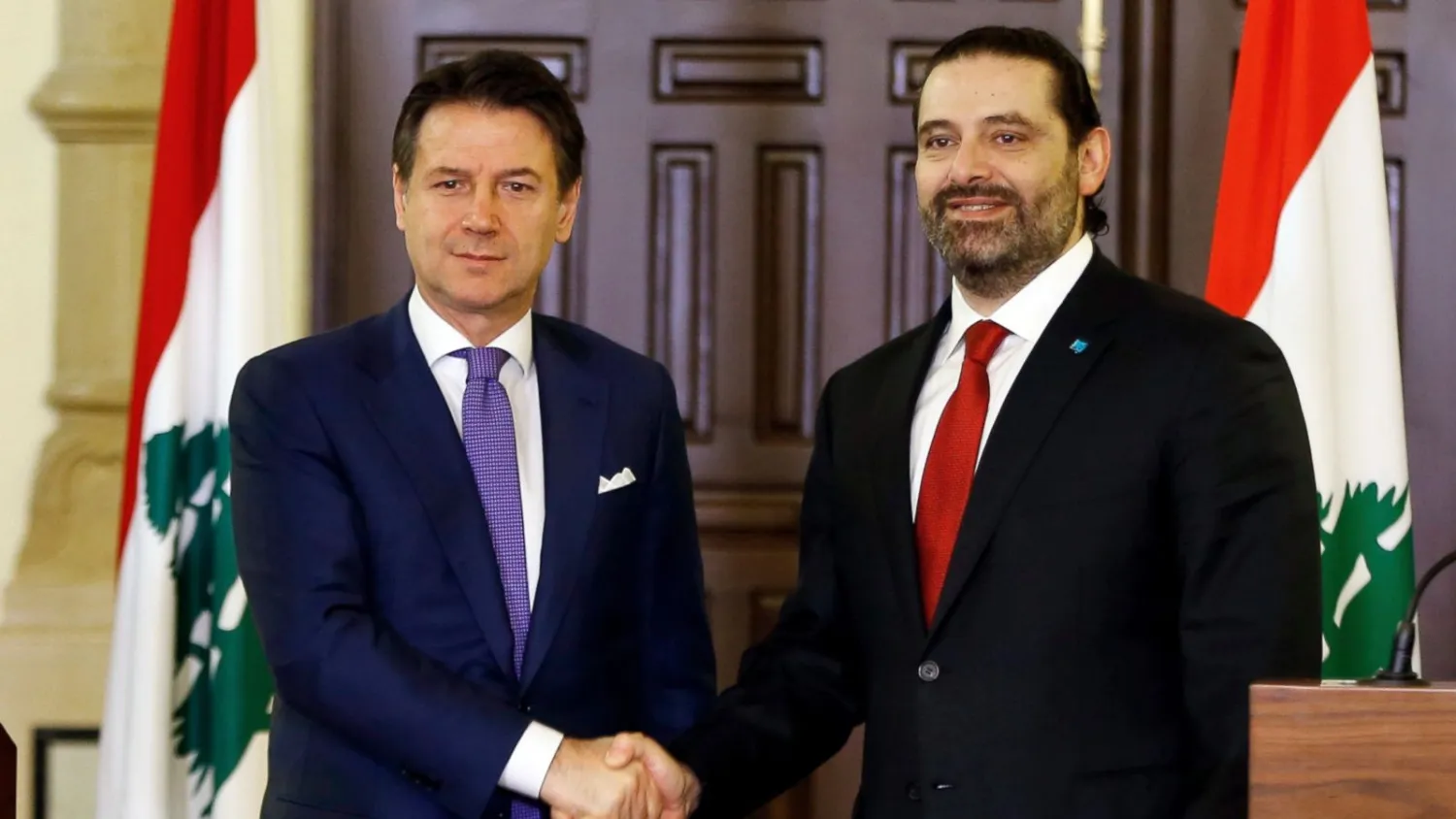
Italian Prime Minister Giuseppe Conte, left, shakes hands with his Lebanese counterpart Saad Hariri after a joint press conference, at the Government House in Beirut, Lebanon, Thursday, Feb. 7, 2019. (AP Photo/Bilal Hussein)
TT

Hariri Calls On Italy to Increase Investment in Lebanon

Italian Prime Minister Giuseppe Conte, left, shakes hands with his Lebanese counterpart Saad Hariri after a joint press conference, at the Government House in Beirut, Lebanon, Thursday, Feb. 7, 2019. (AP Photo/Bilal Hussein)

Lebanon's Prime Minister has called on Italian companies to invest in his country as it seeks to address deepening economic challenges.

Saad Hariri met with his Italian counterpart, Giuseppe Conte, at the Grand Serail in Beirut on Thursday.

The two Prime Ministers then held a meeting attended by Minister Jamal Jarrah, former minister Ghattas Khoury, the Italian Ambassador to Lebanon Massimo Marotti and the Secretary General of the Council of Ministers Fouad Fleifel.

After Hariri and Conte held a closed meeting, they toured parts of the Serail and held a joint press conference.

Hariri lauded the relations between Lebanon and Italy and said that "the coming period in Lebanon is a period of work ... with many investment opportunities."

"The relations between Lebanon and Italy are historic and deeply rooted, and we will work together in the next phase to develop and activate them on all levels, especially at the economic, trade and investment levels," Hariri said.

"Italy has always been at the forefront of Lebanon's commercial partners in terms of our imports, which we hope will apply to Lebanese exports to Italy in the near future."

Italy is a traditional trading partner of Lebanon, has invested in its gas and oil sector and also supports Lebanese military and security forces. Rome has over 1,000 peacekeepers in the UN force monitoring the ceasefire with Israel.

Hariri said he's "convinced that Lebanon can be a regional center for the Italian private sector."

For his part, Conte said that Italy is ready to invest in Lebanon and Italian companies are willing to offer their expertise to their Lebanese counterparts.

"We agreed to organize a visit for Lebanese Prime Minister Saad Hariri to Italy to encourage Italian companies to invest in development projects in Lebanon," Conte said.

He said that Italy will continue to support Lebanon on all levels, stressing the strong friendship between the two countries "based on mutual respect and a common Mediterranean identity."

"Italy has long stood by the Lebanese institutions and the Lebanese people and will continue to contribute to the peace process, to dialogue and to social cohesion."

Furthermore, Hariri thanked Italian companies that are active in fields such as oil and gas and electricity.

"We want to encourage these companies to come and explore investment opportunities in Lebanon," he said.

Hariri added that Lebanon is about to implement numerous infrastructure projects under the framework of CEDRE in which Italian companies can have a stake.

The CEDRE is an international conference in support of Lebanon's development and reforms. Hariri's government hopes to unlock around $11 billion in soft loans and grants pledged by international donors in Paris last year.

Hariri also expressed his gratitude for Italy for always standing beside Lebanon while providing humanitarian and military assistance.

Later in the day, the Italian prime minister will meet with Lebanese President Michel Aoun and Parliament Speaker Nabih Berri and visit Italy's UNIFIL (the UN Interim Forces in Lebanon) contingent.

Yemen Rejects Iran's Mediation Bid While It Continues to Arm Houthis

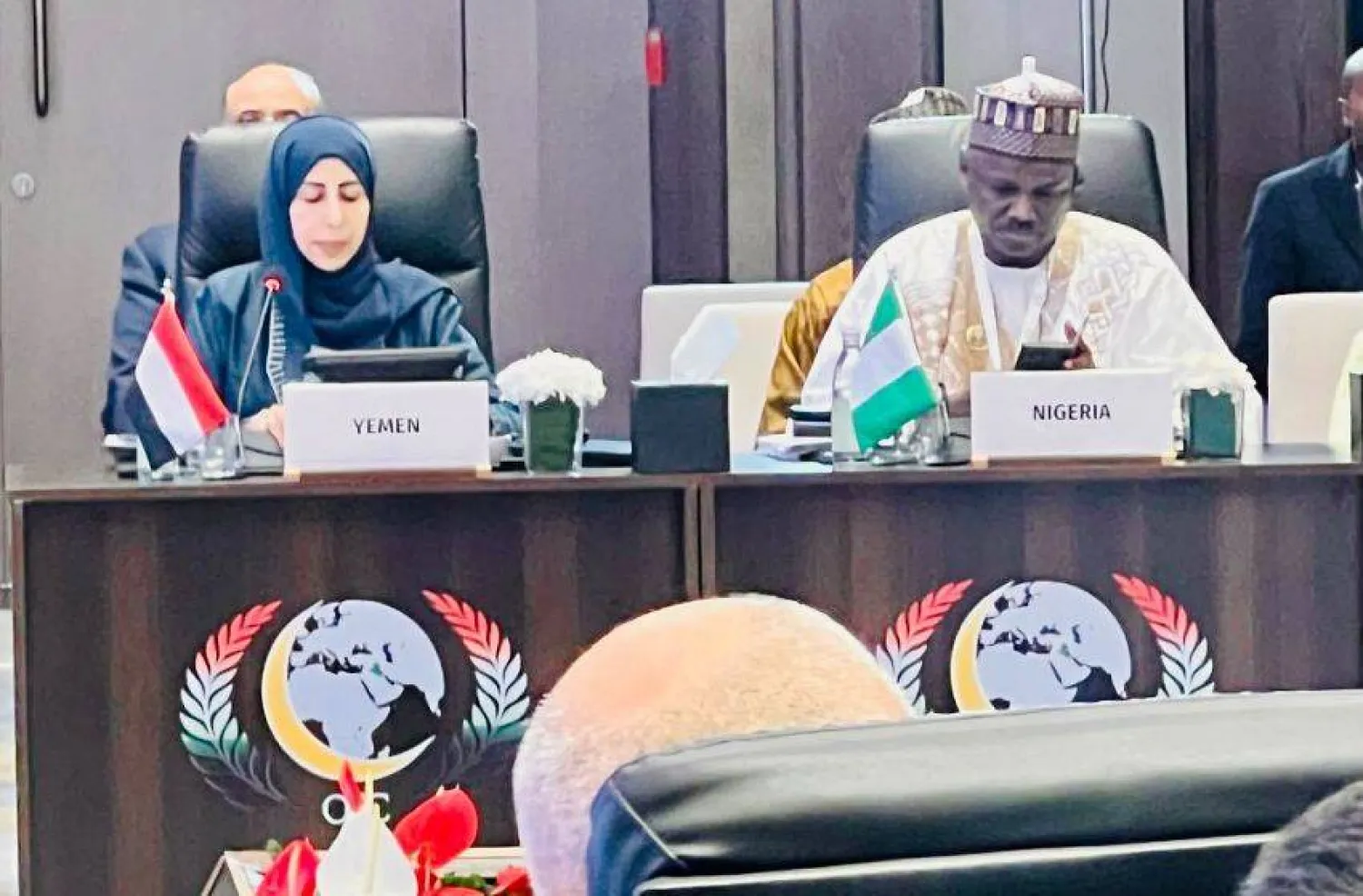
Al-Zouba called on the Islamic world to cut off funding and arms supplies to the Houthis (SABA)
TT

Yemen Rejects Iran's Mediation Bid While It Continues to Arm Houthis

Al-Zouba called on the Islamic world to cut off funding and arms supplies to the Houthis (SABA)

The Yemeni government has rejected Iran's attempts to position itself as a mediator in the country's war, holding Tehran responsible for supporting the Houthi takeover and prolonging the conflict by supplying the group with weapons, funding, training, missiles, drones and military experts.

Foreign Minister Afrah Al-Zouba said Iran had made itself a party to the war against the Yemeni people and should end its military support for the Houthis and respect national sovereignty and the principles of good neighborliness rather than offer to mediate. Her remarks reflect the government's efforts to move beyond political accusations against Tehran and press for international action against the sources of the group's weapons.

Speaking on the sidelines of the 52nd session of the Council of Foreign Ministers of the Organization of Islamic Cooperation (OIC) in the Iraqi capital, Baghdad, Al-Zouba said Tehran could not arm one party to a conflict and then present itself as a mediator seeking to end it.

She argued that Iran's attempts to portray the war as a conflict between Yemen and Saudi Arabia ignored the reality of an armed group's takeover of the Yemeni state.

The minister accused the Iranian regime of using Yemen as a bargaining chip and channeling pressure directed at Tehran into attacks whose costs are borne by the people of the region, international trade and global markets.

She noted that the Houthis had rejected regional and international peace initiatives, including a Saudi-proposed roadmap, and exploited periods of de-escalation to regroup and strengthen their military capabilities.

Tehran's Responsibility

Al-Zouba also rejected Iran's attempts to portray the Houthis as Yemen's legitimate representatives or describe them as the "Yemeni Armed Forces."

She stressed that Tehran's dealings with the group did not grant it the legitimacy to represent the Yemeni state or give the Iranian regime authority over Yemen's sovereign decisions.

The minister also rejected efforts to characterize the campaign to restore state institutions as a conflict between Yemen and Saudi Arabia.

She said Houthi claims that the group acts according to its own interests and calculations did not absolve Iran of responsibility for arming it and enabling it to continue its attacks.

Al-Zouba cited several Iranian actions that she described as violations of Yemeni sovereignty, including the handover of Yemen's diplomatic premises in Tehran to a Houthi representative in November 2019.

She also pointed to the smuggling of an Islamic Revolutionary Guard Corps (IRGC) officer into Sanaa in October 2020 and his appointment as ambassador to the Houthis, as well as flights operated to Sanaa airport in July 2026 without the internationally recognized government's approval.

The minister accused Tehran of continuing to interfere in Yemen's affairs despite the severing of diplomatic relations in October 2015, describing those actions as violations of the rules governing relations between states, Yemeni sovereignty and the Vienna Convention on Diplomatic Relations.

Al-Zouba linked these accusations to the ongoing military escalation in Yemen, citing Houthi ballistic missile attacks on Maashiq Palace, the seat of the presidency and government in the temporary capital, Aden.

She also pointed to the continued siege of Taiz and shelling of residential neighborhoods, alongside attacks targeting Saudi Arabia and threatening international shipping.

Call for Islamic Action

Amid what she described as growing threats, the Yemeni foreign minister urged OIC member states to take a firm stance against the Houthis, designate the group a terrorist organization, cut off its funding sources and halt the flow of weapons and military expertise to its forces.

She stressed that the continuation of the war could not be separated from Iranian military and technical support, warning against allowing Yemeni territory to become a launching pad for threats to regional security.

Al-Zouba called for Islamic solidarity to move beyond declarations and translate into practical measures that protect member states and their resources while countering foreign interference that fuels conflicts.

She also urged the international community to enforce the arms embargo on the Houthis under UN Security Council Resolutions 2216 and 2624, hold the group's financiers accountable and support the Yemeni government in restoring state institutions and extending its authority throughout the country.

Al-Zouba emphasized that Yemen's security was closely tied to that of its neighbors and that confronting Iranian interference required ending support for armed proxies and safeguarding national sovereignty.

She also highlighted Saudi Arabia's continued support for Yemen through economic, humanitarian and development assistance.

On the political front, the minister said the Yemeni government, which had remained committed to pursuing peace for 12 years, would not accept a political process that served as cover to legitimize the Houthi takeover or allow weapons to remain outside state institutions.

She stressed that a just and lasting peace required respect for Yemen's sovereignty, unity and territorial integrity, the restoration of its institutions and adherence to the agreed framework for a political settlement, foremost among them UN Security Council Resolution 2216.

The remarks came as Operation Dawn of Yemen, launched by Presidential Leadership Council Chairman Rashad al-Alimi, continued its campaign to restore state institutions and extend government authority across the country's entire territory, according to the government.


US Ambassador Condemns Israeli Settler Attack on American Journalist

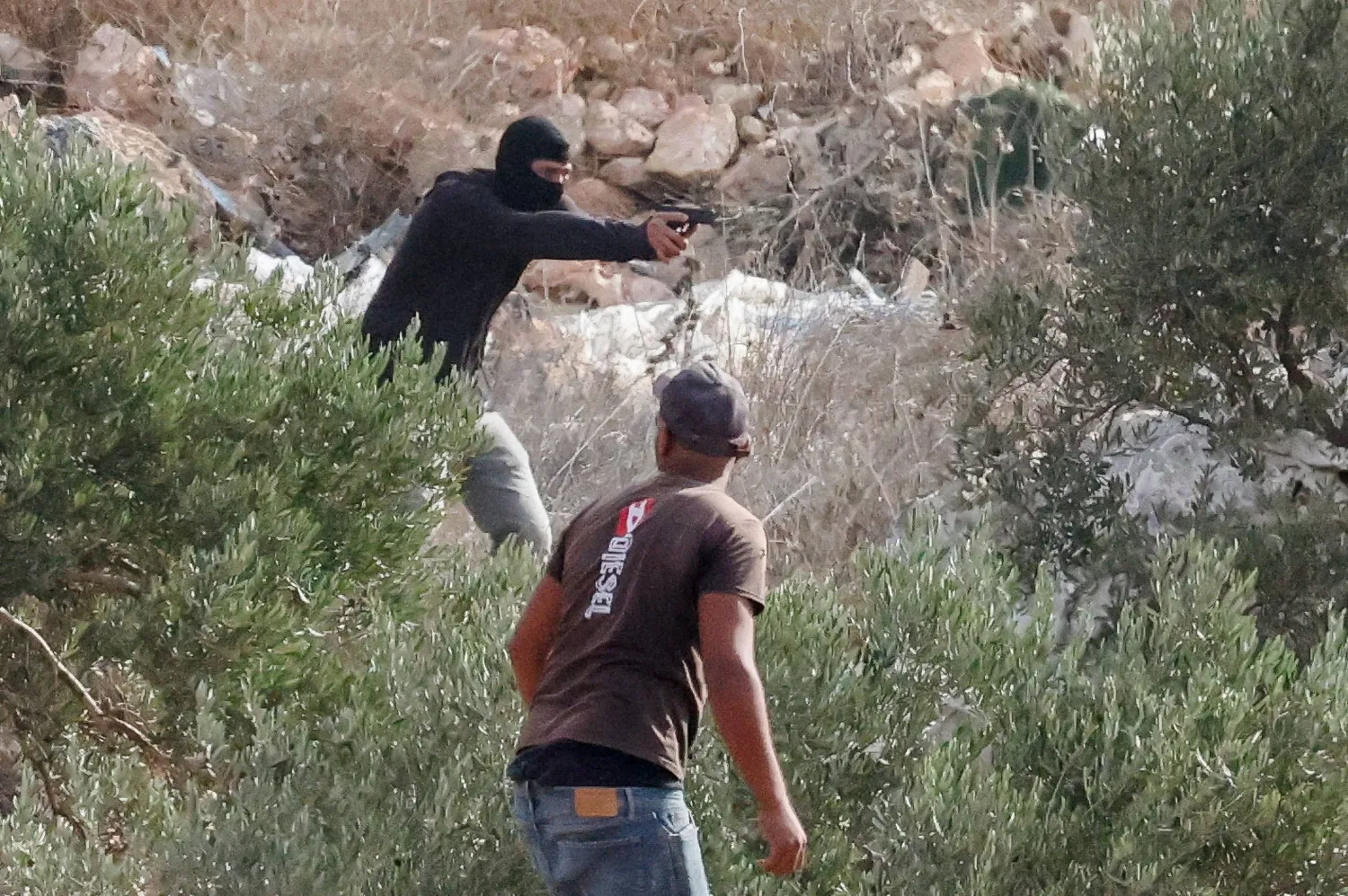
An Israeli settler points a gun amid clashes with Palestinians harvesting olives in Abu Falah near Ramallah in the Israeli-occupied West Bank, October 16, 2026. (Reuters)
TT

US Ambassador Condemns Israeli Settler Attack on American Journalist

An Israeli settler points a gun amid clashes with Palestinians harvesting olives in Abu Falah near Ramallah in the Israeli-occupied West Bank, October 16, 2026. (Reuters)

US Ambassador to Israel Mike Huckabee sharply condemned on Sunday settler violence during an olive harvest in the West Bank that injured several Palestinians and Washington Post photographer Heidi Levine as “a despicable act of terror carried out by masked cowards.”

In a post late Saturday on X, he called for “a full investigation, arrest, and prosecution to the fullest extent of the law to whoever participated in this.”

Levine was seriously injured in the attack Friday in the West Bank village of Abu Falah. Israeli police are also investigating an attack by Israeli settlers on European diplomats Saturday in another West Bank village.

Settler violence against Palestinians has soared this year and spiked further in recent weeks as Israel plans to hold elections Oct. 27.

Israeli Prime Minister Benjamin Netanyahu was ambiguous in addressing Levine’s assault, condemning “violence against anyone” but referring to the attack as “alleged” and saying its circumstances remain unclear.

Huckabee said Levine’s assault was “vicious” and “dishonorable,” and noted that she was clearly identified as a journalist when she was attacked.

Levine, an award-winning photojournalist who has covered conflict zones around the world for more than four decades, remains hospitalized in Tel Aviv as she recovers from hand surgery, broken ribs and other injuries she sustained in the attack.

She said she was forced to the ground and beaten for more than 10 minutes by the settlers, who also stole her camera, passport and phone.

The Washington Post reiterated its call for a full and transparent investigation, though Israel rarely investigates settler violence fully. Yesh Din, an Israeli rights group, says around 94% of investigations into settler violence since 2005 have ended without an indictment, with just 3% leading to full or partial convictions.


US Wants Israel to ‘Crack Down’ on Settler Violence in West Bank, Rubio Says

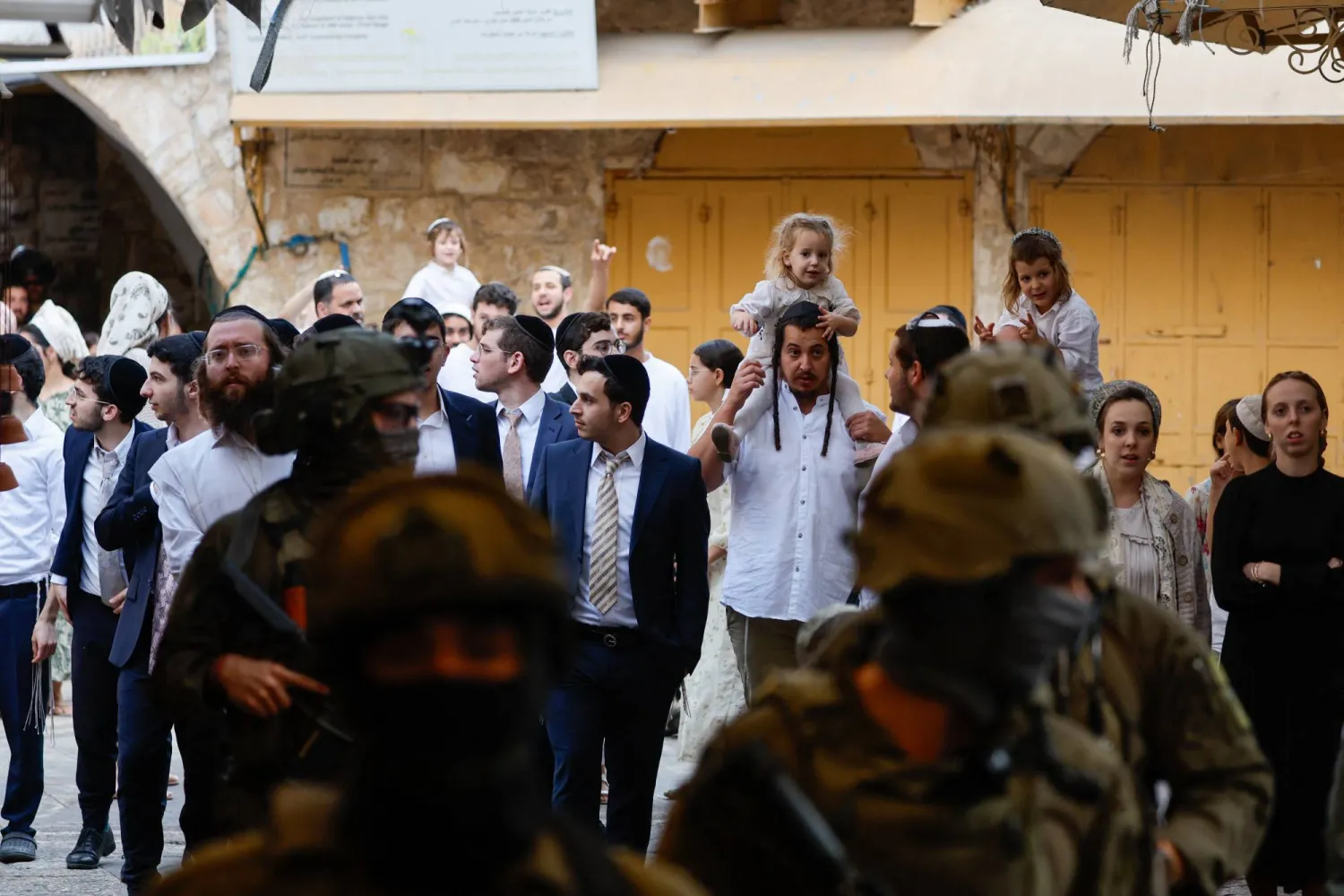
 Israeli forces keep watch during Israeli settlers' weekly tour in Hebron, in the Israeli-occupied West Bank, October 17, 2026. (Reuters)
Israeli forces keep watch during Israeli settlers' weekly tour in Hebron, in the Israeli-occupied West Bank, October 17, 2026. (Reuters)
TT

US Wants Israel to ‘Crack Down’ on Settler Violence in West Bank, Rubio Says

 Israeli forces keep watch during Israeli settlers' weekly tour in Hebron, in the Israeli-occupied West Bank, October 17, 2026. (Reuters)
Israeli forces keep watch during Israeli settlers' weekly tour in Hebron, in the Israeli-occupied West Bank, October 17, 2026. (Reuters)

The United States wants Israel to do more to deter attacks committed by settlers in the West Bank, US Secretary of State Marco Rubio said on Saturday.

"We're very disturbed by those images and what we're seeing," Rubio said. "We've asked the Israelis and continue to ask them ‌to crack ‌down on that stuff."

His ‌comments ⁠to reporters came ⁠after the widespread dissemination of video showing multiple individuals attacking Heidi Levine, an American photojournalist with the Washington Post. Levine was one of at least two people injured in the Friday ⁠incident, which took place ‌as Israeli settlers ‌attacked Palestinian civilians.

European diplomats and a French ‌mayor also were attacked in the occupied ‌West Bank, Belgium's foreign minister said.

The US State Department, Rubio said, has inquired about the event that included Levine's ‌attack. Rubio, who spoke to reporters before boarding a flight to ⁠Uzbekistan, ⁠said he expects to hear back from the US Embassy in Jerusalem by Sunday.

Israeli settlers in the West Bank have been involved in at least 170 attacks on Palestinians since September 27, around the start of the annual olive harvest, according to Yesh Din, an Israeli settlements monitoring group.