


Iran’s FM: Israel Is Looking for War

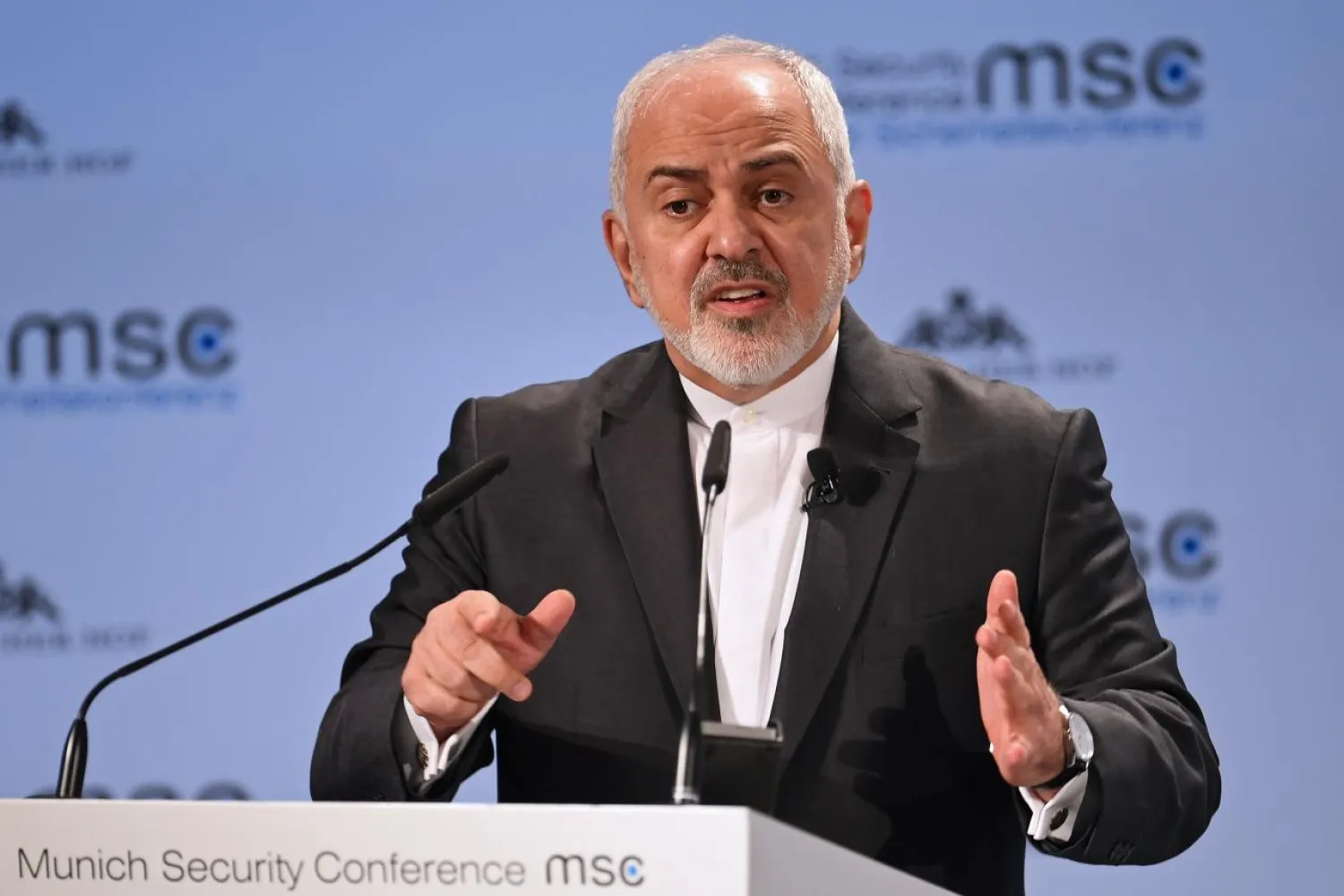
Iran's Foreign Minister Mohammad Javad Zarif speaks during the annual Munich Security Conference in Munich, Germany February 17, 2019. (Reuters)
TT

Iran’s FM: Israel Is Looking for War

Iran's Foreign Minister Mohammad Javad Zarif speaks during the annual Munich Security Conference in Munich, Germany February 17, 2019. (Reuters)

Iran's foreign minister on Sunday accused Israel of looking for war and warned that its actions and those of the United States were increasing the chances of a clash in the region.

Addressing the Munich Security Conference (MSC), in Germany, Zarif indicated that some people, such as Israel, are looking for war.

“The risk is great. The risk will be even greater if you continue to turn a blind eye to severe violations of international law.”

The FM accused Israel of violating international law after bombing campaigns in Syria, and criticized European powers for not calling out Israel and the United States for their behavior in the region.

“Israeli behavior is putting international law on the shelf, US behavior is putting international law on the shelf.”

Reuters reported that Israeli Prime Minister Benjamin Netanyahu said Iranian belligerence was the main destabilizing factor in the entire Middle East.

“We must deny Iran nuclear weaponry and block its military entrenchment in Syria. We will continue taking constant action to ensure Israel’s security,” Netanyahu said.

Zarif criticized the US administration after Vice-President Pence maintained his harsh rhetoric against Tehran and called on the EU powers to withdraw from the nuclear deal.

Zarif said the US had an “unhealthy” and “pathological obsession” with Iran and accused Pence of trying to bully his allies.

“All in the name of containing Iran, the US claims, and some blindly parrot, that it is Iran that is interfering in the region, but has it been asked whose region?”

He also indicated that US troops have traveled “10,000 kilometers to dot all our borders with its bases. There is a joke that it is Iran that put itself in the middle of US bases.”

Zarif refused to comment on Western remarks regarding Iran’s ballistic missile program. He accused European countries of repeating US rhetoric, denying Tehran had violated UN Resolution 2231.

The Foreign Minister claimed that Iran needs to develop missiles to defend itself.

“I cannot leave the door open for some to attack my country and harm its people. In Iran, there are many people who are still suffering from the chemical weapons that Europeans sold to Saddam’s regime.”

Zarif, who said Iran was committed to the 2015 nuclear deal with world powers for now, also accused France, Britain and Germany of not doing enough to ensure Tehran received the economic benefits of that accord.

These three countries set up the Instrument In Support Of Trade Exchanges (INSTEX), a new channel for non-dollar trade with Iran to avoid US sanctions.

“INSTEX falls short of commitments by the E3 (France, Germany, Britain) to save the nuclear deal.”

Europe needs to be willing to get wet if it wants to swim against the dangerous tide of US unilateralism, Zarif noted.

Asked how long the deal could survive, he replied: “I am not a fortune-teller so I don't know”.

The Minister referred to recent polls showing about 51 percent of the public believe Iran should stay in JCPOA.

“We believe it is in our interest but we believe it is at the same time in the interest of Europe to stay in the deal.”

Zarif responded to European criticism of Iran’s human rights, guaranteeing that rights and freedoms of the Iranian people are a national security issue for the government.

“There are a number of shortcomings in relation to the Iranian government's responsibilities with regards to its own citizens, but this is a domestic Iranian issue, and unrelated to Europe, and should not concern Europe,” he admitted.

“Human rights is an essential security issue for us, and we don't regard it as an ethical issue. The United States of America and Europe, given their own human rights records, are not in a position to lecture us on human rights or to pass judgment on human rights.”

Zarif also rejected accusations that Iran was responsible for assassinations on European soil, saying the arrest of Asadullah al-Asadi, an Iranian diplomat at the Iranian Embassy in Vienna, was based on false accusations.

While politicians were discussing security matters, streets outside the conference were taken by an Iranian opposition protest, describing Zarif as the "Foreign Minister of a terrorist regime". Protesters called for sanctions on Iranian Revolutionary Guard Corps (IRGC) for assassinations in Europe.

Iran's Supreme Leader Urges Iranians to Show 'Resolve' against Foreign Pressure

Iran's supreme leader Ali Khamenei on (File Photo/Supreme Leader's website).
TT

Iran's Supreme Leader Urges Iranians to Show 'Resolve' against Foreign Pressure

Iran's supreme leader Ali Khamenei on (File Photo/Supreme Leader's website).

Iran's supreme leader Ali Khamenei on Monday called on his compatriots to show "resolve" ahead of the anniversary of the 1979 Islamic revolution this week.

Since the revolution, "foreign powers have always sought to restore the previous situation", Ali Khamenei said, referring to the period when Iran was under the rule of shah Reza Pahlavi and dependent on the United States, AFP reported.

"National power is less about missiles and aircraft and more about the will and steadfastness of the people," the leader said, adding: "Show it again and frustrate the enemy."


UK PM's Communications Director Quits

British Prime Minister Keir Starmer delivers a speech at Horntye Park Sports Complex in St Leonards, Britain, February 05, 2026. Peter Nicholls/Pool via REUTERS
TT

UK PM's Communications Director Quits

British Prime Minister Keir Starmer delivers a speech at Horntye Park Sports Complex in St Leonards, Britain, February 05, 2026. Peter Nicholls/Pool via REUTERS

British Prime Minister Keir Starmer's director of communications Tim Allan resigned on Monday, a day after Starmer's top aide Morgan McSweeney quit over his role in backing Peter Mandelson over his known links to Jeffrey Epstein.

The loss of two senior aides ⁠in quick succession comes as Starmer tries to draw a line under the crisis in his government resulting from his appointment of Mandelson as ambassador to the ⁠US.

"I have decided to stand down to allow a new No10 team to be built. I wish the PM and his team every success," Allan said in a statement on Monday.

Allan served as an adviser to Tony Blair from ⁠1992 to 1998 and went on to found and lead one of the country’s foremost public affairs consultancies in 2001. In September 2025, he was appointed executive director of communications at Downing Street.


Road Accident in Nigeria Kills at Least 30 People

FILE PHOTO: A police vehicle of Operation Fushin Kada (Anger of Crocodile) is parked on Yakowa Road, as schools across northern Nigeria reopen nearly two months after closing due to security concerns, following the mass abductions of school children, in Kaduna, Nigeria, January 12, 2026. REUTERS/Nuhu Gwamna/File Photo
TT

Road Accident in Nigeria Kills at Least 30 People

FILE PHOTO: A police vehicle of Operation Fushin Kada (Anger of Crocodile) is parked on Yakowa Road, as schools across northern Nigeria reopen nearly two months after closing due to security concerns, following the mass abductions of school children, in Kaduna, Nigeria, January 12, 2026. REUTERS/Nuhu Gwamna/File Photo

At least 30 people have been killed and an unspecified number of people injured in a road accident in northwest Nigeria, authorities said.

The accident occurred Sunday in Kwanar Barde in the Gezawa area of Kano state and was caused by “reckless driving” by the driver of a truck-trailer, Gov. Abba Yusuf said in a statement. He did not specify what other vehicles were involved.

Yusuf described the accident as “heartbreaking and a great loss” to the affected families and the state. He did not provide more details of the accident, said The Associated Press.

Africa’s most populous country recorded 5,421 deaths in 9,570 road accidents in 2024, according to data by the country’s Federal Road Safety Corps.

Experts say a combination of factors including a network of bad roads, lax enforcement of traffic laws and indiscipline by some drivers produce the grim statistics.

In December, boxing heavyweight champion Anthony Joshua was in a deadly car crash that injured him and killed Sina Ghami and Latif “Latz” Ayodele, two of his friends, in southwest Nigeria.

Adeniyi Mobolaji Kayode, Joshua’s driver, was charged with dangerous and reckless driving and his trial is scheduled to begin later this month.

Africa has the highest road fatality rate in the world despite having only about 3% of the world’s vehicles, mainly due to weak enforcement of road laws, poor infrastructure and widespread use of unsafe transport.
