


Ex-Qatar PM Helped Barclays Take Advantage of Doha’s Wealth

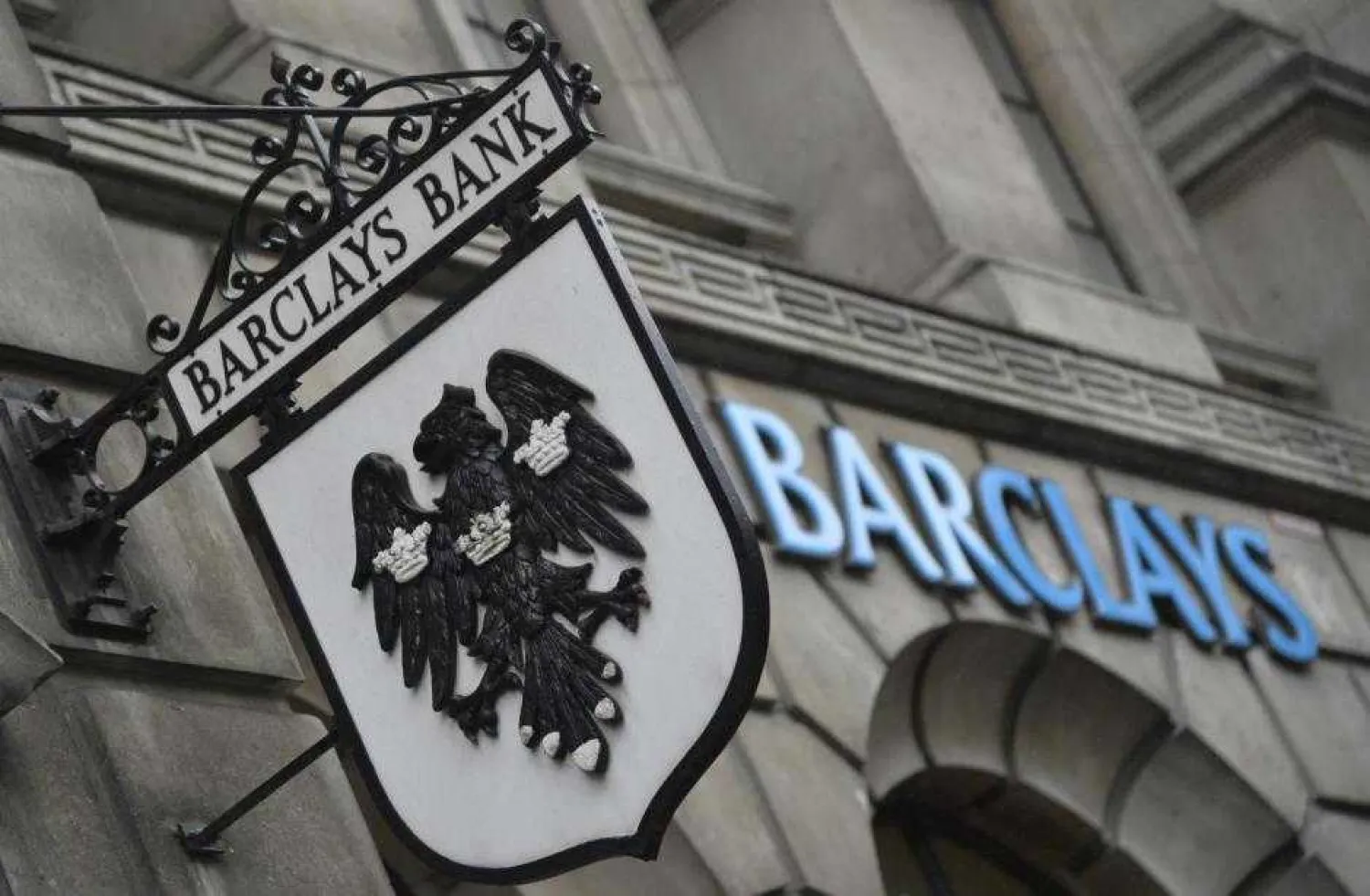
Logos are seen outside a branch of Barclays bank in London (File Photo: Reuters)
TT

Ex-Qatar PM Helped Barclays Take Advantage of Doha’s Wealth

Logos are seen outside a branch of Barclays bank in London (File Photo: Reuters)

A British court looking into bribery and fraud claims between Qatar and Barclays Bank said the bank wanted to take advantage of Qatar's wealth, although its management did not consider it an important country.

During a fraud trial on Tuesday, the former chairman of Barclays, Marcus Agius, admitted that Qatar was “not as central” to the bank’s plans to fundraise billions in 2008.

During the 2008 banking crisis, the bank was facing the threat of being nationalized and it needed extra funding.

The case is being prosecuted by the British Serious Fraud Office (SFO), which alleges that senior bankers Roger Jenkins, Richard Boath and Tom Kalaris, as well as former CEO John Varley, were all involved in the emergency fundraising by the bank with Qatar.

The Office claims the bankers agreed to pay £322 million in extra fees to Qatar during capital raising that were not properly disclosed to other investors between June and October 2008. The defendants deny the charges.

The prosecutor also pointed out that Boath admitted in an email to one of his colleagues that hadn’t it been for the Qatari money, the bank would have collapsed.

The court is looking into secret deal arrangements made at the time between bank officials and Qatar Investment Authority (QIA).

SFO accuses the four officials of paying illegal funds to Challenger, an investment vehicle of former Qatari prime minister Sheikh Hamad bin Jassim, to facilitate money transfers from Qatar’s treasury.

Prosecutors explained the amount was paid to Challenger under a falsified consulting contract, claiming that the company is providing marketing and operational services to Barclays in the Middle East.

The SFO alleges that the deals paid Qatari companies £322 million, a 3.25 percent commission, in secret fees during capital raisings that were not properly disclosed to other investors.

The Prosecutor indicated that the four bank officials had lied to investors about the amounts paid to Hamad bin Jassim’s Challenger, for advising services.

The Prosecution also reviewed a series of emails, including one dated 30 October 2008 from Varley to Roger Jenkins, Barclays' Middle East investment manager.

In the email, the two discussed that in order to convince Challenger CEO to buy Barclays shares at £1.30 per share, commissions and "profit coupons" of £222 million must be paid. It also details how £12 million were to be paid as fees and £18 million in dividends, and the remaining £192 million must be provided by Jenkins.

In a handwritten paper, Roger Jenkins tried to explain the methods to arrange a £130 million deduction from the entire deal by changing some ratios, prices and commissions.

In addition to a series of emails indicating that Jenkins and Varley were in direct contact with the former prime minister of Qatar between October 2008 and June 2009, where they held meetings in various locations as well as phone calls between Varley and Bin Jassim.

The prosecution referred to the eleventh paragraph of the contract between the parties, which states that there are no commissions or other expenses paid by the bank to investors, other than the declared four percent.



France Accuses Iran of ‘Repression’ in Sentence for Nobel Laureate

People cross an intersection in downtown Tehran, Iran, Monday, Feb. 9, 2026. (AP)
TT

France Accuses Iran of ‘Repression’ in Sentence for Nobel Laureate

People cross an intersection in downtown Tehran, Iran, Monday, Feb. 9, 2026. (AP)

France accused Iran on Monday of "repression and intimidation" after a court handed Nobel Peace Prize laureate Narges Mohammadi a new six-year prison sentence on charges of harming national security.

Mohammadi, sentenced Saturday, was also handed a one-and-a-half-year prison sentence for "propaganda" against Iran's system, according to her foundation.

"With this sentence, the Iranian regime has, once again, chosen repression and intimidation," the French foreign ministry said in a statement, describing the 53-year-old as a "tireless defender" of human rights.

Paris is calling for the release of the activist, who was arrested before protests erupted nationwide in December after speaking out against the government at a funeral ceremony.

The movement peaked in January as authorities launched a crackdown that activists say has left thousands dead.

Over the past quarter-century, Mohammadi has been repeatedly tried and jailed for her vocal campaigning against Iran's use of capital punishment and the mandatory dress code for women.

Mohammadi has spent much of the past decade behind bars and has not seen her twin children, who live in Paris, since 2015.

Iranian authorities have arrested more than 50,000 people as part of their crackdown on protests, according to US-based Human Rights Activists News Agency (HRANA).


Iran's Supreme Leader Urges Iranians to Show 'Resolve' against Foreign Pressure

Iran's supreme leader Ali Khamenei on (File Photo/Supreme Leader's website).
TT

Iran's Supreme Leader Urges Iranians to Show 'Resolve' against Foreign Pressure

Iran's supreme leader Ali Khamenei on (File Photo/Supreme Leader's website).

Iran's supreme leader Ali Khamenei on Monday called on his compatriots to show "resolve" ahead of the anniversary of the 1979 Islamic revolution this week.

Since the revolution, "foreign powers have always sought to restore the previous situation", Ali Khamenei said, referring to the period when Iran was under the rule of shah Reza Pahlavi and dependent on the United States, AFP reported.

"National power is less about missiles and aircraft and more about the will and steadfastness of the people," the leader said, adding: "Show it again and frustrate the enemy."


UK PM's Communications Director Quits

British Prime Minister Keir Starmer delivers a speech at Horntye Park Sports Complex in St Leonards, Britain, February 05, 2026. Peter Nicholls/Pool via REUTERS
TT

UK PM's Communications Director Quits

British Prime Minister Keir Starmer delivers a speech at Horntye Park Sports Complex in St Leonards, Britain, February 05, 2026. Peter Nicholls/Pool via REUTERS

British Prime Minister Keir Starmer's director of communications Tim Allan resigned on Monday, a day after Starmer's top aide Morgan McSweeney quit over his role in backing Peter Mandelson over his known links to Jeffrey Epstein.

The loss of two senior aides ⁠in quick succession comes as Starmer tries to draw a line under the crisis in his government resulting from his appointment of Mandelson as ambassador to the ⁠US.

"I have decided to stand down to allow a new No10 team to be built. I wish the PM and his team every success," Allan said in a statement on Monday.

Allan served as an adviser to Tony Blair from ⁠1992 to 1998 and went on to found and lead one of the country’s foremost public affairs consultancies in 2001. In September 2025, he was appointed executive director of communications at Downing Street.