



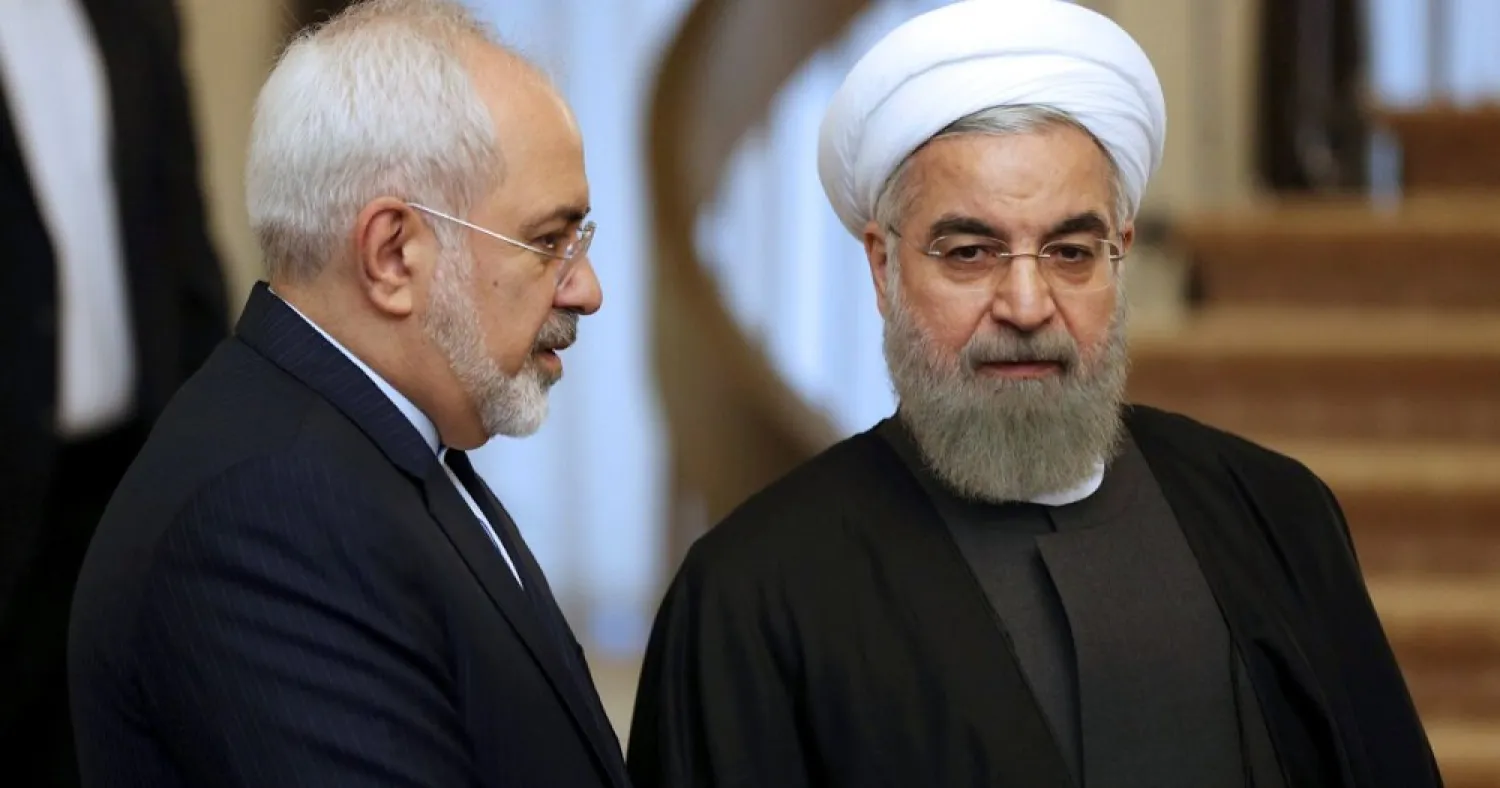

Iranian President Hassan Rouhani rejected on Wednesday the resignation of Foreign Minister Mohammad Javad Zarif, saying accepting it would have gone against “national interests.”
"As the Supreme Leader has described you as a 'trustworthy, brave and religious' person in the forefront of resistance against widespread US pressures, I consider accepting your resignation against national interests and reject it," he said in a letter published on state news agency IRNA.
Zarif - a US-educated veteran diplomat who helped craft the pact that curbed Iran's nuclear program in return for sanctions relief - announced his shock resignation on Instagram on Monday.
In another show of confidence, senior Revolutionary Guards commander Qassem Soleimani said Zarif was the main person in charge of Iranian foreign policy and he was supported by Supreme Leader Ali Khamenei.
Zarif thanked Iranians for their support. "As a modest servant I have never had any concern but elevating the foreign policy and the status of the foreign ministry," he added in an Instagram post.
After Rouhani's announcement, the semi-official ISNA news agency reported that Zarif had attended a ceremony to welcome Armenia's prime minister to Tehran.
Zarif gave no specific reasons for his resignation.
On Tuesday, he said fighting between parties and factions in Iran is a “deadly poison” undermining foreign policy.
“We first have to remove our foreign policy from the issue of party and factional fighting,” Zarif told the Jomhuri Eslami newspaper. “The deadly poison for foreign policy is for foreign policy to become an issue of party and factional fighting.”
His comments suggest he may have quit over pressure from hardline elements who have long criticized his role in negotiating the 2015 nuclear deal with world powers.
His move thrust the schism between Iran's hardliners and moderates into the open, effectively challenging Khamenei to pick a side.
The schism between hardliners and moderates over the nuclear deal shows the tension in Iran between the two factions, and between the elected government which runs the country on a day-to-day basis and a clerical establishment with ultimate power.
An ally of Zarif told Reuters his resignation was motivated by criticism of the nuclear accord, under increasingly intense fire in Iran since the United States abandoned it last year.
Since the United States walked out of the nuclear deal and reimposed sanctions, Rouhani has had to explain why Iran has continued to abide by its restrictions while reaping virtually none of the foreseen economic benefits.
Iranian Oil Minister Bijan Zanganeh, a moderate, on Wednesday denied reports by a hardline lawmaker that he had also resigned, the Iranian Students' News Agency (ISNA) reported.
Unconfirmed media reports indicated he resigned over Syrian regime chief Bashar Assad’s visit to Tehran on Monday. Noting that Zarif was not pictured in any of the coverage of the visit, one online website said “the foreign minister was not informed”.
US Secretary of State Mike Pompeo, in a post on Twitter Tuesday, dismissed Zarif and Rouhani as “front men for a corrupt religious mafia.”
“Our policy is unchanged - the regime must behave like a normal country and respect its people”, Pompeo said.
Israeli Prime Minister Benjamin Netanyahu welcomed his departure.
"Zarif is gone, good riddance. As long as I am here Iran will not get nuclear weapons," he wrote in Hebrew on Twitter.


