
Kepa and Sarri Are Actors in the Soap Opera of Football Social Media

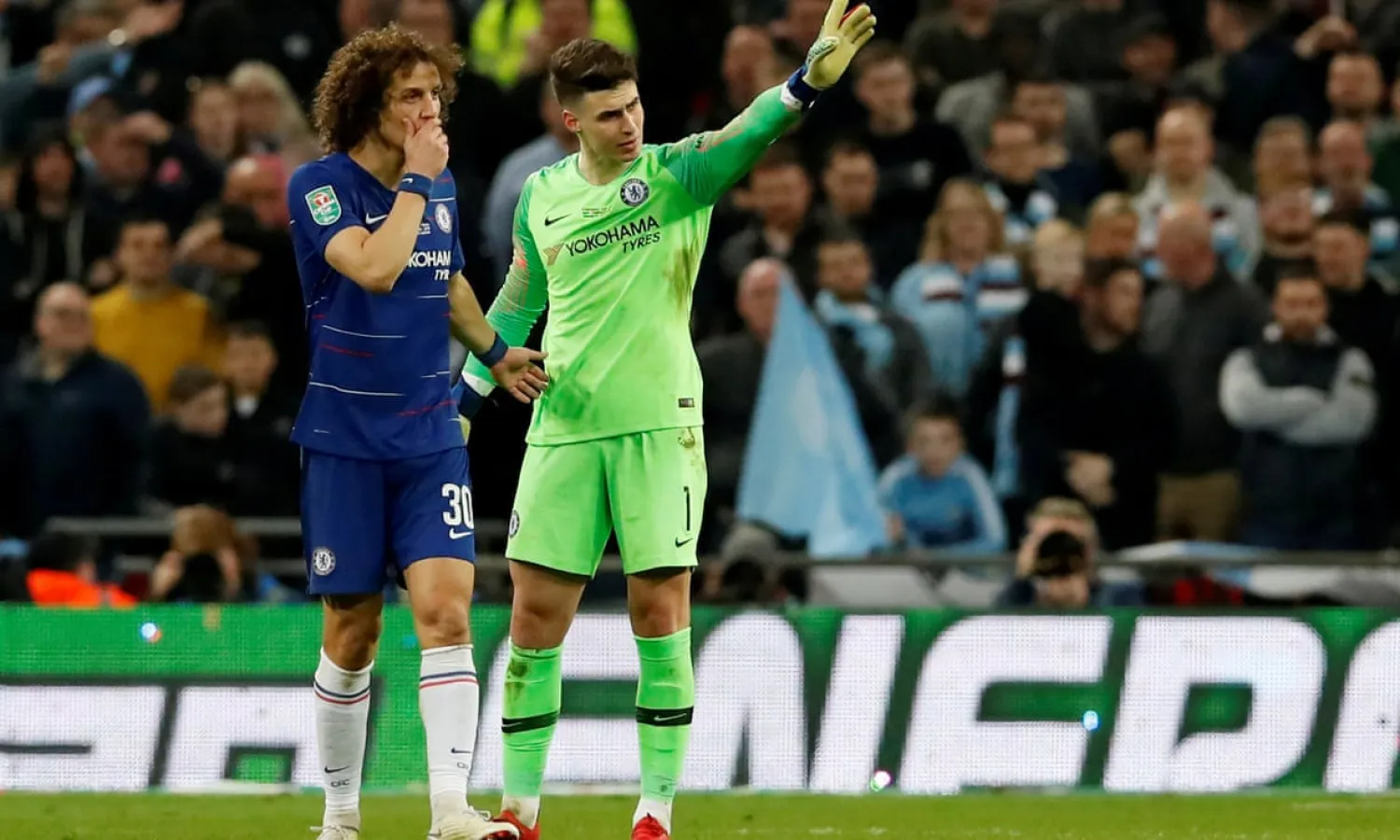
Chelsea’s Kepa Arrizabalaga gestures to his manager that he is not going to come off during the League Cup final against Manchester City on Sunday. Photograph: David Klein/Reuters
TT

Kepa and Sarri Are Actors in the Soap Opera of Football Social Media

Chelsea’s Kepa Arrizabalaga gestures to his manager that he is not going to come off during the League Cup final against Manchester City on Sunday. Photograph: David Klein/Reuters

Even by the standards of non-apology apologies, Kepa Arrizabalaga’s first effort to address The Unpleasantness during Sunday’s League Cup final refined an art form. Politicians everywhere should draw inspiration from the Chelsea keeper, whose decision to decline to be substituted by Maurizio Sarri is regarded by some as the harbinger of Britain’s complete social breakdown (more on that possibility later).

First, though, to events at Wembley Stadium. As Kepa put it in a statement issued in the immediate wake of the action: “I regret how the end of the match has been portrayed.” As always with these passive formulations, one is left to surmise who or what is the subject of the verb. In this case, given the verb in question is “portrayed” and the events in question were taking place on the medium of live television, delivered in real time via multiple camera angles, the subject of the verb is basically “your own eyes”. Kepa is accusing your own eyes of stitching him up.

In some ways, this apology template is simply a new and improved version of apologizing to “anyone who may have been offended”. The latter classic formulation also suggests the entire thing is somehow the fault of the offendee, who has taken an active decision to lose their shit – a decision that the bigger person is now wearily having to deal with.

However – and inevitably, perhaps – the above turned out not to be Kepa’s last apology on the subject. Late on Monday night, a formal Chelsea statement was forthcoming, in which the £71m keeper took another run at the situation. “I have thought a lot more about yesterday’s events,” this asserted. “Although there was a misunderstanding, on reflection, I made a big mistake with how I handled the situation.” Now you tell us. The news comes as something of a guilt trip for those of us who had already sent our own eyes to bed with no supper for their inaccurate portrayal.

The wider issue, of course – and there must always be a wider issue! – is what Sunday’s drama of insubordination means for football. Does the game’s Doomsday Clock stand at two minutes from anarchy? Should dissenting players be keelhauled, as pirate mutineers once were, but which would now involve being dragged beneath and round the chassis of a Bugatti Chiron (quite a squeeze)? There seems to be a developing consensus in some quarters that footballers are these days multimillion-pound corporations, whose power and private staff will eventually relegate all managers to junior personnel.

I have some sympathy with the notion that managers are not quite what they used to be. But blaming it all on player power seems to look the wrong way, when the players too are grist to much bigger mills.

The brilliant film writer David Thomson (a lifelong Chelsea supporter, as it happens) has written interestingly of what happened to footballers once the game became primarily a televised spectacle, and particularly since the technical innovations and multiple camera angles that the likes of Sky have brought. Long ago the stadium fans were a player’s only audience, but elite footballers now “know they are part of a system of close-ups and slow-motion”. Hugely performative goal celebrations would have been regarded as bad taste in the past; today they are what the medium demands. Players have become far more theatrical to adapt to the small screens via which they are mostly seen – and so have managers, as Sarri’s operatic gesticulations on Sunday also demonstrated.

Even were it not so bound up with the big money, that specific consciousness of oneself as a TV star arguably made footballers more individualistic and less bound by the sense of subservience to a team. Furthermore, the marketers’ attempts to reach and ensnare vast global audiences has deliberately exacerbated the notion of football as a dramatic TV show rather than “merely” a sport. Plotlines are spoken of and personal rivalries played up in a fashion once the preserve of soap opera.

But football is no longer just a TV event; it is now a social media one, too. Executives at leading clubs speak unabashedly of “content”, which might be actual football, but might equally be some made‑for‑Instagram stunt. The biggest club brands consider themselves to be in the entertainment industry.

To an extent we have yet to understand fully, we have all been corrupted by the mediums via which we mostly experience football – first television, but now social media. And increasingly, we all collude in our own corruption. The Sarri-Kepa bust-up was widely reviewed as the most watchable two and a half minutes of Sunday’s final – and you could tell this, because people were lighting up social media with the observation. You don’t get that with 30 minutes of serviceable but uneventful play – much to the disappointment of the various platforms, whose business model relies on drama. In as turbo-capitalist an environment as top‑flight football, then, you have to assume the market will instinctively adapt and provide this type of content more and more. There are plenty of modern football executives who will privately admit that a killer clip is more important than any match for driving global fan engagement and value for their sponsors.

Perhaps this is why Chelsea as a club feels able to “move past” the histrionics of Sunday. It might have been a headache for the manager, but he’s only at best a supporting actor. For the big studio moneymen, that two-and-a-half-minute clip was an excellent day at the office. Drama – and it doesn’t really matter what sort – is always a great result.

(The Guardian)


Tottenham Hotspur Sack Head Coach Thomas Frank

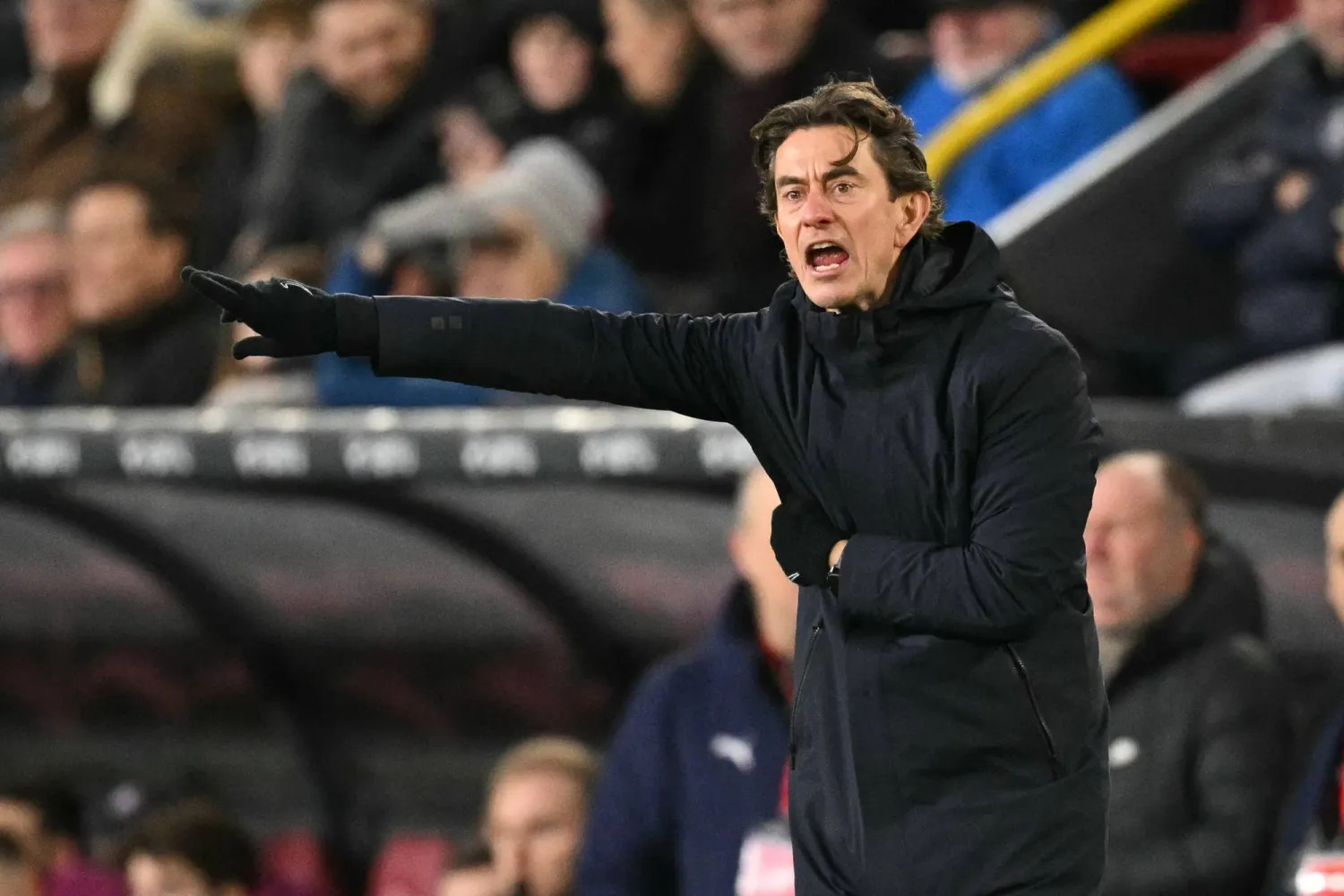
(FILES) Tottenham Hotspur's Danish head coach Thomas Frank gestures on the touchline during the English Premier League football match between Burnley and Tottenham Hotspur at Turf Moor in Burnley, north-west England on January 24, 2026. (Photo by Oli SCARFF / AFP)/
TT

Tottenham Hotspur Sack Head Coach Thomas Frank

(FILES) Tottenham Hotspur's Danish head coach Thomas Frank gestures on the touchline during the English Premier League football match between Burnley and Tottenham Hotspur at Turf Moor in Burnley, north-west England on January 24, 2026. (Photo by Oli SCARFF / AFP)/

Thomas Frank was fired by Tottenham on Wednesday after only eight months in charge and with his team just five points above the relegation zone in the Premier League.

Despite leading Spurs to the round of 16 in the Champions League, Frank has overseen a desperate domestic campaign. A 2-1 loss to Newcastle on Tuesday means Spurs are still to win in the league in 2026.

“The Club has taken the decision to make a change in the Men’s Head Coach position and Thomas Frank will leave today,” Tottenham said in a statement. “Thomas was appointed in June 2025, and we have been determined to give him the time and support needed to build for the future together.

“However, results and performances have led the Board to conclude that a change at this point in the season is necessary.”

Frank’s exit means Spurs are on the lookout for a sixth head coach in less than seven years since Mauricio Pochettino departed in 2019.


Marseille Coach De Zerbi Leaves After Humiliating 5-0 Loss to PSG 

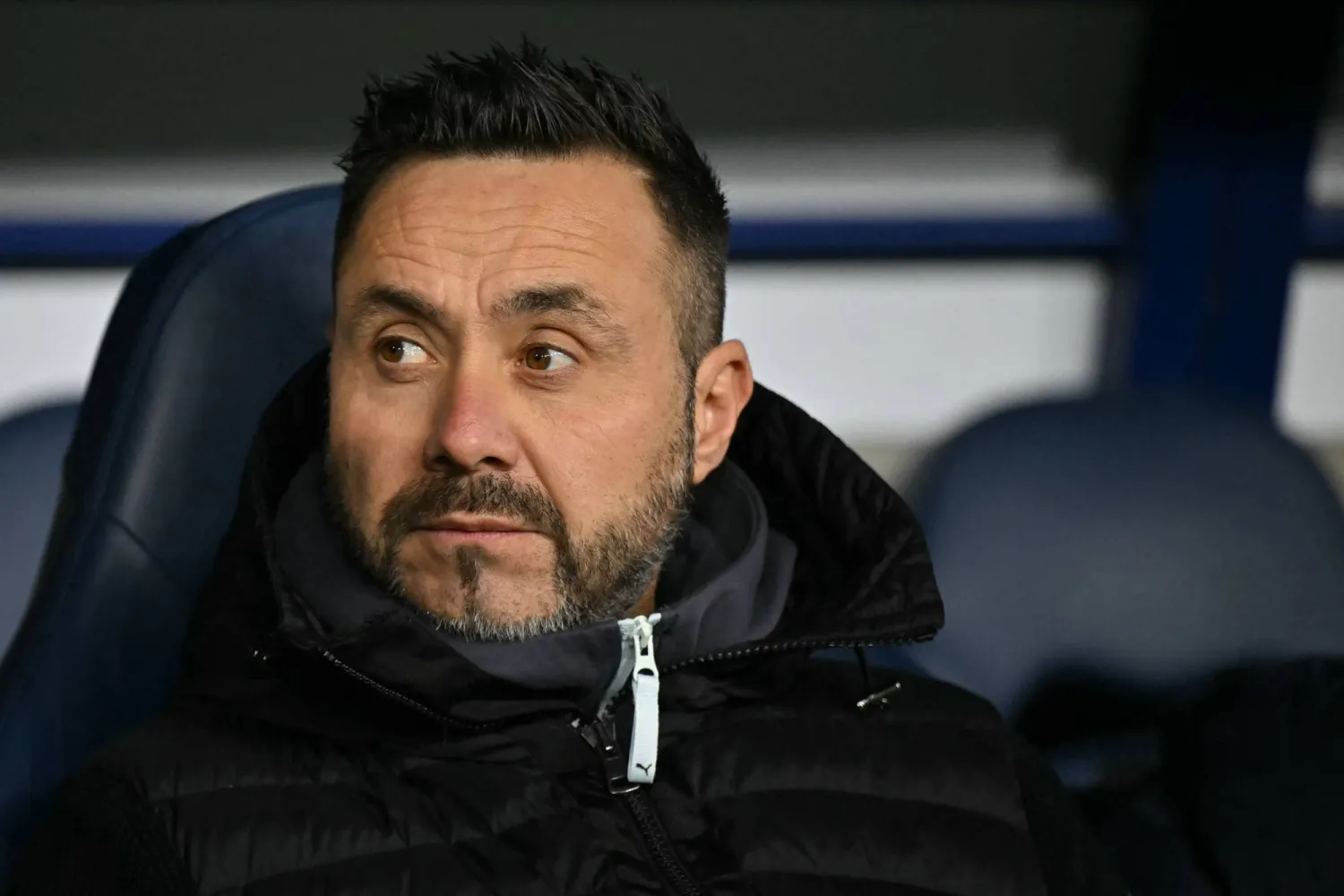
Marseille's Italian coach Roberto De Zerbi looks on from the technical area during the French Cup round of 32 football match between FC Bayeux and Olympique de Marseille (OM) at the Michel-d'Ornano Stadium in Caen on January 13, 2026. (AFP) 
TT

Marseille Coach De Zerbi Leaves After Humiliating 5-0 Loss to PSG 

Marseille's Italian coach Roberto De Zerbi looks on from the technical area during the French Cup round of 32 football match between FC Bayeux and Olympique de Marseille (OM) at the Michel-d'Ornano Stadium in Caen on January 13, 2026. (AFP) 

Marseille coach Roberto De Zerbi is leaving the French league club in the wake of a 5-0 thrashing at the hands of PSG in French soccer biggest game.

The nine-time French champions said on Wednesday that they have ended “their collaboration by mutual agreement.”

The heavy loss Sunday at the Parc des Princes restored defending champion PSG’s two-point lead over Lens after 21 rounds, with Marseille in fourth place after the humiliating defeat.

De Zerbi's exit followed another embarrassing 3-0 loss at Club Brugge two weeks ago that resulted in Marseille exiting the Champions League.

De Zerbi, who had apologized to Marseille fans after the loss against bitter rival PSG, joined Marseille in 2024 after two seasons in charge at Brighton. After tightening things up tactically in Marseille during his first season, his recent choices had left many observers puzzled.

“Following consultations involving all stakeholders in the club’s leadership — the owner, president, director of football and head coach — it was decided to opt for a change at the head of the first team,” Marseille said. “This was a collective and difficult decision, taken after thorough consideration, in the best interests of the club and in order to address the sporting challenges of the end of the season.”

De Zerbi led Marseille to a second-place finish last season. Marseille did not immediately announce a replacement for De Zerbi ahead of Saturday's league match against Strasbourg.

Since American owner Frank McCourt bought Marseille in 2016, the former powerhouse of French soccer has failed to find any form of stability, with a succession of coaches and crises that sometimes turned violent.

Marseille dominated domestic soccer in the late 1980s and early 1990s. It was the only French team to win the Champions League before PSG claimed the trophy last year. It hasn’t won its own league title since 2010.


Olympic Fans Hunt for Plushies of Mascots Milo and Tina as They Fly off Shelves 

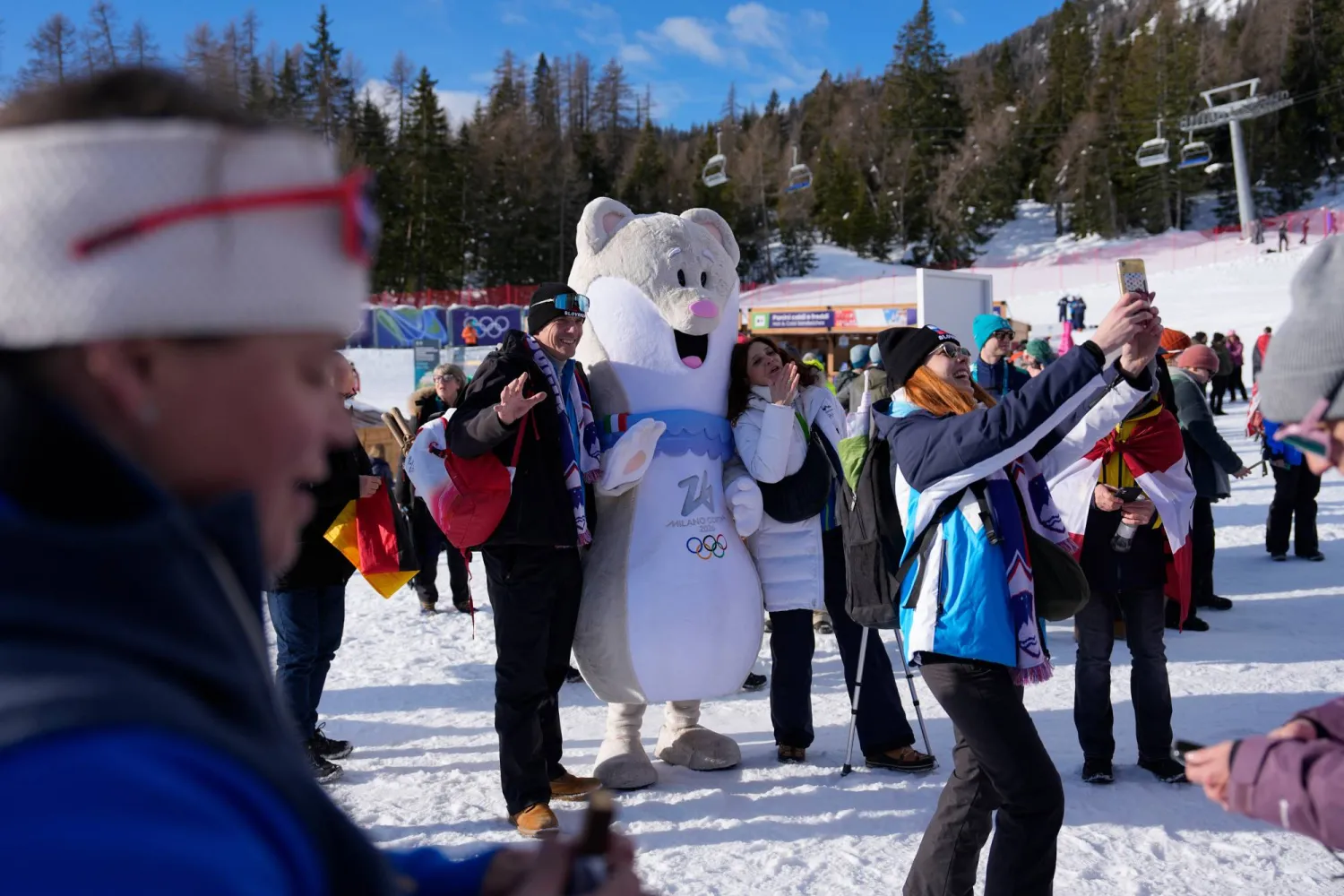
Fans take selfies with the Olympic mascot Tina at the finish area of an alpine ski, slalom portion of a women's team combined race, at the 2026 Winter Olympics, in Cortina d'Ampezzo, Italy, Tuesday, Feb. 10, 2026. (AP)
TT

Olympic Fans Hunt for Plushies of Mascots Milo and Tina as They Fly off Shelves 

Fans take selfies with the Olympic mascot Tina at the finish area of an alpine ski, slalom portion of a women's team combined race, at the 2026 Winter Olympics, in Cortina d'Ampezzo, Italy, Tuesday, Feb. 10, 2026. (AP)

For fans of the Milan Cortina Olympic mascots, the eponymous Milo and Tina, it's been nearly impossible to find a plush toy of the stoat siblings in Milan and Cortina d’Ampezzo.

Many of the official Olympics stores in the host cities are already sold out, less than a week into the Winter Games.

“I think the only way to get them is to actually win a medal,” Julia Peeler joked Tuesday in central Milan, where Tina and Milo characters posed for photos with fans.

The 38-year-old from South Carolina is on the hunt for the plushies for her niece. She's already bought some mascot pins, but she won't wear them on her lanyard. Peeler wants to avoid anyone trying to swap for them in a pin trade, a popular Olympic pastime.

Tina, short for Cortina, is the lighter-colored stoat and represents the Olympic Winter Games. Her younger brother Milo, short for Milano, is the face of the Paralympic Winter Games.

Milo was born without one paw but learned to use his tail and turn his difference into a strength, according to the Olympics website. A stoat is a small mustelid, like a weasel or an otter.

The animals adorn merchandise ranging from coffee mugs to T-shirts, but the plush toys are the most popular.

They're priced from 18 to 58 euros (about $21 to $69) and many of the major official stores in Milan, including the largest one at the iconic Duomo Cathedral, and Cortina have been cleaned out. They appeared to be sold out online Tuesday night.

Winning athletes are gifted the plush toys when they receive their gold, silver and bronze medals atop the podium.

Broadcast system engineer Jennifer Suarez got lucky Tuesday at the media center in Milan. She's been collecting mascot toys since the 2010 Vancouver Games and has been asking shops when they would restock.

“We were lucky we were just in time,” she said, clutching a tiny Tina. “They are gone right now.”

Friends Michelle Chen and Brenda Zhang were among the dozens of fans Tuesday who took photos with the characters at the fan zone in central Milan.

“They’re just so lovable and they’re always super excited at the Games, they are cheering on the crowd,” Chen, 29, said after they snapped their shots. “We just are so excited to meet them.”

The San Franciscan women are in Milan for the Olympics and their friend who is “obsessed” with the stoats asked for a plush Tina as a gift.

“They’re just so cute, and stoats are such a unique animal to be the Olympic mascot,” Zhang, 28, said.

Annie-Laurie Atkins, Peeler's friend, loves that Milo is the mascot for Paralympians.

“The Paralympics are really special to me,” she said Tuesday. “I have a lot of friends that are disabled and so having a character that also represents that is just incredible.”