Exclusive - Syrian Sunni-Alawite Dialogue Forms Council to Implement Coexistence Agreement

Destruction in Syria. (Reuters)
TT

Exclusive - Syrian Sunni-Alawite Dialogue Forms Council to Implement Coexistence Agreement

Destruction in Syria. (Reuters)

After two years of closed-door talks between various segments of Syrian society, most notably Sunnis and Alawites, they decided to go out in the open and declare a document on “joint Syrian coexistence.” The document presents principles that are supra-constitutional and provide the ground to the formation of an all-encompassing council that steers clear of the regime-opposition equation.

The final round of these talks was held in Berlin on Friday and Saturday. Twenty-four figures attended to represent various Syrian social communities. Among them were nine Alawite former lawmakers, elders and influential social figures. They came together at a roundtable with opposition, “rebel” and clan leaders, as well as Kurdish and Christian figures, from throughout Syria.

While diplomats dismissed the talks because they lacked a political vision, others highlighted its social significance.

Asharq Al-Awsat attended the second day of talks that were moderated by Syrian constitutional expert, Dr. Nassif Naim.

The media was not allowed to disclose the exact location of the meeting or the names of the participants, who assured that the Syrian authorities were not aware of the details of their discussions and agreements. They portrayed themselves as Syrians, who refuse to be described in sectarian terms.

The idea of the dialogue first emerged in 2016 and meetings were held by Alawite and Sunni figures in France and Switzerland. After overcoming various differences over the “transition phase” and formation of a “presidential council” in Syria and after introducing some structural changes, more meetings were held between the Alawite and Sunni teams in mid-2017. The participants included Mulham al-Shabali, of the Al-Fawara tribe, Sheikh Amir al-Dandal, of the Al-Aqaidat tribe, Aounein al-Jarba, of the Shamar tribe, Mustafa Kiyali, of the National Bloc in Aleppo-Idlib, and various Alwaite figures from Tartus, Homs and Latakia.

After months of discussions, they agreed to form a council of the eleven-item “Code of Conduct for Syrian Coexistence.” Three spokesmen were chosen to explain the eleven principles and present them to “embracing social environments” inside and outside Syria.

Saturday’s talks witnessed a heated debate over foreign forces in Syria, until the question over why the figures chose to come out into the open was raised. Everyone had his own reply.

Jarba said that he noticed that the code of conduct was positively received by his acquaintances and his the “embracing” environment because they realized that the participants were seeking to establish the central social system of a future Syrian state that is based on social justice.

On the broader level, he stressed the need to introduce a greater Arab role in Syria. He urged Arab countries, starting with Saudi Arabia, to lead the Arab role in resolving his country’s crisis. “Other countries have interests, but Arab ones are our relatives and Saudi Arabia is our older brother,” he was quoted as saying.

Moreover, Jarba said that the Syrian people do not believe that a solution could be found in the regime-opposition equation. The solution lies in the “embracing” environment and the code of conduct is a message of reassurance to the people that there were forces that were working for them and their future.

He warned that the regime will not allow the emergence of a civil society and believes that the solution lies in local societies. “We are the guarantees of the future and the participating Alawites know this,” he stressed.

Former Syrian Ambassador to London Sami al-Khaimi warned that the danger lurking around Syria is that the Syrians are not united in combating foreign ambitions. He stressed the need for Syrians to seek economic interests.

After two days of talks, each figure returned to Syria or back to their expatriate life. They did, however, agree on promoting the code of conduct and seeking efforts to resolve disputes in their local communities without waiting for a long-stalled political solution to come from higher powers.

A Look at the Major Candidates in Israel’s Election Next Week

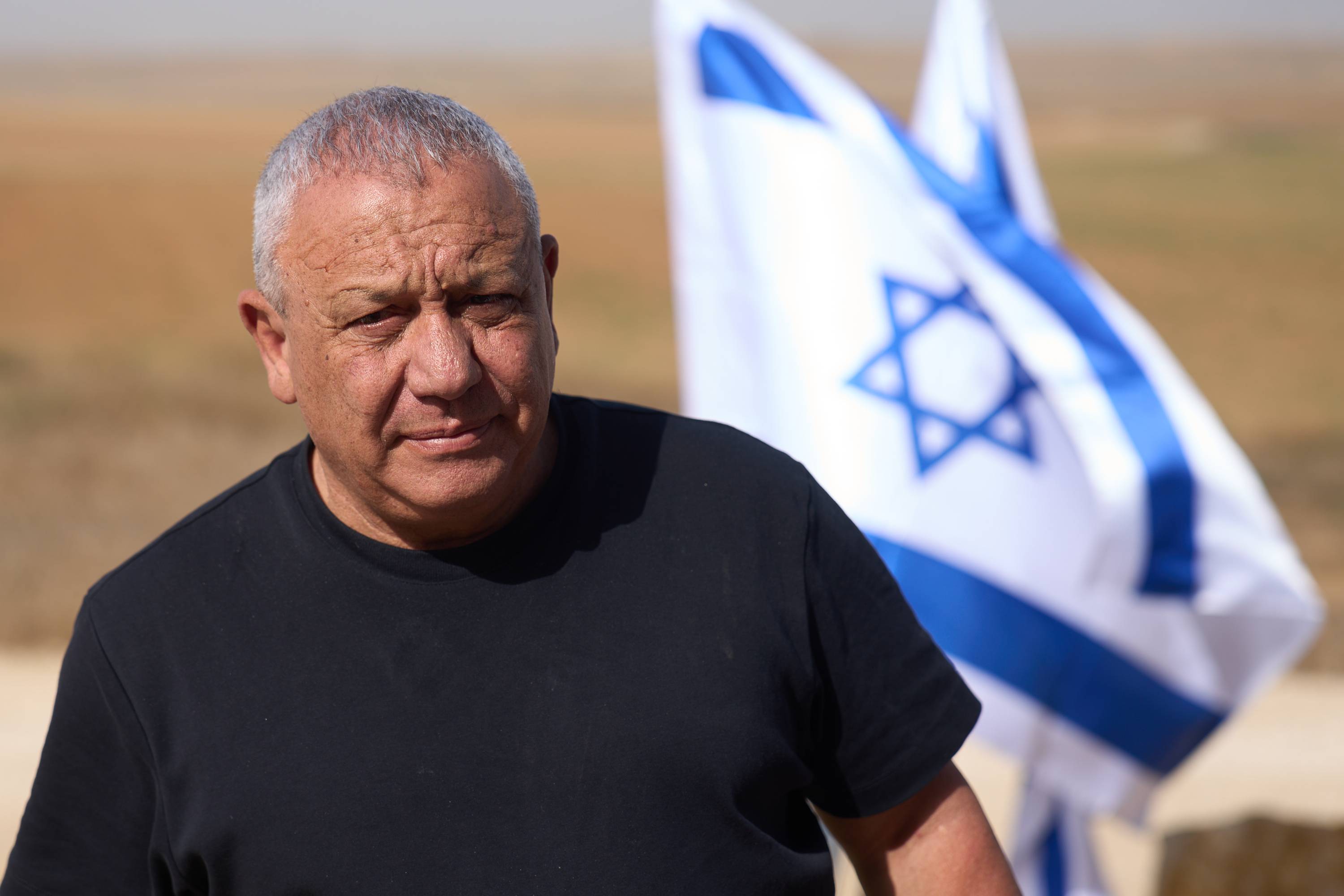
21 October 2026, Israel, Tel Aviv: An election campaign poster for the Gadi Eisenkot, is displayed in the street. (dpa)
TT

A Look at the Major Candidates in Israel’s Election Next Week

21 October 2026, Israel, Tel Aviv: An election campaign poster for the Gadi Eisenkot, is displayed in the street. (dpa)

Three years after the Hamas-led attacks on Israel that triggered the war in Gaza, Israeli voters will decide next week whether to grant Benjamin Netanyahu yet another term as prime minister — or usher in a new era of Israeli politics.

Polling suggests a tight race between Netanyahu, leader of the nationalist Likud party, and his chief rival, Gadi Eisenkot, who leads the centrist Yashar! for control of the government.

Israelis vote for parties, which then form alliances to create a majority coalition. No single party has ever won a majority in the 120-member parliament, or Knesset.

Here is a look at some of the most important leaders of the major parties ahead of the election:

Benjamin Netanyahu, prime minister

Netanyahu, 77, is Israel’s longest-serving prime minister and the most dominant force in Israeli politics, having persevered through wars, crises, scandals and the Oct. 7, 2023 attack — the deadliest in Israel's history. He is the longtime leader of the Likud party, and supporters point to his record on security and the economy, as well as his close ties with US President Donald Trump, who has endorsed Netanyahu.

Netanyahu's opponents say he's responsible for the policy and security failures that preceded the Oct. 7, 2023, attack and accuse him of mismanaging the wars that followed. In 2024, the International Criminal Court issued a warrant for Netanyahu's arrest over allegations of war crimes and crimes against humanity. He is also embroiled in a years-long legal scandal at home, having been charged with fraud, breach of trust and accepting bribes. Netanyahu denies any wrongdoing.

Gadi Eisenkot, former military chief of staff

Eisenkot, 66, comes from a working-class family of Jewish Moroccan immigrants. He spent four decades rising through the ranks of Israel's military, eventually becoming the chief of staff. The general currently leads the largest opposition party — the centrist Yashar! — after entering politics in 2022. His son and two nephews were all killed in combat in Gaza following the Oct. 7 attacks.

Eisenkot also served as an observer in Netanyahu's war cabinet, but resigned after eight months, when he accused the prime minister of lacking a clear strategy. He has since positioned himself as a moderate alternative to Netanyahu, but remains hawkish on security. Eisenkot is credited with formulating Israel’s so‑called “Dahiyeh Doctrine,” a military strategy calling for the use of disproportionate power in areas from which militants launch attacks.

If he succeeds in forming a coalition, Eisenkot could become the first Israeli prime minister of Mizrahi descent. Israel's Mizrahim, who come from North Africa and the Middle East, have historically faced discrimination from the country's European-descended elite.

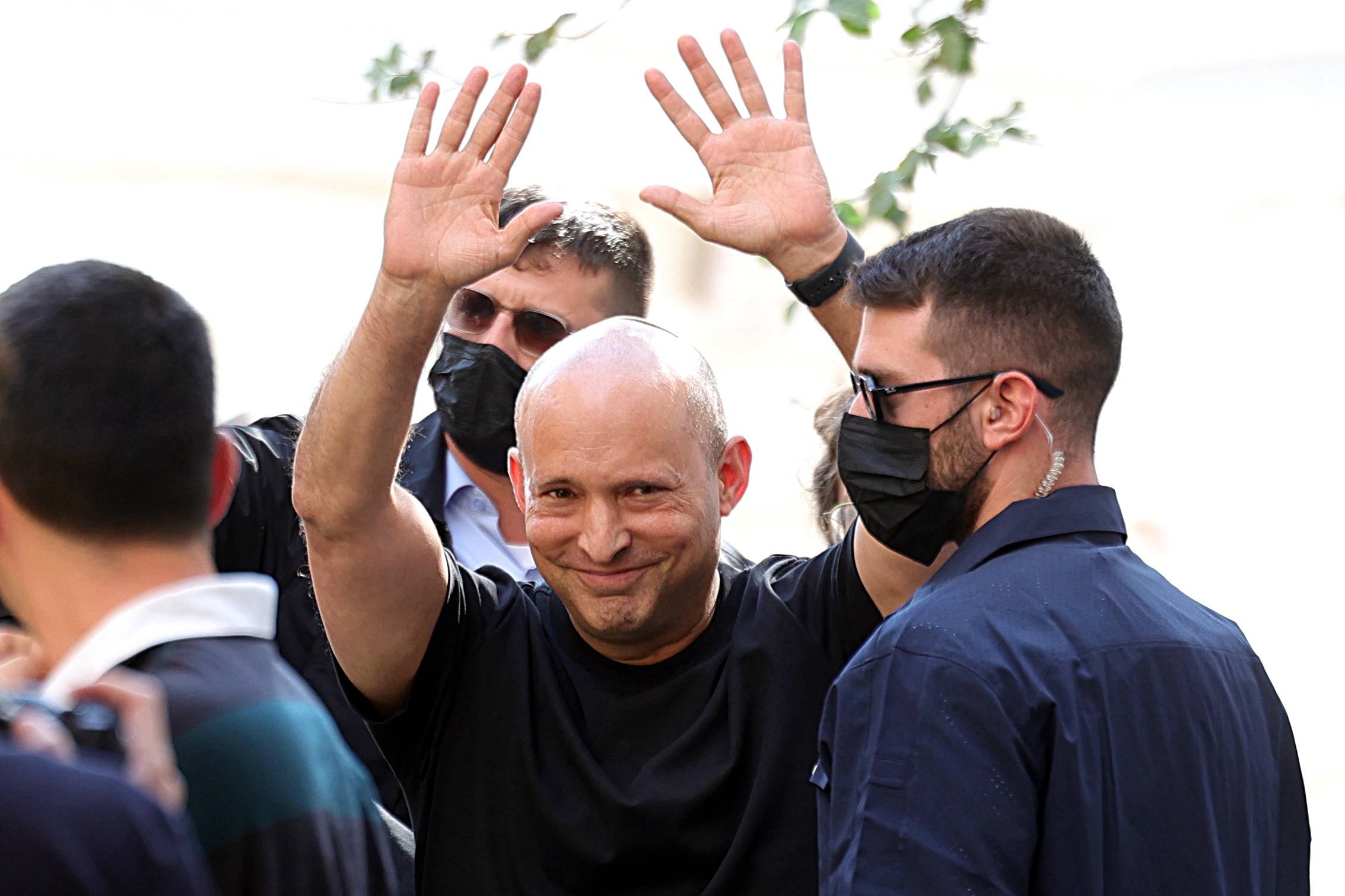
Former Israeli Prime Minister and candidate for Knesset, Naftali Bennett (C) reacts as he campaigns in Jerusalem, 19 October 2026. (EPA)

Naftali Bennett, former prime minister

Bennett, 54, is the right-wing and religiously observant leader of Beyachad (Together), a joint ticket with centrist politician Yair Lapid. He opposes Palestinian independence and supports settlement-building in the occupied West Bank.

Before entering the Knesset in 2013, Bennett served as Netanyahu's chief of staff and also was head of the Yesha Council, an umbrella organization of local authorities inside Israeli settlements. His conservative Yamina party won seven seats, which helped him cobble together a coalition of both left-wing and Arab parties. He then briefly served as prime minister in 2021, the result of a power-sharing agreement, also with Lapid.

While Bennett, like Netanyahu, takes a hard line toward the Palestinians, the two men have deep disagreements over Netanyahu's handling of security issues and his battle against the Israeli legal system.

Itamar Ben-Gvir, national security minister

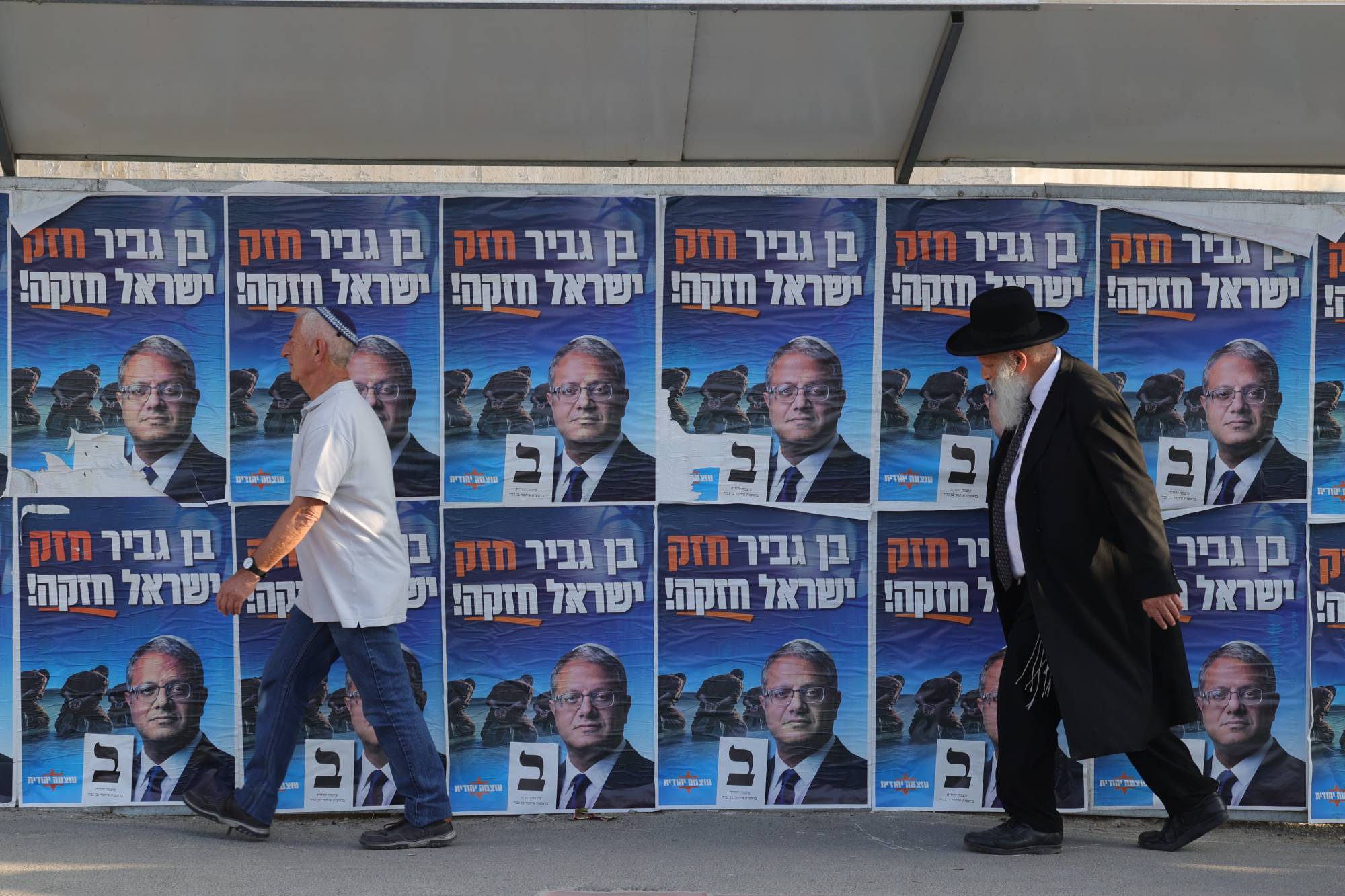
Ben-Gvir, 50, is Israel's national security minister and a far-right provocateur with multiple convictions, including for supporting a terrorist organization. He leads Otzma Yehudit (Jewish Power), an ultra-nationalist party whose strong showing in the last election secured him his Cabinet post and helped push Netanyahu's coalition further to the right.

Ultra-Orthodox Jews pass an election billboard of Minister of National Security and leader of the Otzma Yehudit party, Itamar Ben-Gvir, with a Hebrew slogan reading "Ben-Gvir strong, Israel strong", in an ultra-Orthodox neighborhood in Jerusalem, 21 October 2026. (EPA)

He is a trained lawyer who gained recognition by successfully defending right-wing Jewish extremists accused of violence against Palestinians. When Ben-Gvir was a teenager, the military refused to draft him because of his extreme views. He was also a follower of Meir Kahane, the violently racist rabbi who advocated for expelling Palestinians from Israel, Gaza and the West Bank.

Ben-Gvir has also laid out plans for what he says would be the “voluntary” emigration of roughly 2 million Palestinians from the Gaza Strip, where he has advocated for re-building Jewish settlements.

Mansour Abbas, Knesset member and leader of Ra'am

Abbas, 52, is a Palestinian Arab politician and dentist from northern Israel. He leads Ra'am, an Islamist party that was the first Arab-led party to join a governing coalition in 2021.

His strategy has been to focus on more local issues, such as crime in Arab communities, rather than the larger Israeli-Palestinian conflict, in the hopes it will win Ra'am more seats in the Knesset and court potential coalition partners.

As part of this push, Abbas named former police commander and centrist Jewish politician Yoav Segalovitz as the number two candidate on Ra'am's electoral list. Abbas has served in the Knesset since 2019.


Israel’s Election May Change Its Leader, but Not Iran War Policy

A woman passes by an election billboard of Israeli Prime Minister Benjamin Netanyahu with Hebrew slogan reading "will not surrender" in Jerusalem, 21 October 2026. (EPA)
TT

Israel’s Election May Change Its Leader, but Not Iran War Policy

A woman passes by an election billboard of Israeli Prime Minister Benjamin Netanyahu with Hebrew slogan reading "will not surrender" in Jerusalem, 21 October 2026. (EPA)

Israel's election next week may change its leader, but not its strategy: Iran will remain its chief adversary, military force will continue to be its preferred tool and Palestinian statehood a distant prospect, regional policymakers and analysts say.

That is because the strategic assumptions underpinning Israeli policy were hardened by the October 7, 2023, attacks on southern Israeli communities by Palestinian group Hamas and by the wars in Gaza, Lebanon and Iran.

If anything, Israel could toughen its security policy, the analysts said, as victory for Prime Minister Benjamin Netanyahu with the backing of far-right coalition partners could embolden him to step up the war with Iran, tighten Israel's grip on the occupied West Bank and push diplomacy further to the margins.

Israel's security doctrine now rests on three pillars: breaking Iran, holding buffer zones beyond its borders and using force to deter enemies.

The real divide is one of degree rather than direction — how aggressively Israel fights its wars, how far it expands Jewish settlements in the West Bank and whether any leader opts for diplomacy, the analysts said.

From Tehran to ‌Riyadh, Tuesday's election ‌is not seen as a potential turning point but as a test of whether the Middle East is ‌settling ⁠into a long ⁠confrontation, where wars ebb and flow while the underlying conflicts are unresolved.

"If Netanyahu is elected, he'll do whatever he thinks he wants to do," said Aviv Bushinsky, a former adviser to Netanyahu. "Expansion of the settlements will continue. The wars against Iran, Hamas and Hezbollah will continue."

"What you see now is what you'll see after the election, maybe even more aggressively," he said. "As long as Iran is in such a situation, it's a waste of time talking about Palestine.”

Netanyahu said on Sunday that Israel must prioritize “prevention and offence over containment and defense”, including pre-emptive strikes to thwart emerging threats, while establishing Israel as a regional power and maximizing its independence in armaments.

WHY THE COURSE IS UNLIKELY TO CHANGE

The election pits Netanyahu's right-wing Likud and its ultranationalist allies against an opposition led ⁠by former military chief Gadi Eisenkot's Yashar party.

Palestinian analyst Ghassan al-Khatib sees no prospect of a fundamental shift ‌in policy towards the Palestinians, with Israeli political parties competing to project harder-line positions as public opinion ‌moves further to the right.

“The substance of the policy remains the same: No to a Palestinian state and yes to further settlement expansion. On this, they ‌are all in agreement,” he said.

A government led by Netanyahu's opponents might seek to repair Israel's international standing by curbing some settler violence or ‌pursuing settlement expansion with less fanfare. But such changes would be a shift in style rather than substance, al-Khatib said.

Michael Young of the Carnegie Middle East Center said Israel's security establishment and much of its political class share a common strategic outlook, centered on confronting Iran, maintaining "forward defense" and preserving military deterrence, reducing the scope for big policy shifts.

Joost Hiltermann of the International Crisis Group, who has conducted research in the West Bank, said growing settler violence, mounting Palestinian frustration and the absence ‌of a "political horizon" had created combustible conditions, where even a minor trigger could spark a wider uprising.

'VENOMOUS OCTOPUS'

Some regional policymakers ask whether Israel's confrontation with Iran has become the organizing principle of Middle East security, ⁠regardless of who wins the ⁠election.

US President Donald Trump's praise of Netanyahu as a "great warrior prime minister" has reinforced expectations that the Israeli leader will try to finish the campaign against Tehran if he retains power.

Netanyahu has made clear his ambitions extend beyond containing Iran to toppling its clerical rulers.

“Completing the task means toppling the terrorist regime in Iran, the head of the venomous octopus,” he said in a speech this week.

But military and political analysts question whether anything short of a US-Israeli ground invasion would force Tehran to abandon what it views as its core security interests in what it sees as an existential fight.

After surviving months of war, Iran may be betting it can outlast its opponents while continuing to exert pressure through regional allies.

"This is a quagmire," Young said. "The Iranians can outlast Trump."

Hezbollah in Lebanon and Hamas in Gaza have been weakened, but the broader network of Iran-aligned groups has survived and the conflict could strengthen Tehran's determination to pursue a nuclear deterrent, the analysts said.

"Netanyahu's policies in Gaza, the West Bank, Syria and Lebanon are damaging," said Abdulaziz Sager, chairman of the Gulf Research Center. "As for Iran, a settlement is needed before the conflict escalates further. If Iran's role is not curbed, the region could be heading toward 50 years of Iranian hegemony."


Israel’s Elections: Four Possible Scenarios

A partially-torn billboard for Israeli Prime Minister Benjamin Netanyahu's Likud party is displayed in southern Tel Aviv on October 20, 2026. (AFP)
TT

Israel’s Elections: Four Possible Scenarios

A partially-torn billboard for Israeli Prime Minister Benjamin Netanyahu's Likud party is displayed in southern Tel Aviv on October 20, 2026. (AFP)

Israel goes to the polls on October 27 with results forecast to be close, meaning that the next government will be determined by whoever can cobble together a coalition in a fragmented political landscape.

Israel votes through proportional representation based on the nationwide vote and it is highly unlikely that any single party would come even close to the 61 seats needed for a majority in the 120-seat parliament, or Knesset.

Here are four possible scenarios:

Coalition

Immediately after the election, the parties will begin negotiations to try to reach the 61-seat threshold.

After the official announcement of the results, President Isaac Herzog will consult with party representatives and name a candidate who has the chance to form a government -- not necessarily the party with the most seats, but the one deemed best positioned to secure enough seats in parliament.

The negotiations can be arduous and lengthy, with parties insisting on parochial interests, and can produce unstable governments.

Following the previous election in November 2022, it took Benjamin Netanyahu 58 days to form his government.

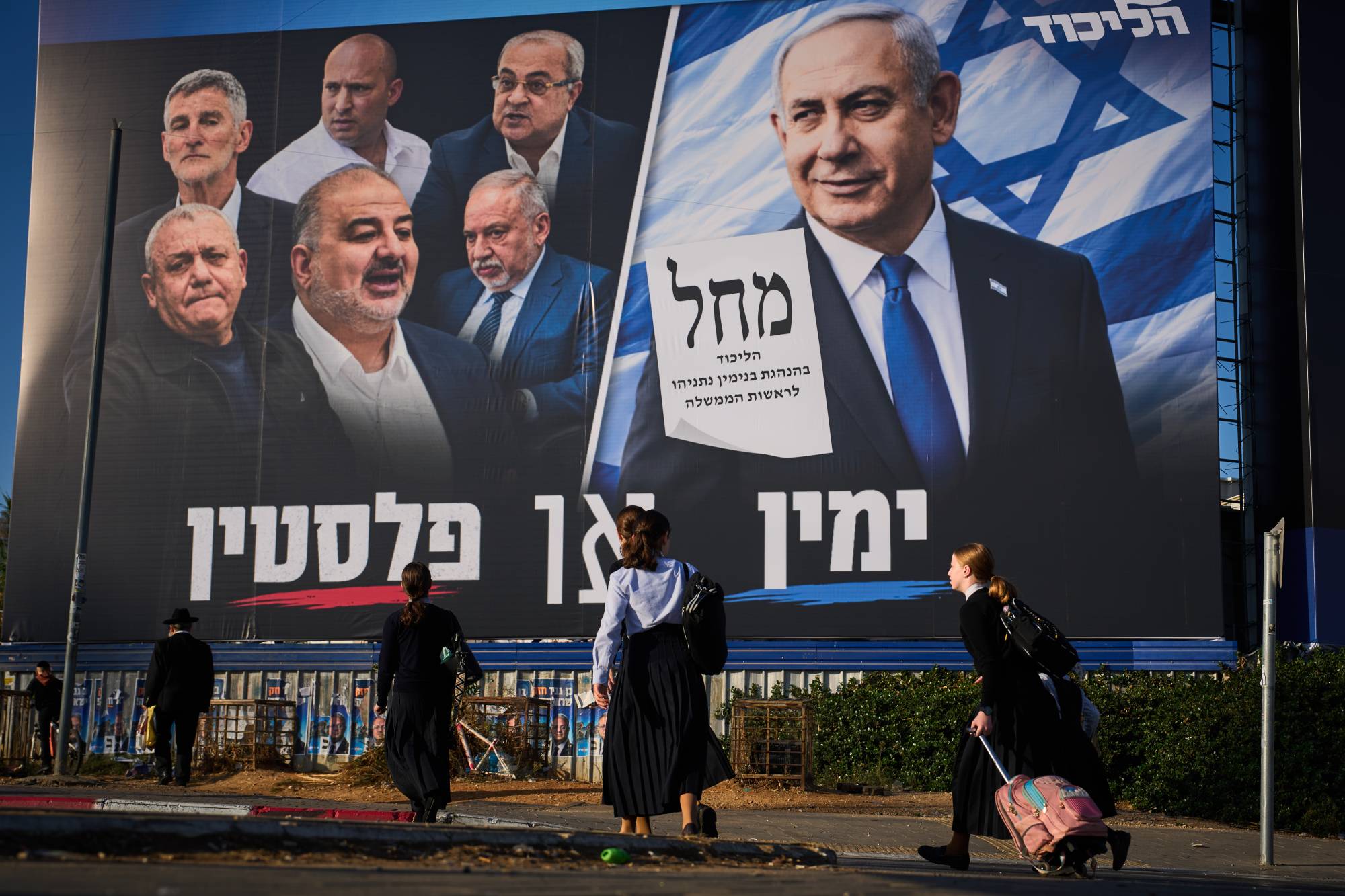
People walk past a Likud party campaign billboard featuring Israeli Prime Minister Benjamin Netanyahu alongside opposition party leaders and bearing the Hebrew slogan "Right or Palestine," ahead of Israel's general election, in Beni Brak, Israel, Sunday, Oct. 18, 2026. (AP)

Polls show that Netanyahu's right-wing and far-right coalition and the opposition bloc, whose most prominent figure is former military chief Gadi Eisenkot, are neck and neck, with approximately 50 to 52 seats each.

The two sides have been nearly even in polls for weeks, foreshadowing a mathematical puzzle that both sides will have to solve to find the 10 or so seats needed for a coalition.

Israeli political history is full of twists and turns, with defections and other unexpected shifts in alliances.

Israel also has two new right-wing parties that are seen as scratching the threshold of entering parliament, where they could throw their decisive support to one of the two blocs.

Minority government

If no bloc manages to secure 61 seats, a candidate could attempt to govern without a majority but rather through support on an ad hoc basis by other lawmakers.

In this scenario, lawmakers from Israel's Arab minority -- who make up 20 percent of the population and generally identify as Palestinians -- could play a critical role. Polls show that two Arab-Israeli lists, the Joint List and Raam, could win 12 to 14 seats in total.

Raam, led by Mansour Abbas, a kingmaker in the past, has stated its willingness to work with Eisenkot's bloc, and the Joint List has offered to provide a "safety net" for any coalition that ousts Netanyahu from power.

But the leading figures in the opposition bloc are reluctant to publicly acknowledge such a possibility, due to the hostility of a large segment of the Jewish electorate towards any form of alliance with Israeli Arabs.

This has not prevented Netanyahu from focusing his campaign on the possibility of Eisenkot working with Arab parties, campaigning on the slogan, "Either the right wing or Palestine."

Gadi Eisenkot, former Israeli military chief of staff and leader of the centrist Yashar "Straight" party delivers a statement ahead of Israel's general election near Israel-Gaza border, southern Israel, Thursday, Oct. 15, 2026. (AP)

National unity government

Considering Israel's extreme polarization, a national unity government would appear fanciful, but it could theoretically create a less extreme government.

Israeli commentators have often mused on the possibility of a national unity government in which Netanyahu would jettison his provocative far-right allies as well as ultra-Orthodox parties and team up with Eisenkot, who shares Netanyahu's views on many security issues.

The grand coalition would also exclude Arab parties.

A poll published on October 16 found that 55 percent of Israelis would prefer a national unity government over new elections if the vote did not produce a clear majority.

This scenario has a recent precedent. In 2020, Netanyahu and Benny Gantz, like Eisenkot a retired general appealing to the center, reached a power-sharing agreement after three elections in less than a year, which stipulated a rotation of the prime ministership.

But the partnership fell apart after a year, triggering a new election. According to media reports, Herzog is working behind the scenes to bring Netanyahu and Eisenkot together to repeat the experiment should a deadlock occur after October 27.

However, the scenario would face strong opposition from both sides, particularly from the opposition bloc, which is treating the election as a referendum against Netanyahu and has questioned his character.

Deadlock and new elections

If no candidate manages to form a government, Israel will have to return to the polls.

The country held four elections between April 2019 and March 2021 due to the inability of politicians to forge a lasting coalition.

The candidate designated by the president will, in principle, have 28 days to form a coalition, with a possible 14-day extension, although there are other procedural ways to prevent an immediate calling of new elections.