US Decision on Golan Sparks Wide Rejection at Security Council

Syrian flags are seen in the village of Ain el-Tineh in the Golan Heights. AFP file photo
TT

US Decision on Golan Sparks Wide Rejection at Security Council

Syrian flags are seen in the village of Ain el-Tineh in the Golan Heights. AFP file photo

“The UN position on the Golan is known and clear. That position is reflected in the relevant Security Council and General Assembly resolutions, notably Security Council Resolutions 242 (1967) and 497 (1981),” said Rosemary DiCarlo, UN Under-Secretary-General for Political and Peacebuilding Affairs, during her brief to the Security Council on the situation in the Middle East on Wednesday.
 
“We hope that the recent developments will not be used as an excuse by anyone to pursue actions that could undermine the relative stability of the situation on Golan and beyond. We will continue to closely monitor developments on the ground and will keep the Council informed, as appropriate,” she added.
 
She also called on the Guarantor States to work together to address the issue of terrorist groups on the Security Council’s list, in full compliance with international humanitarian law, noting that this was a necessary step to avoid mass migration and another humanitarian catastrophe.
 
Meanwhile, during a Tuesday meeting on the Israeli-Palestinian conflict, a number of Security Council members (some European countries, South Africa, Indonesia, China, and others) expressed dissatisfaction with the US decision to break with international consensus on the Golan Heights, considered by the UN as “occupied territory.”
 
“We do not recognize Israel’s sovereignty over the territories it occupies since June 1967, including the Golan Heights,” said the five European permanent members of the Security Council (Germany, France, Britain, Belgium and Poland) in a statement.
 
They also stressed that the annexation of territory by force was prohibited by international law. “Any unilateral border changes go against the rules-based international order and the UN Charter,” they emphasized.
 
“We raise our strong concerns about broader consequences of recognizing illegal annexation and also about the broader regional consequences,” the statement concluded.



EU Condemns Israel's West Bank Control Measures

The Israeli settlement of Har Homa, seen from the West Bank city of Bethlehem, Tuesday, Dec. 17, 2024. (AP)
TT

EU Condemns Israel's West Bank Control Measures

The Israeli settlement of Har Homa, seen from the West Bank city of Bethlehem, Tuesday, Dec. 17, 2024. (AP)

The European Union on Monday condemned new Israeli measures to tighten control of the West Bank and pave the way for more settlements in the occupied Palestinian territory, AFP reported.

"The European Union condemns recent decisions by Israel's security cabinet to expand Israeli control in the West Bank. This move is another step in the wrong direction," EU spokesman Anouar El Anouni told journalists.


Atrocities in Sudan's El-Fasher Were 'Preventable Human Rights Catastrophe'

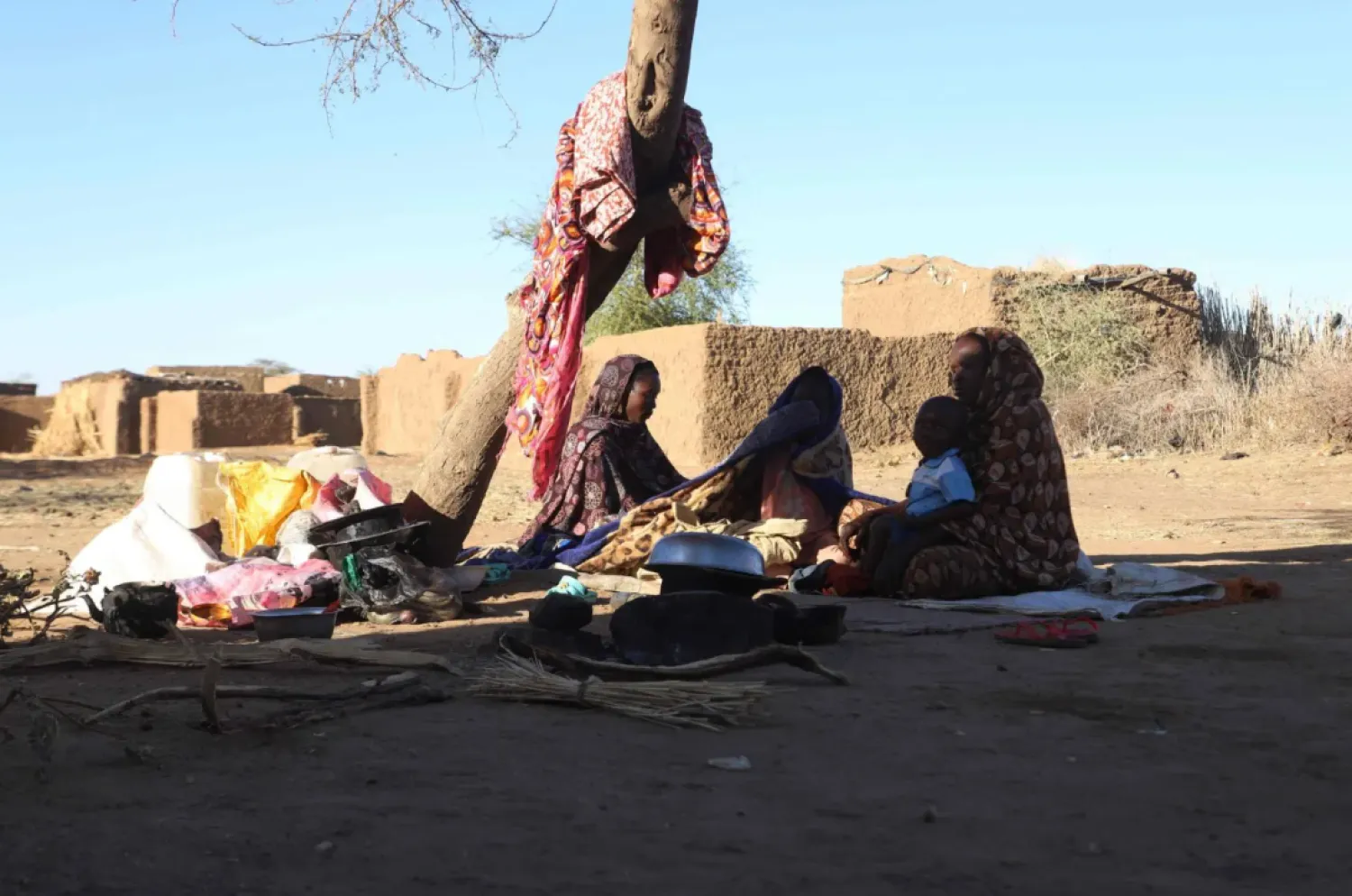
Sudanese displaced people who left El Fasher after its fall, sit in the shade in Tawila at the Rwanda camp reception point on December 17, 2025. (Photo by AFP)
TT

Atrocities in Sudan's El-Fasher Were 'Preventable Human Rights Catastrophe'

Sudanese displaced people who left El Fasher after its fall, sit in the shade in Tawila at the Rwanda camp reception point on December 17, 2025. (Photo by AFP)

The atrocities unleashed on El-Fasher in Sudan's Darfur region last October were a "preventable human rights catastrophe", the United Nations said Monday, warning they now risked being repeated in the neighbouring Kordofan region.


"My office sounded the alarm about the risk of mass atrocities in the besieged city of El-Fasher for more than a year ... but our warnings were ignored," UN rights chief Volker Turk told the Human Rights Council in Geneva.


He added that he was now "extremely concerned that these violations and abuses may be repeated in the Kordofan region".


Arab League Condemns Israel's Decisions to Alter Legal, Administrative Status of West Bank

A general view shows the opening session of the meeting of Arab foreign ministers at the Arab League Headquarters (Reuters)
TT

Arab League Condemns Israel's Decisions to Alter Legal, Administrative Status of West Bank

A general view shows the opening session of the meeting of Arab foreign ministers at the Arab League Headquarters (Reuters)

The General Secretariat of the Arab League strongly condemned decisions by Israeli occupation authorities to impose fundamental changes on the legal and administrative status of the occupied Palestinian territories, particularly in the West Bank, describing them as a dangerous escalation and a flagrant violation of international law, international legitimacy resolutions, and signed agreements, SPA reported.

In a statement, the Arab League said the measures include facilitating the confiscation of private Palestinian property and transferring planning and licensing authorities in the city of Hebron and the area surrounding the Ibrahimi Mosque to occupation authorities.

It warned of the serious repercussions of these actions on the rights of the Palestinian people and on Islamic and Christian holy sites.

The statement reaffirmed the Arab League’s firm support for the legitimate rights of the Palestinian people, foremost among them the establishment of their independent state on the June 4, 1967 borders, with East Jerusalem as its capital.