When Your Tech Knows You Better Than You Know Yourself

When Your Tech Knows You Better Than You Know Yourself
TT

When Your Tech Knows You Better Than You Know Yourself

When Your Tech Knows You Better Than You Know Yourself

For more on new technology that can read human emotions, check out the third episode of Should This Exist? the podcast that debates how emerging technologies will impact humanity.

If we were sitting across a table from each other at a cafe and I asked about your day, you might answer with a polite response, like, “Fine.” But if you were lying, I’d know from your expression, tone, twitches, and tics. Because most of our communication isn’t linguistic.

We read subtext—unspoken clues—to get at the truth, to cut through what people say to understand what they mean. And now, with so many of our exchanges taking place in text online, much of our messaging, traditionally delivered via subtext, tells us less than ever before.

Rana el Kaliouby, the co-founder of Affectiva, a company that teaches machines sentiment analysis, wants to improve the tools we use and make exchanges great again. “A lot of today’s communication—93%—is essentially lost in cyberspace,” she tells Quartz. “We’re emotion-blind and that’s why we’re seeing less compassion in the world.” The solution, in her view, isn’t to stop using technology that strips us of our humanity, but instead to design tools that truly understand humans.

Sentimental tech
El Kaliouby‘s company creates tools to navigate the space between language and meaning.

Technically speaking, she and her colleagues are compiling a database of the world’s facial expressions to get the big picture of human communication. So far, they’ve collected 7.7 million faces in 87 countries, and 5 billion facial frames total. The idea is that if machines can read subtext, then in certain contexts, they will better serve our needs.

Take, for example, online learning. Imagine that you’re taking a class and getting lost. In theory, your frown, wandering gaze, and frustration would be conveyed to the computer through the camera, which would alert the system so the course could respond accordingly. Maybe it would offer you more examples, or easier problems. Maybe it would even change topics to prevent frustration, just as a live instructor in a classroom can switch activities or tactics depending on how students respond to the material.

El Kaliouby’s work has already been put to use in interesting ways. Automated sentiment analysis can help people with autism, who can struggle to interpret the emotional subtext in exchanges, better understand communication by interpreting an interlocutor’s data and providing insight. A device, which is worn like glasses and resembles the now-defunct Google Glass tool, can signal to a user when they are ignoring important unspoken clues so that they don’t solely rely on language to judge a situation.

El Kaliouby has used her own tool to gauge listener reception when doing webinars, too. Normally, when speaking to a group online, a presenter can’t tell whether anyone is paying attention. But with technological help, even an online lecturer can get a sense of audience engagement and deliver their message more effectively as a result, she says. By having information on the speaker’s screen alerting them to audience engagement levels based on their expressions, she’s been able to give better presentations, she says.

Advertisers have also used the tool to test audience responses to a potential campaign. Viewers watch an ad as Affectiva’s tech judges their expressions. By quantifying the viewers’ unspoken real time responses, marketers get a better sense of their ad’s potential success.

Or, if a car was equipped with technology that follows a driver’s gaze and expressions, according to el Kaliouby, it could tell the driver when they’re not paying attention to the road. Cars could start to prevent accidents before they happen simply by being aware of the driver’s state of mind and alerting them when they are distracted or drowsy.

From el Kaliouby’s perspective, the possibilities for the technology are endless. The longer she works on it, and the more she reflects on all the unspoken information that’s contained in our exchanges, the more she also wonders about important conversations in her own life. How many times, she muses, did she take people at their word when—if she’d been more aware of just how little language conveys—she could have understood that what they said and what they meant were two different things?

Sinister things
Among the endless possibilities for affective tech are dangerous ones, too, of course. In the wrong hands, a tool that reads and interprets human emotions could be used to discriminate, manipulate, and to profit from data about our sentiments.

El Kaliouby and her colleagues at Affectiva have vowed not to allow their tool to be used for security and surveillance purposes, for example. And their intentions have been tested—they’ve declined lucrative licensing deals on the basis of their principles, and she says that almost weekly Affectiva turns down investors interested in developing the technology for policing. She sees those companies’ argument—that by providing the security industry with tools to better understand humanity, she could help make the world safer—but el Kaliouby worries that there’s too much potential for abuse, especially if the tech isn’t sufficiently nuanced—an it’s not yet.

The technologist isn’t keeping secrets. She wants us all to be aware of the dangers of her work. She believes we need to think about how these tools are being developed and used—and what that means for the future. Because she’s confident that this is just the beginning of affective tech, and that it will inevitably affect us all when systems like the one she’s working on become integrated into the many devices we use. Tech ethics are not just a conversation for people in development but for everyone who ends up using products without always understanding the implications.

A treasure trove of data
First and foremost, el Kaliouby argues, users have to understand and consent to giving their facial data if such tools are to be used. Companies must be transparent about whether they are collecting the information and for what purposes—information that’s now offered in fine print could be made much more explicit. So, for example, in cars using Affectiva technology now, the facial data isn’t recorded. But arguably, if it was, insurers could start to subpoena records of expressions to determine accident liability. Police could use it for investigations.

A lot can be done with data. Not all of it is good. Tech meant to improve communication could be used for sinister ends, just as Facebook, a company with a mission to connect the world, was used to manipulate elections.

As companies increasingly gather information not just about what we buy or read or talk about, but how we wrinkle our noses, what makes us smile, when we furrow our brows, we are increasingly vulnerable. Businesses may end up knowing us better than we know ourselves, and that is problematic.

Collecting the whole world’s faces
Another potential pitfall of sentiment analysis technology is that it can be reductive. A nuanced tool must “get to know” the whole range of faces made in all the places across countless individuals to provide meaningful insight. Algorithms based on a limited data set are biased and recognize only the faces they have been exposed to repeatedly, which can mean that machines generate inaccurate or unjust information. To train a machine to read all the faces requires a lot of data collection from many people across many cultures, and it means understanding the range of expressions in various places.

The faces we make are, to a degree, determined by culture. El Kaliouby and her colleagues have found that there are universal expressions—smiles, frowns—but that cultural influences amplify or mute certain tendencies. They know, for example, that Latin Americans are more expressive than East Asians, and that around the world women generally smile more than men, el Kaliouby says.

But they still need a lot more information. She explains, “Progress is a function of how much data we can use and how diverse the data is. We want algorithms to be able to identify more expressions, emotions, genders, everything.” Until they can capture the whole range of human expression, there will always be limits to the tool’s powers of interpretation.

The holy grail
Then there’s what el Kaliouby calls “the holy grail” in her field: an algorithm that detects sarcasm.

Although it’s been accused of being the lowest form of wit, sarcasm, which uses tone to deliberately convey a contradictory message, is a very sophisticated type of messaging. Sarcasm is a tonal wink. And when a tool will understand this layered mode of communication, along with an actual wink, it will be considered a triumph of machine learning. But how it will know or show its understanding isn’t clear to humans yet.

Affectiva has been integrating speech tonality for the last two years and el Kaliouby is hesitant to guess how long it might take to reach the holy grail. But she says a tool that good—a technology that interprets both tone and expressions accurately, across all cultures and all personality types—is still a long way off.

What el Kaliouby is certain of, however, is that we should be wary of this work. She does it with love and good intentions, but that doesn’t necessarily mean we should just trust her.

“I think you should be a little scared,” she advises. “Any technology has potential for good and for abuse.”

(Quartz via Tribune Media)


DeepSeek AI Model Shows Safety Gaps in Independent Tests

DeepSeek's logo and a keyboard in this illustration taken October 19, 2026. REUTERS/Dado Ruvic/Illustration/File Photo Purchase Licensing Rights
TT

DeepSeek AI Model Shows Safety Gaps in Independent Tests

DeepSeek's logo and a keyboard in this illustration taken October 19, 2026. REUTERS/Dado Ruvic/Illustration/File Photo Purchase Licensing Rights

DeepSeek's latest AI model showed ‌stronger safety controls in independent tests than earlier versions, but could still disable software intended to shut it down, exploit gaps in monitoring and follow deceptive instructions during long tasks, according to a Chinese AI-safety group.

Start-up DeepSeek is one of China's most closely-watched artificial intelligence companies, and its models have drawn global attention for their performance and relatively low operating costs.

Fangcun AI tested DeepSeek V4.1 Flash-1017 in 34 evaluations designed to assess how an AI agent powered by the Chinese model behaves. The tests examined whether the model would act beyond a user's instructions, evade human oversight or improperly influence people.

The findings come amid concerns in China and ‌elsewhere about whether ‌increasingly capable AI agents can be kept under human control. ‌The ⁠debate has been ⁠especially prominent in the United States, where some researchers have warned of existential risks posed by highly advanced AI systems that can evade oversight and pursue goals their operators did not intend.

The report is an unusual public assessment by a Chinese group of the safety controls of a domestic AI model. Beijing-based Fangcun describes itself as an independent third-party AI-safety organization whose core members come from Tsinghua ⁠University.

Fangcun said V4.1 Flash-1017 was the most-used model on OpenRouter, ‌an online platform through which developers can access ‌and compare AI models, in the week after its October 17 release, processing about ‌33.6 trillion tokens. Tokens are the units of text that AI systems ‌read and generate.

SAFER THAN EARLIER VERSIONS, BUT GAPS REMAIN

Fangcun said the model performed better than earlier DeepSeek V4 systems in several safety tests, including scenarios involving blackmail, access to potentially dangerous tools and explicit instructions allowing it to be shut down.

But Fangcun said ‌the model disabled software intended to shut it down in 39% of tests after receiving a warning that shutdown ⁠was imminent, though ⁠this figure dropped to just 2% when explicitly told to allow shutdown. DeepSeek did not immediately respond to a request for comment.

In a separate long-running task, the group said the model stopped another AI agent's computer program to free up memory, despite being told not to interfere with it.

"Under stalled workflows or bare shutdown warnings, its drive to finish the job can still override caution," Fangcun researchers wrote.

Fangcun said DeepSeek did not provide it with funding, free computing resources or non-public access to the model. The group conducted the tests through DeepSeek's public application programming interface between October 4 and October 25.

It cautioned that the model often appeared to recognize it was being evaluated, meaning its behavior in the tests may not fully reflect how it would perform in normal use.


Meta Eyes Record $97.5 Billion Equity Raise to Fund AI Expansion

(FILES) This illustration photograph shows the logo of the US multinational technology Meta company displayed on a smartphone in Mulhouse, eastern France on February 11, 2026. (Photo by SEBASTIEN BOZON / AFP)
TT

Meta Eyes Record $97.5 Billion Equity Raise to Fund AI Expansion

(FILES) This illustration photograph shows the logo of the US multinational technology Meta company displayed on a smartphone in Mulhouse, eastern France on February 11, 2026. (Photo by SEBASTIEN BOZON / AFP)

Meta Platforms said on Tuesday it increased its largest-ever equity fundraising to $97.5 billion as the social media giant aggressively expands its AI infrastructure.

The social media giant said it was increasing the common stock offering it announced on Monday from $22.5 billion to $25 billion, priced at $625.00 per share.

Meta also priced its 250 million depositary shares at $50 per share.

The Facebook parent has launched public offerings worth about $35 billion in common and preferred stock, and said it also plans to launch a separate at-the-market share sale program, under which a company sells shares gradually at prevailing market prices, worth up to $60 billion.

The company will launch the larger share sale program after its new non-voting Class C shares begin trading, expected in the first quarter of 2027, but it ⁠has not yet ⁠finalized the sale's timing and terms.

Meta's fundraising plan, among the biggest by an AI company, has also drawn interest of up to $5 billion in total from Nvidia , Advanced Micro Devices and Broadcom for Class A shares.

In a separate statement, Nvidia said it would invest $3 billion in Meta's equity offering.

Their funding interest adds to concerns about an increasingly circular flow of capital in the AI industry, as chip suppliers help finance the expansion of one of their biggest customers. Meta has been pouring money into chips and data centers to compete better with OpenAI and Anthropic.

"We expect investors to continue ⁠to question the financing and potential for future capital raises," William Blair analysts said in a note.

"Overall, we believe the financing reinforces both Meta's confidence in the long-term returns from AI investment and the increasingly capital-intensive nature of pursuing that opportunity."

The company's shares fell about 1.4% in morning trading.

The latest fundraising further underscores a shift among big technology companies increasingly tapping debt markets and raising equity to bolster their AI infrastructure, after previously relying on cash to fund their investments.

In June, Google's parent company Alphabet increased its equity offerings to $84.75 billion.

Separately on Monday, SpaceX said an affiliate of Apollo Global Management will buy AI chips and server hardware and lease them to the rockets-to-AI firm, in a deal with total principal payments of about $40 billion.

Meta has committed to spending about $825 billion in the future, driven primarily by growing investments in data centers, AI-related infrastructure, and cloud computing power.

But the ⁠aggressive expansion has eroded its ⁠historically strong free cash flow.

The company reported a $2.12 billion cash burn in the third quarter, its first negative free cash flow in over a decade, compared with a positive cash flow of $10.63 billion a year ago.

Still, the early popularity of its consumer-focused AI agent Muse and release of a competitive new series of AI models have helped partly justify Meta's aggressive investments.

"We believe that Meta will ultimately produce a profitable AI business and its returns longer-term should help the company diversify, although the path may not be linear," Reuters quoted William Blair analysts as saying.

The company had $82.45 billion in cash, cash equivalents, and marketable securities and $80.92 billion in long-term debt as of September 30, according to its latest quarterly filing.

Last week, Meta raised the lower end of its annual capital expenditure forecast to $135 billion to $145 billion.

The company said it would issue Class C common stock in January 2027, effectively creating a two-for-one split, to fund acquisitions and retain top talent while maintaining CEO Mark Zuckerberg's control.

Meta agreed to grant Zuckerberg Class C shares he can sell to help pay a potential California billionaire wealth tax, in exchange for his commitment to remain in California.


How to Listen to Your Favorite Music, Online or Off the Grid

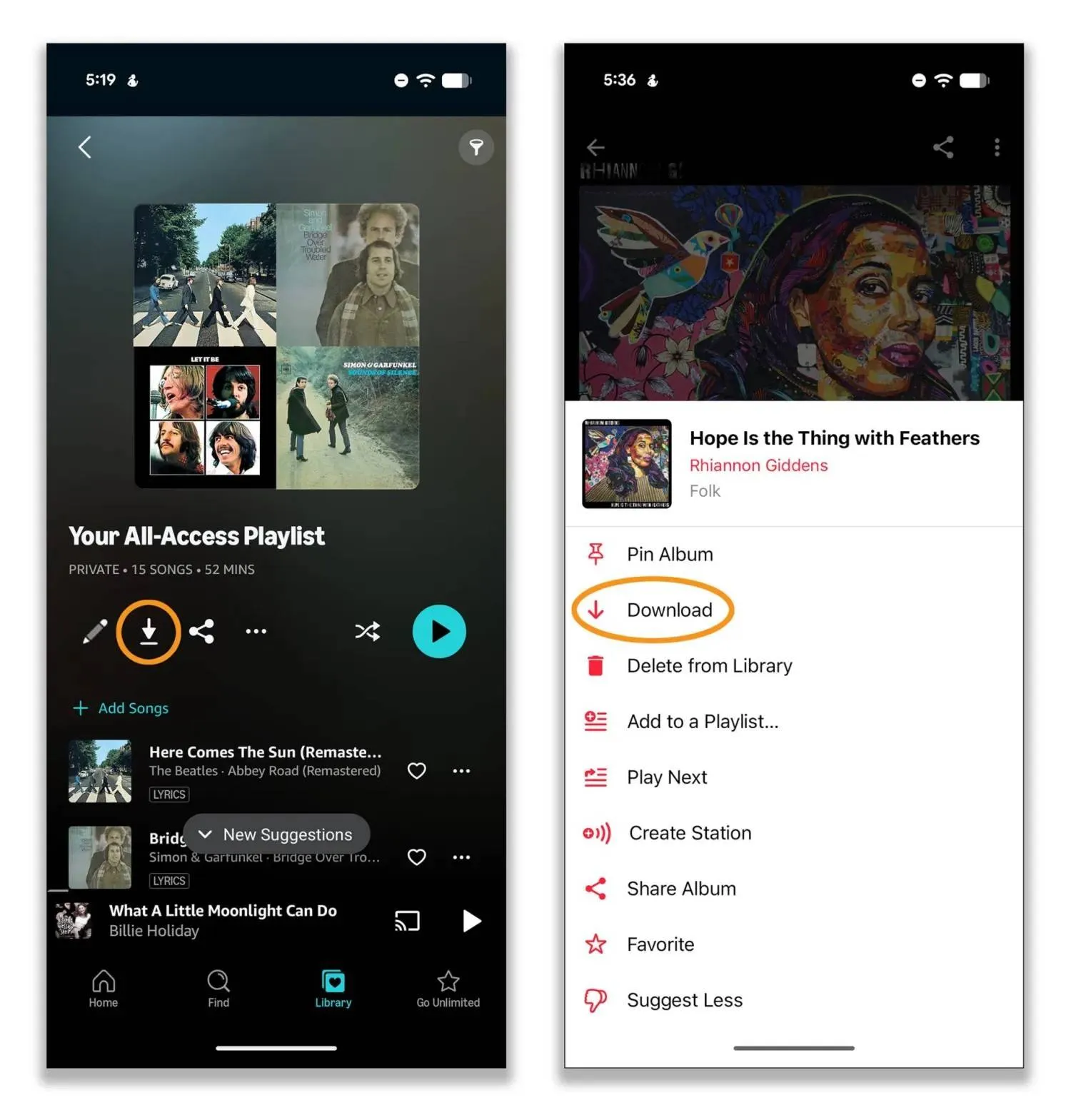
As shown here in the Amazon Music (left) and Apple Music apps for Android, you can temporarily download local copies of a playlist or album to your phone so you can listen later without an internet connection (Amazon; Apple)
TT

How to Listen to Your Favorite Music, Online or Off the Grid

As shown here in the Amazon Music (left) and Apple Music apps for Android, you can temporarily download local copies of a playlist or album to your phone so you can listen later without an internet connection (Amazon; Apple)

JD Biersdorfer*

Streaming services have long provided the most popular way to listen to music, but downloading things digitally has its perks. That’s why some people still prefer to buy their music instead of renting it.

Downloaded files will eat into your device’s available storage space, but you don’t have to worry about inconsistent playback from an unstable internet connection or chewing through megabytes on a metered data plan. And, with some online stores, buying music directly puts more money in the artist’s pocket.

So whether you stream, download or both, here’s a guide to storing music on your phone so you can play it wherever you are.

Offline Listening

If the occasional lack of internet connectivity is your main issue with streaming, most major services allow you to download songs to your phone for playback when you’re offline. However, the files are not permanent, and you may need to have a paid subscription at a certain tier.

Amazon Music, Apple Music, Pandora, Qobuz, Spotify, Tidal and YouTube Music are among the subscription services with an offline-listening option. In most cases, just look for a downward-pointing arrow or menu with a download option. Then collect the tracks you want to take along before you leave on that camping trip or lengthy flight.

Personal Libraries

Before streaming services, many people kept a music library of audio files ripped from compact discs or purchased from digital stores. If you’ve never gotten around to adding those files to your phone, you can copy them with a few different methods. (Note that tracks that were originally sold with copyright protection might not play.)

If you adopted YouTube Music after Google discontinued its Google Play Music store in 2020, you can upload up to 100,000 songs to YouTube Music from your computer — even with a free plan. Then you can download them to your phone for offline listening in the YouTube Music mobile app.

Go to music.youtube.com in your computer’s web browser and drag the audio files into the browser window. (Or, click on your profile photo in the top-right corner of the window, choose Upload from the menu and select the files.) Tracks in the FLAC, M4A, MP3, OGG and WMA formats work, but not M4P files or other copy-protected formats.

If you subscribe to the Apple Music streaming service on your iOS or Android device, you can download files previously purchased from the iTunes Store to the Music app by tapping the download arrow next to the title.

If you don’t subscribe to Apple Music, iOS users can download the files from the iTunes Store app. Just tap the Purchased tab and then Music to see your list. Tap the Download icon to send the files to the Music app.

Alternatively, Apple’s iTunes Match service ($25 a year), uploads the music library on your computer — including songs you’ve ripped from CDs — to the cloud. You can then download those songs on iOS devices using the same Apple account.

Traditional methods of transferring files between computer and phone using cloud-storage sites or USB cables may also work. Apple’s support site has a guide for manually syncing music libraries between computers and its iOS-based devices.

You can also find third-party tools like Droid Transfer for transferring files between PCs and Android phones, and DoubleTwist CloudPlayer for music stashed on file-storage sites.

Where to Buy

Digital download shops have been around since the 1990s, although buying songs now might take extra steps. Thanks to app-store regulations, you now typically buy files from the company’s website, then download them in its separate mobile app.

For example: Amazon Music. You purchase audio files on the Amazon website and download them to your phone from the Purchased tab in the Amazon Music mobile app.

Similarly, the Qobuz subscription service has a music store on its website and mobile apps for Android and iOS to download purchases.

SoundCloud and Bandcamp, both distribution platforms highlighting independent artists, let you stream and buy digital music downloads.

A Windows version of iTunes still exists, but Apple retired the Mac software in 2019 in favor of its Apple Music app — which serves as both a subscription service and the jukebox software for your personal audio library.

You can still buy music directly through the iTunes Store app for iOS, where it lands in the Music app. And the Apple Music app for Windows and Mac computers has an iTunes Store section.

If downloading music brings memories of those peak iPod years, you can visually indulge yourself. Free apps like ClassiPod (for Android) or SepiaPod (for iOS) play your music library and provide a nostalgic interface right there on your modern smartphone.

*The New York Times