


Flowers Bloom in War-Torn Syria's Battered Cities

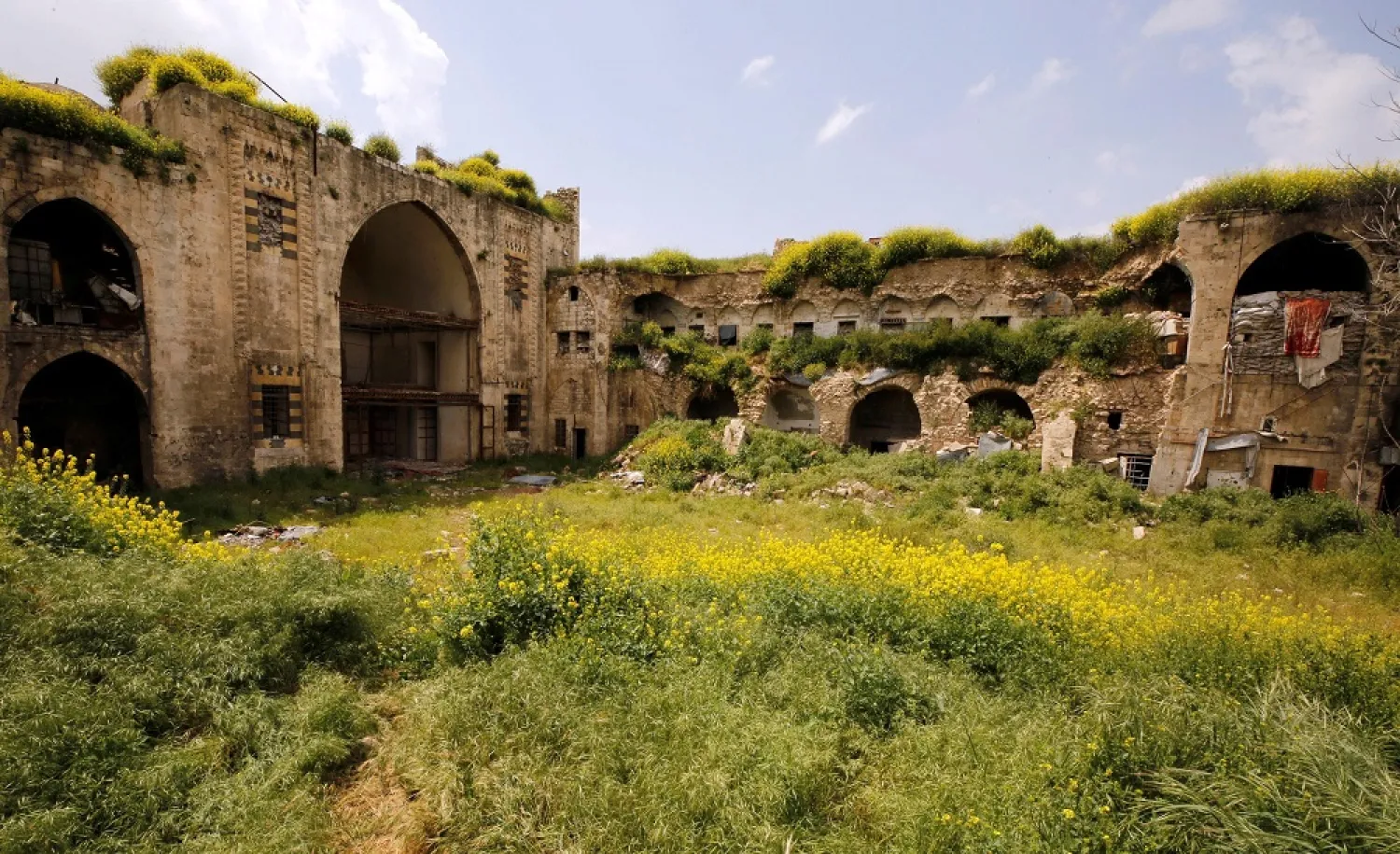
A view of a damaged archaeological site in the old city of Aleppo. (Reuters)
TT

Flowers Bloom in War-Torn Syria's Battered Cities

A view of a damaged archaeological site in the old city of Aleppo. (Reuters)

A mantle of gold smothers Aleppo’s ruins, hiding the rubble and filling the craters with wild flowers that for a moment seem to transform a landscape scarred by war, destruction and death.

After an unusually wet winter, the warm days of spring have suddenly brought an abundance of color and life to a weary Syria, blooming in city and desert, said a Reuters report Tuesday.

But they blanket a scene of war. The hummocks and dells are piles of debris, barricades, craters and trenches. The flowers grow where people once lived, fought, died.

Eight years of conflict have killed perhaps half a million people, destroyed whole towns and city districts and made half of all Syrians homeless.

In most parts of the country, the fighting is now over - at least for now. Regime leader Bashar Assad holds most of Syria, including the city of Aleppo, taken after months of bitter fighting in 2016.

However, Kurdish-led groups hold northeast Syria, and, in the northwest near Aleppo is the frontline with the last big rebel stronghold, where there has been bombardment in recent weeks.

The war destroyed much of Aleppo’s beautiful Old City and many poor eastern districts, leaving neighborhoods of rubble and fallen stone.

In the remains of the Attariyeh section of the souk, where the stone roof collapsed, a young couple sat on a pile of stones courting in the warm evening air, the sun illuminating the yellow flowers and picking out the woman’s red headscarf.

The steep sides of the ancient citadel’s round hill in the center of the city are thick with blooms and families gather at sunset to stroll or sit.

“It’s God’s message to make everything beautiful after mankind destroyed everything,” said Majd Kanaa, 35, standing at the end of a souk alleyway where he was repairing his late father’s shop, ready to reopen.

Clouds of butterflies, russet, black and white, flutter from the undergrowth and bees hum round the flowers. Flocks of swallows flit from the sky to roost in the ruins.

At night, in the fields and olive groves just outside the city, a cacophonous croaking of frogs drowns out the noise of cars from a road lined with cypress and pine trees.

Along the road from the south, precariously held for years by the regime with opposition factions on one side and the ISIS terrorist group on the other, the fighting left a chain of fortifications.

The war has moved far from here and these are now mostly deserted. Grass and flowers grow thick between the oil drums, sandbags and stacked tires guarding the old gun emplacements and concrete boxes.

Yellow broom, purple thistles and fat red poppies spring from the desert floor and paint it a psychedelic swirl of color. In one place, a huge patch of ground seems to bleed with thousands of poppies springing from the softly undulating earth.

“In Syria we believe that poppies are the blood of the martyrs,” said Aleppo lawyer and historian Alaa al-Sayed, explaining that their Arabic name comes from a dead king. “There are so many martyrs,” he added, according to Reuters.

In the hills beyond the poppies are the pretty pointed mud domes of traditional “beehive” villages and young shepherds watching flocks of sheep and goats.

When the strong west wind ruffles the ground in the late afternoon, it makes the grass shimmer. Flocks of small birds suddenly rise from the ground and bob in the air. Migrating storks beat their wings in the distance.

Little electricity means little light, and at night the heavens are lit by a sharp crescent moon and brilliant constellations of stars. A fox slinks across the desert road in the light of car headlights.

But from time to time they also illuminate the burnt-out wrecks by the roadside, the remains of battles past, while two heavy trucks bear tanks onwards to today’s front line.



Hundreds of Firefighters Battle Japan Forest Blazes

 Japanese Self-Defense Forces helicopter drops water during firefighting operations, as wildfires continue in Otsuchi, Iwate Prefecture, Japan, April 25, 2026. (Reuters)
Japanese Self-Defense Forces helicopter drops water during firefighting operations, as wildfires continue in Otsuchi, Iwate Prefecture, Japan, April 25, 2026. (Reuters)
TT

Hundreds of Firefighters Battle Japan Forest Blazes

 Japanese Self-Defense Forces helicopter drops water during firefighting operations, as wildfires continue in Otsuchi, Iwate Prefecture, Japan, April 25, 2026. (Reuters)
Japanese Self-Defense Forces helicopter drops water during firefighting operations, as wildfires continue in Otsuchi, Iwate Prefecture, Japan, April 25, 2026. (Reuters)

Hundreds of firefighters were battling wildfires in the forests of northern Japan on Saturday, as authorities urged more than 3,200 people to evacuate from their homes, government officials said.

As of Saturday morning, blazes in the mountainous areas of Iwate region had burned about 700 hectares (1,730 acres) since breaking out three days ago, local government officials said in a statement.

A large column of smoke, which could be smelled 30 kilometers (20 miles) away, was seen rising up the valley near the town of Otsuchi as two helicopters dropped water on the burning forest.

In Otsuchi, fire engines were spraying the forest near homes close to the fire.

About a dozen helicopters and more than 1,300 firefighters as well as Japan Self-Defense Forces troops would be mobilized on Saturday to battle the fires, the statement said.

At least eight buildings had been burnt but all the residents had evacuated, it said.

"We're making efforts to extinguish (the fires) ... and will update the information" later in the day, an Iwate official told AFP.

"Ultimately, I do hope it'll rain," a man in Otsuchi told public broadcaster NHK.

Increasingly dry winters have raised the risk of wildfires. A blaze that broke out in the Iwate city of Ofunato early last year was Japan's worst in more than half a century.

Scientists have long warned that climate change caused by mankind's burning of fossil fuels will make periods of drought more intense and longer-lasting, creating the ideal conditions for wildfires.


Australia and New Zealand Gather in Türkiye to Commemorate WWI Battle

New Zealand soldiers march during the international service in recognition of the Gallipoli campaign at Mehmetcik monument, a day before ANZAC Day, in the Gallipoli peninsula near Canakkale, Türkiye, Friday, April 24, 2026. (Sercan Ozkurnazli/Dia Photo via AP)
TT

Australia and New Zealand Gather in Türkiye to Commemorate WWI Battle

New Zealand soldiers march during the international service in recognition of the Gallipoli campaign at Mehmetcik monument, a day before ANZAC Day, in the Gallipoli peninsula near Canakkale, Türkiye, Friday, April 24, 2026. (Sercan Ozkurnazli/Dia Photo via AP)

Officials and visitors from Australia, New Zealand and Turkey gathered in northwest Türkiye on Saturday to commemorate the 111th anniversary of the Battle of Gallipoli.

The solemn ceremony began at 5:30 a.m. local time near a beach where the Australian and New Zealand Army Corps, or Anzacs, first landed at Gallipoli at dawn on April 25, 1915.

The hour-long event included mournful hymns, prayers and the laying of wreaths by the participants, which included representatives from many countries around the world.

The Gallipoli campaign, part of a British-led effort to defeat the Ottoman Empire, ultimately failed, resulting in tens of thousands of deaths on both sides during the eight-month conflict. It aimed to secure a naval route from the Mediterranean Sea to Istanbul through the Dardanelles, and knock the Ottomans out of the war.

The battle helped forge Australia and New Zealand’s national identities, as well as friendship with their former adversary, Türkiye.

“From great suffering, understanding can grow. From former enemies, friendships can blossom. The relationship between Türkiye, Australia and New Zealand is built on remembrance, respect and recognition of our shared humanity,” said Governor-General of New Zealand Dame Cindy Kiro during the opening address.

Turkish Col. Fatih Cansiz read from the tribute Türkiye’s founder Mustafa Kemal Ataturk made in 1934 for the fallen: “Those heroes that shed their blood and lost their lives ... you are now lying in the soil of a friendly country. Therefore, rest in peace. There is no difference between the Johnnies and the Mehmets to us where they lie side by side in this country of ours.”

Ataturk first rose to prominence as commander of the Turkish forces at Gallipoli, then went on to lead Türkiye’s War of Independence and ultimately found the Turkish Republic.


Chinese Panda Pair Headed to US Zoo

One of four panda bears at Zoo Atlanta rests in their habitat on Dec. 30, 2023, in Atlanta. (AP)
TT

Chinese Panda Pair Headed to US Zoo

One of four panda bears at Zoo Atlanta rests in their habitat on Dec. 30, 2023, in Atlanta. (AP)

Two giant pandas from China are headed to Atlanta on a new 10-year conservation deal.

Pandas Ping Ping, a male, and Fu Shuang, a female, will live at Zoo Atlanta, China Wildlife Conservation Association said in a statement Friday.

The organization signed the research agreement with the United States zoo last year, it said, noting the deal continues "the 'panda bond' shared by the people of both nations for more than 20 years".

The panda pair come from the Chengdu Research Base of Giant Panda Breeding in southwestern Sichuan province, according to the statement.

"Zoo Atlanta is delighted and honored to yet again be trusted as stewards of this treasured species," the zoo's president Raymond B. King said in a statement.

"We can't wait to meet Ping Ping and Fu Shuang."

The zoo welcomed its first giant pandas Yang Yang and Lun Lun when they arrived in 1999.

That pair produced seven cubs over a 25-year agreement before returning to China with their two youngest in 2024, when that deal expired.

The US side has prepared for Ping Ping and Fu Shuang's arrival by renovating their habitat to make it "more comfortable and more safe", the Chinese association said.

The panda news comes as US President Donald Trump is expected to meet his Chinese counterpart Xi Jinping in Beijing next month.

A Chinese foreign ministry spokesman said on Friday the new deal "will contribute to the well-being of giant pandas... and the friendship between the people of China and the US".