


EU Investigates Palestinian Curricula over Alleged Hate Education

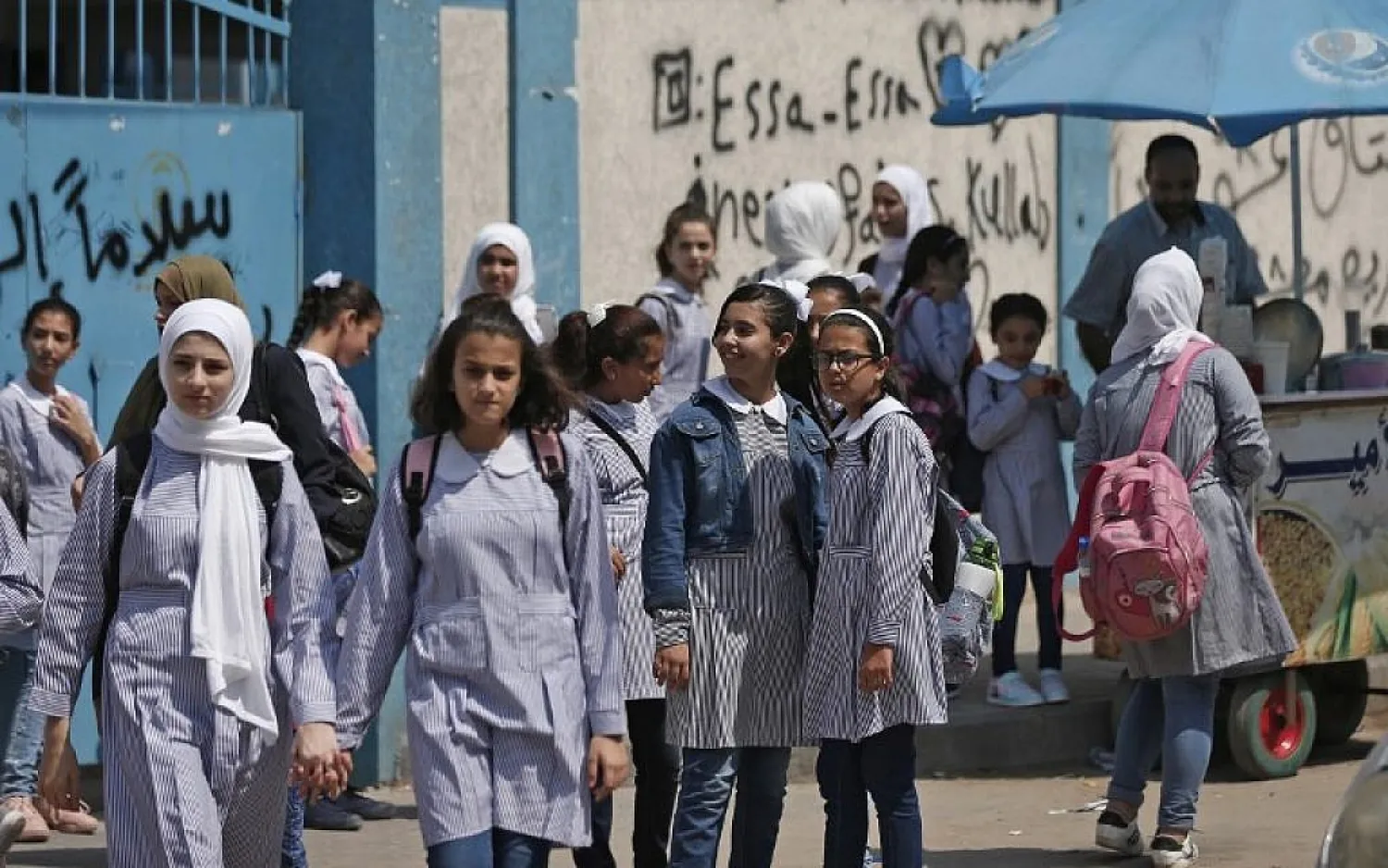
Pupils gather in front of a school run by the United Nations Agency for Palestinian Refugees (UNRWA) in Gaza City on August 29, 2018, on the first day of classes after the summer holidays. (AFP/ Mahmud Hams)
TT

EU Investigates Palestinian Curricula over Alleged Hate Education

Pupils gather in front of a school run by the United Nations Agency for Palestinian Refugees (UNRWA) in Gaza City on August 29, 2018, on the first day of classes after the summer holidays. (AFP/ Mahmud Hams)

The European Union (EU) has decided to investigate the new Palestinian textbooks after reports said they promote against peace with Israel.

EU foreign policy chief Federica Mogherini stated that the EU took this decision after a study by a non-government organization showed that the new Palestinian textbooks are even more radical than previous editions.

The purpose of the probe is to "identify possible incitement to hate and violence and non-compliance with UNESCO standards regarding peace and tolerance in education," Mogherini said.

"Incitement to violence is incompatible with the promotion of the two-state solution, and greatly exacerbates the lack of trust between the communities,” she added.

The EU grants the Palestinian Authority annually around EUR360 million, much of which goes to the Education Ministry. The EU passed a legislation in April 2018 to prevent hateful content in Palestinian textbooks.

The Institute for Monitoring Peace and Cultural Tolerance in School Education, IMPACT-SE, published last month a 70-page document with hundreds of examples of incitement for hate in the new Palestinian textbooks.

According to the investigation by IMPACT-SE, the 2018-2019 curriculum has intentionally omitted studies about peace or the presence of Jews before 1948.

"The European Union is the largest financial donor to the Palestinian Ministry of Education. But European taxpayers' money and good will have been abused for years, with generations of young Palestinians systematically undergoing radicalization," said Marcus Sheff, CEO of the institute.

 "There is no excuse and no justification. The PA takes hundreds of millions of euros and in return educates millions of children to violence, hatred, and Jihad. We hope that the EU's in-depth examination of this issue will help put an end to this abuse of children and will finally enable young Palestinians to finally receive a meaningful education for peace and tolerance,” he added.

However, the Palestinian Ministry of Education said that its previous and updated curricula are committed to the message of openness, independence, and international standards. They also reinforce the identity and belonging to the Palestinian community and demand the end of the occupation, it said.

The ministry added that in the past two years it requested an impartial European committee to compare the Israeli and Palestinian curricula but Israel rejected the move, which means that the occupation’s curricula are full of incitement.



Strike Kills One Iraqi Fighter near Syria Border

Mourners attend the funeral of members of Iraq's Hashed al-Shaabi, who were killed in an airstrike in the town of al‑Qaim near the Syrian border, amid heightened regional tensions due to the US-Israel conflict with Iran, in Baghdad, Iraq, March 12, 2026. REUTERS/Stringer
TT

Strike Kills One Iraqi Fighter near Syria Border

Mourners attend the funeral of members of Iraq's Hashed al-Shaabi, who were killed in an airstrike in the town of al‑Qaim near the Syrian border, amid heightened regional tensions due to the US-Israel conflict with Iran, in Baghdad, Iraq, March 12, 2026. REUTERS/Stringer

An attack killed one fighter from the former paramilitary coalition Hashed al-Shaabi on Saturday, the alliance said, blaming the US and Israel.

Iraq has been dragged into the war between the United States, Israel and Iran, with strikes targeting both US interests and pro-Iran groups in the country, reported AFP.

"This treacherous attack resulted in the martyrdom of one PMF fighter and the wounding of four others, as well as a member of the ministry of defense," said a short statement from the group, which is also known as the Popular Mobilization Forces (PMF), adding it was a "Zionist-American attack".

The PMF is a coalition of armed groups -- formed in 2014 to fight extremists-- that is now part of Iraq's regular army, but also contains pro-Iran factions who have a reputation for acting independently.

PMF positions have been repeatedly targeted since the outbreak of war, with the group consistently blaming the attacks on the US and Israel.

According to the group's statement, the latest attack targeted a position in western Anbar province of the 45th Brigade, which belongs to the US-blacklisted, pro-Iran Kataeb Hezbollah group.

Kataeb Hezbollah is part of the umbrella movement known as the Islamic Resistance in Iraq, which has been claiming daily attacks since the start of the war on US interests in Iraq and the region.

The Pentagon has said helicopters have carried out strikes against pro-Iran armed groups in Iraq during the war.

Washington has strongly denied claims it has targeted Iraqi security forces.


Houthis Threaten ‘Gradual Escalation’ after Fourth Attack on Israel

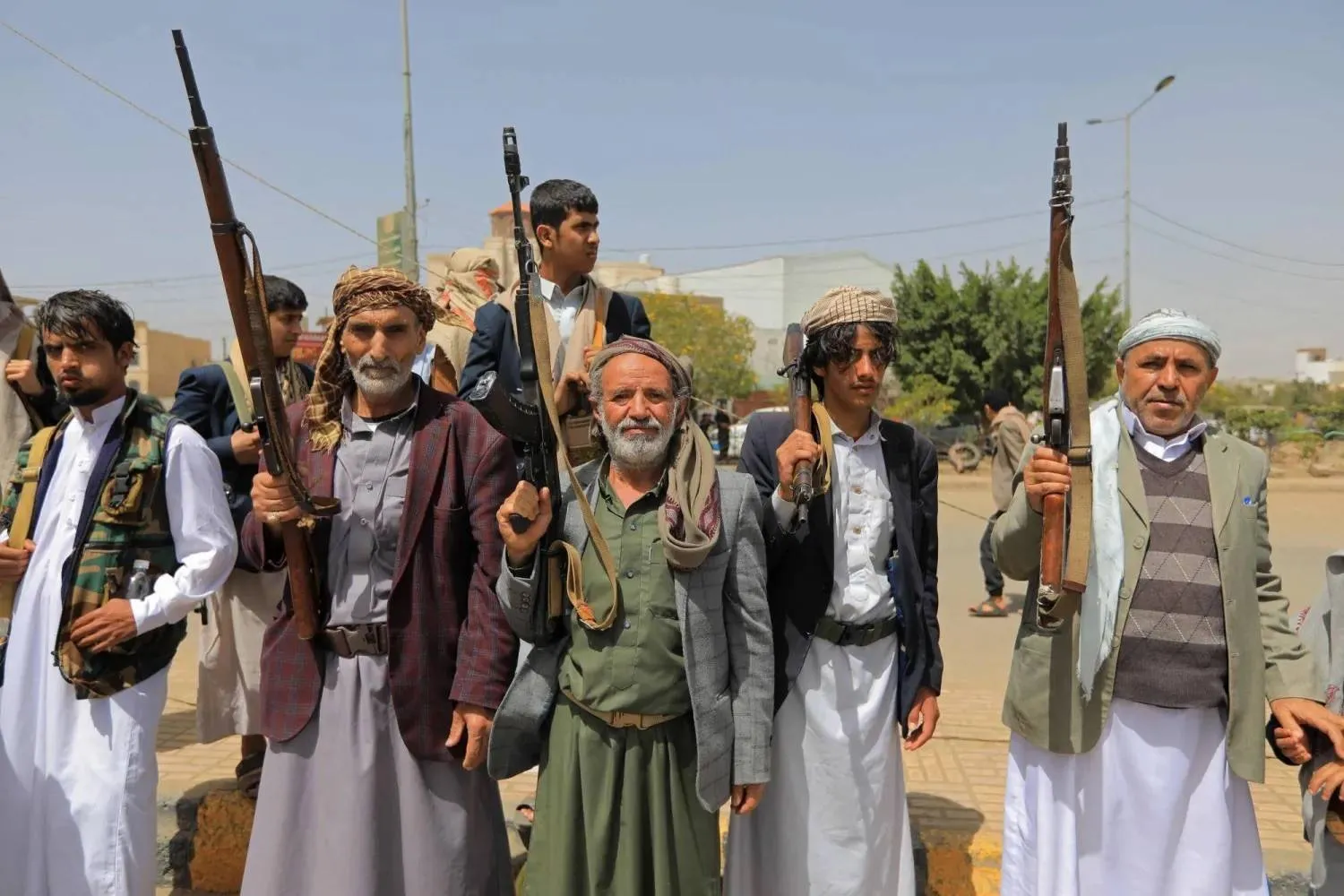
Houthi gunmen during a rally in Sanaa called by their leader (AFP) 
TT

Houthis Threaten ‘Gradual Escalation’ after Fourth Attack on Israel

Houthi gunmen during a rally in Sanaa called by their leader (AFP) 

Yemen’s Houthi group has threatened “gradual escalation” after claiming a fourth attack on Israel, about a week after entering the war alongside Iran as part of the Tehran-led “axis of resistance.”

The move comes as Yemen’s internationally recognized government steps up rhetoric, saying a decisive battle to retake the state from Houthi control is nearing. Israel, for its part, said it is consulting Washington on how to respond to the Houthi attacks, despite their limited impact compared with sustained fire from Iran and Hezbollah.

In a televised statement late Thursday, Houthi military spokesman Yahya Saree said the group launched “a salvo of ballistic missiles” at “vital Israeli targets in the occupied Jaffa area.” He claimed the operation was carried out in coordination with Iran and Hezbollah and had “successfully achieved its objectives.”

The Houthis said their intervention in what they described as a “major and exceptional battle” would be incremental, adding they would adjust their actions depending on “the enemy’s escalation or de-escalation.”

The latest strike marks the fourth since the group announced direct involvement in the regional confrontation, underscoring growing coordination among Iran-backed actors, including Hezbollah and armed Iraqi factions.

Limited effect

The Houthis had claimed a third attack a day earlier. The Israeli military said it intercepted a missile launched from Yemen “without casualties or damage,” adding early detection allowed it to neutralize the threat.

Analysts say such attacks are unlikely to do more than stretch Israel’s air defenses, already under pressure from multiple fronts, including Iran and Hezbollah.

In his first appearance since announcing the escalation, Houthi leader Abdul Malik al-Houthi said the group had shifted from political and media backing of Iran to “direct operational engagement.”

He framed the attacks as part of “joint operations of the axis of resistance,” describing the confrontation as “a duty that transcends geographical borders.” He also defended joining the war, saying neutrality “is not an option,” despite growing concern inside Yemen over the economic and security risks.

Al-Houthi urged supporters to maintain weekly pro-Iran rallies and step up mobilization, including sending school students to summer camps—long used by the group for recruitment.

Government signals offensive

Tareq Saleh, a member of Yemen’s Presidential Leadership Council, said “the battle to end the Houthi coup is approaching,” adding national forces would act “as one team.”

State media reported his remarks during a visit to forces on Yemen’s west coast, where he praised troops as “a safety valve for the republic,” signaling confidence in their ability to regain the initiative.

Saleh also pointed to the regional dimension, saying Iranian actions against Gulf states and Jordan show Tehran’s project is “destructive” and “has never truly been directed at Israel.”

Rejecting Houthi claims, he said the group “pretends to confront Israel” while using that narrative to justify violence against Yemenis, noting the conflict with the Houthis dates back to 2004, well before current regional tensions.


Fire Reported at Foreign Oil Companies' Storage Facilities in Iraq after Drone Strike

Members of Iraq's Hashed al-Shaabi forces stand guard during a pro-Iran rally in Tahrir Square in Baghdad on April 2, 2026.  (Photo by AHMAD AL-RUBAYE / AFP)
Members of Iraq's Hashed al-Shaabi forces stand guard during a pro-Iran rally in Tahrir Square in Baghdad on April 2, 2026. (Photo by AHMAD AL-RUBAYE / AFP)
TT

Fire Reported at Foreign Oil Companies' Storage Facilities in Iraq after Drone Strike

Members of Iraq's Hashed al-Shaabi forces stand guard during a pro-Iran rally in Tahrir Square in Baghdad on April 2, 2026.  (Photo by AHMAD AL-RUBAYE / AFP)
Members of Iraq's Hashed al-Shaabi forces stand guard during a pro-Iran rally in Tahrir Square in Baghdad on April 2, 2026. (Photo by AHMAD AL-RUBAYE / AFP)

A fire broke out ‌early ‌on Saturday at ‌storage ⁠facilities belonging to ⁠foreign ⁠oil ‌companies ‌west of Iraq's ‌Basra after ‌a ‌drone strike, security ⁠sources told Reuters.