


Mother's Aleppo Film Moves Cannes to Tears

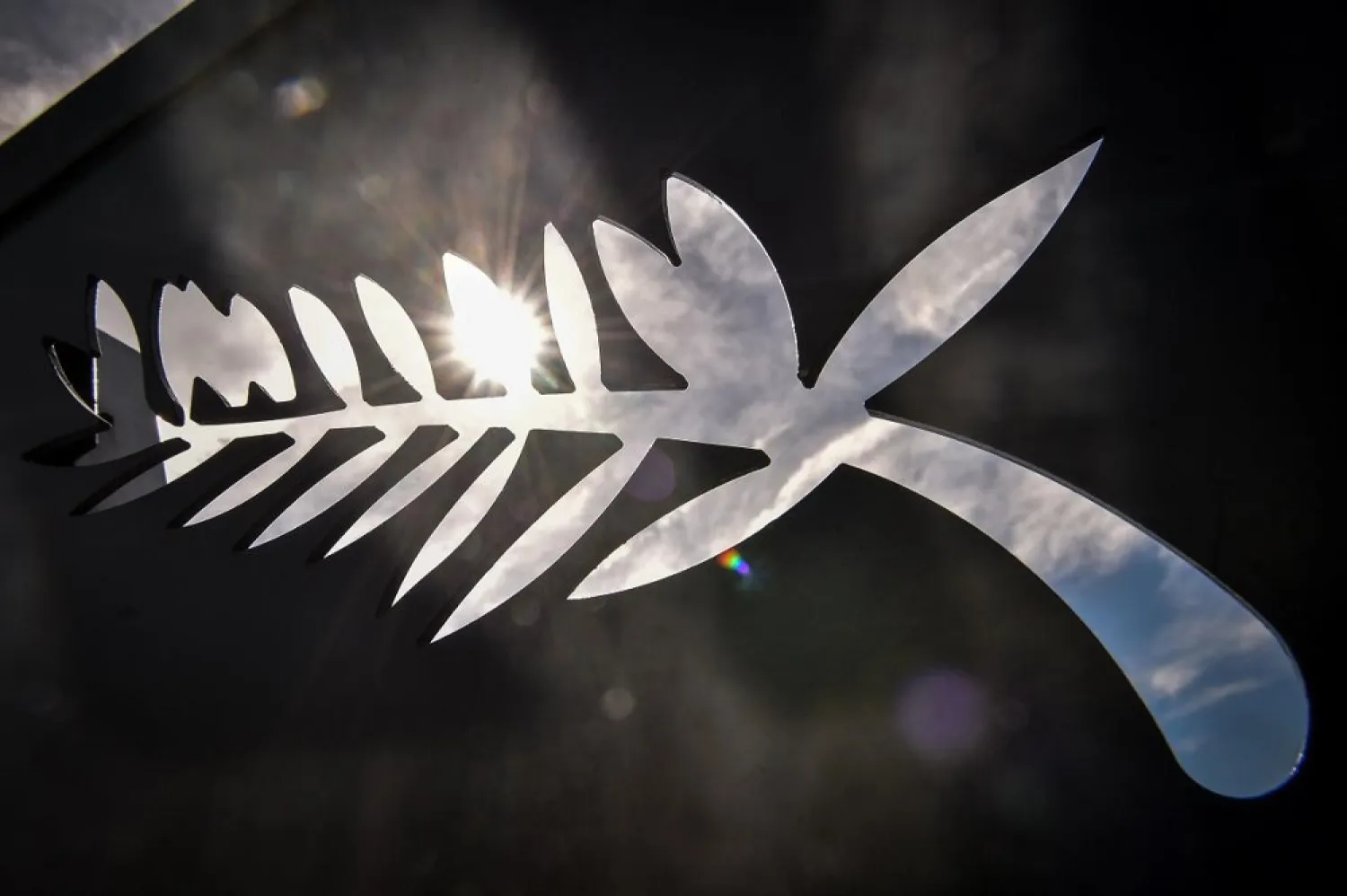
The sun is seen seeping through a palm, similar to the Palme d'Or, on May 13, 2019. (AFP)
TT

Mother's Aleppo Film Moves Cannes to Tears

The sun is seen seeping through a palm, similar to the Palme d'Or, on May 13, 2019. (AFP)

With the thud of shells exploding all around them in the dark, a terrified young couple sneak past lines of Syrian regime troops back into besieged Aleppo, their six-month-old daughter Sama clutched in a sling.

It is a key moment in Waad al-Kateab's powerful and intimate documentary "For Sama", a love letter to her infant daughter to explain what they lived through in that city of death and devastation just in case they didn't make it.

The film, which charts five years of Kateab's life from student protester to wife and young mother, reduced much of the audience at the Cannes film festival to tears and brought the house to its feet in a minutes-long standing ovation, reported AFP Friday.

Kateab was just 20 when the pro-democracy protests began in Syria, prompting a bloody crackdown by regime leader Bashar Assad that has killed 370,000 people and displaced millions.

The northern city of Aleppo suffering some of the heaviest fighting after rebels seized its eastern sector in 2012.

Her idea was to document their increasingly precarious lives in the city as the crushing might of the Russian-backed Syrian regime pressed in, with the footage juxtaposing the joy of falling in love and the excitement of becoming a mother with the daily trauma of life inside the ravaged city's last hospital.

At one point in July 2016, when the situation was already very extreme, Kateab and her doctor husband Hamza went to Turkey to see his sick father. While there, they heard regime forces were poised to totally cut off eastern Aleppo.

"We knew we had to go back," Kateab told AFP. Within an hour, they had packed, despite pleas from his parents not to go, or to leave baby Sama behind.

With access to Aleppo almost impossible, the young family somehow made the treacherous journey, sneaking past regime troops in the dead of night to reach the "safety" of the opposition-held east of the city.

At one point, baby Sama starts wailing, prompting frantic hushed efforts to calm her in a surreal scene in which they sing her a nursery rhyme about chicks and a mother hen.

"We were very scared because we didn't know where the regime soldiers were exactly. We knew it was very risky, there was shelling on the front line so they were just about to take the road," Kateab said.

What dragged them back was the close bonds they had built with those living under bombardment, and the sense they had a crucial role to play.

"We lived with these people for five years, we shared all these experiences with them, the shelling the bombings. Hamza knew how much of a difference a doctor would make in that situation, and I knew how important it was to document things," she said.

"We are not brave, we are just people. Any normal human being would do the same thing."

'I need you to understand'
As the film plays out, the lives of real people are brought sharply into focus, the absurdity of laughter as missiles crash down overhead, the children painting a bombed-out bus, the snowball fights, the aching grief of two little boys over the body of their brother.

Their life increasingly revolves around the hospital where Hamza and his team race to treat the flood of victims which at one point reaches 300 a day, and which is then itself hit in an air strike.

Central to the story is her struggle with the impossible question of whether or not to flee the city to protect her daughter.

"Sama, I've made this film for you. I need you to understand what we were fighting for," she says in the voiceover.

Co-director Edward Watts said it was crucial to counter the regime's propaganda -- that they were fighting ISIS terrorists in Aleppo.

"ISIS was only in Aleppo for three months," he told AFP.

"Ultimately, you had secular, middle-class, educated people peacefully protesting for their basic human rights and they were met with the full violence of a national military force," he said.

"The big point of the film is the shared humanity. What Waad captured is people that you know, your friends from uni, your neighbors, your school teacher."

Traumatized but grateful
Six months after the family returned, Aleppo was overrun and they were forced into exile.

She was later awarded an Emmy for her reports for Britain's Channel 4, believed to be the most watched reports of any during the Syrian war.

"Each one has his own difficulties, nightmares or other things, and even if I lived with this all my life, I still feel gratitude for the experiences I had," she told AFP.

"When I showed the film to the people who were there, all of them said 'This is our story'," she said.



Annual Orchids Show Brings Vivid Color to Chicago Winter

Orchids adorn a Volkswagen Beetle as finishing touches are placed on the 12th annual Chicago Botanic Garden Orchid Show, Friday, Feb. 6, 2026, in Glencoe, Ill. (AP)
TT

Annual Orchids Show Brings Vivid Color to Chicago Winter

Orchids adorn a Volkswagen Beetle as finishing touches are placed on the 12th annual Chicago Botanic Garden Orchid Show, Friday, Feb. 6, 2026, in Glencoe, Ill. (AP)

A soft layer of white snow blankets the grounds of the Chicago Botanic Garden. The air is chilly, the sky gray.

Inside, however, the air is warm and lights illuminate more than 10,000 vividly colored orchids. Staff members move in and out of greenhouses, preparing to open the garden’s 12th annual Orchid Show on Saturday.

This year’s theme is “Feelin’ Groovy" with several installations calling back to the 1970s, including a yellow Volkswagen Beetle filled with orchids.

“It’s just a really great way to get out of the winter cold and come into our greenhouses,” said Jodi Zombolo, associate vice president of visitor events and programs. “I think people are really looking for something to kind of bring happiness and something that they will enjoy and find whimsy in.”

The orchid family is one of the largest in the plant world and some of the species in the show are rare, exhibits horticulturist Jason Toth said. One example is the Angraecum sesquipedale, also known as Darwin’s orchid, on display in the west gallery.

Toth said the orchid led Darwin to correctly conclude that pollinators have adapted in order to reach down the flower's very long end.

"It has a great story and it’s quite remarkable-looking,” said Toth.

Elsewhere, massive, gnarly roots dangle from purple, pink and yellow Vanda orchids in the south greenhouse. These epiphytic orchids grow on the surface of trees instead of in soil.

“I think everyone’s tired of the winter,” said Toth. “So having some kind of flower show at this point is what we’re all craving. And 'Orchids' fits the bill.”

The show is expected to draw 85,000 visitors this year.


UK Zoo Says Tiny Snail ‘Back from Brink’ of Extinction

This photo taken on February 2, 2026 shows a greater Bermuda snail, which is part of a breeding program, sitting under a microscope at Chester Zoo in Chester, north-west England. (AFP)
TT

UK Zoo Says Tiny Snail ‘Back from Brink’ of Extinction

This photo taken on February 2, 2026 shows a greater Bermuda snail, which is part of a breeding program, sitting under a microscope at Chester Zoo in Chester, north-west England. (AFP)

A minuscule snail once thought to have disappeared has been saved from the edge of extinction, a British zoo said Saturday.

The greater Bermuda land snail had not been spotted for years until a cluster of shells was caught slithering through an alleyway in the capital Hamilton in 2014.

Some were flown to Chester Zoo, where experts spent years building up the population before they released thousands back into the wild in 2019.

Unique to Bermuda, this type of snail traces its lineage back over a million years -- a relic of the island's ancient ecosystem.

Now "we can officially say the species is back from the brink", said Chester Zoo in a statement sent to AFP.

The snail "once thought lost has officially been saved from extinction by experts in Chester Zoo, London Zoo, and Bermuda," it said.

They confirmed this after a study in the Oryx biodiversity conservation journal found that six colonies of the re-wilded snails had settled successfully on the archipelago.

"The fact that the snails are firmly established in six areas is massive," said Gerardo Garcia, animal and plant director at Chester Zoo.

From specially designed pods in northwest England, they are now breeding and roaming freely in Bermuda, he said.

"Being able to say that the snails are now safe from extinction is amazing ... and something that conservationists might get to say once or maybe twice in their whole career."

At one point, keeper Katie Kelton said the zoo housed around 60,000 snails.

It was "a lot of snails to look after ... a lot of chopping lettuce, sweet potato and carrot," she told AFP.

- Conservation 'success' story -

The snails faced many threats, including habitat loss, pesticide use, and the cannibalistic "wolf snail".

They were rescued in a process Garcia described as "a war game" with growing numbers tracked by flags pinned across a map of Bermuda.

While they cannot say the species is safe forever, he noted they now knew how to rebuild the population quickly and effectively.

But long-term recovery, he said, would go hand in hand with nature regeneration projects carried out by the Bermudian government.

Chester Zoo has now turned its attention to the lesser Bermuda land snail -- even smaller and much harder to breed.

These snails, which can reach about 23 millimeters (0.9 inches) in length, may now be extinct in the wild.

"We're considering things like seasonality, how long it takes a colony to establish and the complexity of their environments," said expert Iri Gill.

But their experience with the greater Bermuda snail should point them "in the right direction", she said.

"These snails are tiny, but this has been one of the biggest success stories in conservation."


SpaceX Delays Mars Plans to Focus on 2027 Moon Landing

FILE PHOTO: SpaceX headquarters is shown in Hawthorne, California, US June 5, 2025. REUTERS/Daniel Cole/File Photo
TT

SpaceX Delays Mars Plans to Focus on 2027 Moon Landing

FILE PHOTO: SpaceX headquarters is shown in Hawthorne, California, US June 5, 2025. REUTERS/Daniel Cole/File Photo

Elon Musk's SpaceX told investors it will prioritize going to the moon first and attempt a trip to Mars at a later time, the Wall Street Journal reported on Friday, citing sources.

The company will target March 2027 ‌for a ‌lunar landing without ‌astronauts ⁠on board, the ‌report added. The news comes after SpaceX agreed to acquire xAI in a deal that values the rocket and satellite company at $1 trillion and the artificial intelligence outfit ⁠at $250 billion.

SpaceX did not immediately respond ‌to a Reuters request ‍for comment. Musk said ‍last year that he aimed ‍to send an uncrewed mission to Mars by the end of 2026.

SpaceX is developing its next-generation Starship rocket, a stainless steel behemoth designed to be fully reusable and ⁠serve an array of missions including flights to the moon and Mars.

The United States faces intense competition this decade from China in its effort to return astronauts to the moon, where no humans have gone since the final US Apollo mission in ‌1972.