Attention, Amazon Shoppers: Google Wants Some of Your Spending Moneyhttps://english.aawsat.com/home/article/1738726/attention-amazon-shoppers-google-wants-some-your-spending-money
Attention, Amazon Shoppers: Google Wants Some of Your Spending Money
FILE PHOTO: The Google logo is pictured at the entrance to the Google offices in London, Britain January 18, 2019. REUTERS/Hannah McKay
San Francisco - Daisuke Wakabayashi, Karen Weise
TT
TT
Attention, Amazon Shoppers: Google Wants Some of Your Spending Money
FILE PHOTO: The Google logo is pictured at the entrance to the Google offices in London, Britain January 18, 2019. REUTERS/Hannah McKay
For years, Google and Amazon stuck to their strengths. Google’s search monopoly and universe of online services seemed to present little overlap with Amazon’s web commerce empire.
But as the ambitions of each have expanded, it is becoming unavoidably, inescapably clear that the technology giants are heading for a collision.
On Tuesday, at its annual Google Marketing Live conference, Google unveiled a list of new products meant to help it become a destination for shoppers and for marketers hoping to reach consumers considering spending decisions.
Google’s latest move into Amazon’s core business is playing out as the retail giant makes gains in what has traditionally been the search company’s home turf: digital advertising.
As online commerce has become synonymous with Amazon, shoppers are starting more of their product searches at the company’s website instead of Google’s — the traditional on-ramp to all things internet — and marketers are spending advertising money there.
In 2015, about 54 percent of product searches started on Google, and 46 percent started on Amazon. By 2018, the numbers had flipped, according to the marketing analytics firm Jumpshot.
Google may be synonymous with many things — search, ads, email, even artificial intelligence — but online shopping is not one of them. That is not to say the company does not try.
The company’s shopping site, Google Express, looks similar to Amazon’s familiar online marketplace. Whether someone buys an item from, say, 99 Ranch Market and 1-800-Flowers, products are displayed in the same way and the payments are handled through Google Pay, the company’s digital payment system. Customers must meet certain spending minimums to get free delivery, which is limited to the United States.
Google’s financial reports do not break out how much the company makes on e-commerce, nor will the company say how many people use Google Express, but analysts assume it is a sliver of Google’s $116 billion in annual ad sales.
Amazon, on the other hand, sold $277 billion in goods online last year, which analysts estimate is between a third and a half of all e-commerce sales. Amazon’s “other” business segment, which it says is primarily ads, brought in $10.8 billion in the past 12 months, a tiny sum compared with the ad businesses of Google and Facebook, but growing.
“Both of these companies are arriving at the same conclusion from different points,” said Juozas Kaziukenas, founder of the Marketplace Pulse, a research company. “For Amazon, it makes sense because why wouldn’t they? They have all this traffic, and all this interest from brands.”
Amazon did not respond to a request for comment on Google’s new shopping plans.
The two companies, which competed only on the fringes of their businesses for years, now have a range of overlapping interests.
Google Cloud is challenging Amazon Web Services in cloud computing. Amazon’s Twitch is becoming a popular alternative to Google’s YouTube for online video content. The Google Home and Amazon Echo are smart speaker vessels for competing intelligent assistants from the companies.
Google said on Tuesday that it planned to beef up its e-commerce with a shopping feature that would allow people to make purchases directly from searches, images and YouTube videos. By clicking ads in those settings, a shopper would buy products through Google.
For users whose credit card and shipping information is stored with Google, which declined to say how many that is, the company would fill out that information to speed up checking out. Google said it wanted to make shoppers more comfortable buying from retailers that they may not be familiar with by serving as a middleman that guarantees a consistent return policy and customer service.
Google also said it planned to introduce new “Discovery” ads in YouTube, its Discover news feed, which appears beneath the search field in the Google app and mobile website, and Gmail later this year. The goal is to target audiences across different Google properties using what Google knows about users based on their online searches, the videos they watch on YouTube, the websites they browse and the apps they download.
“We’re making more of Google shoppable,” said Brad Bender, the vice president of product management for the company’s ads division.
Google has made other efforts to slow Amazon in e-commerce, with little success. It started a shopping service in 2013, initially offering free same-day delivery before scrapping it. It also tried grocery delivery but gave up on that, too.
More recently, Google has spent several years building its Google Express, featuring more than 1,000 retailers, including Best Buy, Costco and Target. As part of its new shopping push, Google said, it will create a shopping home page that is personalized for users.
Google is adding new advertising and shopping products as it tries to quell concerns that its revenue growth has started to decelerate.
Last month, Google’s parent company, Alphabet, announced quarterly results that fell short of Wall Street expectations, dragging down its share price. One concern raised by analysts was that paid clicks on ads on sites like Google and YouTube had grown 39 percent, below the increases of 50 to 60 percent in recent quarters.
Even as Amazon has become a giant in online sales, only recently has it had an advertising awakening. Many analysts see advertising as a rising third pillar of the business, along with the company’s retail sales and cloud computing services. In an analysis released Tuesday morning, Morgan Stanley estimated that Amazon’s ad business would be valued at $85 billion on Wall Street.
The company has been building more tools for brands to place ads on and off its website, and it has added more space for ads when people search for products.
People may turn to Google to research their interests, but “Amazon is about buying actual goods,” said Brian Wieser, who analyzes media for GroupM, which directs more than $48 billion in ads each year on behalf of brands. “You are actually doing, not just intending to do, which is why it’s viewed as being so much more useful.”
The core of Amazon’s ad offerings are “sponsored product” listings, which direct shoppers to specific items based on the keywords they searched. The top of most search pages also now has a rectangular banner ad, called a sponsored brand, that points shoppers to a company’s page or to particular items.
Amazon has also quietly been building tools to help brands show video and display ads to consumers on other websites based on the rich data they have on their customers. For example, someone using a credit card from one bank to pay for Amazon purchases may see ads for another bank’s cards when reading the news online.
Google’s latest move lets the company sell ads and services that are more closely tied to actual transactions, which they can charge more for.
Mr. Kaziukenas said that for now, Google’s plans were “not a risk at all” for Amazon. The reason, he said, is that Amazon has a large advantage over other retailers after more than a decade of building out the infrastructure to ship items quickly and reliably, while Google is depending on merchants to fulfill orders on their own.
“Google historically has tried to not do things in the physical world,” Mr. Kaziukenas said. “Obviously for them that has been very profitable.”
Tesla to Refund Many Cybertruck Deposits as Demand Exceeds Production, Musk Sayshttps://english.aawsat.com/business/5339211-tesla-refund-many-cybertruck-deposits-demand-exceeds-production-musk-says
Tesla Cybertruck electric vehicles sit parked in a storage lot in San Diego, California on April 11, 2025. (AFP)
TT
TT
Tesla to Refund Many Cybertruck Deposits as Demand Exceeds Production, Musk Says
Tesla Cybertruck electric vehicles sit parked in a storage lot in San Diego, California on April 11, 2025. (AFP)
Tesla will have to refund Cybertruck deposits for many customers as orders far exceed production capacity, CEO Elon Musk said, following last week's announcement that the electric vehicle maker is winding down the pickup truck's production at its Texas factory.
"We will try to make as many as possible before shutting down the line in about 8 months, but will have to return deposits for a lot of people," the billionaire said in a post on X on Monday.
The comments come after Musk said Tesla would add an extra production shift to fulfill outstanding Cybertruck orders before dismantling the production line next year to expand output of its Cybercab robotaxi.
The production winddown is slated for mid-2027, Musk announced on Friday, with the resources being redirected to the Cybercab, a vehicle central to the automaker's autonomous-driving ambitions.
Tesla began delivering the Cybertruck in late 2023, but demand has fallen far short of Musk's expectations. US sales fell 48% to 20,237 units last year, according to Kelley Blue Book, well below Musk's earlier projection that annual Cybertruck sales could reach 250,000 vehicles.
China Extends Suspension of New Rare Earth Controls Until Januaryhttps://english.aawsat.com/business/5339200-china-extends-suspension-new-rare-earth-controls-until-january
A mining machine is seen at the Bayan Obo mine containing rare earth minerals, in Inner Mongolia, China July 16, 2011. (Reuters)
TT
TT
China Extends Suspension of New Rare Earth Controls Until January
A mining machine is seen at the Bayan Obo mine containing rare earth minerals, in Inner Mongolia, China July 16, 2011. (Reuters)
China on Monday announced a two-month extension of export-control waivers due to expire this month, preserving part of a wide-ranging deal struck after a summit between Presidents Xi Jinping and Donald Trump.
China introduced export controls on certain rare earths in April 2025, only to expand them further in October of that year, dramatically widening their scope and also adding new controls on certain diamonds with industrial applications and lithium battery technology.
The measures were then paused for one year last November after a summit in South Korea between Xi and Trump.
The Ministry of Commerce said in a short statement on Monday that the pause would be extended for two months until January 10. It gave no other details.
The extension is part of a broader suspension of trade countermeasures and tariffs announced by China on Monday as it negotiates with Washington over an enduring trade deal.
Trump is set to travel to Shenzhen in southern China later this month for an APEC leaders summit, where he is expected to meet with Xi.
UN to Asharq Al-Awsat ahead of COP31: Climate Change and Energy Security Are Two Integrated Pathshttps://english.aawsat.com/business/5339197-un-asharq-al-awsat-ahead-cop31-climate-change-and-energy-security-are-two
UN to Asharq Al-Awsat ahead of COP31: Climate Change and Energy Security Are Two Integrated Paths
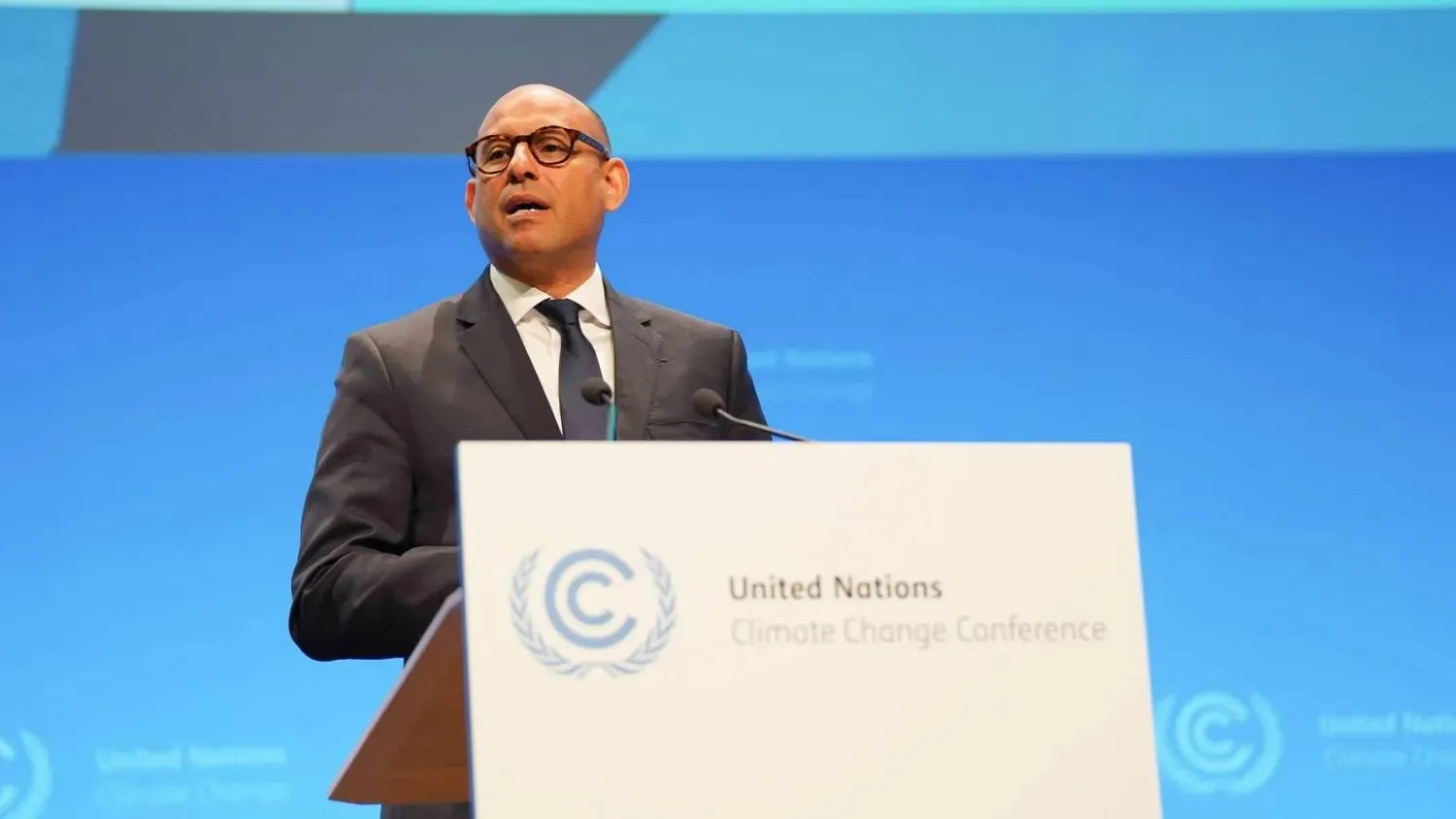
United Nations Climate Change Executive Secretary Simon Stiell. (UN)
On the eve of the opening of the 31st United Nations Climate Change Conference (COP31) on Monday in the Turkish city of Antalya, attention is focused on the ability of governments to bridge the pledge gap and transition toward executing concrete steps to confront climate change. This comes at a time when the challenges of reducing emissions intersect with energy market disruptions, rising electricity demand, and the accelerating expansion of artificial intelligence and data centers.
In an exclusive interview with Asharq Al-Awsat, UN Climate Change Executive Secretary Simon Stiell urged the swift fulfillment of international climate pledges, particularly financing for developing countries and the realization of the $1.3 trillion annual Baku-to-Belem roadmap.
Stiell noted that energy security and climate action are complementary rather than conflicting, while commending the Saudi Green and Middle East Green initiatives for advancing regional cooperation.
The COP31 conference is being held over a period of more than two weeks in Antalya, amid record-breaking temperatures, worsening climate change impacts, and rising energy insecurity, according to the United Nations website. The UN stated that the summit presents a critical opportunity for countries to accelerate the pace of climate action and strengthen cooperation. The host country places electricity at the forefront of its priorities, promoting its own boom in the renewable energy sector alongside its "Zero Waste" program as a means to curb methane emissions.
Stiell addressed the relationship between energy security and climate action amid ongoing disruptions in energy markets, the implications of expanding artificial intelligence and data centers on electricity and water consumption, and the opportunities to utilize these technologies to improve the efficiency of energy systems. He also reviewed the gap between climate pledges and actual implementation, alongside the priorities for the 31st session of the Conference of the Parties in Türkiye.
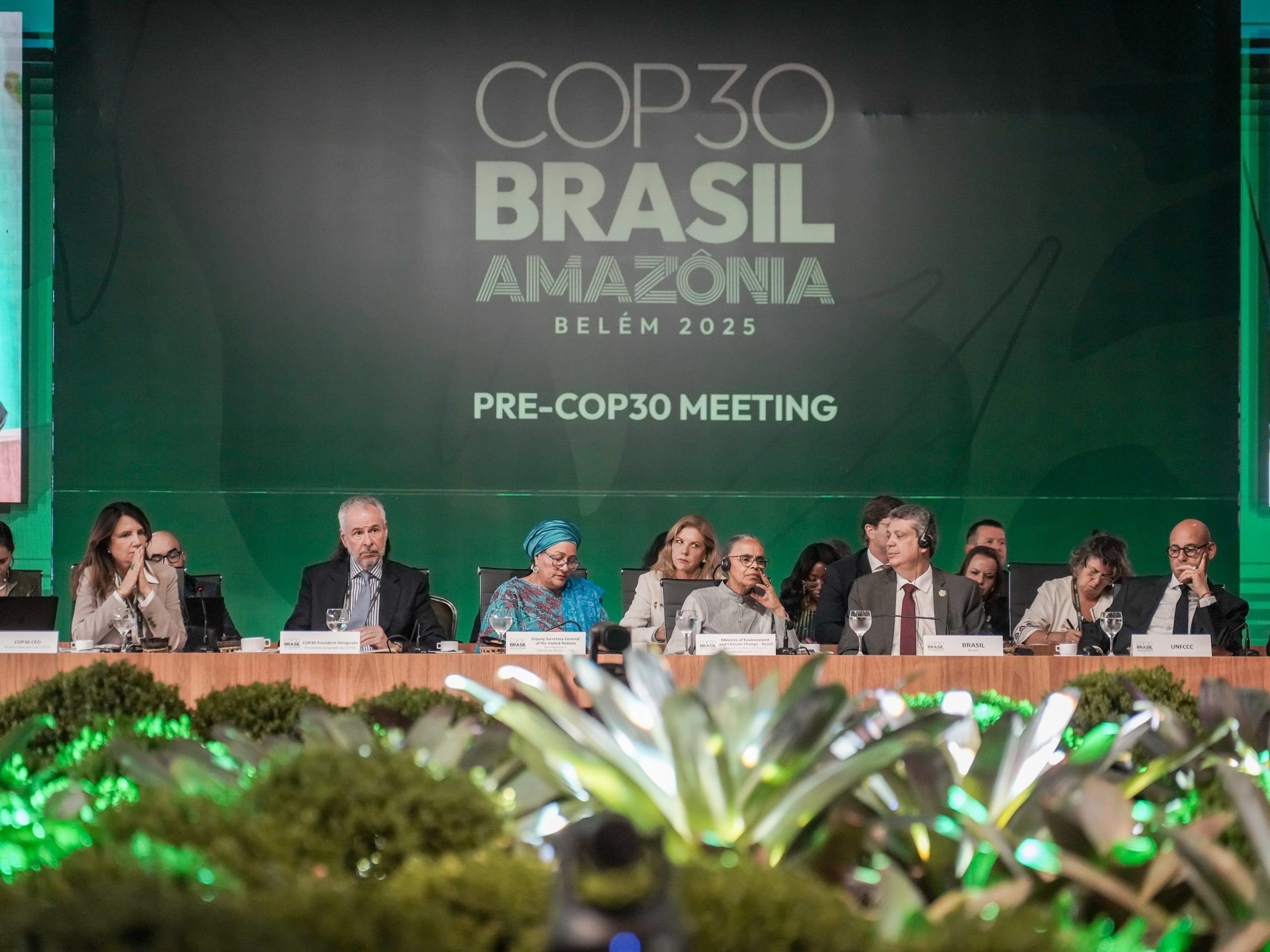
Officials at COP30 in Brazil. (UN)
High capital costs impede climate financing for developing nations
Stiell described climate finance as a fundamental element to expand the scope and accelerate the pace of climate action, both by reducing greenhouse gas emissions and strengthening the resilience of countries and communities to the worsening impacts of climate change.
Fulfilling all climate finance pledges is "absolutely crucial," particularly to support developing countries that are most vulnerable to the impacts of climate change, despite having contributed the least to causing the crisis, he told Asharq Al-Awsat.
He explained that the challenges facing these countries pertain to the accessibility, nature, and quality of financing, noting that the high cost of capital stands at the forefront of these hurdles, particularly for low-income and highly indebted countries already grappling with compounding debt crises.
While a shortage of projects is not the primary obstacle for some developing countries, others face a challenge rooted in their limited capacity to prepare and develop initiatives, resulting in a scarcity of bankable projects capable of attracting funding and investment, Stiell explained.
Stiell stressed that climate finance is not an act of charity or mere aid, but rather a necessity for achieving climate justice, and at the same time a strategic investment to ensure the resilience of global economies and societies, thereby supporting economic stability and growth with low inflation rates.
He called for strengthening joint action and cooperation among all climate-finance stakeholders and policymakers, including governments holding shares in multilateral development banks, which can leverage their influence to ensure more concessional financing reaches countries most vulnerable to climate risks.
International cooperation can play a pivotal role in deploying public finance to mitigate risks, support project development, and catalyze larger flows of private capital, he stressed.
In this context, he stated that it is essential for the Baku-to-Belem roadmap, which aims to mobilize $1.3 trillion annually in climate finance, to become a tangible reality, building on the agreement reached during COP29 in Azerbaijan regarding the New Collective Quantified Goal on climate finance, and in coordination with the COP30 presidency in Brazil.
The roadmap charts a path to scale up climate finance to $1.3 trillion per year for developing nations, while ensuring it is directed toward the countries and communities that need it most, Stiell said.
The priority today is to transition from the stage of pledges to providing actual and accessible financing, and to translate it into practical investments and projects that support the implementation of climate commitments in developing countries, he stated.
UN Climate Change Executive Secretary Simon Stiell. (UN)
Energy security and climate action: Two complementary paths
Amid geopolitical tensions and recurring disruptions in energy markets, Stiell said that energy security and climate action should be treated as complementary paths that must be addressed together.
He explained that governments must ensure reliable and affordable energy supplies, while reducing emissions and preparing for long-term shifts in energy demand patterns.
Recent disruptions in energy markets underscore the critical need to build resilient infrastructure, diversify energy sources and supply routes, and strengthen international cooperation, continued Stiell.
He added that expanding investments in renewable energy, improving energy efficiency, and developing electricity grids and energy storage systems can contribute to strengthening energy systems that are reliable and capable of meeting demand.
He said that the solution lies in integrating the immediate needs of energy security with long-term strategic planning, explaining that reliable clean energy supplies, emissions reductions, economic development, and international cooperation should reinforce one another rather than be viewed as competing objectives.
Stiell noted that investment in green energy is experiencing an accelerating global boom, with its value surpassing two trillion US dollars over the past year and continuing to rise. Green energy has become a primary driver of economic growth, enhanced competitiveness, job creation, improved living standards, and the achievement of stability.
This is one of the primary reasons driving nearly all G20 economies, including Saudi Arabia, to expand their investments in renewable energy to capitalize on these significant economic and social gains, he said.
Artificial intelligence: A double-edged sword
Regarding the rapid surge in electricity demand resulting from the expanding use of artificial intelligence and data centers, Stiell described AI as a "double-edged sword." He explained that data centers consume massive amounts of electricity and water, making it essential to ensure they rely on clean energy sources and are managed according to sustainability standards.
At the same time, AI possesses enormous potential that can be deployed positively to accelerate the pace of transition, contributing to making energy systems more efficient, flexible, and reliable, while also reducing their costs, he remarked.
He added that the challenge lies in mitigating the negative impacts and risks associated with artificial intelligence, enhancing its positive potential, and ensuring its responsible deployment.
He underlined the importance of ensuring all countries benefit from this potential through capacity building, particularly in the most vulnerable developing nations, and fostering the exchange of knowledge and expertise to help accelerate the implementation of these technologies.
Stiell noted that governments and industrial sectors could achieve substantial gains through joint action, with governments establishing clear policies, regulatory frameworks, appropriate safeguards, and long-term investment plans, while technology companies work to improve the efficiency of data centers and increase their reliance on clean energy sources.
Planning and investment strategies must account for uncertainty, given the varying estimates regarding the scale of future electricity demand driven by the expanding use of artificial intelligence, he went on to say.
Investing in electricity grids, energy storage systems, and the development of more efficient electrical architectures will yield sustainable, long-term benefits, regardless of future demand levels, he added.
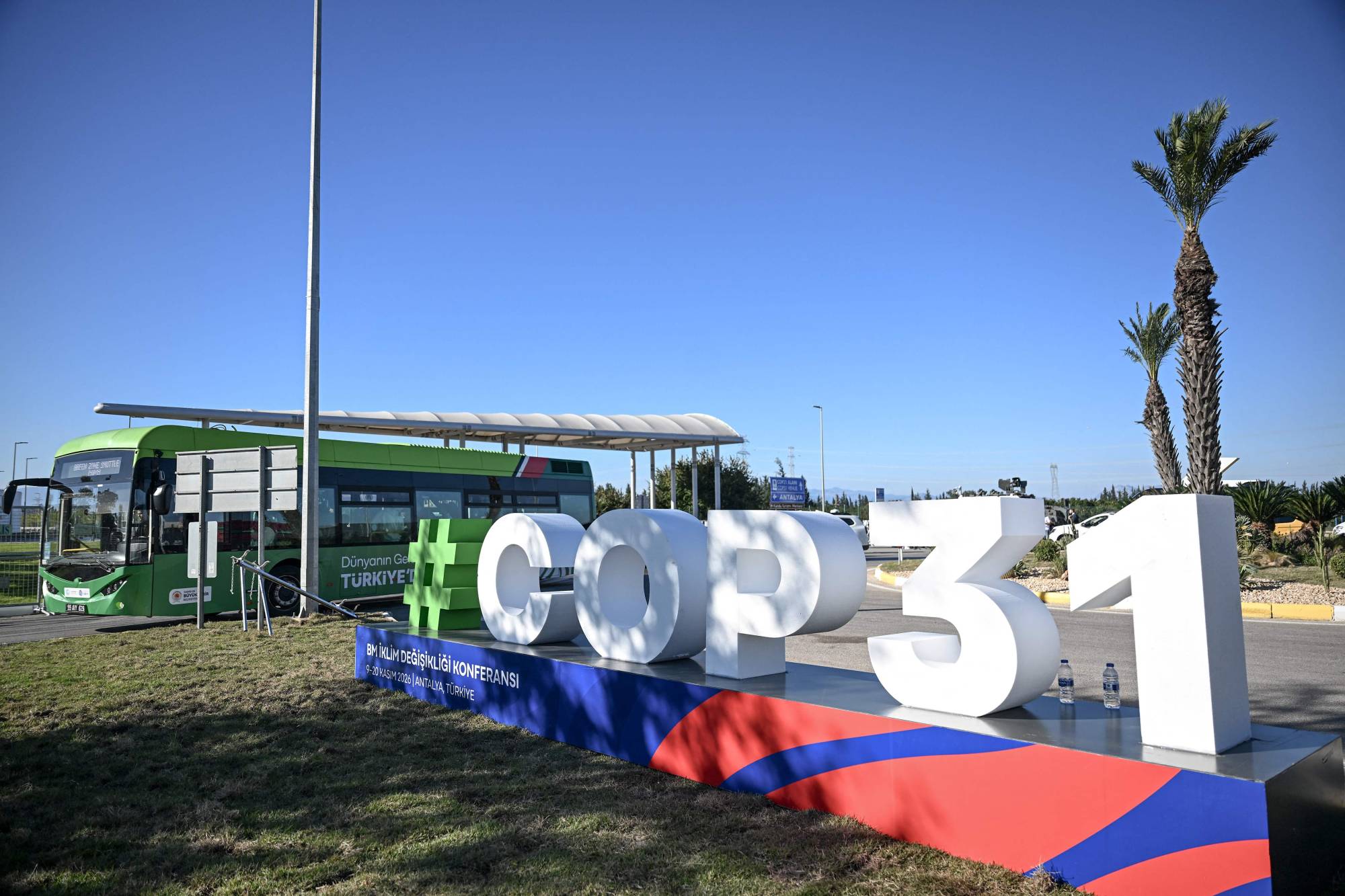
A "#COP31" sign is displayed by a road near the entrance of the Antalya Expo Center, venue of the 2026 United Nations Climate Change Conference (COP31), in Antalya on November 7, 2026. (AFP)
Global climate progress remains below required level
In his assessment of global progress toward the Paris Agreement, Stiell stated that humanity has made significant strides against climate change, though current efforts remain insufficient. He noted that without structured United Nations climate cooperation and national initiatives, global temperatures would be on track to rise by more than 4 degrees Celsius, or potentially higher under worst-case scenarios.
He added that current projections indicate global warming could reach around 2.6 degrees Celsius. While this level remains catastrophically high and threatens devastating consequences for economies and populations worldwide, it also reflects the scale of progress humanity has managed to achieve.
The goals of the Paris Agreement remain a fundamental necessity, but achieving them requires accelerating and expanding the scope of climate action through a just global transition that ensures no country or community is left behind, stressed Stiell.
He noted that the world has witnessed progress in technological development, increased investment in clean energy, and the strengthening of national climate plans, but the real challenge lies in accelerating the pace of implementation and turning goals and pledges into tangible results on the ground.
No single session of the UN Climate Change Conference can resolve the global climate crisis on its own, yet recent COP sessions have taken significant steps forward, and the 31st session in Türkiye must continue this path and build upon what has been achieved, he urged.
COP31 focuses on implementation and accelerating electrification
Regarding the priorities of the 31st session of the Conference of the Parties in Türkiye, Stiell explained that the focus will center heavily on boosting and accelerating implementation, both within the framework of formal negotiations and through the action agenda, noting that numerous vital issues require agreements.
He said that climate action must deliver practical benefits to a larger number of people, economies, and ecosystems.
He explained that the formal negotiations within the framework of the UN Framework Convention on Climate Change and the Paris Agreement provide a platform for all countries to present solutions and advance several key files, including a just transition, climate finance, adaptation, mitigation, and climate change response measures.
As for the work agenda, which enables countries to cooperate with businesses, cities, regions, and stakeholders across various sectors, the COP31 presidency has announced its priorities to drive progress in specific, practical areas, such as accelerating the transition to electricity use and modernizing power grids.
Stiell noted that climate change adaptation and building resilience must receive greater attention, explaining that communities need better protection against extreme heatwaves, floods, droughts, and other climate impacts.
Climate action must translate into practical, tangible benefits that reach a larger number of people, economies, and ecosystems around the world, he urged.
Afforestation efforts in the Saudi Arabia. (Saudi Green Initiative)
Clean energy revolution opens opportunities to build stronger economies
In his message prior to the meeting in Turkey, Stiell said the clean energy revolution offers extraordinary opportunities to build stronger economies, enhance energy security, and improve living standards. The conference provides a vital chance to forge new partnerships, reinforce shared priorities, and advance the Sustainable Development Goals.
He called on nations, business leaders, and investors to arrive in Türkiye with a solution-oriented vision, a genuine readiness to work together, and a commitment to reaching the necessary negotiating compromises to secure agreements and drive progress on practical issues, such as the transition to electrification.
These steps are capable of making a real difference and achieving tangible benefits for more people across the world, he stressed.
Climate action: A pillar of Saudi economic transformation
Regarding Saudi Arabia, Stiell praised the steps taken by the Kingdom to integrate climate action into its economic transformation path under Vision 2030.
He pointed to the progress it is making in reducing methane emissions resulting from oil and gas production operations, explaining that this field represents an important opportunity for the Kingdom to strengthen its leadership role at the international level and inspire other countries to take similar steps.
He underlined the importance of continuously integrating renewable energy projects into electricity grids and upgrading the infrastructure of the power sector.
He said that accelerating the pace of climate action in the Kingdom, in these areas and others, would deliver greater benefits to the Saudi economy and its population, as well as to the entire region.
Regarding the upcoming phase, Stiell noted that the priority in the next stage lies in translating national projects and goals into actual, measurable results, by integrating more renewable energy projects into electricity grids, upgrading the infrastructure of the power sector, improving energy efficiency, and continuing to reduce methane emissions.
Achieving this progress remains conditional on the level of commitment to implementation, enhancing transparency in reporting results, and ensuring the sustainability of investments, he added.
Saudi initiatives to boost regional action
Highlighting the Saudi Green and Middle East Green initiatives, Stiell said they are a significant step toward strengthening climate action by combining efforts to reduce emissions, restore land, and protect the environment.
Regional cooperation offers countries the opportunity to exchange expertise and knowledge, build technical capacities, and coordinate investments, he remarked, noting that forging effective regional partnerships can contribute to achieving broader climate and environmental goals while considering the specific ecological characteristics and conditions of the Middle East.
However, he pointed out that the true value of these initiatives depends on the continuity of their implementation and the tangible, long-term results they achieve.
In this context, he stressed that evaluating the success of afforestation projects should not be limited to the number of trees planted, but must also encompass their survival and growth rates, the total area of land successfully restored and rehabilitated, the extent of biodiversity protection, and the efficiency and sustainability of water resource management.
Afforestation efforts in the Saudi Arabia. (Saudi Green Initiative)
Coordination between climate, land, and biodiversity is a necessity
On the importance of coordinating climate, land, and biodiversity agendas and the role the Kingdom can play in this domain, Stiell said Saudi Arabia could play a significant role by leveraging its expertise in combating desertification and land restoration to support regional cooperation.
He explained that the Saudi Green and Middle East Green initiatives provide two important platforms for exchanging knowledge and expertise, strengthening cooperation, and executing environmental projects with a tangible impact.
The primary objective is to transition from treating environmental initiatives as separate tracks to adopting an integrated approach for joint action, achieving tangible results in terms of protecting climate, land, and biodiversity, as well as improving the lives of communities, he said.
Coordinating efforts to confront climate change, restore land, and protect biodiversity is a fundamental necessity, given the close interconnectedness between these issues and challenges, he said.
Climate change exacerbates pressure on ecosystems, while land degradation diminishes the capacity of these systems to store carbon and sustain the livelihoods of communities, he warned.
Message to Saudi Arabia
In a message to Saudi Arabia, Stiell expressed his appreciation for the Kingdom's continuous efforts to confront climate change at a time when climate impacts are intensifying and affecting all countries worldwide, as well as for the significant progress it is making in advancing the energy sector's transition in a just and orderly manner.
He welcomed the Kingdom's continued partnership and active engagement in international climate action efforts, looking forward to further cooperation with it to translate climate commitments into tangible and measurable results that will help in building a more resilient, prosperous, and just world, and a safer and more sustainable future.
لم تشترك بعد
انشئ حساباً خاصاً بك لتحصل على أخبار مخصصة لك ولتتمتع بخاصية حفظ المقالات وتتلقى نشراتنا البريدية المتنوعة