Huawei Ban Threatens Wireless Service in Rural Areas

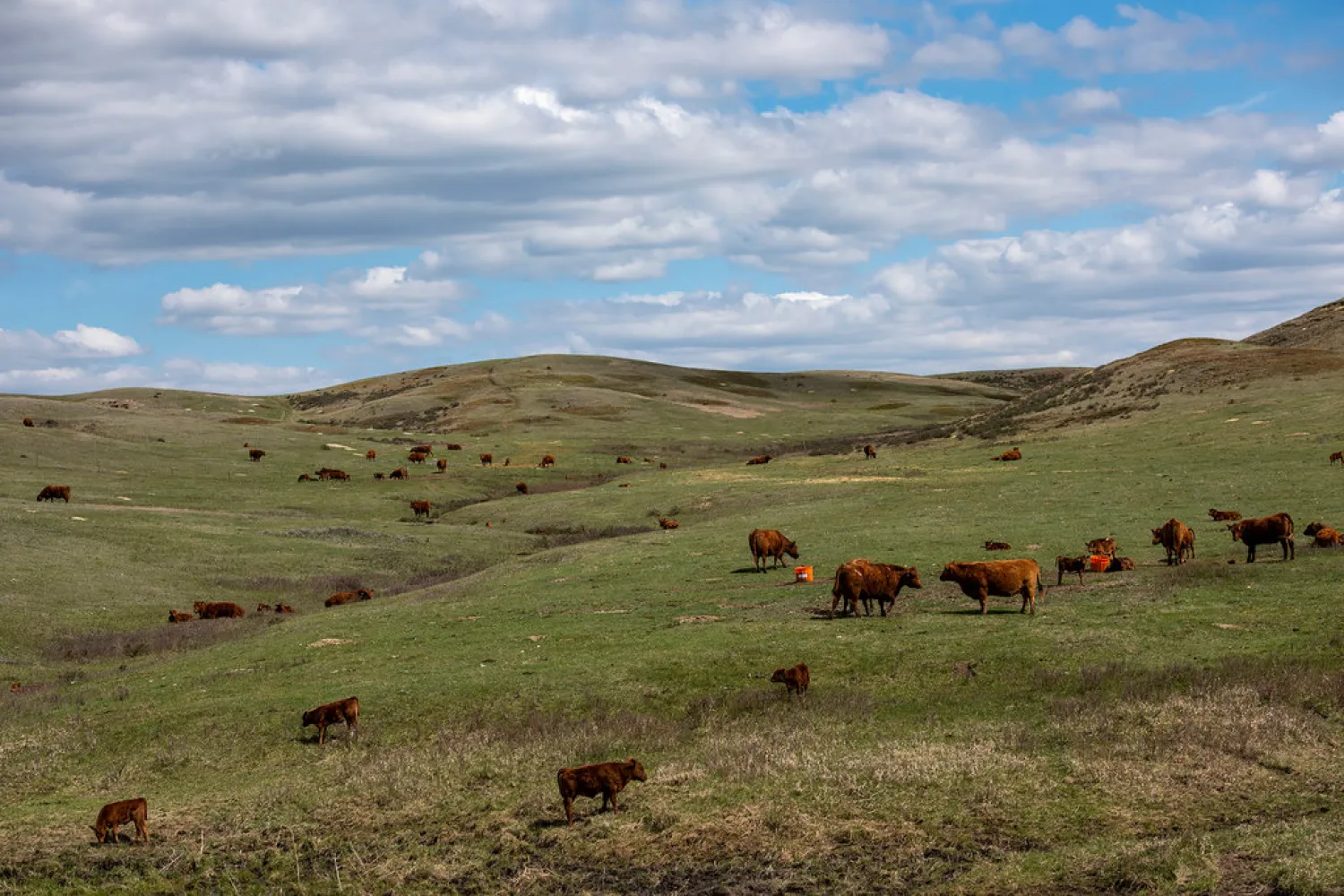
The wide-open areas of Montana, with not a lot of paying customers, are challenging for wireless carriers to cover.CreditCreditLynn Donaldson for The New York Times
TT

Huawei Ban Threatens Wireless Service in Rural Areas

The wide-open areas of Montana, with not a lot of paying customers, are challenging for wireless carriers to cover.CreditCreditLynn Donaldson for The New York Times

Many small carriers depend on inexpensive equipment from the Chinese company. Now they must rethink expansion plans, and perhaps replace existing gear.

Kevin Nelson was recently in the middle of his 3,800-acre farm in northeast Montana, where the landscape stretches out like an ocean, when his tractor broke. He tried to find a cellular signal strong enough to send a photo of the broken part to a repair shop 65 miles away, but failed.

“It’s really frustrating,” Mr. Nelson, 47, said about the poor reception. “We keep being told it’s going to improve, it’s going to improve.”

Now it’s not likely to improve anytime soon.

Plans to upgrade the wireless service near Mr. Nelson’s farm halted abruptly this month when President Trump issued an executive order that banned the purchase of equipment from companies posing a national security threat. That includes gear from Huawei, the Chinese telecommunications giant, a major supplier of equipment to rural wireless companies.

The chief executive of the wireless provider in Mr. Nelson’s area said that without access to inexpensive Huawei products, his company could not afford to build a planned tower that would serve Mr. Nelson’s farm.

The Trump administration’s ban, its latest move against the company, rippled through the telecommunications industry. Wireless carriers in several countries, including Britain and Japan, said they would no longer sell the company’s phones. Google said it would stop providing its Android operating software in new Huawei smartphones, which are popular in Europe and Asia.

But perhaps nowhere will the changes be felt more acutely than in rural America, where wireless service is spotty despite yearslong government efforts to improve coverage. They also add to the economic uncertainty created by the White House’s trade war with China. Farmers are fearful of an extended hit to their exports.

Huawei is essential for many wireless carriers that serve sprawling, sparsely populated regions because its gear for transmitting cell signals often costs far less than other options.

The president’s ban is forcing carriers like Nemont, which serves Opheim, to scrap expansion plans. In addition, some of the companies already using Huawei equipment fear that they will no longer receive government subsidies meant to help get service to remote areas.

Joseph Franell, the chief executive of Eastern Oregon Telecom, a small carrier that relies on Huawei products, said he was being forced to rethink his business.

“The reason why we are able to serve our customers is because we are mindful of costs,” he said. “We don’t go out and buy a Lamborghini when you can buy a Ford pickup.”

While Huawei sells many types of technology, including smartphones, the vast majority of its revenue comes from sales of equipment that moves data through networks and to devices. Only a few other companies, like Nokia and Ericsson, both based in Europe, sell comparable gear.

American intelligence officials have accused Huawei of being an extension of the Chinese government, and say its equipment could be vulnerable to espionage and hacking. Mr. Trump also appears to be using Huawei as a bargaining chip in his escalating trade battle with China.

“Huawei is something that is very dangerous,” the president said on Thursday. “It’s possible that Huawei would be included in some kind of trade deal.”

Huawei denies that it is a security risk, saying it is an independent business that does not act on behalf of the Chinese government. It says 500 carriers in more than 170 nations use its technology.

“Restricting Huawei from doing business in the U.S. will not make the U.S. more secure or stronger,” Huawei said in a statement. “Instead, this will only serve to limit the U.S. to inferior yet more expensive alternatives.”

Much of Mr. Trump’s focus has been on the next generation of wireless technology, known as 5G. But Huawei already provides equipment to about a quarter of the country’s smallest wireless carriers. The Rural Wireless Association, a trade group that represents 55 small carriers, estimates that it would cost its members $800 million to $1 billion to replace equipment from Huawei and ZTE, China’s other maker of networking gear.

Nemont, based near Opheim, is one of those companies. Its footprint is 14,000 square miles, bigger than Maryland, and requires huge amounts of wires, towers and other costly infrastructure. But the company has only 11,000 paying customers.

Nemont first reached out to Huawei nine years ago, when its members decided to upgrade their cellular network. With subsidies from the federal government, Nemont was prepared to spend about $4 million on networking equipment like routers and other gear to put on dozens of cell towers across the region.

Even at the time, officials in the Obama administration voiced concerns about Chinese equipment makers and their ability to break into American networks to steal intellectual property or hack into corporate or government networks. Defense Department officials and lawmakers said they were concerned that the Chinese government and military could use the equipment to intercept American communications.

The officials were vague about their concerns over Huawei, then a little-known firm. But Mike Kilgore, the chief executive of Nemont, said he had outlined Nemont’s plans to buy Huawei equipment in a letter to Senator Jon Tester, a Montana Democrat, and asked whether Mr. Tester had security concerns.

Mr. Kilgore said he was ready to go another route if Huawei’s equipment would put customers at risk. “I was begging for them to say, ‘No, don’t buy it,’” he said.

Mr. Tester's office called him and said it didn’t see any major concerns with picking Huawei, Mr. Kilgore said. A spokesman for Mr. Tester said an aide had told Mr. Kilgore to contact the F.B.I. and other intelligence officials for advice.

After the call, Mr. Kilgore chose Huawei, which offered to customize its equipment and charge 20 to 30 percent less than competitors.

Nemont has since expanded its high-speed wireless network using almost all Huawei equipment. Mr. Kilgore even visited Huawei’s headquarters in Shenzhen. He is the president of the Rural Wireless Association, the trade group. Huawei has a representative on the group’s board without voting rights, one of two board members who don’t represent a wireless carrier.

“The other vendors hardly gave us the time of day, and now they have been acquired or are out of business,” Mr. Kilgore said. “We took a gamble, but we clearly made the right bet.”

The technological upgrade changed lives. Kevin Rasmussen was recently in the cab of his tractor using an iPad connected to high-speed internet beaming from a nearby cell tower. The connection worked with software on the iPad to help direct where the tractor poked holes in the soil and dropped seeds and fertilizer.

“I can sit up here in my tractor and do my banking, monitor six weather apps and read up on things like trade and Huawei, all on my phone,” Mr. Rasmussen said. “Rural America needs this so badly.”

Nemont had plans to extend that high-speed service. It had leased land in Opheim for a new cell tower that would have delivered a strong signal. That is the tower that would have improved the service on Mr. Nelson’s farm.

But the company tabled those plans after Mr. Trump’s executive order.

“We have no idea what we are going to be able to do,” Mr. Kilgore said. “I’m not getting sleep at night.”

Many companies that extend wireless broadband to rural areas, like Nemont, depend on subsidies from the Federal Communications Commission. But Ajit Pai, the commission’s chairman, has proposed cutting off that money to carriers using equipment from Huawei or ZTE.

“We believe that it is important that networks are secure not just in urban areas, but in rural areas as well,” the agency said in a statement. “There are currently many rural broadband providers that use equipment that does not pose a national security risk.”

Mr. Kilgore estimated that it would cost $50 million to replace his Huawei equipment. If that is the only option, he said, he might have to shut down the company, leaving his customers without wireless service.

Mr. Rasmussen said that would be a big blow to his farming operation.

“We’re getting squeezed on all sides,” he said. “The tariffs and trade affect our prices, and now this could affect our ability to farm.”

Mr. Kilgore has argued, through his work with the Rural Wireless Association, for an exemption to the F.C.C. rule for small rural carriers, or for subsidies to replace the Huawei equipment. A bipartisan group senators recently introduced a bill that would set aside about $700 million in grants to carriers forced to rip Huawei equipment from their networks.

The New York Times


Tesla to Refund Many Cybertruck Deposits as Demand Exceeds Production, Musk Says

Tesla Cybertruck electric vehicles sit parked in a storage lot in San Diego, California on April 11, 2025. (AFP)
TT

Tesla to Refund Many Cybertruck Deposits as Demand Exceeds Production, Musk Says

Tesla Cybertruck electric vehicles sit parked in a storage lot in San Diego, California on April 11, 2025. (AFP)

Tesla will have to refund Cybertruck deposits for many customers as orders far exceed production capacity, CEO Elon Musk said, following last week's announcement that the electric vehicle maker is winding down the pickup truck's production at its Texas factory.

"We will try ‌to make ‌as many as ‌possible ⁠before shutting down the ⁠line in about 8 months, but will have to return deposits for a lot of people," the billionaire said in a post on X on Monday.

The comments ⁠come after Musk said ‌Tesla would ‌add an extra production shift to fulfill outstanding ‌Cybertruck orders before dismantling the production ‌line next year to expand output of its Cybercab robotaxi.

The production winddown is slated for mid-2027, Musk announced on ‌Friday, with the resources being redirected to the Cybercab, a vehicle ⁠central ⁠to the automaker's autonomous-driving ambitions.

Tesla began delivering the Cybertruck in late 2023, but demand has fallen far short of Musk's expectations. US sales fell 48% to 20,237 units last year, according to Kelley Blue Book, well below Musk's earlier projection that annual Cybertruck sales could reach 250,000 vehicles.


China Extends Suspension of New Rare Earth Controls Until January

A mining machine is seen at the Bayan Obo mine containing rare earth minerals, in Inner Mongolia, China July 16, 2011. (Reuters)
TT

China Extends Suspension of New Rare Earth Controls Until January

A mining machine is seen at the Bayan Obo mine containing rare earth minerals, in Inner Mongolia, China July 16, 2011. (Reuters)

China on Monday announced a two-month extension of export-control waivers due to expire this month, preserving part of a wide-ranging deal struck after a summit between Presidents Xi Jinping and Donald Trump.

China introduced export controls on certain rare earths ‌in April 2025, ‌only to expand ‌them ⁠further in October ⁠of that year, dramatically widening their scope and also adding new controls on certain diamonds with industrial applications and lithium battery technology.

The measures were then ⁠paused for one year last ‌November after ‌a summit in South Korea ‌between Xi and Trump.

The Ministry of ‌Commerce said in a short statement on Monday that the pause would be extended for two months ‌until January 10. It gave no other details.

The extension ⁠is ⁠part of a broader suspension of trade countermeasures and tariffs announced by China on Monday as it negotiates with Washington over an enduring trade deal.

Trump is set to travel to Shenzhen in southern China later this month for an APEC leaders summit, where he is expected to meet with Xi.


UN to Asharq Al-Awsat ahead of COP31: Climate Change and Energy Security Are Two Integrated Paths

United Nations Climate Change Executive Secretary Simon Stiell. (UN)
TT

UN to Asharq Al-Awsat ahead of COP31: Climate Change and Energy Security Are Two Integrated Paths

United Nations Climate Change Executive Secretary Simon Stiell. (UN)

On the eve of the opening of the 31st United Nations Climate Change Conference (COP31) on Monday in the Turkish city of Antalya, attention is focused on the ability of governments to bridge the pledge gap and transition toward executing concrete steps to confront climate change. This comes at a time when the challenges of reducing emissions intersect with energy market disruptions, rising electricity demand, and the accelerating expansion of artificial intelligence and data centers.

In an exclusive interview with Asharq Al-Awsat, UN Climate Change Executive Secretary Simon Stiell urged the swift fulfillment of international climate pledges, particularly financing for developing countries and the realization of the $1.3 trillion annual Baku-to-Belem roadmap.

Stiell noted that energy security and climate action are complementary rather than conflicting, while commending the Saudi Green and Middle East Green initiatives for advancing regional cooperation.

The COP31 conference is being held over a period of more than two weeks in Antalya, amid record-breaking temperatures, worsening climate change impacts, and rising energy insecurity, according to the United Nations website. The UN stated that the summit presents a critical opportunity for countries to accelerate the pace of climate action and strengthen cooperation. The host country places electricity at the forefront of its priorities, promoting its own boom in the renewable energy sector alongside its "Zero Waste" program as a means to curb methane emissions.

Stiell addressed the relationship between energy security and climate action amid ongoing disruptions in energy markets, the implications of expanding artificial intelligence and data centers on electricity and water consumption, and the opportunities to utilize these technologies to improve the efficiency of energy systems. He also reviewed the gap between climate pledges and actual implementation, alongside the priorities for the 31st session of the Conference of the Parties in Türkiye.

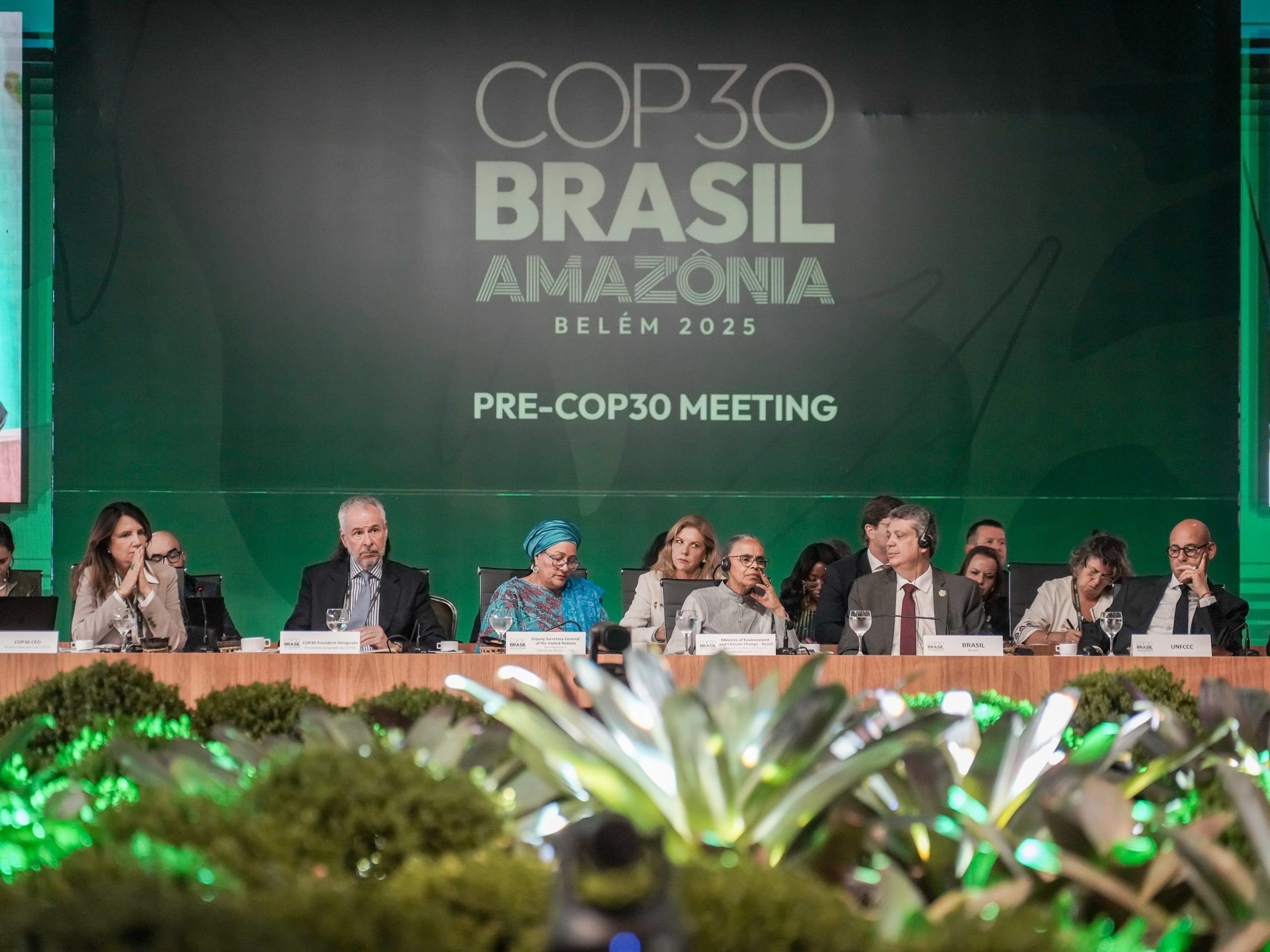
Officials at COP30 in Brazil. (UN)

High capital costs impede climate financing for developing nations

Stiell described climate finance as a fundamental element to expand the scope and accelerate the pace of climate action, both by reducing greenhouse gas emissions and strengthening the resilience of countries and communities to the worsening impacts of climate change.

Fulfilling all climate finance pledges is "absolutely crucial," particularly to support developing countries that are most vulnerable to the impacts of climate change, despite having contributed the least to causing the crisis, he told Asharq Al-Awsat.

He explained that the challenges facing these countries pertain to the accessibility, nature, and quality of financing, noting that the high cost of capital stands at the forefront of these hurdles, particularly for low-income and highly indebted countries already grappling with compounding debt crises.

While a shortage of projects is not the primary obstacle for some developing countries, others face a challenge rooted in their limited capacity to prepare and develop initiatives, resulting in a scarcity of bankable projects capable of attracting funding and investment, Stiell explained.

Stiell stressed that climate finance is not an act of charity or mere aid, but rather a necessity for achieving climate justice, and at the same time a strategic investment to ensure the resilience of global economies and societies, thereby supporting economic stability and growth with low inflation rates.

He called for strengthening joint action and cooperation among all climate-finance stakeholders and policymakers, including governments holding shares in multilateral development banks, which can leverage their influence to ensure more concessional financing reaches countries most vulnerable to climate risks.

International cooperation can play a pivotal role in deploying public finance to mitigate risks, support project development, and catalyze larger flows of private capital, he stressed.

In this context, he stated that it is essential for the Baku-to-Belem roadmap, which aims to mobilize $1.3 trillion annually in climate finance, to become a tangible reality, building on the agreement reached during COP29 in Azerbaijan regarding the New Collective Quantified Goal on climate finance, and in coordination with the COP30 presidency in Brazil.

The roadmap charts a path to scale up climate finance to $1.3 trillion per year for developing nations, while ensuring it is directed toward the countries and communities that need it most, Stiell said.

The priority today is to transition from the stage of pledges to providing actual and accessible financing, and to translate it into practical investments and projects that support the implementation of climate commitments in developing countries, he stated.

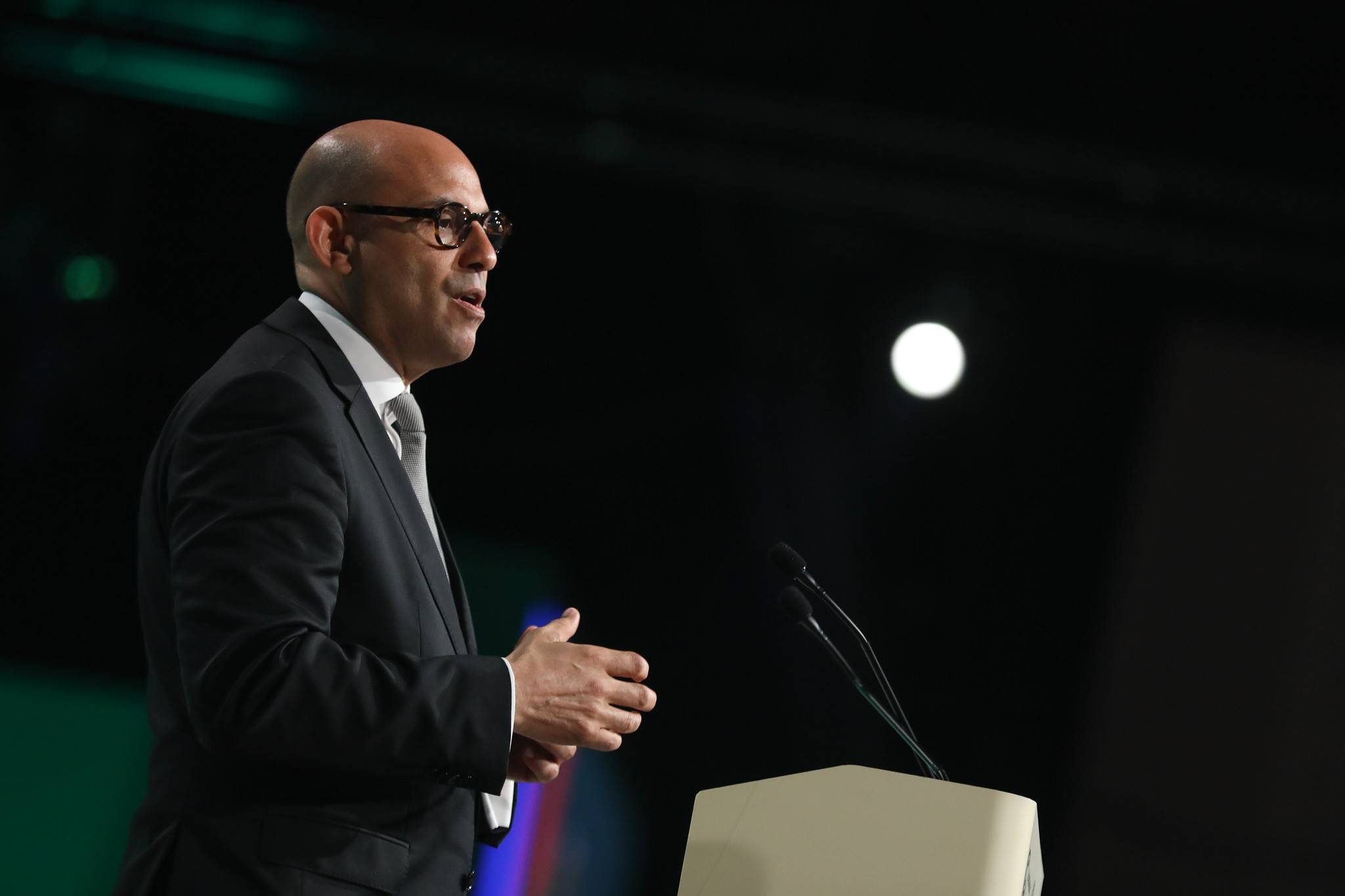
UN Climate Change Executive Secretary Simon Stiell. (UN)

Energy security and climate action: Two complementary paths

Amid geopolitical tensions and recurring disruptions in energy markets, Stiell said that energy security and climate action should be treated as complementary paths that must be addressed together.

He explained that governments must ensure reliable and affordable energy supplies, while reducing emissions and preparing for long-term shifts in energy demand patterns.

Recent disruptions in energy markets underscore the critical need to build resilient infrastructure, diversify energy sources and supply routes, and strengthen international cooperation, continued Stiell.

He added that expanding investments in renewable energy, improving energy efficiency, and developing electricity grids and energy storage systems can contribute to strengthening energy systems that are reliable and capable of meeting demand.

He said that the solution lies in integrating the immediate needs of energy security with long-term strategic planning, explaining that reliable clean energy supplies, emissions reductions, economic development, and international cooperation should reinforce one another rather than be viewed as competing objectives.

Stiell noted that investment in green energy is experiencing an accelerating global boom, with its value surpassing two trillion US dollars over the past year and continuing to rise. Green energy has become a primary driver of economic growth, enhanced competitiveness, job creation, improved living standards, and the achievement of stability.

This is one of the primary reasons driving nearly all G20 economies, including Saudi Arabia, to expand their investments in renewable energy to capitalize on these significant economic and social gains, he said.

Artificial intelligence: A double-edged sword

Regarding the rapid surge in electricity demand resulting from the expanding use of artificial intelligence and data centers, Stiell described AI as a "double-edged sword." He explained that data centers consume massive amounts of electricity and water, making it essential to ensure they rely on clean energy sources and are managed according to sustainability standards.

At the same time, AI possesses enormous potential that can be deployed positively to accelerate the pace of transition, contributing to making energy systems more efficient, flexible, and reliable, while also reducing their costs, he remarked.

He added that the challenge lies in mitigating the negative impacts and risks associated with artificial intelligence, enhancing its positive potential, and ensuring its responsible deployment.

He underlined the importance of ensuring all countries benefit from this potential through capacity building, particularly in the most vulnerable developing nations, and fostering the exchange of knowledge and expertise to help accelerate the implementation of these technologies.

Stiell noted that governments and industrial sectors could achieve substantial gains through joint action, with governments establishing clear policies, regulatory frameworks, appropriate safeguards, and long-term investment plans, while technology companies work to improve the efficiency of data centers and increase their reliance on clean energy sources.

Planning and investment strategies must account for uncertainty, given the varying estimates regarding the scale of future electricity demand driven by the expanding use of artificial intelligence, he went on to say.

Investing in electricity grids, energy storage systems, and the development of more efficient electrical architectures will yield sustainable, long-term benefits, regardless of future demand levels, he added.

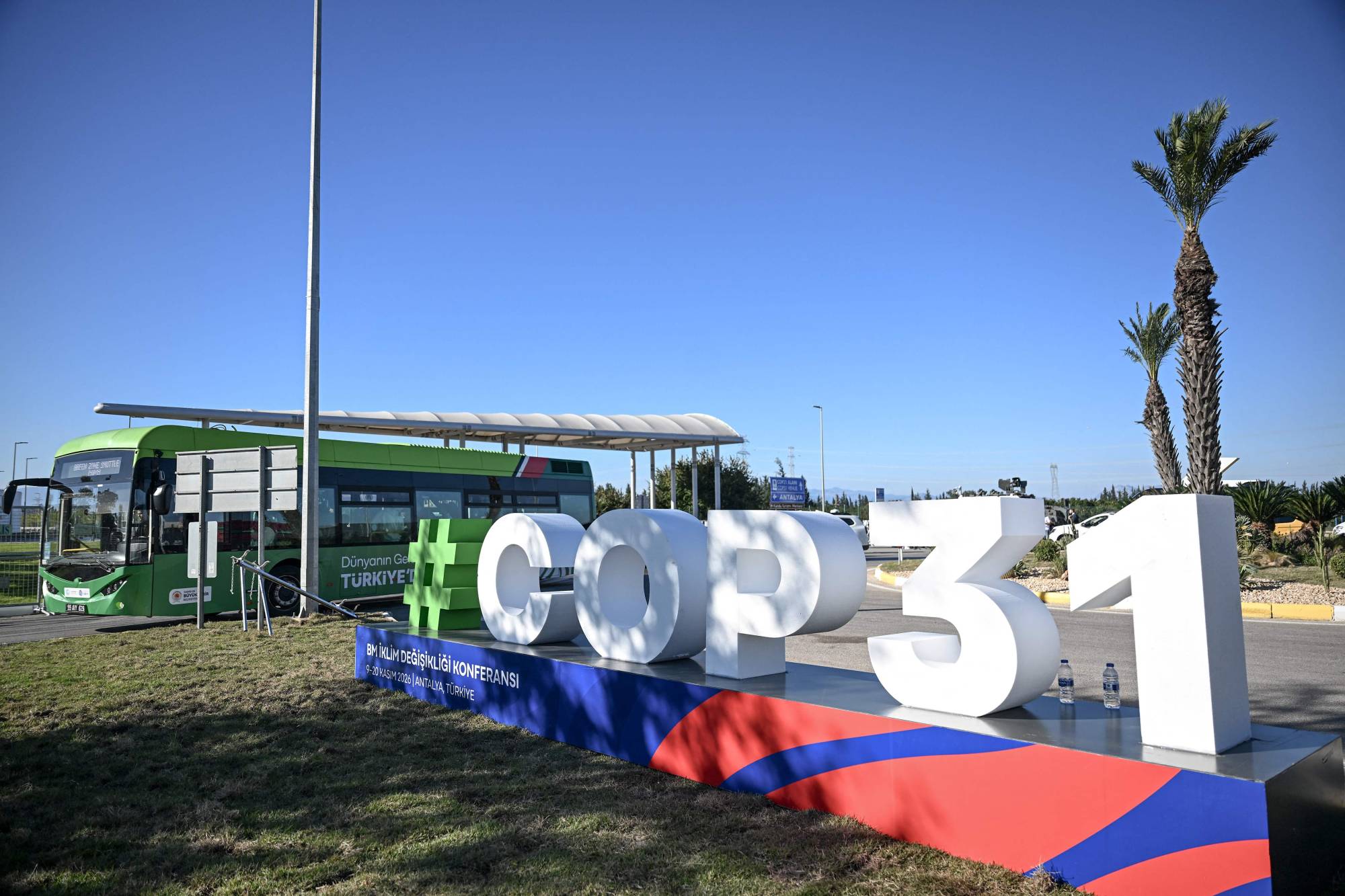
A "#COP31" sign is displayed by a road near the entrance of the Antalya Expo Center, venue of the 2026 United Nations Climate Change Conference (COP31), in Antalya on November 7, 2026. (AFP)

Global climate progress remains below required level

In his assessment of global progress toward the Paris Agreement, Stiell stated that humanity has made significant strides against climate change, though current efforts remain insufficient. He noted that without structured United Nations climate cooperation and national initiatives, global temperatures would be on track to rise by more than 4 degrees Celsius, or potentially higher under worst-case scenarios.

He added that current projections indicate global warming could reach around 2.6 degrees Celsius. While this level remains catastrophically high and threatens devastating consequences for economies and populations worldwide, it also reflects the scale of progress humanity has managed to achieve.

The goals of the Paris Agreement remain a fundamental necessity, but achieving them requires accelerating and expanding the scope of climate action through a just global transition that ensures no country or community is left behind, stressed Stiell.

He noted that the world has witnessed progress in technological development, increased investment in clean energy, and the strengthening of national climate plans, but the real challenge lies in accelerating the pace of implementation and turning goals and pledges into tangible results on the ground.

No single session of the UN Climate Change Conference can resolve the global climate crisis on its own, yet recent COP sessions have taken significant steps forward, and the 31st session in Türkiye must continue this path and build upon what has been achieved, he urged.

COP31 focuses on implementation and accelerating electrification

Regarding the priorities of the 31st session of the Conference of the Parties in Türkiye, Stiell explained that the focus will center heavily on boosting and accelerating implementation, both within the framework of formal negotiations and through the action agenda, noting that numerous vital issues require agreements.

He said that climate action must deliver practical benefits to a larger number of people, economies, and ecosystems.

He explained that the formal negotiations within the framework of the UN Framework Convention on Climate Change and the Paris Agreement provide a platform for all countries to present solutions and advance several key files, including a just transition, climate finance, adaptation, mitigation, and climate change response measures.

As for the work agenda, which enables countries to cooperate with businesses, cities, regions, and stakeholders across various sectors, the COP31 presidency has announced its priorities to drive progress in specific, practical areas, such as accelerating the transition to electricity use and modernizing power grids.

Stiell noted that climate change adaptation and building resilience must receive greater attention, explaining that communities need better protection against extreme heatwaves, floods, droughts, and other climate impacts.

Climate action must translate into practical, tangible benefits that reach a larger number of people, economies, and ecosystems around the world, he urged.

Afforestation efforts in the Saudi Arabia. (Saudi Green Initiative)

Clean energy revolution opens opportunities to build stronger economies

In his message prior to the meeting in Turkey, Stiell said the clean energy revolution offers extraordinary opportunities to build stronger economies, enhance energy security, and improve living standards. The conference provides a vital chance to forge new partnerships, reinforce shared priorities, and advance the Sustainable Development Goals.

He called on nations, business leaders, and investors to arrive in Türkiye with a solution-oriented vision, a genuine readiness to work together, and a commitment to reaching the necessary negotiating compromises to secure agreements and drive progress on practical issues, such as the transition to electrification.

These steps are capable of making a real difference and achieving tangible benefits for more people across the world, he stressed.

Climate action: A pillar of Saudi economic transformation

Regarding Saudi Arabia, Stiell praised the steps taken by the Kingdom to integrate climate action into its economic transformation path under Vision 2030.

He pointed to the progress it is making in reducing methane emissions resulting from oil and gas production operations, explaining that this field represents an important opportunity for the Kingdom to strengthen its leadership role at the international level and inspire other countries to take similar steps.

He underlined the importance of continuously integrating renewable energy projects into electricity grids and upgrading the infrastructure of the power sector.

He said that accelerating the pace of climate action in the Kingdom, in these areas and others, would deliver greater benefits to the Saudi economy and its population, as well as to the entire region.

Regarding the upcoming phase, Stiell noted that the priority in the next stage lies in translating national projects and goals into actual, measurable results, by integrating more renewable energy projects into electricity grids, upgrading the infrastructure of the power sector, improving energy efficiency, and continuing to reduce methane emissions.

Achieving this progress remains conditional on the level of commitment to implementation, enhancing transparency in reporting results, and ensuring the sustainability of investments, he added.

Saudi initiatives to boost regional action

Highlighting the Saudi Green and Middle East Green initiatives, Stiell said they are a significant step toward strengthening climate action by combining efforts to reduce emissions, restore land, and protect the environment.

Regional cooperation offers countries the opportunity to exchange expertise and knowledge, build technical capacities, and coordinate investments, he remarked, noting that forging effective regional partnerships can contribute to achieving broader climate and environmental goals while considering the specific ecological characteristics and conditions of the Middle East.

However, he pointed out that the true value of these initiatives depends on the continuity of their implementation and the tangible, long-term results they achieve.

In this context, he stressed that evaluating the success of afforestation projects should not be limited to the number of trees planted, but must also encompass their survival and growth rates, the total area of land successfully restored and rehabilitated, the extent of biodiversity protection, and the efficiency and sustainability of water resource management.

Afforestation efforts in the Saudi Arabia. (Saudi Green Initiative)

Coordination between climate, land, and biodiversity is a necessity

On the importance of coordinating climate, land, and biodiversity agendas and the role the Kingdom can play in this domain, Stiell said Saudi Arabia could play a significant role by leveraging its expertise in combating desertification and land restoration to support regional cooperation.

He explained that the Saudi Green and Middle East Green initiatives provide two important platforms for exchanging knowledge and expertise, strengthening cooperation, and executing environmental projects with a tangible impact.

The primary objective is to transition from treating environmental initiatives as separate tracks to adopting an integrated approach for joint action, achieving tangible results in terms of protecting climate, land, and biodiversity, as well as improving the lives of communities, he said.

Coordinating efforts to confront climate change, restore land, and protect biodiversity is a fundamental necessity, given the close interconnectedness between these issues and challenges, he said.

Climate change exacerbates pressure on ecosystems, while land degradation diminishes the capacity of these systems to store carbon and sustain the livelihoods of communities, he warned.

Message to Saudi Arabia

In a message to Saudi Arabia, Stiell expressed his appreciation for the Kingdom's continuous efforts to confront climate change at a time when climate impacts are intensifying and affecting all countries worldwide, as well as for the significant progress it is making in advancing the energy sector's transition in a just and orderly manner.

He welcomed the Kingdom's continued partnership and active engagement in international climate action efforts, looking forward to further cooperation with it to translate climate commitments into tangible and measurable results that will help in building a more resilient, prosperous, and just world, and a safer and more sustainable future.