
Me, My Dad and Tottenham: What Happened Next (Spoiler Alert – Not Good)

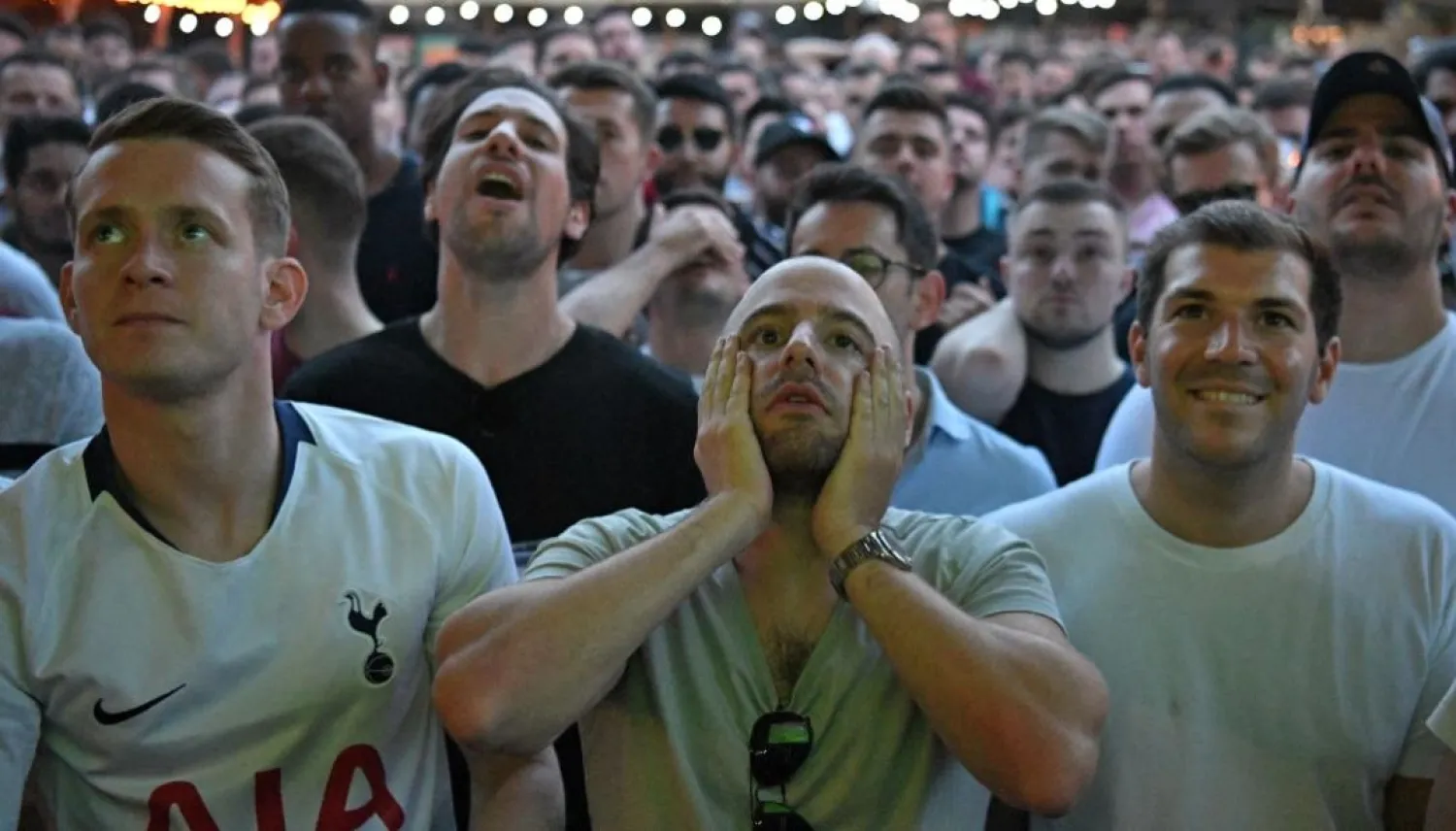
Tottenham fans react as they watch the Champions League final at Flat Iron Square in London. (Getty Images)
TT

Me, My Dad and Tottenham: What Happened Next (Spoiler Alert – Not Good)

Tottenham fans react as they watch the Champions League final at Flat Iron Square in London. (Getty Images)

I recently wrote an article explaining how I’d given up my Champions League final ticket to watch the game with my dad. He gave me a love of Spurs that meant it was the right thing to do. It was well received. Real journalists slid into my DMs to praise me. Ex-pros texted me (well, one ex-pro texted me). What an altruistic gesture. What a moving piece. You should write more they all said. I was a hero.

A cynic might argue that writing an article about liking both your own father and football was likely to resonate with an audience of people – many of whom also have, or had, fathers and also like football.

But that’s not the point. Here was someone (me) from within the football establishment who still understood the real fan – a rare breed among the oil barons, corrupt officials, overpaid players and slightly less overpaid broadcasters.

Now all I needed to do was put this powerful but very simple gesture into practice. How difficult could if be to watch a football match on TV with my dad?

On the morning of the game I woke up in Madrid and the Spanish heat even at 8am was too much. My taxi driver to the airport drove too fast and wanted to talk. I tried every liquid going at the airport – water, coffee, Coke, Yop – nothing did the trick.

Back in London, and feeling pretty ropey, I went for a nap before the game. Dad was getting the 4.15 from Cambridge – plenty of time. I’d watched every round with a Spurrsy crowd (well, four of us), so they all agreed to come over, and I bought the kettle chips and the posh triumvirate of Waitrose dips, salsa, tzatziki and guacamole. What a night we’d have.

I woke up at 5pm, and checked my phone at 5.01pm. Dad (missed call). Dad (missed call). Dad (missed call). Two missed calls is normal behavior, normally followed by a WhatsApp with all manner of predictive text mistakes, curious spacing and lacking even the most basic punctuation. Decipherable, but only with practice.

“Hi Max. Just got home. Not sure if you’ve seen my text messages

Apparently not a bus service to ivll St but no certainty of late trains plus as far as I can see from the Web the late ones are very slow and the fast ones go vie King s Cross. Sou ds odd…. I ll call soon…… I ll miss not seeing it with you

W h Lane next season?…”

I rang. We laughed. “This doesn’t help the narrative,” I said. I could drive to Cambridge, but I had people over and work in the morning. Dad was in his favorite armchair and had “managed to find BT Sport” on his Virgin box. Fair enough.

I wondered how I’d explain this away – perhaps never mention it. No one would know. It would be our secret. And after all, we don’t normally watch the games together. We watch them separately, on our own TVs and then talk about it afterwards. If anything this would be even more authentic.

I checked national rail enquires. The trains had started up again. I messaged. “The 18,44 seems to be running”.

Dad’s response: “Off to srTjon”.

For some reason Dad jumped on the Liverpool Street line – a route that stops at every town, village and park bench between the two cities. His ETA was 7.50pm. My friends arrived, we got going on the dips and watched the buildup. Kane and Winks starting. Was that good? We weren’t sure.

The Champions League theme. No sign of Dad. No blue ticks on WhatsApp. Not even two ticks. Just one.

Kick-off. No sign of Dad. Penalty to Liverpool. No sign of Dad.

The doorbell rang five minutes in and we watched the game. Just after Origi scored I ordered him an Uber. He left before full-time. The game was over and it’d be good to get the 22.12 back home. I offered him the spare room, but he had string quartet in the morning. That cello wasn’t going to play itself.

I watched Jordan Henderson’s trophy lift. I texted Mum. “Call when he’s home.” My friends left and I went to bed.

The 22.12 was canceled. Dad walked to St. Pancras. He got on the Thameslink. He got a table. It was empty. Until the next stop. Hundreds of dejected Spurs fans got on.

The cab ride from Cambridge station to my parents house is 10 minutes. Unfortunately the queue was a mile long. Dad walked. He got home just before 1am.

If I hadn’t written the first article, he could have had a relaxing evening. Instead, I forced an 80-year-old man to leave his armchair and the peace and quiet of his living room, to take a 90-minute train journey in the searing heat so he could watch most of a football match with six people he didn’t know and then take a three-hour journey home in the middle of the night. I guess we’ll always have those 86 minutes.

The Guardian Sport


Chelsea Injuries up 44% After Club World Cup but Report Says Event Has Had ‘Minimal’ Impact

Chelsea's Reece James, center, lifts the trophy following the Club World Cup final soccer match between Chelsea and PSG at MetLife Stadium in East Rutherford, N.J., Sunday, July 13, 2025. (AP)
TT

Chelsea Injuries up 44% After Club World Cup but Report Says Event Has Had ‘Minimal’ Impact

Chelsea's Reece James, center, lifts the trophy following the Club World Cup final soccer match between Chelsea and PSG at MetLife Stadium in East Rutherford, N.J., Sunday, July 13, 2025. (AP)

Chelsea suffered a 44% spike in injuries after competing in the supersized Club World Cup this year, according to findings published on Tuesday.

But the newly expanded tournament has so far had a “minimal impact” on injuries overall, the latest edition of the Men’s European Football Injury Index found.

There was fierce opposition to FIFA's new flagship club event when it was confirmed in 2023 that it would increase from seven to 32 teams, with players' unions warning of physical and mental burnout of players due to an ever expanding match schedule. But FIFA pressed ahead and staged the tournament in the United States in June-July.

Chelsea went on to win the inaugural competition, receiving the trophy from US President Donald Trump at MetLife Stadium and taking home prize money of around $125 million. But, according to the Index, from June-October, Chelsea picked up more injuries — 23 — than any of the nine clubs from Europe's top leagues that participated in the Club World Cup.

They included star player Cole Palmer, and was a 44% increase on the same period last year.

While Chelsea, which played 64 games over the entire 2024-25 season, saw an increase in injuries, the Index, produced by global insurance firm Howden, found that overall there was a decrease.

“In principle you would expect this increased workload to lead to an increase in the number of injuries sustained, as a possible rise in overall injury severity,” the Index report said, but added: “The data would suggest a minimal impact on overall injury figures.”

Despite the figures, the authors of the report accept it was too early to assess the full impact of the Club World Cup, with the findings only going up to October.

“We would expect to see the impact to spike in that sort of November to February period,” said James Burrows, Head of Sport at Howden. “What we’ve seen previously is that’s where the impact is seen from summer tournaments."

Manchester City has sustained 22 since the tournament, which is the highest among the nine teams from Europe's top leagues — England, Spain, Italy, Germany and France.

Those teams have recorded 146 injuries from June-October, which is down on the previous year's figure of 174.

From August-October that number is 121, the lowest for that three-month period in the previous six years of the Index.


Sunderland Worst Hit by Losing Players to African Cup of Nations 

14 December 2025, United Kingdom, London: Sunderland's Habib Diarra (L) and Leeds United's Gabriel Gudmundsson battle for the ball during the English Premier League soccer match between Brentford and Leeds United at the Gtech Community Stadium. (dpa)
TT

Sunderland Worst Hit by Losing Players to African Cup of Nations 

14 December 2025, United Kingdom, London: Sunderland's Habib Diarra (L) and Leeds United's Gabriel Gudmundsson battle for the ball during the English Premier League soccer match between Brentford and Leeds United at the Gtech Community Stadium. (dpa)

Premier League Sunderland will have to do without six players over the next few weeks and are the club worst hit as the Africa Cup of Nations takes its toll on European clubs competing over the holiday season.

Sunderland, eighth in the standings, had four of their African internationals in action when they beat Newcastle United on Sunday, but like 14 other English top-flight clubs will now lose those players to international duty.

The timing of the African championship, kicking off in Morocco on Sunday and running through to January 18, has long been an irritant for coaches, with leagues in Belgium, France, Germany, Italy, Netherlands, Portugal, and Spain also affected.

Hosting the tournament in the middle of the season impacts around 58% of the players at the Cup of Nations, though the Confederation of African Football did try to mitigate the impact by moving the start to before Christmas, so it is completed before the next round of Champions League matches.

The impact on European clubs was also lessened by allowing them to release players seven days, rather than the mandatory 14 days, before the tournament, meaning they could play for their clubs last weekend.

Sunderland's Congolese Arthur Masuaku and Noah Sadiki, plus full back Reinildo (Mozambique), midfielder Habib Diarra (Mali), and attackers Chemsdine Talbi (Morocco) and Bertrand Traore (Burkina Faso) have now departed for Morocco.

Ironically, Mohamed Salah’s absence from Liverpool to play for Egypt should lower the temperature at the club after his recent outburst against manager Arne Slot, but Manchester United will lose three players in Noussair Mazraoui, Bryan Mbeumo and Amad Diallo, who scored in Monday’s 4-4 draw with Bournemouth.

France is again the country with the most players heading to the Cup of Nations, and with 51 from Ligue 1 clubs. But their absence is much less impactful than previously as Ligue 1 broke after the weekend’s fixtures and does not resume until January 2, by which time the Cup of Nations will be into its knockout stage.

There are 21 players from Serie A clubs, 18 from the Bundesliga, and 15 from LaLiga teams among the 24 squads at the tournament in Morocco.


Rodgers Takes Charge of Saudi Team Al-Qadsiah After Departure from Celtic 

Then-Celtic head coach Brendan Rodgers greets supporters after a Europa League soccer match between Red Star and Celtic at Rajko Mitic Stadium in Belgrade, Serbia, Sept. 24, 2025. (AP)
TT

Rodgers Takes Charge of Saudi Team Al-Qadsiah After Departure from Celtic 

Then-Celtic head coach Brendan Rodgers greets supporters after a Europa League soccer match between Red Star and Celtic at Rajko Mitic Stadium in Belgrade, Serbia, Sept. 24, 2025. (AP)

Brendan Rodgers has returned to football as the coach of Saudi Arabian club Al-Qadsiah, six weeks after resigning from Scottish champion Celtic.

Al-Qadsiah, whose squad includes Italian striker Mateo Retegui and former Real Madrid defender Fernandez Nacho, is in fifth place in the Saudi Pro League in its first season after promotion.

Rodgers departed Celtic on Oct. 27 and has opted to continue his managerial career outside Britain for the first time, having previously coached Liverpool, Leicester and Swansea.

In its statement announcing the hiring of Rodgers on Tuesday, Al-Qadsiah described him as a “world-renowned coach” and said his arrival “reflects the club’s ambitious vision and its rapidly growing sporting project.”

Aramco, the state-owned Saudi oil giant, bought Al-Qadsiah in 2023 in a move that has helped to transform the club’s status.

“This is a landmark moment for the club,” Al-Qadsiah chief executive James Bisgrove said. “The caliber of his experience and track record of winning reflects our ambition and long-term vision to establish Al-Qadsiah as one of Asia’s leading clubs.”

Rodgers is coming off winning back-to-back Scottish league titles with Celtic, where he won 11 major trophies across his two spells. He also won the FA Cup with Leicester.

Al-Qadsiah's last two coaches were former Liverpool striker Robbie Fowler and former Spain midfielder Michel.